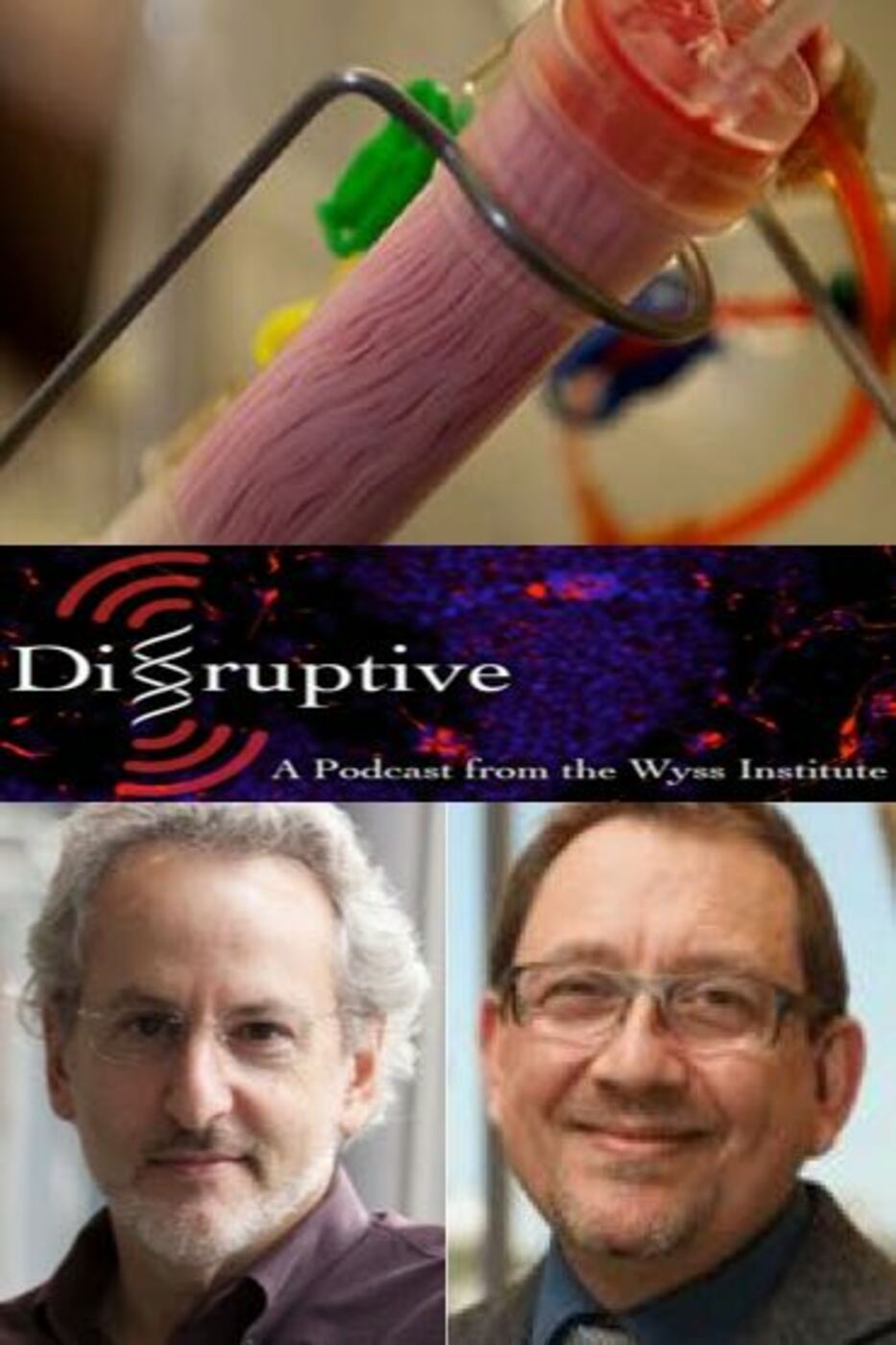
DISRUPTIVE DISRUPTIVE: CONFRONTING SEPSIS - Don Ingber and Mike Super episode artwork

EPISODE · Oct 14, 2015 · 36 MIN

DISRUPTIVE DISRUPTIVE: CONFRONTING SEPSIS - Don Ingber and Mike Super

from Free Forum with Terrence McNally · host Terrence McNally

Hello, I’m Terrence McNally and you’re listening to DISRUPTIVE the podcast from Harvard's Wyss Institute for Biologically Inspired Engineering. The mission of the Wyss is to: Transform healthcare, industry, and the environment by emulating the way nature builds.Our bodies — and all living systems — accomplish tasks far more sophisticated and dynamic than any entity yet designed by humans. By emulating nature's principles for self-organizing and self-regulating, Wyss researchers develop innovative engineering solutions for healthcare, energy, architecture, robotics, and manufacturing. They focus on technology development and its translation into products and therapies that will have an impact on the world in which we live. So the Wyss is not interested in making incremental improvements to existing materials and devices, but in shifting paradigms. In this episode of DISRUPTIVE, we will focus on: CONFRONTING SEPSIS.Sepsis is a bloodstream infection in which the body's organs become inflamed and susceptible to failure. The leading cause of hospital deaths, sepsis kills at least eight million people worldwide each year. It can be caused by 6 species of fungi and 1400 species of bacteria. Diagnosis takes two to five days, and every hour you wait can increase the risk of death by 5-9%. The treatment challenge grows more complex as the prevalence of drug-resistant bacteria increases while the development of new antibiotics lags. “Even with the best current treatments, sepsis patients are dying in intensive care units at least 30% of the time,” says one of today’s guests, Wyss Senior Staff Scientist Mike Super.A new device developed by a team at Wyss and inspired by the human spleen may radically transform the way we treat sepsis. Their blood-cleansing approach can be administered quickly, even without identifying the infectious agent. In animal studies, treatment with this device reduced the number of targeted pathogens and toxins circulating in the bloodstream by more than 99%. Although we focus here on treatment of sepsis, the same technology could in the future be used for other applications, including removing microbial contaminants from circulating water, food or pharmaceutical products.

Hello, I’m Terrence McNally and you’re listening to DISRUPTIVE the podcast from Harvard's Wyss Institute for Biologically Inspired Engineering. The mission of the Wyss is to: Transform healthcare, industry, and the environment by emulating the way nature builds. Our bodies — and all living systems — accomplish tasks far more sophisticated and dynamic than any entity yet designed by humans. By emulating nature's principles for self-organizing and self-regulating, Wyss researchers develop innovative engineering solutions for healthcare, energy, architecture, robotics, and manufacturing. They focus on technology development and its translation into products and therapies that will have an impact on the world in which we live. So the Wyss is not interested in making incremental improvements to existing materials and devices, but in shifting paradigms. In this episode of DISRUPTIVE, we will focus on: CONFRONTING SEPSIS. Sepsis is a bloodstream infection in which the body's organs become inflamed and susceptible to failure. The leading cause of hospital deaths, sepsis kills at least eight million people worldwide each year. It can be caused by 6 species of fungi and 1400 species of bacteria. Diagnosis takes two to five days, and every hour you wait can increase the risk of death by 5-9%. The treatment challenge grows more complex as the prevalence of drug-resistant bacteria increases while the development of new antibiotics lags. “Even with the best current treatments, sepsis patients are dying in intensive care units at least 30% of the time,” says one of today’s guests, Wyss Senior Staff Scientist Mike Super. A new device developed by a team at Wyss and inspired by the human spleen may radically transform the way we treat sepsis. Their blood-cleansing approach can be administered quickly, even without identifying the infectious agent. In animal studies, treatment with this device reduced the number of targeted pathogens and toxins circulating in the bloodstream by more than 99%. Although we focus here on treatment of sepsis, the same technology could in the future be used for other applications, including removing microbial contaminants from circulating water, food or pharmaceutical products.

NOW PLAYING

DISRUPTIVE DISRUPTIVE: CONFRONTING SEPSIS - Don Ingber and Mike Super

0:00 36:50

No transcript for this episode yet

We transcribe on demand. Request one and we'll notify you when it's ready — usually under 10 minutes.

No similar episodes found.

No similar podcasts found.

Frequently Asked Questions

How long is this episode of Free Forum with Terrence McNally?

This episode is 36 minutes long.

When was this Free Forum with Terrence McNally episode published?

This episode was published on October 14, 2015.

What is this episode about?

Hello, I’m Terrence McNally and you’re listening to DISRUPTIVE the podcast from Harvard's Wyss Institute for Biologically Inspired Engineering. The mission of the Wyss is to: Transform healthcare, industry, and the environment by emulating the way...

Can I download this Free Forum with Terrence McNally episode?

Yes, you can download this episode by clicking the download button on the episode player, or subscribe to the podcast in your preferred podcast app for automatic downloads.
URL copied to clipboard!