
EPISODE · May 1, 2026 · 22 MIN
Diversification Is Often Just Fear Disguised As Wisdom
from Breaking News To Trading Moves
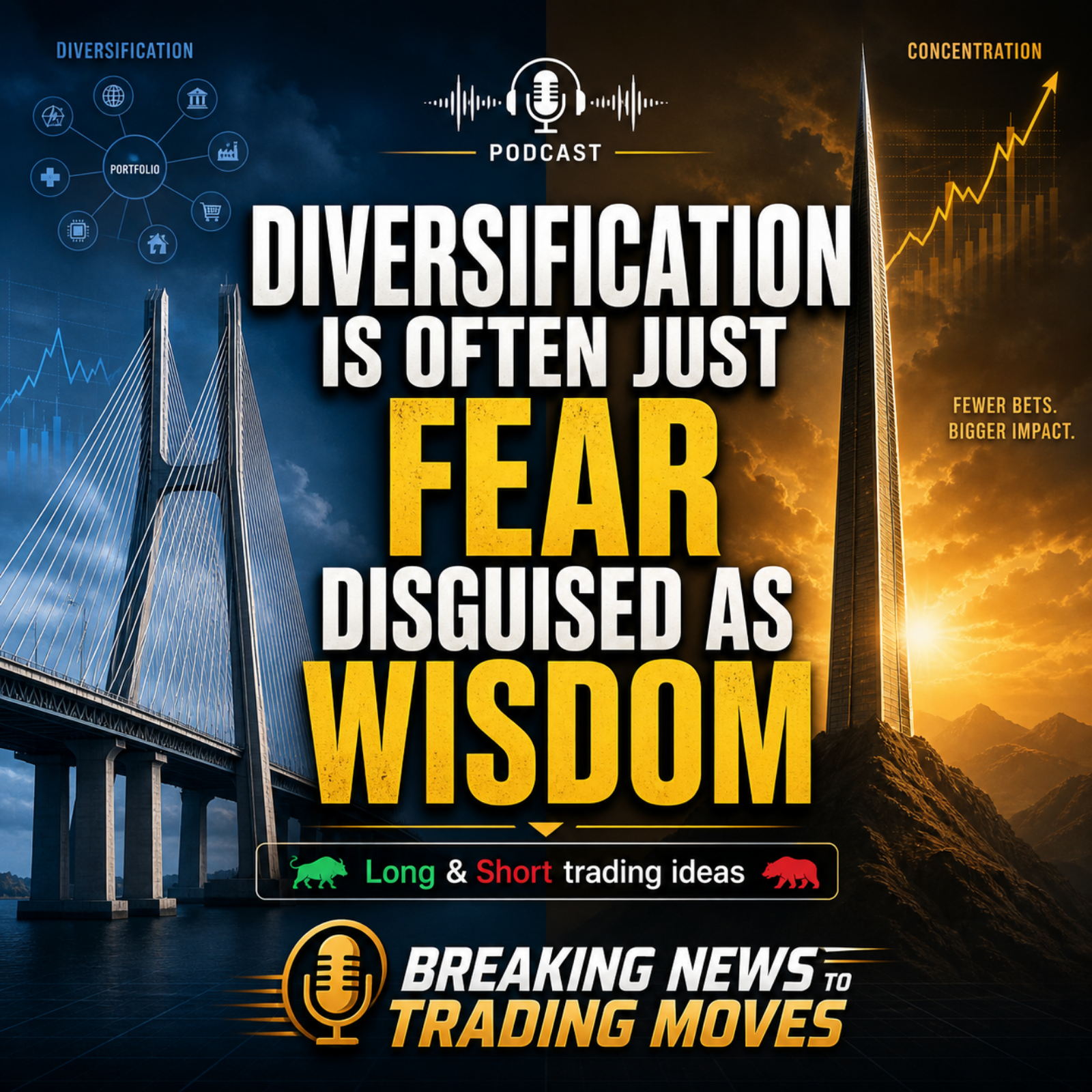
In this episode of Breaking News to Trading Moves, the debate challenges one of the most repeated ideas in investing: that diversification is always wise. The discussion asks whether spreading capital across hundreds of holdings is genuine risk management, or whether it is sometimes fear dressed up as discipline.The episode opens with a powerful contrast. In engineering, redundancy makes sense. Bridges need backup cables, cars need spare tyres, and insurance protects against uncertainty. But wealth creation may work differently. Charlie Munger argued that broad diversification is often for investors who do not truly understand what they own, while John Bogle and modern portfolio theory argue that most people are better off owning the whole market through low-cost index funds.Key Points1. Concentration and the search for alphaThe pro-concentration side argues that real wealth is built by owning a small number of exceptional businesses and holding them with patience. If your best ideas are diluted by 50 or 100 average holdings, your portfolio gets pulled back towards the benchmark. Alpha, or return above the market, becomes almost impossible if you own too much of the market.2. The danger of false convictionThe diversification side argues that concentration is only sensible when backed by a verified informational edge. Many investors believe they have deep insight, but in reality they lack the time, accounting skill and emotional control needed to analyse businesses properly. A concentrated mistake can become permanent capital loss.3. Nomad Investment Partnership as a case studyThe episode explores how Nomad concentrated heavily in businesses such as Amazon, Costco and Berkshire Hathaway, often holding positions for years. Their approach was based on patience, deep research and business models with strong competitive advantages, including scale economics shared, where companies use their size to lower prices for customers and widen their moat.4. Why active management failsThe discussion looks at forced diversification, closet indexing and de-warsification. Many fund managers add weaker ideas to appear safer, trim winners too early, add to losers, or copy benchmark holdings while charging active fees. The result is not true concentration or true diversification.5. Psychology is the real battlefieldThe hardest part of investing is not the maths. It is behaviour. Concentration requires sitting through drawdowns, looking wrong for years and ignoring short-term price quotes. Diversification protects investors from ego, panic and overconfidence.Why This Matters For TradersThe lesson is not simply to own fewer stocks or buy every index. The lesson is to understand your own edge. If you cannot explain why a business is mispriced, why the market is wrong, and why you can hold through volatility, concentration may be dangerous. If you diversify only because you are scared to make a decision, your safety may also come at the cost of real upside.The Big QuestionShould investors build portfolios like suspension bridges, with many redundant cables designed to survive almost anything? Or should they build narrow towers, capable of reaching far higher but vulnerable if the foundation cracks?This episode does not give a simple answer. Instead, it forces traders and investors to ask a more honest question: do you truly have the skill, patience and capital structure for concentration, or are you better served by broad diversification?Listen to the full debate and decide whether diversification is wisdom, protection, or fear in disguise.#StockMarket #Trading #Investing #DayTrading #SwingTrading #PortfolioManagement #Diversification #Concentration #CharlieMunger #JohnBogle #IndexFunds #RiskManagement
Embed this episode
Ready to play
Diversification Is Often Just Fear Disguised As Wisdom
No transcript for this episode yet
Similar Episodes
No similar episodes found.
Similar Podcasts
No similar podcasts found.