
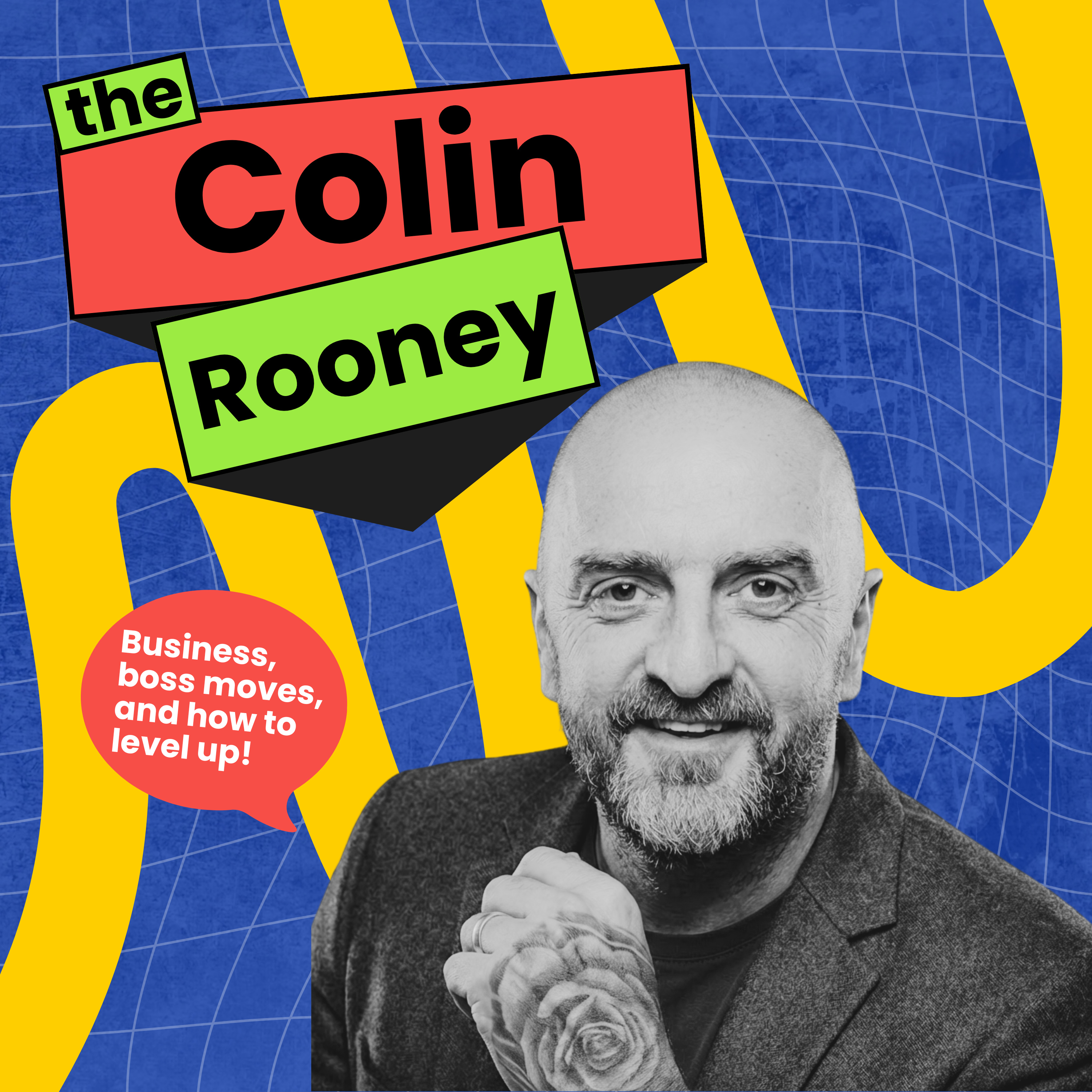
EPISODE · May 28, 2026 · 28 MIN
Do as I say, Not as I do
from The Colin Rooney Podcast · host Colin Rooney
Three thousand years ago, the wisest man who ever lived had seven hundred wives. And three hundred concubines on top of that. The man wrote the book on wisdom and couldn't apply a word of it to himself.His name was Solomon. And he's the reason this episode exists.This one is the most personal one I've done yet. It's about the gap between giving advice and taking it. Between knowing what to do and actually doing it. I'm brilliant at giving advice. Properly. The kind that, if you took it, would change your business and your life. But me taking my own advice? I'm fucking terrible at it. And I wanted to know why.Some of what's in this episode:Why the wisest man in the Bible had a train-wreck personal life, and what that tells us about all of us.Why Steve Jobs refused life-saving surgery for nine months and tried fruit juice cleanses instead. The man who built the most rational company on earth couldn't make a rational decision about his own body.The intention-behaviour gap. The actual data on how often we do the thing we genuinely intended to do. Spoiler, it's a lot lower than you think.Why marriage counsellors have one of the highest divorce rates of any profession.The five real reasons we do this, including the dark one nobody wants to admit. That giving advice itself gives us a dopamine hit, and we get the emotional payoff of progress without ever having to do the thing.My own confession. The advice I give people every day that I don't take myself. Including the fact that episode one of this podcast was me hiding behind an AI voice while preaching the importance of being vulnerable.And three actual fixes that work, according to the research. The Batman Effect. Implementation intentions. And the one nobody wants to hear about because it sounds soft, but the data is undeniable.If you've ever felt like a hypocrite for giving brilliant advice you don't follow yourself, this one's for you. You're not a fraud. You're human. And there might just be a way out.Pull up a chair. Pour yourself something. This one's a long one and it's a personal one.Research Links & References (paste at the bottom of the same description box, leave a blank line first):Igor Grossmann – Solomon's Paradox research, University of Waterloo: https://uwaterloo.ca/wisdom-and-culture-lab/Grossmann & Kross, 2014 – Original Solomon's Paradox study in Psychological Science: https://journals.sagepub.com/doi/10.1177/0956797614535400University of Michigan – How to give ourselves advice as good as we give others: https://news.umich.edu/how-to-give-ourselves-advice-as-good-as-we-give-others/M.D. Faries, 2016 – The Intention-Behaviour Gap meta-analysis (NIH): https://pmc.ncbi.nlm.nih.gov/articles/PMC6125069/The Decision Lab – Intention-Action Gap explained: https://thedecisionlab.com/reference-guide/psychology/intention-action-gapWalter Isaacson – Steve Jobs biography (the cancer treatment chapter): https://www.simonandschuster.com/books/Steve-Jobs/Walter-Isaacson/9781451648539Forbes – Steve Jobs' cancer treatment regrets: https://www.forbes.com/sites/alicegwalton/2011/10/24/steve-jobs-cancer-treatment-regrets/The Guardian – Steve Jobs regretted delaying cancer surgery: https://www.theguardian.com/technology/2011/oct/21/steve-jobs-cancer-surgery-regretJeffrey Pfeffer & Robert Sutton – The Knowing-Doing Gap (Stanford Graduate School of Business): https://www.gsb.stanford.edu/insights/knowing-doing-gapLauren Eskreis-Winkler – University of Chicago research on giving advice and motivation: https://news.uchicago.edu/story/unmotivated-people-benefit-more-giving-advice-receiving-itRoy Baumeister – Ego depletion and willpower research: https://pubmed.ncbi.nlm.nih.gov/39278166/American Psychological Association – The power of self-control: https://www.apa.org/monitor/2012/01/self-controlPeter Gollwitzer – Implementation Intentions ("if-then" planning) research: https://www.tandfonline.com/doi/full/10.1080/10463283.2020.1808936
What this episode covers
Three thousand years ago, the wisest man who ever lived had seven hundred wives. And three hundred concubines on top of that. The man wrote the book on wisdom and couldn't apply a word of it to himself.His name was Solomon. And he's the reason this episode exists.This one is the most personal one I've done yet. It's about the gap between giving advice and taking it. Between knowing what to do and actually doing it. I'm brilliant at giving advice. Properly. The kind that, if you took it, would change your business and your life. But me taking my own advice? I'm fucking terrible at it. And I wanted to know why.Some of what's in this episode:Why the wisest man in the Bible had a train-wreck personal life, and what that tells us about all of us.Why Steve Jobs refused life-saving surgery for nine months and tried fruit juice cleanses instead. The man who built the most rational company on earth couldn't make a rational decision about his own body.The intention-behaviour gap. The actual data on how often we do the thing we genuinely intended to do. Spoiler, it's a lot lower than you think.Why marriage counsellors have one of the highest divorce rates of any profession.The five real reasons we do this, including the dark one nobody wants to admit. That giving advice itself gives us a dopamine hit, and we get the emotional payoff of progress without ever having to do the thing.My own confession. The advice I give people every day that I don't take myself. Including the fact that episode one of this podcast was me hiding behind an AI voice while preaching the importance of being vulnerable.And three actual fixes that work, according to the research. The Batman Effect. Implementation intentions. And the one nobody wants to hear about because it sounds soft, but the data is undeniable.If you've ever felt like a hypocrite for giving brilliant advice you don't follow yourself, this one's for you. You're not a fraud. You're human. And there might just be a way out.Pull up a chair. Pour yourself something. This one's a long one and it's a personal one.Research Links & References (paste at the bottom of the same description box, leave a blank line first):Igor Grossmann – Solomon's Paradox research, University of Waterloo: https://uwaterloo.ca/wisdom-and-culture-lab/Grossmann & Kross, 2014 – Original Solomon's Paradox study in Psychological Science: https://journals.sagepub.com/doi/10.1177/0956797614535400University of Michigan – How to give ourselves advice as good as we give others: https://news.umich.edu/how-to-give-ourselves-advice-as-good-as-we-give-others/M.D. Faries, 2016 – The Intention-Behaviour Gap meta-analysis (NIH): https://pmc.ncbi.nlm.nih.gov/articles/PMC6125069/The Decision Lab – Intention-Action Gap explained: https://thedecisionlab.com/reference-guide/psychology/intention-action-gapWalter Isaacson – Steve Jobs biography (the cancer treatment chapter): https://www.simonandschuster.com/books/Steve-Jobs/Walter-Isaacson/9781451648539Forbes – Steve Jobs' cancer treatment regrets: https://www.forbes.com/sites/alicegwalton/2011/10/24/steve-jobs-cancer-treatment-regrets/The Guardian – Steve Jobs regretted delaying cancer surgery: https://www.theguardian.com/technology/2011/oct/21/steve-jobs-cancer-surgery-regretJeffrey Pfeffer & Robert Sutton – The Knowing-Doing Gap (Stanford Graduate School of Business): https://www.gsb.stanford.edu/insights/knowing-doing-gapLauren Eskreis-Winkler – University of Chicago research on giving advice and motivation: https://news.uchicago.edu/story/unmotivated-people-benefit-more-giving-advice-receiving-itRoy Baumeister – Ego depletion and willpower research: https://pubmed.ncbi.nlm.nih.gov/39278166/American Psychological Association – The power of self-control: https://www.apa.org/monitor/2012/01/self-controlPeter Gollwitzer – Implementation Intentions ("if-then" planning) research: https://www.tandfonline.com/doi/full/10.1080/10463283.2020.1808936
NOW PLAYING
Do as I say, Not as I do
No transcript for this episode yet
Similar Episodes
Mar 26, 2026 ·1m
Mar 19, 2026 ·34m
Feb 18, 2026 ·11m
Feb 11, 2026 ·45m