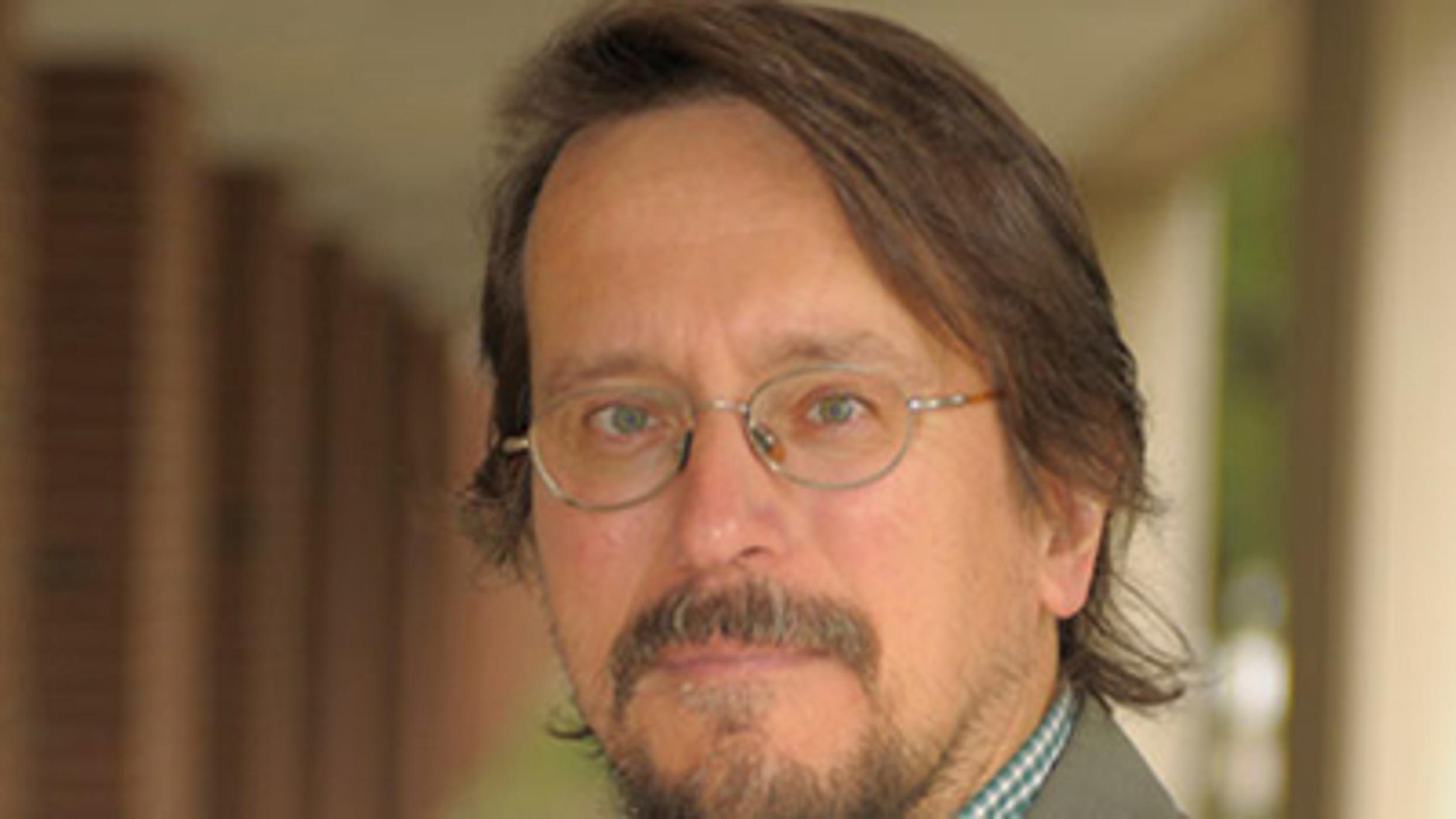
'Do Bad Things Happen When Works Enter the Public Domain? Empirical Tests of Copyright Term Extension' - Paul Heald: CIPIL Seminar episode artwork

EPISODE · Feb 28, 2013 · 37 MIN

'Do Bad Things Happen When Works Enter the Public Domain? Empirical Tests of Copyright Term Extension' - Paul Heald: CIPIL Seminar

from Centre for Intellectual Property and Information Law (CIPIL) Podcast

Professor Paul Heald, University of Illinois School of Law, gave an seminar entitled "Do Bad Things Happen When Works Enter the Public Domain? Empirical Tests of Copyright Term Extension" on Thursday 28th February 2013 at the Faculty of Law as a guest of CIPIL (the Centre for Intellectual Property and Information Law). Paul Heald (University of Illinois School of Law) lectures on patent, copyright and international intellectual property law around the world and has previously held visiting positions at universities in London, Lyon, Regensburg and Innsbruck, and at the University of Chicago, University of Texas and Vanderbilt University. He also taught in the UGA/OSU program at St. Anne's College, Oxford University, during the spring of 2009. Professor Heald is a Herbert Smith Visiting Fellow at the Faculty during the Lent and Easter terms 2013. According to the current copyright statute, in 2018, copyrighted works of music, film, and literature will begin to transition into the public domain. While this will prove a boon for users and creators, it could be disastrous for the owners of these valuable copyrights. Accordingly, the next few years will witness another round of aggressive lobbying by the film, music, and publishing industries to extend the terms of already-existing works. These industries, and a number of prominent scholars, claim that when works enter the public domain bad things will happen to them. They worry that works in the public domain will be underused, overused, or tarnished in ways that will undermine the works’ cultural and economic value. Although the validity of their assertions turn on empirically testable hypotheses, very little effort has been made to study them. This research attempts to fill that gap by studying the market for audiobook recordings of bestselling novels. Data from our research, including a novel human subjects experiment, suggest that the claims about the public domain are suspect. Our data indicate that audio books made from public domain bestsellers (1913-22) are significantly more available than those made from copyrighted bestsellers (1923-32). In addition, our experimental protocol suggests that professionally made recordings of public domain and copyrighted books are of similar quality. Finally, while a low quality recording seems to lower a listener's valuation of the underlying work, our data do not suggest any correlation between that valuation and legal status of the underlying work. Accordingly, ourresearch indicates that the significant costs of additional copyright protection for already-existing works are not justified by the benefits claimed for it. These findings will be crucially important to the inevitable congressional and judicial debate over copyright term extension in the next few years. Recent publications have focused on economic aspects of IP law, including theoretical papers on optimal patent remedies, the role transaction costs in patent law and the problem of patent pricing as well as empirical studies on best-selling fiction and musical compositions from 1913 to 1932 and the behavior of famous trademarks in product and service markets. He has also written two books on law and literature, and his first novel, No Regrets, was published by St. James Music Press in 2002. For more information see the CIPIL website at http://www.cipil.law.cam.ac.uk

Professor Paul Heald, University of Illinois School of Law, gave an seminar entitled "Do Bad Things Happen When Works Enter the Public Domain? Empirical Tests of Copyright Term Extension" on Thursday 28th February 2013 at the Faculty of Law as a guest of CIPIL (the Centre for Intellectual Property and Information Law). Paul Heald (University of Illinois School of Law) lectures on patent, copyright and international intellectual property law around the world and has previously held visiting positions at universities in London, Lyon, Regensburg and Innsbruck, and at the University of Chicago, University of Texas and Vanderbilt University. He also taught in the UGA/OSU program at St. Anne's College, Oxford University, during the spring of 2009. Professor Heald is a Herbert Smith Visiting Fellow at the Faculty during the Lent and Easter terms 2013. According to the current copyright statute, in 2018, copyrighted works of music, film, and literature will begin to transition into the public domain. While this will prove a boon for users and creators, it could be disastrous for the owners of these valuable copyrights. Accordingly, the next few years will witness another round of aggressive lobbying by the film, music, and publishing industries to extend the terms of already-existing works. These industries, and a number of prominent scholars, claim that when works enter the public domain bad things will happen to them. They worry that works in the public domain will be underused, overused, or tarnished in ways that will undermine the works’ cultural and economic value. Although the validity of their assertions turn on empirically testable hypotheses, very little effort has been made to study them. This research attempts to fill that gap by studying the market for audiobook recordings of bestselling novels. Data from our research, including a novel human subjects experiment, suggest that the claims about the public domain are suspect. Our data indicate that audio books made from public domain bestsellers (1913-22) are significantly more available than those made from copyrighted bestsellers (1923-32). In addition, our experimental protocol suggests that professionally made recordings of public domain and copyrighted books are of similar quality. Finally, while a low quality recording seems to lower a listener's valuation of the underlying work, our data do not suggest any correlation between that valuation and legal status of the underlying work. Accordingly, ourresearch indicates that the significant costs of additional copyright protection for already-existing works are not justified by the benefits claimed for it. These findings will be crucially important to the inevitable congressional and judicial debate over copyright term extension in the next few years. Recent publications have focused on economic aspects of IP law, including theoretical papers on optimal patent remedies, the role transaction costs in patent law and the problem of patent pricing as well as empirical studies on best-selling fiction and musical compositions from 1913 to 1932 and the behavior of famous trademarks in product and service markets. He has also written two books on law and literature, and his first novel, No Regrets, was published by St. James Music Press in 2002. For more information see the CIPIL website at http://www.cipil.law.cam.ac.uk

NOW PLAYING

'Do Bad Things Happen When Works Enter the Public Domain? Empirical Tests of Copyright Term Extension' - Paul Heald: CIPIL Seminar

0:00 37:24

No transcript for this episode yet

We transcribe on demand. Request one and we'll notify you when it's ready — usually under 10 minutes.

MG Show MG Show The MG Show, hosted by Jeffrey Pedersen and Shannon Townsend, is a leading alternative media platform dedicated to uncovering the truth behind today’s most pressing political issues. Launched in 2019, the show has grown exponentially, offering unfiltered insights, comprehensive research, and real-time analysis. With a commitment to independent journalism and factual integrity, the MG Show empowers its audience with knowledge and encourages active participation in the political discourse. Breaking News Show | eTurboNews Juergen Thomas Steinmetz News is relevant to the global travel and tourism industry, human rights and global issues.Breaking news when it happens and only from the source. Eat to Live Jenna Fuhrman, Dr. Fuhrman Our health is our most precious gift and smart nutrition can change your life. Each month, join Dr. Fuhrman and his daughter, Jenna Fuhrman as they discuss important topics in the world of nutrition. Eat to Live will change the way you eat and think about food. French Your Way Jessica: Native French teacher founder of French Your Way Boost your French listening skills and test your comprehension with this one of a kind series of podcasts. Get the chance to listen to a real conversation between native speakers talking at normal speed AND customise your learning experience through carefully designed sets of questions (2 levels of difficulty) available for download at www.frenchvoicespodcast.com. All interviews also come with the transcript. French teacher Jessica interviews native speakers of French from around the world who share a bit of their life and passion. Where else would you meet in one same place a French yoga teacher based in Melbourne, a soap manufacturer from Provence, or a couple cycling around the world?

Frequently Asked Questions

How long is this episode of Centre for Intellectual Property and Information Law (CIPIL) Podcast?

This episode is 37 minutes long.

When was this Centre for Intellectual Property and Information Law (CIPIL) Podcast episode published?

This episode was published on February 28, 2013.

What is this episode about?

Professor Paul Heald, University of Illinois School of Law, gave an seminar entitled "Do Bad Things Happen When Works Enter the Public Domain? Empirical Tests of Copyright Term Extension" on Thursday 28th February 2013 at the Faculty of Law as a...

Can I download this Centre for Intellectual Property and Information Law (CIPIL) Podcast episode?

Yes, you can download this episode by clicking the download button on the episode player, or subscribe to the podcast in your preferred podcast app for automatic downloads.
URL copied to clipboard!