
EPISODE · Apr 17, 2022 · 13 MIN
Do/Open by David Hieatt: why you need to be more interesting
from Steph's Business Bookshelf Podcast · host Steph Clarke
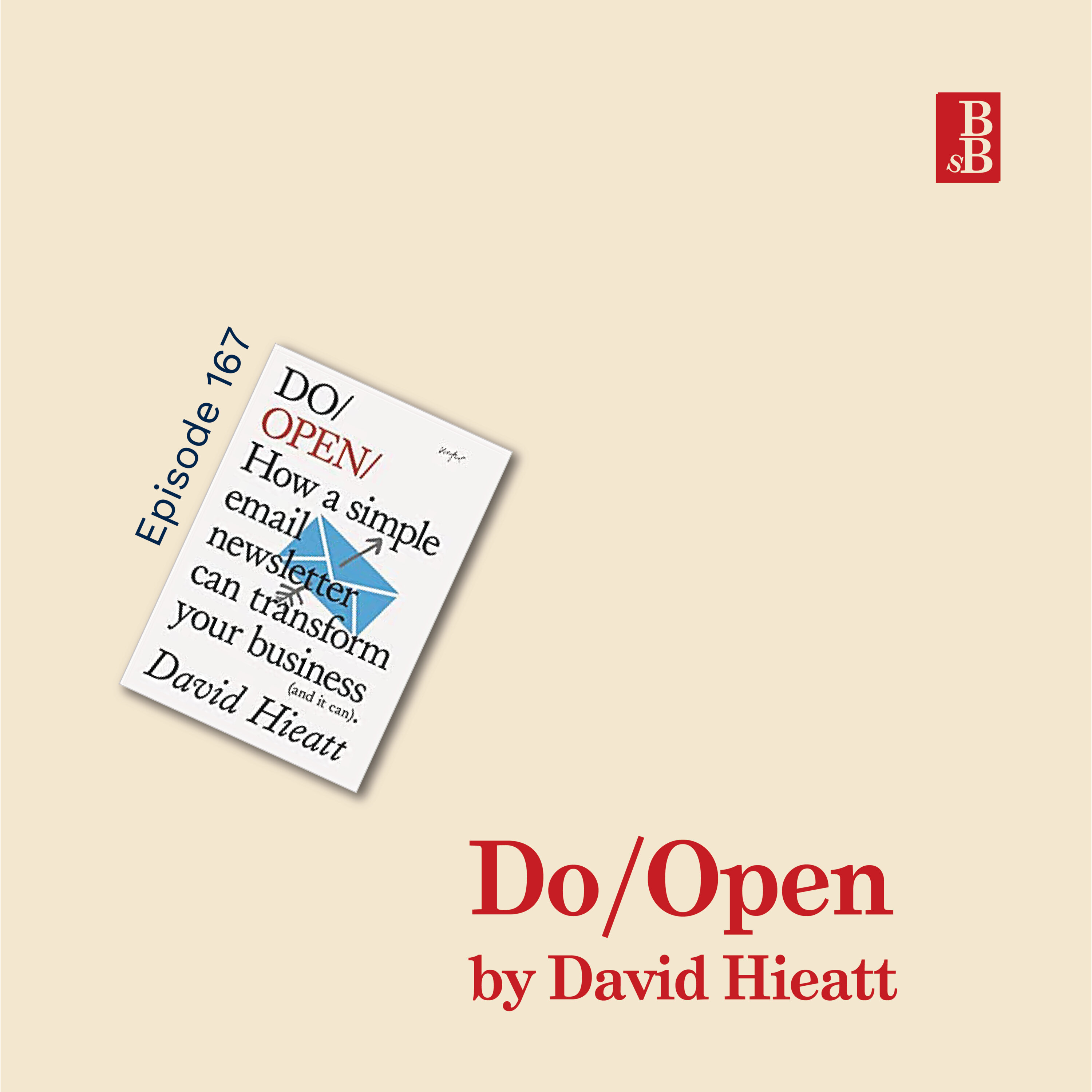
About the book How do you grow your business when you don’t have a marketing budget?How do you stand out in a busy world? And what if the answer is right in front of you? ‘For me, the newsletter is the most important tool I have in building a global denim brand. Second only to the sewing machine.’ So writes entrepreneur David Hieatt who has based his entire marketing strategy around a simple email newsletter. And it’s worked. His company has grown into a creative global jeans business with a fiercely loyal community. Now, David shares his insight, strategy and methodology so you can do the same. In Do Open you will discover: Why giving is your secret to success How to get people’s attention when time is your biggest competitor Why creating beats sharing How a small team can win Build community. Build your brand. Build long-term growth. Discover why the humble newsletter is pure and utter gold. Source: https://thedobook.co/products/do-open-how-a-simple-email-newsletter-can-transform-your-business-and-it-can About the author David Hieatt is not a theorist. He has built brands from nothing, with next to nothing, just by understanding a few basic rules. The Scrapbook Chronicles newsletter has become a cult offering from his company, the Hiut Denim Co. Its open rate exceeds almost any industry standard and it is one of those rare emails that people actually look forward to receiving. And it has delivered results. It has grown the company by 25 per cent each year for the last three years. And each year for the last three years, the company has turned a profit. David is co-founder of The Do Lectures and has spoken at Apple, Google and Red Bull, amongst others. In 2010 he self-published The Path of a Doer and in 2014 he published Do Purpose: Why brands with a purpose do better and matter more (Do Books). Source: https://thedobook.co/products/do-open-how-a-simple-email-newsletter-can-transform-your-business-and-it-can Big idea #1 — Be excellent You know your audience are busy people, so the best way of respecting their time is sending them something excellent, and most importantly, interesting. If you’ve not got anything interesting to say, you’re probably going to struggle to keep your audience very engaged. This point of being interesting and being excellent really does underpin the whole book. You can build your excellence and interest by putting in the deep work required to think carefully about what to send your audience. This requires putting the time aside to think, because the best ideas are going to come from that thinking time. You don’t necessarily need to be running a business for this to be relevant. You can absolutely use these ideas and techniques to write better emails or comms within the company you work for, in your projects, or to write better social media posts. Whatever it is, if you want it to be great, spend more time on. David says that a good newsletter shares how you think about the world, therefore you need to put the time aside to think in order to then share those thoughts. David has the equation of Maintenance + Momentum = Strategic use of time. Maintenance is your BAU, it’s the stuff you’ve got to do in order to keep going for things to keep making money or keep operating. But momentum is where you get the movement, the traction, and the growth. So that’s where you need to prioritise spending time. He encourages us to think long term; what if this was a 10-year relationship/activity? Not just a newsletter for a transaction to get some short-term sales. And if you’re a a small business, this will be to your advantage if you use it well; you can act fast and you can likely bring a lot more personality into your newsletters, which helps build that personal relationship with your readers. Big idea #2 — Be generous, but sell You need to give before you ask. David uses the Gary Vee jab, jab, jab, right hook idea in this concept of give and take. But you don’t want to just talk about yourself. Think about talking about your customers, the people around your business, or other topics your audience might be interested in. But, when you’re selling, sell. Don’t leave people wondering whether you’re trying to sell something or not, and don’t make it hard for them — make it really clear that you are selling something when you’re selling something. David suggests actually having two different formats or different newsletters for different purposes, which is not something that you see in a lot of other content around this topic. The Hiut Denim Company have two different newsletters; the Scrapbook Chronicles which contains 14 things: 12 pockets of inspiration and two company updates, which is their community building newsletter. They’ve also got the second newsletter; Factory Talk which contains three things and ends with their latest offer. It’s much shorter and is very much a sales newsletter. Whilst generosity is important, David reminds us not to be too generous; a lot of unsubscribes come from people receiving too many emails. Don’t drown people in your generosity. In order to be interesting and generous in your newsletters, you should curate your own inputs to make sure that you are getting different and interesting inputs in the things that you are reading, because that’s where you’re going to find things to curate and share with your audience. There is a balance between curation which is more your maintenance type content, and creation, which is the momentum content as it’s original thought that’s often a bit more personal. There’s a role for both, but think about where you need to be investing the time in creation because that’s where you get your momentum. Big idea #3 — Build a community Your list is not a list, it’s people, it’s a community. You can use them to help you be more interesting, because if you understand them you can better connect with them and can share more relevant things with them that they’ll find interesting. David encourages you to think about who the minority are that you’re talking to, who is that small group of people or what is the intersect of that venn diagram that where three or four things overlap? This is why unsubscribes for the right reason can be good, as the wrong people filter themselves out. so in Use your newsletter to instigate a conversation with your community and allow a two way conversation to emerge. Make it really easy for people to comment, share, reply or come back to you with a response. In the book he talks about the fact that a community wants three things; connection, meaning, and change. How can you bring those three elements into your your brand, your tone of voice, the design of your newsletter, the things you share, and the way people can interact with you. Finally, you need to show people that you care. If you show people that you care about the work you’re doing, about your process, your products or service, about your message, and about them, they will let you lead. If you’re not very interesting or you’re a bit soulless and don’t have much of a voice, people aren’t going to trust you as much. If you put out good ideas by spending the time thinking about them, you build a community that trusts you and appreciates your generosity. Support my book habit: https://www.buymeacoffee.com/stephsbookshelfSee omnystudio.com/listener for privacy information.
Embed this episode
NOW PLAYING
Do/Open by David Hieatt: why you need to be more interesting
No transcript for this episode yet
Similar Episodes
No similar episodes found.
Similar Podcasts
No similar podcasts found.