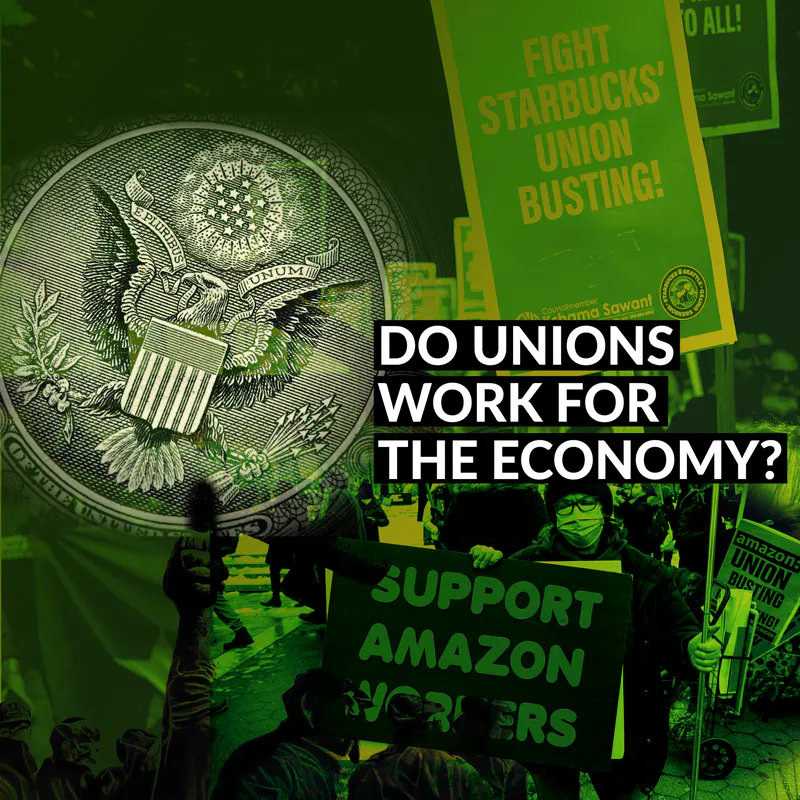
Do Unions Work For The Economy? episode artwork

EPISODE · Oct 21, 2022 · 53 MIN

Do Unions Work For The Economy?

from Open to Debate · host Open to Debate

Unions may be on the verge of a resurgence. After decades of decline, workers are organizing at well-known companies, like Starbucks, Amazon, and Google, at a pace not seen since the 1930s. Decades of stagnant wages, recent labor shortages, and the most vocally pro-union President in recent memory have all stoked key wins for American labor, including successful strikes at John Deere and Kellogg. In fact, recent polling shows public support for labor unions has climbed to 71%, its highest level since 1965. During the old industrial days, unions had broad influence over the American economy. But their power waned. In 1983, one in 5 employees belonged to a union. Last year, that number had dwindled to one in 10, with most of the declines occurring in the private sector. Some say good riddance. They argue that unions actually hurt workers and the economy under the guise of supporting both. Union dues sap salaries, they say, and can actually increase unemployment. They also make the economy more rigid to change, raise consumer prices, and ultimately render unionized companies less competitive. Advocates, however, argue that in light of yawning income inequality, organized labor is desperately needed. Unions increase workers’ pay and benefits, they say, and can also settle disputes more equitably, improve wages, and encourage a more robust middle class. Of course, not all unions are created equal. And the difference between private and public-sector unions needs to be explored. Yet as public support for organized labor has grown as more workers push to join unions, an overarching question looms large: Do Unions Work For The Economy?  Learn more about your ad choices. Visit podcastchoices.com/adchoices

Unions may be on the verge of a resurgence. After decades of decline, workers are organizing at well-known companies, like Starbucks, Amazon, and Google, at a pace not seen since the 1930s. Decades of stagnant wages, recent labor shortages, and the most vocally pro-union President in recent memory have all stoked key wins for American labor, including successful strikes at John Deere and Kellogg. In fact, recent polling shows public support for labor unions has climbed to 71%, its highest level since 1965. During the old industrial days, unions had broad influence over the American economy. But their power waned. In 1983, one in 5 employees belonged to a union. Last year, that number had dwindled to one in 10, with most of the declines occurring in the private sector. Some say good riddance. They argue that unions actually hurt workers and the economy under the guise of supporting both. Union dues sap salaries, they say, and can actually increase unemployment. They also make the economy more rigid to change, raise consumer prices, and ultimately render unionized companies less competitive. Advocates, however, argue that in light of yawning income inequality, organized labor is desperately needed. Unions increase workers’ pay and benefits, they say, and can also settle disputes more equitably, improve wages, and encourage a more robust middle class. Of course, not all unions are created equal. And the difference between private and public-sector unions needs to be explored. Yet as public support for organized labor has grown as more workers push to join unions, an overarching question looms large: Do Unions Work For The Economy?  Learn more about your ad choices. Visit podcastchoices.com/adchoices

NOW PLAYING

Do Unions Work For The Economy?

0:00 53:47

No transcript for this episode yet

We transcribe on demand. Request one and we'll notify you when it's ready — usually under 10 minutes.

MG Show MG Show The MG Show, hosted by Jeffrey Pedersen and Shannon Townsend, is a leading alternative media platform dedicated to uncovering the truth behind today’s most pressing political issues. Launched in 2019, the show has grown exponentially, offering unfiltered insights, comprehensive research, and real-time analysis. With a commitment to independent journalism and factual integrity, the MG Show empowers its audience with knowledge and encourages active participation in the political discourse. Breaking News Show | eTurboNews Juergen Thomas Steinmetz News is relevant to the global travel and tourism industry, human rights and global issues.Breaking news when it happens and only from the source. Eat to Live Jenna Fuhrman, Dr. Fuhrman Our health is our most precious gift and smart nutrition can change your life. Each month, join Dr. Fuhrman and his daughter, Jenna Fuhrman as they discuss important topics in the world of nutrition. Eat to Live will change the way you eat and think about food. French Your Way Jessica: Native French teacher founder of French Your Way Boost your French listening skills and test your comprehension with this one of a kind series of podcasts. Get the chance to listen to a real conversation between native speakers talking at normal speed AND customise your learning experience through carefully designed sets of questions (2 levels of difficulty) available for download at www.frenchvoicespodcast.com. All interviews also come with the transcript. French teacher Jessica interviews native speakers of French from around the world who share a bit of their life and passion. Where else would you meet in one same place a French yoga teacher based in Melbourne, a soap manufacturer from Provence, or a couple cycling around the world?

Frequently Asked Questions

How long is this episode of Open to Debate?

This episode is 53 minutes long.

When was this Open to Debate episode published?

This episode was published on October 21, 2022.

What is this episode about?

Unions may be on the verge of a resurgence. After decades of decline, workers are organizing at well-known companies, like Starbucks, Amazon, and Google, at a pace not seen since the 1930s. Decades of stagnant wages, recent labor shortages, and the...

Can I download this Open to Debate episode?

Yes, you can download this episode by clicking the download button on the episode player, or subscribe to the podcast in your preferred podcast app for automatic downloads.
URL copied to clipboard!