
EPISODE · Jan 19, 2026 · 38 MIN
Domestic Military Power and the Insurrection Act
from The World Between Us · host Norse Studio
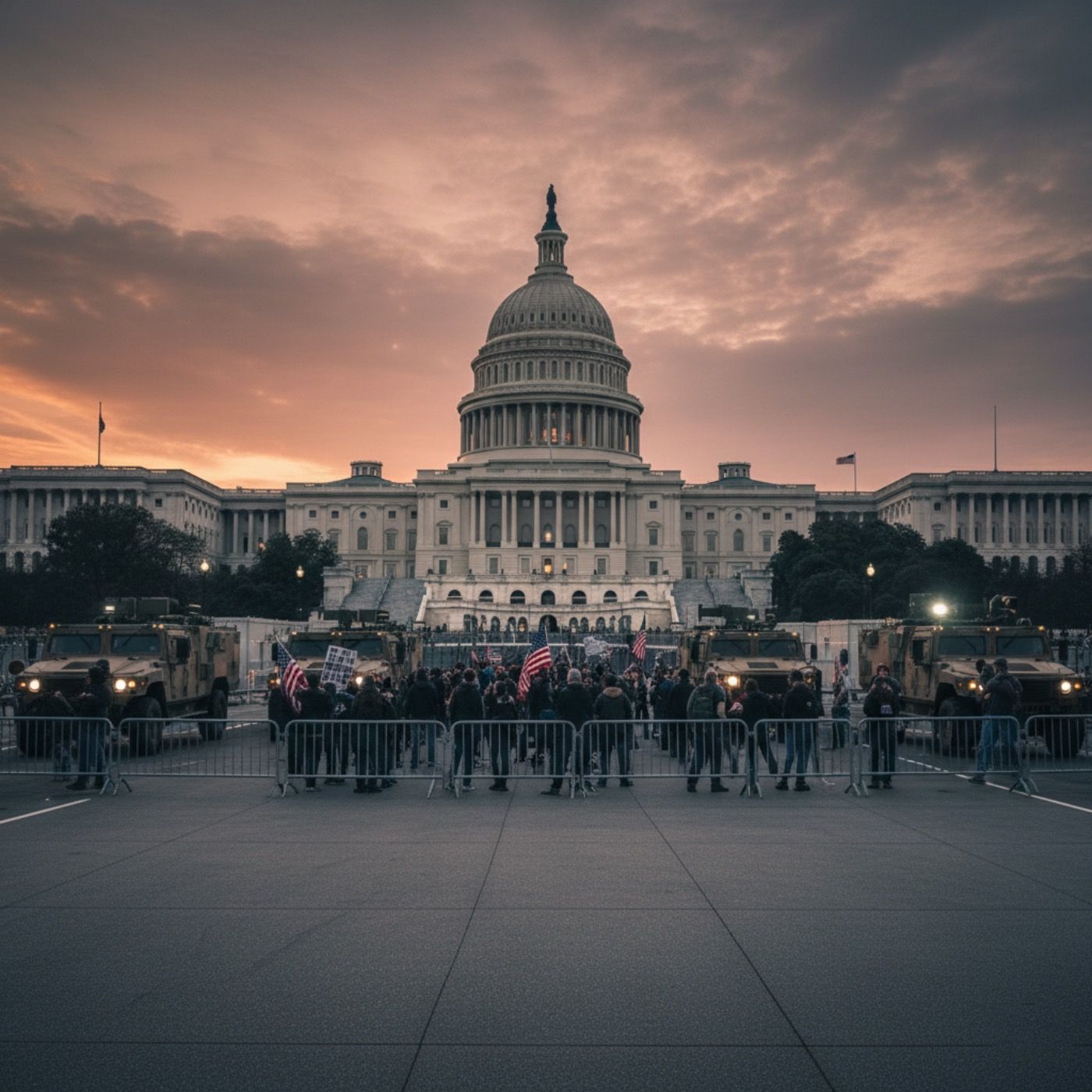
The Insurrection Act is a collection of federal laws that grant the President of the United States the authority to deploy military forces domestically to suppress rebellion, address domestic violence, or enforce federal laws. It serves as the primary exception to the Posse Comitatus Act of 1878, which generally prohibits federal military personnel from participating in civilian law enforcement activities. The origins of this legislation trace back to the Calling Forth Act of 1792, with the current framework primarily established by the Insurrection Act of 1807 and subsequent amendments made during the Civil War and Reconstruction eras to address rebellions and protect civil rights.Today, the Act is codified in Title 10 of the United States Code, specifically sections 251 through 255. It provides three distinct scenarios for the use of the military. Under Section 251, the president may deploy troops upon the formal request of a state legislature or governor to help suppress an insurrection against the state government. In contrast, Sections 252 and 253 allow for unilateral presidential action without state consent. Section 252 permits deployment when the president determines that unlawful obstructions or rebellion against federal authority make it impracticable to enforce the laws of the United States through regular judicial proceedings. Section 253 allows intervention if domestic violence or conspiracies hinder the execution of laws to the point that citizens are deprived of constitutional rights and state authorities are unable or unwilling to protect them, or if such actions obstruct the execution of federal law.Historical usage of the Act shows it has been invoked approximately 30 times. Early presidents used it against rebellions, while Abraham Lincoln invoked it during the Civil War. In the 20th century, the Act became a vital tool for enforcing civil rights. Presidents Eisenhower and Kennedy used it to ensure school desegregation in the South, most notably in Little Rock, Arkansas, in 1957, and in Alabama in 1963. The most recent invocation occurred in 1992, when President George H.W. Bush deployed federal troops and federalized the National Guard at the request of California's governor to address the civil unrest in Los Angeles.Despite its importance, the Insurrection Act is often criticized for its vague and antiquated language. Terms like combinations and assemblages lack modern precise definitions, giving the president broad discretion. Unlike other emergency powers, the Act does not currently require the president to consult with or obtain approval from Congress, nor does it impose specific time limits on how long troops can remain deployed. Furthermore, the Supreme Court ruled in the 1827 case Martin v. Mott that the president's decision to call forth the militia is largely conclusive, though later legal analysis suggests that the military's actions once deployed remain subject to constitutional limits and judicial review regarding their lawfulness.The relationship between the Insurrection Act and the National Guard is also significant. While National Guard members usually report to their state governors, they can be federalized under the Act, placing them under the direct command of the president. Once federalized, they are subject to the same restrictions as the regular military.Recent discussions regarding reform focus on introducing modern checks and balances. Proposed changes include requiring the president to provide formal findings to Congress, establishing time limits that require congressional reauthorization for extended deployments, and refining the criteria for what constitutes a domestic emergency. While the Act is viewed as a necessary tool for extreme crises where local law enforcement is overwhelmed, legal experts emphasize the need to update the law to prevent potential executive abuse and to better reflect the capabilities of modern law enforcement. Hosted on Acast. See acast.com/privacy for more information.Become a supporter of this podcast: https://www.spreaker.com/podcast/the-world-between-us--6886561/support.
Embed this episode
NOW PLAYING
Domestic Military Power and the Insurrection Act
No transcript for this episode yet
Similar Episodes
No similar episodes found.
Similar Podcasts
No similar podcasts found.