
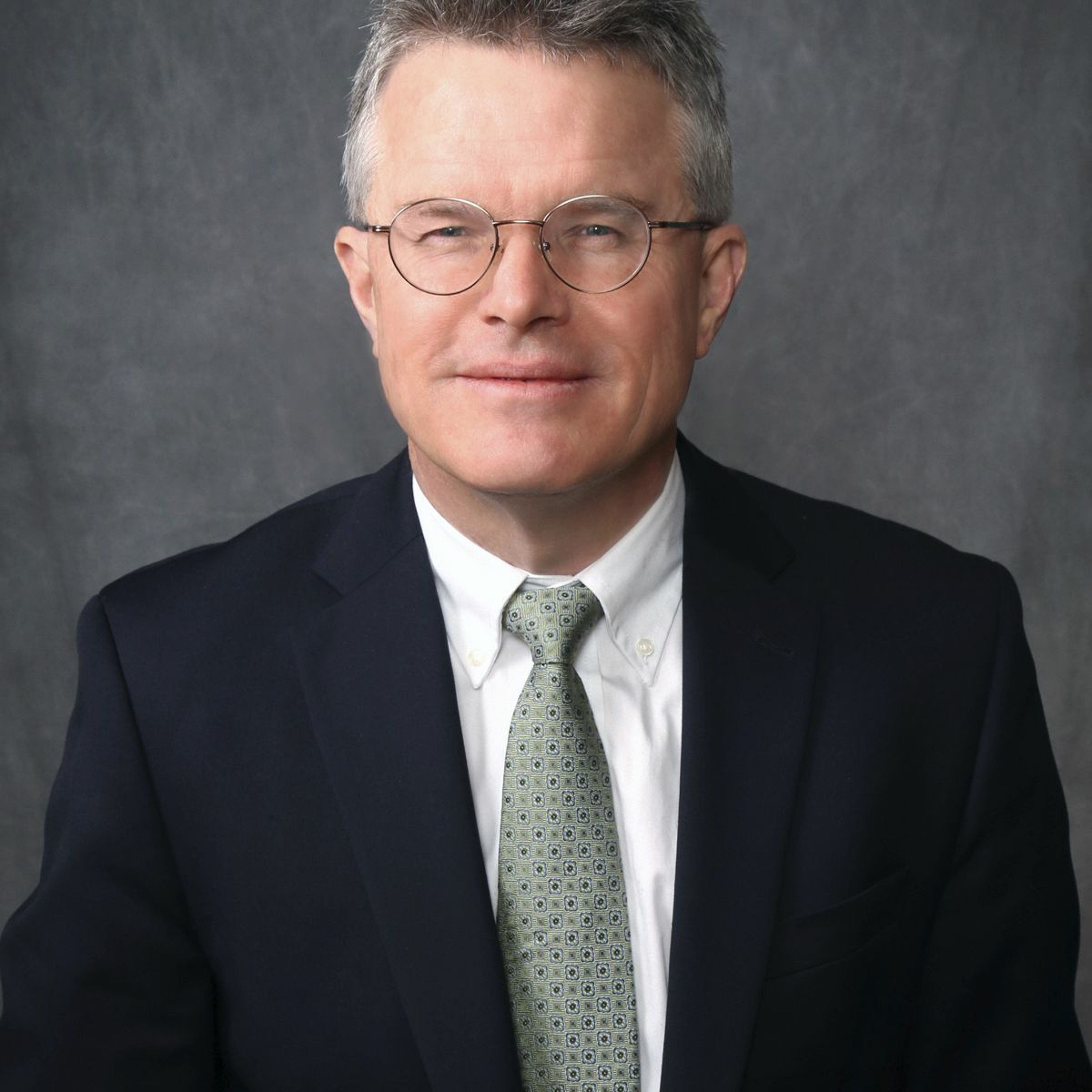
Hi everyone and welcome to CMS On Air, the podcast on migration, refugee and population issues brought to you by CMS, the Center for Migration Studies of New York. I am Rachael Reyes, CMS's Director of Communications. A few days before the 15th anniversary of the September 11 terrorist attacks, CMS is releasing a new in-depth report examining refugee protection and national security. The paper titled, How Robust Refugee Protection Policies Can Strengthen Human and National Security is part of a special collection of CMS's journal on migration and human security on rethinking the global refugee protection system.
In this episode, I talk with the paper's author and our very own executive director, Donald Croen. Thanks Don for joining us on CMS On Air. Let's begin our discussion by telling us about the paper. Yeah, I mean the short answer is that it makes the case that refugee protection advances national security, that refugees and international migrants more broadly can contribute to security by contributing to a state's economic vitality, its military strength, its diplomatic standing, and its civic values, and it argues that refugee protection and security strategies mostly align and reinforce each other.
I'm talking about strategies like conflict prevention, peace building, reconstruction of failed states, reconciliation, safe return programs, and humanitarian and development assistance. And of course, integration itself is both a refugee protection and a national security imperative. So that's the short answer. The long answer does this kind of in great detail by looking at the global refugee crisis and the immense challenges posed by terrorist groups and by individuals that are inspired by terrorist groups.
So have refugees been fairly characterized as potential terrorists? I mean, no, of course they haven't. I mean, persons who have fled for their lives shouldn't be confused or conflated with terrorists, who in many cases are the groups that prompted their flight, numerous military and intelligence and diplomatic officials and researchers and scholars have pointed out refugees are victims, they're not the perpetrators of terrorism. According to one study, the 11 nations had experienced more than 500 terrorism-related deaths, and 2014 produced the highest average numbers of refugees and internally displaced people.
So basically, terrorism causes refugee flows. And it's clear that the interests of refugees who are actually seeking protection elsewhere aren't at odds with citizens of potential refugee hosting states who also want to be safe and secure, but in their home nations. What is the scope of the global terrorist threat? Well, I mean, it's a real threat.
So in 2014, according to the National Consortium for the Study of Terrorism and Responses to Terrorism, there were nearly 14,000 terrorist attacks worldwide and they resulted in about 33,000 deaths. 60% of those attacks took place in Iraq, Pakistan, Afghanistan, India, and Nigeria. And 78% of the fatalities occurred in Iraq, Nigeria, Afghanistan, Pakistan, and Syria. According to the Institute for Economics and Peace, in 2014, the number of Boko Haram killings exceeded even the number by ISIL.
And Boko Haram, as you know, declared allegiance to ISIL in early 2015. The killings in Western states have been lower between 2000 and 2014, about 3,700 terrorist killings, which accounted for about less than 3% of the world's total. And a lot of those, of course, were tied to the 9-11 terrorist attacks. The New American Foundation reports that 45 persons were killed in nine jihadist terrorist attacks in the US between 2002 and 2015.
And of course, 50 more persons were tragically killed in the June 2016 terrorist attacks at the nightclub in Orlando, Florida. Are terrorists attempting to infiltrate targeted states as refugees? Is this a major source of vulnerability? I think terrorists are going to try to infiltrate targeted states in whatever ways are available to them, the easier, the better.
But according to the US Department of State, only about a dozen of the nearly 785,000 refugees that have been admitted since 9-11 have been arrested or removed from the US due to terrorism concerns, which preceded their admission. So some have become radicalized in the United States, but in terms of arrests or removals of people who were terrorists before they came, it's only about a dozen, a very small number. I would say that those kinds of statistics that were definitely not cause for complacency, groups like ISIL and al-Qaeda and other groups are committed to inflicting catastrophic damage on their near and far enemies, including the United States. In Europe, the situation's a bit different because there hasn't been the kind of vetting and screening necessary to detect those terrorists who are opposing as refugees.
An estimated 3 dozen terrorists who entered Europe posing as migrants who have been arrested while planning attacks or died during attacks. That's a significant number and a very low percentage, for example, of arriving refugees in Germany. And that number is around 25 to 30 percent. According to some reports, actually possessed passports or travel documents.
What aggravates this threat is the fact that ISIL has secured hundreds of thousands of false stolen or blank Syrian and Iraqi passports. And German officials have been able to obtain fingerprints in only a small percentage of the cases of arriving refugees and migrants. So the vetting in the screening hasn't been in place to the extent it needs to be in place in terms of refugees or really we're not worried about refugees. We're worried about terrorists posing as refugees potentially coming into Europe.
So is the world experiencing a refugee protection crisis? I mean, I think that the obvious answer to that is yes. It is a refugee protection crisis and the paper uses that language. But we have to be careful about how you use that language to it, uses it in a certain way.
There's certainly been a colossal collective failure in preventing by the international community and by individual states and preventing and rapidly addressing refugee producing conditions like armed conflict, terrorism, breakdowns in the rule of law and others. There's also been an immense crisis and responsibility sharing among states regarding people who have been forcibly displaced. And all that has led them to a human security crisis for refugees. And that's the refugee protection crisis.
Can you tell me more? What are the causes of this crisis? Well, I mean, I think the first is the failure of responsibility sharing. And this is what the UN General Secretary is proposing, which is a compact on responsibility sharing.
And that'll be discussed on September 19th at the summit. The United States too often deny access to protection through policies like border externalization, their own immigration enforcement policies, and onerous procedures in narrow legal interpretations that essentially deny protection to people. The world's response to the communities that host large numbers of refugees and other forcibly displaced people and that bear the burden of these humanitarian crises has been very stingy and really dismal. So that's a failure in responsibility sharing.
I think second, there's really if you look at it, a positive of permanent safe options for refugees, what used to be called durable solutions. The main one would be people being able to safely and voluntarily return home, but only 126,800 refugees were voluntarily repatriated in 2014. That's the smallest number in 30 years. And in 2015, it was 201,400 who were repatriated.
And that's the third lowest number in 20 years. If you look at the fact that there's 65 million forcibly displaced people and 21 million refugees, 127,000 and 200,000 returning per year is not going to reduce the number. So it's not sufficient. There's also only 134,000 refugee cases that were referred for resettlement in 2015 and only 107,000 actually departed to a third country.
90% of those that were resettled were resettled in the US, Canada and Australia. So again, not a sufficiently large, durable solution given the numbers of refugees. And as a result of that, the numbers have grown and people who are refugees have been refugees for longer periods of time. So you have 6.7 million refugees who live in protracted situations.
That means they've been refugees for more than five years and there's no end in sight for them. I think probably the best example of case study is the Syrian crisis. And that's really a failure of responsibility sharing in a significant way. If you look at that, there's an estimated 13.5 million persons in Syria that need humanitarian aid.
6.5 million are internally displaced. And 4.5 million live in besieged or hard to reach regions. Nearly 5 million Syrians have been registered as refugees or are awaiting registration in neighboring states. Turkey hosts 2.7 million Syrian refugees, Lebanon, a million, Jordan, 650,000.
And Iraq, Egypt and smaller numbers in North Africa. In Germany, Germany in 2015 registered 1.1 million first-time asylum seekers. That's more than a third of them came from Syria. And yet, compare that to Amnesty International's report that the Gulf Cooperation Council states have failed to resettle any Syrian refugees at all between the wars on set and late 2015.
The United States, the pace of resettlement of Syrian refugees, has picked up in recent months. But since the beginning of FY 2012, about the onset of the war, the US has admitted about 13,000 Syrian refugees. That's about one-fourth of one percent of all of the Syrian refugees out there. It has also granted political asylum to several hundred Syrians and has granted temporary protected status to about 5,800, and with maybe another 2,500 that are eligible for it under this latest redesignation.
But the numbers are fairly modest. How does refugee protection contribute to national security? I mean, I think you have to have a broad vision of national security. And in fact, it's a typical kind of military definition of national security to say that it involves protection of a people, a territory, and a way of life.
And that definition is from a standard military textbook. And we know that refugee protection and migration policies can positively contribute to the well-being, economically, the military well-being, and the diplomacy of a state. And those are sources of power. As David Martin has put it, in a globalized interconnected world, no nation can prosper or even achieve modest economic success without ready contact with the rest of the world.
And refugee protection can help states prevail in the battle of ideas, in the contest for support and even the affection of the world's population, which is a source of national security. So I think commitment to refugee protection advances security in those ways. And it also allows states to distinguish themselves from geopolitical rivals and to appeal to global public opinion in a very powerful way. What about refugees themselves?
Can they and how do they contribute to national security? Well, refugees themselves have historically made extremely important economic, scientific, diplomatic, cultural and ethical contributions to the United States and to other states. To the point that we don't identify them really as refugees at some point. I mean, if you think about prominent US citizens who were refugees, you're talking about people like Albert Einstein and Rico Fermi, Elie Weizell, Madeline Albright, Andrew Grove, Sergey Brin and many others.
So they contribute immensely to their host states. According to one study, just in terms of them looking at the military angle, non-citizens and the US armed forces and their substantial numbers of them have lower attrition rates than citizens. They have a track record and I'm quoting here, a track record of superior performance. And they bring linguistic and cultural diversity that supports US counter-terror objectives.
So they're contributing very significantly to the kind of military strength that the counter-terror fight as well. And refugees and migrants have been a regular source of intelligence and support to law enforcement on counter-terror issues. What are some of the ways that refugees and terrorism are connected? I would say to that read the paper because there's a long section on the various ways that terrorism and refugees might be connected and some of the claims made about terrorism and refugees in the public debate and kind of in the academic literature as well.
But the clearest connection in the literature is that terrorism creates refugees. So again, you know, according to the Institute for Economics and Peace and to the renowned terrorist expert, Alex Schmidt, state or political terror, internal conflict and international conflict are correlated with high rates of terrorism. And of the terrorism attacks resulting in at least one fatality, and again, this is the Internet Institute for Economics and Peace. This is their numbers.
The terrorist attacks resulting in at least one fatality between 1989 and 2014. 92% occurred where levels of political terror were high. 55% in nations undergoing internal armed conflict and 33% in nations that were involved in an international conflict of some kind. By contrast, terrorist attacks occur at very low rates in states with no political terror or no conflict.
So you know, it's quite clear that terrorism, the clear connection here is that terrorism produces refugees and displaced people. What are the major migration-related terrorist threats? I think that the big one that's being identified now is the return of jihadist to Western Europe. So an estimated 27,000 to 31,000 persons, depending on who you know, you know, various sources from 86 countries who've traveled to Syria and Iraq to join ISIL and other extremist groups.
I think about 5,000 of them from Western Europe and very small, much smaller numbers, about 250 from the US and Australia. But there's a real concern related to their return. Another challenge is the recruitment and radicalization of so-called homegrown terrorists, which are often citizens or lawful permanent residents. Youth are particularly at risk.
And they have had some success in refugee communities and kind of radicalizing young people, particularly I'm thinking about the Somali community in Minnesota. I think another large threat is the extremist political rhetoric and proposals that undermine national unity by scapegoating Muslims. For example, the ban on the admission of Muslims or adopting policies that run afoul of fundamental national values, like proposing, taking up waterboarding again in a very significant way, or killing the families of terrorists or all of those terrible proposals that would violate international law and would make us a very unexceptional country. So I think that that's a big threat too.
What I wanted to, I guess the point I want to make about this is that these aren't primarily these major threats aren't primarily refugee or international migration related at all. Although terrorist groups have, as I've said, had some success in radicalizing youth in certain refugee communities, and will continue to try to enter targeted states posing as refugees. So what about the United States? Is the U.S.
refugee resettlement program secure? I think you have to go back to 9-11 in the aftermath of 9-11. And one of the things that came out of that was the creation of the Department of Homeland Security and also the notion which the Department of Homeland Security has championed of multi-layered, risk-based approach to security in which for migrants that are coming into the country, and particularly for refugees, there's a lot of screening and a high degree of coordination and redundancy in the vetting and the screening so that if one step doesn't work in detecting somebody that's a problem, another step will. And the refugee resettlement program is the best example of layered screening in the most secure U.S.
admissions program. So you have former DHS secretaries in the Palatano and Chirdoff arguing that homeland security and refugee protection aren't mutually exclusive goals, provided that the current vetting and screening process remains robust and remains undiluted. I think it's not just screening and vetting either, and that's a process that takes a couple of years at this point and involves multiple federal agencies, but it's the priorities of admission. So the U.S.
processing priorities and its commitment to resettle the most vulnerable definitely contribute to the program's security. In addition, the cases that are referred by the United Nations High Commissioner for refugees to resettlement are highly vulnerable, low-risk persons, including single women with children, torture survivors, and persons with special medical needs. So you can't say that it's 100% secure, no program is 100% secure, but it's an extremely secure and securitized program. So the paper's policy recommendations fall into several categories.
But to start, they include strategies that further security and protection. Can you identify a few? Yeah, I mean, I think that first states should commit far greater political and diplomatic capital to prevent and to resolve the world's multiple refugees producing crises without prevention and without early intervention on crises. The population of refugees is unfortunately going to continue to grow.
Second, and this is related, they need to prioritize safe and voluntary return, which hasn't been prioritized, and which is a preferred option for most refugees. Most people want to go home. And that option, voluntary and safe repatriation, has to be brought to scale as a durable solution. I think the UN General Secretary's idea of a global compact on refugee protection, which would be buttressed by concrete state commitments, deserves support as well from both the refugee protection and the national security perspective.
Developed states clearly should offer far more opportunities for orderly and expanded access to their own territories, expanding humanitarian visas, medical channels, student visas, labor visas, work-related visas, and then private resettlement are all important. And all of them should be extended to refugees. And I think the develop state should obviously be providing far greater support to refugee hosting communities and for things like refugee education and job creation, again, both for humanitarian and for security reasons. And then in terms of the radicalization, it's clear that refugee integration, particularly integration of youth, is very, very important.
So youth education, youth employment, creating socially inclusive policies are antidotes to radicalization and extremely important. And of course, there's responsibility on refugees and asylees as well, and extremely important responsibility that should almost go without saying, but let's say it. They should respect the core rights, respecting values and laws of the receiving states. That's crucially important.
How can we ensure that terrorist posing as refugees cannot enter states that they're targeting? I mean, I go back to, again, to the aftermath of 9-11. We're still in that era. In the 9-11 attacks, they were thought to constitute a failure of intelligence gathering and information sharing.
So in this post-9-11 era, the United States has sought to secure refugee and migrant flows in a number of ways. One, information and intelligence collection was regarded as extremely important. There wasn't enough intelligence prior to 9-11, and there's been a huge investment in that. So that's important.
Second, expanded and accurate terrorist and criminal databases that are accessible to people making admissions decisions. Third, taking the information that you have and sharing it within states and between states and between government agencies as well, which didn't occur pre-9-11. Being able to identify people, so identity assurance, the US has done that through focusing on the breeder documents that create identity documents like birth certificates and also creation of biometrically enhanced identity documents. The layered screening that I was talking about before, and part of that, of course, is doing interviews to assess eligibility for admission.
And when you do that, you can assess people's credibility as well. Enhanced background checks on migrants who meet terrorist profiles. And then I think strategies, all of these strategies have to be designed not to scapegoat people, but to actually advance national unity, which is extremely important. And terrorist tactics evolve, so there has to be a continuous assessment of terrorist threats, tactics, and methods, and evolving responses to them.
And then I think finally, applying risk management criteria to assess the effectiveness and the value of these tactics. Are these good investments, these tactics? Are they stopping terrorism? Are they catching terrorists?
That's extremely important as well. So those are the pieces that need to be in place to prevent the infiltration of terrorists that are posing as refugees or normal and international migrants. I should say too, I think that, and the paper makes the point that the borders, particularly the US-Mexico border, are they're an important point of exposure and potential vulnerability for terrorists, but borders can't be the sole or main locus for identifying terrorists or preventing their entry. And I think in the US, the level of investment in border and immigration enforcement policies should also be subjected to risk management principles.
Not a single terrorist has been caught trying to cross the US-Mexico border, and yet 87% of the border patrol agents are there. So if the concern is a national security concern, we're investing huge amounts of money in that border for not a lot of return. And then I think enforcement agencies, this is another thing that's happened, is that enforcement agencies have now been given the responsibility in a lot of cases for screening refugees and migrants, both here in the United States and elsewhere, for protection claims. And they don't do that happily, and they don't do that well, and that responsibility needs to be taken out of their hands.
So if you're going to do enforcement, you have to do refugee protection with it, and we haven't – we've certainly lagged in refugee protection since 9-11. What steps does the paper propose that the US Congress take to strengthen the US refugee protection system and national security? Yeah. I mean, the paper lifts up a lot of proposals that have been out there for a period of time, but let me just go through a few.
I mean, it was the 9-11 Commission that actually proposed that there needed to be a single principal point of oversight and review for Homeland Security. And not too long ago, the National Security Preparedness Group, which is composed of a number of people that were on that 9-11 Commission, found that DHS answered to more than 100 committees, congressional committees and subcommittees. Just looking at 2009-2010 alone, that it provided – that it had to provide more than 3,900 briefings and to testify 285 times between these various committees. That becomes a security risk at some point.
I mean, you know, because you're getting direction from all of these committees, your leadership is pulled in a lot of different directions. And James Ziegler, who was the former INS commissioner, he's made the point – and I'm quoting here – that DHS's responsibilities are as important as those of the US intelligence agencies yet Congress refuses to manage oversight of DHS with the same seriousness as it does with the intelligence agencies. So that needs to be fixed, the congressional oversight of DHS. Second, Congress should also ensure that DHS creates a unified command structure to respond to terrorist attacks and other catastrophic events that implicate and cross jurisdictions and agencies.
That's another recommendation of the National Security Preparedness Group. And it's a good recommendation, and it should be taken up. Third, and this is a recommendation from the 1980 Refugee Act that was never – in fact, it was a mandate actually written into the law that's never happened. And that is that Congress should create a presidentially appointed US coordinator for Refugee Affairs, whose responsibility would be to develop policy, coordinate admission, and resettlement programs, and serve as a liaison to foreign governments, to the Congress, to the relevant federal agencies, to state and local governments – I mean, basically to the world on the US refugee program.
And I've got to say, given the high degree of interest and the misinformation related to the refugee program at this point, the time is more than ripe to create this kind of position. And fourth, Congress really needs the past legislation, get its act together and past legislation to prevent suspected terrorists from purchasing firearms and explosives. Right now, people that are on the FBI terrorist watchlists can purchase firearms and explosives, and the people that sell them have to make a record of that, but they don't have to actually report that to the FBI. Now, we know that there's a lot of people on those watchlists that aren't terrorists.
So this kind of a thing has to be done in conjunction with the ability of people who are incorrectly on that watchlist to challenge that and to clear their names in an expedited way. So those two pieces are extremely important. You really can't have a situation where the US is credible in denying admission to refugees, desperate people who have been well vetted on security-related grounds based on security, because they're terrorists somehow, or that's the accusation. But at the same time, allow potential terrorists who are on watchlists to be able to purchase firearms and explosives.
I mean, that's just, you know, manifestly crazy. But Nora, and I want to make this point, nor should people's right to purchase firearms be denied because they've been mistakenly or incorrectly placed on a terrorist watchlist. This is the kind of thing that there needs to be a bipartisan response and there needs to be a bipartisan bill that passes very quickly. And unfortunately, this hasn't happened, you know, in the aftermath of the last few terrorist attacks and it needs to happen.
And then I think fifth, Congress needs to depoliticize its oversight of the US Refugee Protection Program. The response to a security breach in a program like this, which is a really, really a hardened, securitized program, it shouldn't be automatically to call for a bar on the admission of desperate people. Instead, that should trigger an exhaustive review of whether the officials rigorously followed all the steps in the vetting and screening process. And if not, then, you know, that needs to be remedied.
And if they did, and there's previously unrecognized vulnerabilities have been revealed by like a breach, that too needs to be immediately remedied. But the thought that every time there's some kind of a breach, you know, we have to re-look at the security of the refugee program and start denying admission to people, that's not a good solution. One last question. Is it possible to make refugee protection a popular cause?
Yeah, I mean, I think that's a really important question because we all know that extremist political movements have been on the ascent in Europe and also in the United States. And nobody disputes that I think national defense and public safety represent core responsibilities of states, of sovereign states. Yet it's also clear that states exist to protect rights, to safeguard the rights of their citizens at home and their citizens abroad, and of non-citizens who are passing through them, and persons fleeing persecution who appear at their borders, and refugees and immigrants who settle in their territories. It's even have responsibilities and limited circumstances, for example, like genocide under international law to imperiled persons who are beyond their borders.
So sovereignty is a broad concept. And I think that the debate over how to reconcile these broad responsibilities of states, it can't be a debate between refugee protection and national security anymore. You look and you find a lot of generosity towards refugees and hosting communities throughout the world in Germany now, in the states that neighbor Syria, throughout Africa. And even in US communities that are normally receiving the many Central American children who are driven by violence and terror, and you find broad support for refugees in various surveys, including a survey that Amnesty International just did, and the private financial contributions that flow to refugee crises.
So the need is not to extinguish populist politics, but it's to educate the public on the interconnectedness of refugee protection and security, and it's to make protection of popular clause, which is possible to do unconvinced. Thank you so much, Don, for joining and for sharing your research and your work on CMS on air. Thank you, Rachel. To download Don's paper, how robust refugee protection policies can strengthen human and national security and get more information on CMS projects, publications, and events, visit us at CMSNY.org.
CMS Onair's theme music is provided by Danny Duddristine and the Musiccase.