This podcast is an audio recording of a live event. It may reference visual material that cannot be represented in this recording. It may also contain strong language and adult themes. The opinions expressed in this podcast do not necessarily reflect those of ACMI. Firstly, I'd like to give a brief introduction to our hosts for the day and also to our guests. So firstly, we have Jason O'Callaghan. Jason is the executive producer of New Game Plus and is a long time gaming media personality. He has a passion for games extending from his youth and is a self-described true romantic about video games.
We also have Dr Helen Stuckey. Helen Stuckey is currently... Thank you. Helen Stuckey is currently a post-doctoral researcher at Flinders University working on Australia's early game history. A video games curator and historian, she previously worked right here at the Australian Centre for the Moving Image as the inaugural games curator and was the director of the RMIT Games Program in the School of Media and Communications. She's recently completed her PhD addressing what museums like this one can learn from retro gaming communities on the curation of game history. I'd like to say a big welcome to Marty Stratton. Good evening, Marty.
How are you? Thank you. Marty's been a passionate and driven game developer for more than 20 years. In his current role as executive producer and director at id Software, Marty's responsible for guiding the development and the direction of the latest Doom game. Marty began his games career in 95 as a QA tester at Activision, and by 97 was the publisher's producer, working with id on Quake 2, Quake 3 Arena, and also Doom 3 as well. Finally, a big warm welcome to Simon Altie.
Simon Elsie is the Managing Director of Centimax Australia, also known as Bethesda. He's been in the video game industry for over 25 years, a huge career. Starting with Ocean Software back in 91, Simon has developed his career within several global gaming and software companies, including Rising Star Games, Atari Infogrames. Simon played a pivotal role in bringing over hundreds of games to the market, from V-Rally and Worms in the 90s, to Elder Scrolls Online, Wolfenstein New Order, Fallout 4, and now Doom in 2016. Before we actually get on to hearing from the stars of the day, let's put ourselves in a little bit of context and let's fight like hell and watch a little bit of Doom. When you play Doom, it just, it feels different.
We've taken the essence of Doom, the DNA of Doom, and said, how does this translate for a modern shooter audience? It's exciting. It creates that feel that is unique to us, and that's why we do this, is to create experiences that are unique and are something that is distinctly ours. It starts with combat, the fluidity of movement, the speed of movement, using your guns in really effective ways and feeling connected to the weapons, the responsiveness of the weapons. Doom is about guns, first and foremost, and fighting demons with guns.
I think the designers did a great job. They really tried to make each weapon distinct. Each one kind of has its own style to it. For example, the shotgun is kind of an up-close and personal weapon, but you can modify it so it has an alternate fire that works from a distance. You're inspired to keep playing because you want to fill up that full arsenal. And you're also fighting against the full suite of characters that we have in the game. And each of those characters are kind of like a chess piece. So once the chessboard is full in later levels and your arsenal is full, then you can kind of pick and choose and tailor your experience to your certain play style with just the weapons alone. The way that you play is one of the most fun parts about Doom.
Your Argent energy has just taken into your system. This seems to agree with you. We've kind of had this whole upgrade system that allows you to play in a lot of different ways and use, you know, your own strategy and how you approach the different arenas and, you know, even tweak that as you go through the game. Then there's the progression items like the research projects that we have and the runes. Each of those basically allow you to customize your character and the way the game plays and the way it feels. I like to tailor my experience to speed. Make it so I can glory kill faster, I can mantle faster, I can switch mods faster, I can do all these things just a little bit faster. And once you stack these things on top of each other, the game just plays even faster than it already does, which, out the box, it's pretty fast. So, but that's my personal play style.
you A lot of games have kind of execution moves. Because the game is so fast-paced, it was a nice way to get out of what kind of happens with the clunkiness of some melee systems and make melee within the Doom franchise something that really is very good. It's contextual. Anywhere that you look, you actually do a different glory kill on a character. So if I approach a character from behind, I'll do a certain type of glory kill. It all feels very fluid. I've played the game for a crazy amount of time, and I still love it. It's not a casual game where you can kind of be doing something else while you play, especially in the arenas. They're very challenging in the best possible way.
We fill these spaces and these combat encounters with such a nice diversity of enemies that are so distinct in each of their behaviors. It's kind of like a mental chess game that's happening at a million miles an hour. You can turn a corner. There's a Vancouver. You're probably going to want to switch to a chain gun or a rocket launcher or a gauss cannon, whatever is your favorite heavy type weapon. All these things are kind of happening really fast, and it makes for an incredibly engaging experience. In Doom, you've got to sit up in your chair a little bit and shake out your hands. You get beat a couple times, and you're like, okay, this time, I got it.
Thank you. And now I'd like to hand over to our first host, Jason O'Callaghan and Marty Stratton. Hey Marty, how are you going? Doing great, thank you. Thanks for having me. Thank you for joining us. I guess the question for me is, Doom really is that retro-inspired shooter, you know, like lots of straight shooting, you know, no traditional reloads, that kind of thing. How hard was it balancing bringing those elements to the game, but also engaging the modern audience as well?
It was a challenge throughout development, honestly. And, you know, I think some of the things that we tried to do, you know, they get called a lot of things. They get called retro quite a bit. And I've always tended to refer to them even in situations like this, but also even internally is that there's just a timeless quality to those things. I mean, maybe they kind of took shape and took hold back in the day. But they're just so much. They're just fun. You know, they're just fun things to do. So when we first started on the game, we really did take a look at.
what the DNA of Doom was. We tended to refer to it as the DNA of Doom. And, you know, always thinking about whether those would work in a modern, you know, in a game for 2016. And we all play games. We know what they feel like. And I do think we hit this really cool kind of timing with the game because you do kind of see this ground swell with people. Like, I'm a little tired of what, you know, the kind of current crop of shooters does. I'm a little tired of...
scripted cinematic scenes and scripted gameplay and taking cover and and we kind of it was almost empowering as we as we saw this over the course of three years of development you know we kind of set these things in stone early on like no cover no reloads no regenerating health movement is a defense all these these core components of doom and uh and as we developed it just it kind of felt like we were on the right track as people were talking about kind of what they were tired about with other shooters and it just it empowered us throughout development to like hey we could be onto something here and uh and as we've launched It's been really fun to see the things that we were talking about internally really take shape as people have experienced the game and we've watched people play the game and they talk about it. Well, I guess the other thing that Doom shares in common with its predecessor is that it was preceded by Wolfenstein. You released Wolfenstein two years ago for the modern consoles as well. Did you learn any lessons bringing that to the fore that you incorporate into Doom or was it just a holistic process?
I mean, it's always a holistic process. Machine Games was the developer of Wolfenstein. They're a sister studio of ours, also owned by ZeniMax Bethesda out of Sweden. I mean, I say sister studios, and we really are sister studios. We share technology. We kind of drive the technology.
They just do a ton of work on it as well. We go back and forth. And they definitely develop different types of games. You know, they're driven largely by story. Great gameplay as well. Jens, their creative director, he's just a masterful storyteller and creative in general. And definitely took a lot of lessons from just how they approached Wolfenstein.
You know, they have a tremendous sense of style and personality that they injected into Wolfenstein and kind of took a lot of what we tried to do was take what was cool about it and what was cool about the characterization of it and bring that forward. And they didn't really, they committed to what they were doing. And I think that was something else that was somewhat empowering to see people react so well to Wolfenstein and know that, you know, when you take an id brand, they have this quality to them that is a little outlandish and bombastic and comic book. And to see the MachineGames team really embrace that and commit to it and not let go of it and combine that with that sense of style, I think those were things that, again, gave us a really good sense of confidence in doing that with Doom as well. So, yeah, lots of lessons there. They're a super talented team. And also, they always referred to the game as a love letter. I mean, they would say a love letter to it or a love letter to Wolfenstein fans. And when you think about it in those terms, that's also kind of how we thought about it and how you kind of have to take it.
And it's almost this care and respect, but also, you know, a sense of progress. I mean, you have to make it modern. So you kind of, you do walk this tightrope between the two, but I thought they did it great. And, you know, and I think we did take a lot of good lessons from them just thematically. Well, I guess the other side as well is it is really well known for their technical prowess. And Doom, especially on the consoles, is just like a wonder to the whole. Like you guys have done a really great job of keeping it steady framed, looking great, moving fast. Was it really hard making a game that worked so well both on consoles and PC and still like deliver a result you guys were happy with? Yeah, I'll say it's hard. And our programmers were the one that did it. So they probably would say it was even harder. Yeah, you know, it's one of those things that working at it. I mean, my whole career, our technology team has been...
top top of the industry I mean it's it's uh you almost uh I I've worked at id or on id games almost my entire career so it's probably something that I've I've almost come to take uh take for granted a little bit um like well every team has a has a group of programmers that just make the game run at 60 frames a second or higher and and it looks amazing you know I know how hard it is and the work they put into it was ridiculous. I think part of it is we are primarily a PC development house, as much as we do know that the consoles are a huge audience. We really think from a PC mindset, from where we want to go with performance and graphics options and graphics quality. We have some hardcore PC master racers, as they're called. And so I think when you set the bar that high, really becomes a challenge for the programmers more in optimization.
and um and and you know you end up as you as you go through development as we went through development there's a lot of times where the game just doesn't even run on the consoles um because you're you know you're kind of pushing the boundaries with how you're creating art and how you're creating levels and the amount of ai you're throwing on the screen that you know it just it doesn't even work on a console um and then as you get through it's like okay you know it's really gotta uh it's not the best way to develop again i'm not saying you necessarily should do that but that tends to be how we do it um and then uh you know then it is a race to optimize um so uh uh and they just did they did a tremendous job and i'm really excited about actually a lot of the things we have coming in the future. The way they architect the engine for actually the consoles, particularly the PlayStation, sets it up really well to be natively capable on the new Vulkan API for PCs, which is really going to expand the audience. When that comes out and those cards come out, we have an upcoming release that'll be Vulkan-supported, and it's really going to make the game run really well.
on older generation cards and at 200 plus frames a second on the highest end stuff. And then again, you know, it runs really just flutter smooth on the consoles on both sides. So I couldn't be proud of our tech team and they did put in a ton of effort together. Well, I guess one last one. We heard obviously your intro into gaming was what you would consider the traditional QA into development, into project management and stuff like that. What advice would you give to anyone who, you know, in modern gaming where that's perhaps not the kind of the standard way into video game development?
Yeah, I don't know if there is a standard way into video game development. I run into people constantly that have all different backgrounds, all different degrees. I think the most common thing is a passion for it and a huge sense of a thrill by doing it, by being part of it. You've got to have that because it's so much work. It's so many hours. And if you don't love it, you're just not going to make it through it. But I think if you want to be on...
Some high-level things, I would say, no matter how you want to be. I don't have this, but if I could go back to have some level of engineering or computer science, not even necessarily a degree, but taking some of those classes, it really doesn't matter whether you're a producer or an artist or an engineer. If you're involved in any aspect of it, I think I tend to see people who are more technical just have more success. It's kind of a common language that's spoken throughout the team. I would say if you want to be an artist.
do your art constantly um the the biggest thing we look for um is is just great work um and a real consistency to work um more and more i think the the the kind of classroom side of things is very very important um even if you're an artist i mean you can be super talented but having having rules to fall back on and an understanding of design principles is hugely important i give huge credit to our creative director hugo martin who saw the video there He actually, we hired him as a lead concept artist, made him the art director really, really quick. And over the course of the project, became creative director as well. I mean, the two of us just kind of like just go back and forth and it's just such a great collaboration. But he has a very formal design background. He actually has a training in designing cars. And the way that he can talk to our artists because of his training and because of his education is remarkable. He teaches them rather than tells them how to move their hand or how to draw or just do it like me. He teaches them principles. And then when he gives feedback later, it's all based on those principles. So it's not kind of this random haphazard.
feedback. It's really thoughtful and stuff that he said in the past. And then, you know, I still think going through QA is an amazing way to find your way into the industry and even kind of discover where you want to fit in. If I ran my own company, I would actually probably have most people spend at least a month in QA because I just think it's such a valuable part of the process and it's such a window into what it takes to kind of take a game from beginning to end. You learn how to see things differently. We always talk about putting on our developer goggles. You've got to be able to see features and functionality in what it's going to be as opposed to what it is. So there's just so many valuable things that you can get from QA. So a little bit of a long-winded answer, sorry, but I think there's lots of great ways to do it. Thanks, buddy. Thanks, buddy. That's some fantastic advice for any young developers here in the audience. Helen, I'd like to pass over to you now. Oh, I know. Helen here. Because I'm on her story and I have to ask, if you could... I can't hear. Oh, am I on? I'm sorry. I can't hear you. No.
Hang on, I'm getting the hand mic. Okay, perfect. I've got the hand mic now. Is that better? Awesome, thank you. Thanks. I was just saying that I'm a historian, so I have to ask you about your early experiences with Doom. I know you were right there in the middle of QuakeNet in the mid-90s, so part of the scene. So maybe you could share with us a bit about your early experiences with Doom and maybe with Quake even if you're in a clan.
Yeah, you know, I wasn't in a clan, but my earliest experiences with Doom were right after college, for me, actually. I kind of started, at the end of college, I wasn't playing a ton of games. I was getting a music degree, so I was working my butt off doing that. And then I moved to Los Angeles. Some friends had Doom, so I started playing Doom, and it just happened that I got an opportunity to get my job at Activision there. And pretty quickly, you know, was wrapped up in the nightly Doom Deathmatch games and really starting to just...
see that it was kind of the first time that I really got an experience that you can do this for a living. I was finding my way a little bit as far as like exactly what I wanted to do, but kind of got a sense of what you could do in video games. So that was kind of the first touch points. And then very quickly, I started working with it. I started working with it when I was at Activision in 97 on Quake 2. And then I think I probably...
really started to fall in love with multiplayer, more around the Quake 2 timeframe. I really liked some mods that were... I played the heck out of three-wave CTF on Quake 2. We had a kind of a daily play that usually got a little too long and too much a part of the day. So we ended up getting kind of restricted on that. And then when I came to id...
I really started, one of my early jobs when I started it was to work with a volunteer group that puts on our QuakeCon event. And that was kind of another whole expansion of understanding and experience, much more so with the community than I had been in the past. I mean, that was a group of just people who love to come together and put together this event, but also competitive gamers and mod makers, and really got a taste for kind of the diversity of the community and just how amazing that group is. And then, of course, again, wasn't in a clan, but we at id got really, really good at Quake 3. And up until Doom, Quake 3 was my favorite game. And we had a contest internally that we called MOTU, which stood for Master of the Universe, of course, based on a two versus two Quake 3 game. And we would play it every night and scream and yell at each other. And we had our two-man teams, and probably for a year and a half.
Todd Hollinshead and I, who was the previous CEO of it, we'd take on different people and we'd play it one-on-one. And probably the pinnacle of my feeling like a professional gamer was we got so good at this one map playing 2v2 CTF that we challenged people at QuakeCon. And we worked with NVIDIA, I think, on this one. We would challenge people at QuakeCon to try and beat us. So anybody could put together a 2v2 team and beat us. But it had to be on this map, and we had to be on the same team, and we had all these conditions that we put on it. And if they beat us, they got a video card.
Nobody could even score a capture on us. And it got to the point where they had to start giving people video cards if they just scored a capture against us. And there were pro gamers coming up and playing against us, but we had just gotten so good at that one experience that we were unstoppable. So that was my foray into professional gaming, which was a blast. Sounds very heroic. I like your modesty there. Just what you were saying that your background in music is really interesting because obviously in horror.
Sound is just so important. And certainly in this new version of Doom where you're sort of forsaking the narrative components that sort of crept into the previous one, that atmosphere is going to be even more essential for giving the player the full experience. So can you tell us a bit about the sound design in the newest Doom? Yeah, sure. Absolutely. Sound is hugely important in doing this, stating the obvious, of course, but as much as any other game. I just got a message with my internet connection. So yeah, we have a great audio team. It's been led by a gentleman named Chris Height. And really, the challenge for them, I think, was balancing it all. In an action game, particularly an action game like ours, and we honestly would get in a lot of discussions on this kind of stuff.
we were constantly like, I want to hear this more, I want to hear this more, I want to hear this more, I want to hear this more. And he was like, you can't hear everything at the same time. You know, it's like, you know, a movie, you watch a car chase and, you know, they pick the moment where the car screeches and they bring everything else down. And then when it starts down the straightaway and you don't need to hear the car, they bring up the music. We kind of don't have the same control because the player's in control. So in our type of game, it's just, it's a real tribute to those guys that they were able to get the mix such that, you know, at the times where you're kind of, you're out on the Martian landscape or you're creeping through.
You rarely creep in our game, but you're moving your way through a UAC industrial facility. You really hear the sounds of the environment and it centers you in the place. So there's lava flowing out of a pipe or there's steam coming out. Or when you're coming up to one of our gore nests, these kind of gory looking signals that... bring in demons when you attack them. You've got to hear that. You've got to have a sense of a demonic presence. And it's something that's very signature from Doom is hearing enemies before you encounter them. So doing that, making sure that you got a sense of what was around the corner. Being very distinctive in the sounds that demons make is really important. And again, everything we did with the game from a retro or bringing the old forward was never trying to just
rip it off just basically say well it sounds like this so we're gonna make it sound like sound like that for 2016 it was kind of reimagining what that would be for for today um and again so i thought they you know they went back to all of the demons figured out kind of what were the characteristic qualities of them uh and then tried to do a modern version um and then of course music is is huge and and um when you get into our combat scenarios uh we really wanted to take um kind of what is considered you know doom has a reputation of being metal um and uh and so But again, we didn't want to just do metal. To us, that felt like if we went back and did, as much as there's a lot of inspiration from kind of 90s metal, we often reference, you know, like The Revenant looks like he's right off the cover of an Iron Maiden album cover. So as much as that's a reference for us, we didn't just want to basically do 90s metal. That just felt too retro. So we worked with a composer, Mick Gordon, who's done a lot of really great stuff he actually worked on. It was another influence from Wolfenstein. They used him to do the music for that. And he had a great sense of kind of modernizing metal, I guess, is probably a good way to say it.
bringing a lot of noise and chaos and kind of industrial flair to the music. And then when you get into those moments of combat, we kind of bring a lot of the other sounds down and focus on, you got to hear your guns, you got to hear the demons, and you got to hear the music. So it's kind of a constant juggling act when it comes to that stuff. Much more complicated, I think, like mixing a movie. Games is a lot trickier. Are there any sound Easter eggs we should be looking out for? You can tell us, we won't tell anyone. Sound Easter eggs, that's it. There probably are.
I have to think about that. I can't think of anything off the top of my head. What are the pleasures of making a sequel? The pleasures of making a sequel. When you work at a place like id, and I've worked here a long time. I've worked here 16 years. So I've been shoulder to shoulder with founders of the company and had the privilege of working on pretty much every game. I've worked on every game in some fashion since the Quake 1 mission packs back at Activision. So I have a tremendous respect for the company. So to have the opportunity to lead a team on Doom, and particularly this team that's so talented, it's the opportunity of a lifetime, the opportunity of a career. I can't imagine anything better.
You walk past the trophy case. We have a display case in the office up in the lobby. And you see the old relics of the past, the toy shotgun that we have up there that was scanned to make the original shotgun. And there's just so many little bits of history here that there were moments like. working on it. You get so close to it, but there's moments where you're working on it and you kind of catch something like that, where you're standing by the display case and you're like, oh my God, I'm working on the modern version of that. Or you hear some people talk about it. That's the thing that always strikes me the most and made me, like you just, you feel such a commitment. And like, again, it's ridiculous hours that we work and such passion that we put into it. And for something like Doom, you just, you have to do that because so many people love it and so many people have individual experiences with.
the game uh with the it's it's a part of their dna as a gamer and um and you just you feel like you owe them something you you owe them um every single possible thing you can do to make it to make it great and to make it feel familiar um and you owe new gamers uh the opportunity to to fall in love with with a game that they maybe not then you aren't familiar with so again it's kind of a juggling act as you go through that But I would say just a huge sense of pride and reverence, but also a sense of progression. We have to move this forward and make it relevant, keep it relevant, and overall make it fun. It's a game. So that's job one. Well, I think there's some people who did actually want to ask you some questions. So maybe that's a good opportunity to hand over to the audience. I'll give the hand mic back to Mario. Thanks so much.
Thank you, Helen. Thank you. Very informative, Marty. Okay, so the way we'd like to do the Q&A is if you have a question for Marty, if you please raise your hand and I'll be able to point you out. We'll ask you just to make your way up to the aisle to turn negative ease and we have a microphone on each side. So, yep, would you like to go that way? That would be fantastic. Thank you. And if you could please start just by introducing your name and then ask your question for Marty.
Hi, Marty. Stephen Farrelly from OzGamers. I've been in the industry as long as you have. And just wanted to ask a question about... You talked a little bit before about the influence and the love that you saw in the Wolfenstein recreation from machine games. Was there ever a moment in the design kind of principle period with Doom where you wanted to take Doom into a more story-driven area? It's always been a game about vague concepts, large concepts, but very vague, so left up to the player. Was there ever a moment that you guys thought, maybe we could explore this, given how story-centric the Wolfenstein recreation was?
Yeah, actually. So we actually, at the beginning of 2013, when we started on this project, it was a reboot from kind of a version of Doom that had been being worked on. And that was far more story-centric. That was much closer to kind of the way Wolfenstein. played um and uh and and we got to a point with that game where we just decided that wasn't what we wanted doom to be um so we rebooted it's always a tough decision and and uh and just kind of move on learn from learn from that that work um so we we kind of we had been down a pretty heavy story route and even as we as we started to work on this there was there was times where you know kind of story continued to to creep in um where where it took i guess i would say a heavier uh kind of dominating position than than we wanted so we would always pull back from that because it was kind of one of our initial rules like Combat first, combat first, combat first, combat first. And then we really started, I would say, about halfway through, we really started to kind of gel around what our current story is and found our footing on that. And it really centered around more about providing lore. That was one of the goals of this game. We did want to kind of create, like you said, Doom's kind of never been much more than a page of story. And Doom 3 had a bit more. But there was...
just kind of ripe opportunity. And when I talk about kind of the character that machine games brought to Wolfenstein, aspects of things like the UAC. We didn't want to just have the UAC be a generic sci-fi corporation that you see in any movie or any other game. It's like, what about Doom can we inject into the UAC and make it great? So just taking it as an example, they basically, they work on demons. They weaponize demons. That's insane and almost...
comical. So let's embrace it and let's make the most of it and make them really weird. We kind of made them this weird combination of religion and science and the occult. And people have reacted well to that. You know, giving a little bit more lore behind the Doom Marine. We do all these things in ways that kind of keep it out of the way of players who just want to kind of
blow stuff up and kill demons. But if you want to dig and you want to explore, we leave a lot of opportunities for players to engage. So it kind of took a backseat. But once we really kind of found our footing and found the devices that we wanted to use, we really got into it. And I think we delivered more story in this Doom than really any Doom in the past. Thanks, Mati. Next question.
Hi, I'm Rick, long time fan of id Software. So I beat the game the other day, fantastic work by the way, and I noticed in the credits that a lot of sister studios like Machine Games who you mentioned and Tango Gameworks were listed in the credits as helping out and they're all scattered around the world, Machine Games is in Sweden, Tango is in Japan, and I'm wondering like how hard was it to keep all these distant groups on the same page with time zones and that sort of thing in the way? That's a good question. So it would depend on the studio as far as how much work they did and how complex that work is. So with somebody like Tango, they did a few models for us. So it's a pretty straightforward type of exchange.
send over a concept and basically say, can you do this? And if they had an idle artist, they would do it and send it back over and we'd give some feedback. So stuff like that isn't too complicated. Some of the others where we're working with them very closely, machine games, it's a lot of video conferences. It's a lot of communicating over chat, a lot of emails.
I mean, it's a little bit of a brute force method. I can't say that we have some glamorous system that does it. Just a lot of talking and a lot of back and forth on things. Thanks, Marty. I think I will take a question from the other side now.
Hi, my name is Matthew. I'm a sound engineer and a musician. And I just wanted to ask a question about sound foley and how it relates to some current tech that's coming out. I know that in a lot of movies, when they do sound foley, they'll specifically try to make everything have as least reverb as possible so that the sound cuts through. And with the GTX 1080 that's getting released, they've introduced some technology for ray traced. At the moment, it's kind of echoes, but like it'll obviously be used for reverberation. I was wondering from a producing point of view, if...
that's the sort of technology you would try to incorporate into games, or whether the desire to have things cut through and be very controlled would win over. So I guess I'm asking, is that sort of technology that makes sound location much more realistic actually a good idea in games, or should it still be as managed as it is currently with the way the sound effects are put into the game? Man, that's a great question for our audio team. I will try to do my best. I think, I know part of, and I'm not at all that familiar with the feature you're speaking about on the GTX 1080, but I do know from a, just from that Foley perspective, when we do capture sounds and want them to cut through and be pure, there is, at least at the Foley perspective, we always want that sound to be very pure so that all of the processing, anything we do on it later.
For us, it's in our WI's kind of audio engine. We license WI's. That all happens kind of after the fact. And you always have the purest sound that can cut through. And definitely, our audio guys, as they consider sound, it's always like, at what frequency does that sound exist? Because you're ending up with things competing and canceling each other out. So at least with our guns, they made it very specific that they kind of existed in this one frequency range.
a lot of the sound existed in the one frequency range so that you would get that cutting through and that punctuation. And then, you know, demon sounds or the demon spawn in sound was different. And then, you know, when the music's playing, you make sure that all those things aren't competing with each other. So that probably didn't answer your question, but that's hopefully partially. Is that the reason why the music seemed to have no mid-range in it? Like it seemed very low and high, like a very sort of metal sound system, sort of smile curve? Was that deliberate?
Yeah, I mean, I would say so. Again, Chris and Mick could tell you specifics about that, but that stuff is generally deliberate where you're trying to get, you know, like our guns and our enemies would generally kind of fill that mid-range and then you can get the music kind of outside of that spectrum so that everything does gel and you don't have frequencies canceling each other out. Thanks, Marty. Very informative and great answer for someone who's not specifically working on the sound engineering. To the audience, we will endeavor to get through all of the questions that we have, but we do have a relatively limited time here with Marty. He's a fairly busy bloke, obviously, at the moment. So, yeah, I'll head over to another question from that side. Thank you. Hi, Marty. My name's Mitch, and I'm a big fan of id Software Games. And I've been playing Doom for a long time, and I was just wondering, you probably know about how active the Doom community is and stuff online, making maps and mods and everything. I was just wondering, were you influenced or inspired by any community-made Doom or Doom 2 maps or mods when creating the new Doom?
You know, I wouldn't say anything. I wouldn't point to anyone in particular. We have some stuff a little bit down the road that you might find familiar. But, you know, I mean, probably the one that when that question is asked or they just asked directly was Brutal Doom. And I mean, we definitely saw that out there. And, you know, it's funny because I think people do think that Doom was basically like just inspired by Brutal Doom. I think it's kind of a...
Pretty pretty natural progression for doom to just it doom is a brutal game and it's it's as I talk about the DNA of it as I talk about the you know the kind of What makes doom doom? It's always you know violence is is a big part of it and and and there's a there's kind of an irreverence to it We did we generally with that kind of stuff tried to stay very humorous with it if you know it sounds like you played the game So it's it's it's obviously over the top and uh and there's a lot of blood and you're ripping arms off and guys are blowing apart and all that kind of stuff but it is very bombastic and you kind of are generally laughing uh as much as you're as you're doing anything when it's happening and and that's that's kind of the the the boodle doom uh uh way as well so um you know uh you know just so much good stuff out there um and and just generally i would say as much as anything mods inspired us to, mods in that community inspired us to want to make Snap Map, which is kind of our user generated content tool and hub within the game. It is really...
Our technology kind of places a lot of limitations on people's ability to build maps. If you mess with rage at all, we use really big data, and our light maps take a very long time to bake. So it can be very cumbersome for somebody who wants to make content. And oftentimes, it's limited to people with just that kind of special expertise in programming or level design or somebody who's figured out what are generally fairly complex tools. That community of people that have that love of creation, I've always felt like is an awesome group, but relatively small. And with this, we wanted to make that available to everybody. Really, truly, if you just spend a few minutes and understand the fundamentals of SnapMap, you can understand how to put stuff together and create a game mode or a level or anything. And I found that myself. I was never technical enough to be a part of the mod community or never really got into that side of it.
Snap Map, building maps, is one of my favorite parts of Doom. And just after 20 years in the industry, to be able to sit down and make something directly that, like, I have an idea for a game mode, I'm going to make it myself, is thrilling. So, yeah, huge inspiration from that perspective. Awesome. Thanks, Marty. Hey, thanks, Marty. Snap Map is a fantastic new feature of the new Doom. Over to this side. G'day, Marty. My name's Nick, apprentice game designer here in Melbourne. My question was, were there any design features that you tried to avoid or implement from Doom 3 into the latest iteration?
There weren't a ton, actually. When we rebooted the project and started, we did kind of put as much on the whiteboard as we could. We just asked the question, like, we're making a Doom game. What is it that we are going to be inspired by? What is the game that we want to make? What is the game that we think fans are going to want to play? And we just started listing things that are like the quintessential elements of Doom. And I think, you know...
When it comes to Doom 3, again, I have such a love for the games we make, and I thought it was such a good version of Doom. It was just very different. The Hell Knight is pretty similar to the one in Doom 3. There was definitely some similarities there. He was such an iconic character in Doom 3. But we went such a fast pace, such a shift from horror to action that we really built our foundation on Doom 1 and Doom 2 much more so than Doom 3.
Hey, Marty. Daniel. I've been a big fan of it since basically the 80s, since Mannequin. I've been playing for quite some time. Going back to one of your previous games, Rage, it felt like it almost had an identity crisis. It had great gunplay. It had some cool adventuring and some cool RPG mechanics. But it felt like it wasn't really going anywhere. It kind of felt like it was flip-flopping between one thing and another. Whereas from the get-go in Doom, I felt like...
It knew what it wanted to be, how ridiculous its concept was, and it knew where it was going from the start to the finish. Any thoughts on that? Do you feel like that was the case? Do you feel like Doom felt more focused than Rage? Well, I liked Rage. I thought Rage was a really good game. But I do think Doom had the opportunity to be more focused. When you're doing a new IP, it's really hard. You really want to accomplish a lot. And I think Rage did just a ton of great things. But Doom...
Once we, again, when we kind of distilled things down and we said, combat is king. Like that, it's a simple statement, but to your point, it gives you a clarity in focus that translates to everything we did. And so, I mean, we even had, like I mentioned those whiteboard sessions where we put all the stuff up on the board. Out of that, we kind of created these filters and we created a vision statement for the game. You know, that was a very focused thing. It was, you are the Doom Marine, Hell's Worst Nightmare, beating back the relentless forces of hell. And, you know, when you say you are the Doom Marine, Hell's Worst Nightmare, beating back the relentless forces of hell, that's all about action. That's all about pushing forward. And even something like Hell's Worst Nightmare, which again, we wrote that at the beginning of 2013. It's awesome to see online people talking about the Doom Marine in a sense of like, you know.
like Hell's terrified of him. They're so terrified of him that they locked him in this stone box and, you know, and hid him from everybody and defended, you know, when the UAC and Samuel came to, I'm hopefully, I'm getting some spoilers here, but when Samuel came to take him, Hell defended it. You can read about this in the lore. And the way he reacts to the demons and the way the demons react to him, it's those kinds of things. You kind of establish this focus early on. And if you really stay true to it, and again, Doom was a huge opportunity to be able to do that. And we could come out and we could say, Doom is about combat. Doom is about action. And when we did that at QuakeCon 2014, people were like, yeah, that's what we want. Thank you. And that just reinforces to us, like, OK, we're doing the right thing. So I do think Doom was a very focused experience when we kind of lay that down and we say, this is what we're going to do.
That kind of thing transcends all of our decisions. And we became more and more empowered in doing that as we went. Thanks, Mani. We'll take one more from this side. Hi, Mani. My name's Tegan. I'm a historian and a game and culture journalist. So it's going to be along those lines. Obviously, the gaming industry is starting to be taken a little bit more seriously in terms of artistic and culture. But a lot of the time, I find it's more indie titles that are quite subversive or really character or narrative driven. But here we are in a museum space talking about Doom. So where do you think that fits in? Is there a place for it in the art world? And yeah.
Yeah, I mean, I think, you know, I think games are... Games are interesting because they're everything. I mean, they're art, they're entertainment, there's a huge amount of history and historical significance to them. They become kind of defining elements of pop culture. So, I mean, I can't imagine how games don't fit into something like that. You know, we dealt with it throughout Doom, the kind of historical significance and particularly in pop culture that the original had.
We're kind of, I mean, it's inspiring. It's terrifying to a certain extent when you're working on something that has mean that kind of in the past. And so you're kind of set out with those expectations and hopes as you're developing to try and do something similar, to create a moment for people where they say, I remember when I sat down and played Doom or whatever game it is you're working on. That's a moment that we strive for as developers. So I think it brings so many.
bring so many aspects together to create a game, so many more than really any other form of entertainment. I can't imagine music, sound, art, design, all of it, just animation. And then combining that with a user that basically gets to control all of that, it's remarkable they ever even come together. Honestly, I've done it a long time, and I still, it blows my mind that we get to do this and that it all works. Thanks, Marty. I think we've got time for just one or two more quick questions. So we'll take one from that side and one from this side. Hello, Marty. My name's James. I currently study game design here in Melbourne. And my question to you is, what did you and the team do to make sure that Doom remained relevant for modern audiences? And what you did to bring in new gamers and stuff like that to the series?
Sure. I think the number one thing, this is going to sound overly simplistic, but I think the number one thing was we said fun is the most important thing. And we have all types of gamers. We're not, you know, a bunch of just old Doom players that have never played a game since Doom and we wanted to make this like a reskin version of Doom. So, you know, as much as we have a love for Doom, you know, everybody has modern sensibilities and plays everything that comes out as much as possible. So I think combining those two things, combining like
What is going to be fun today? It has to be a fun game today. If you have no knowledge of Doom, you still have to have a fun time playing the game and you still have to think our enemies are badass and you have to think our guns are powerful and it has to be the most exciting, exhilarating experience you've ever had. And if you played Doom or if Doom is part of your gaming history, there is a familiarity to it and a wink and a nod and a nudge here and there that like, hey, remember this? One of the coolest moments.
uh, since, since we launched was, um, uh, there's a, um, there's a, uh, in one of the doom levels, there's a famous kind of room where, uh, mancubuses, uh, appear on these, these columns, these pillars. Um, and there's a, there's a, uh, in one of our doom levels, um, there's a kind of a very similar shaped room. It's in hell. Um, and our designer did it very deliberately. And I was watching a player named, uh, Dracu, uh, on Twitch, uh, the day that it came out and, uh, he went into the room.
And it is a fun fight. It is awesome. You go into this room and these four Mancubus spawn and the Mancubuses are amazing. They're fun to fight. And most players would just walk in there and they would have a blast. It's a great fight. But he walked in there and all he said was, oh, I see what you did there. That's cute. And he had like 10,000 players watching him or something, 7,000 players watching him. Had no idea that anybody from id was watching him. But it was that moment. He didn't say, oh, I get it. That's that level. He just said, I get it. And that was such an example of what we tried to hit with everything.
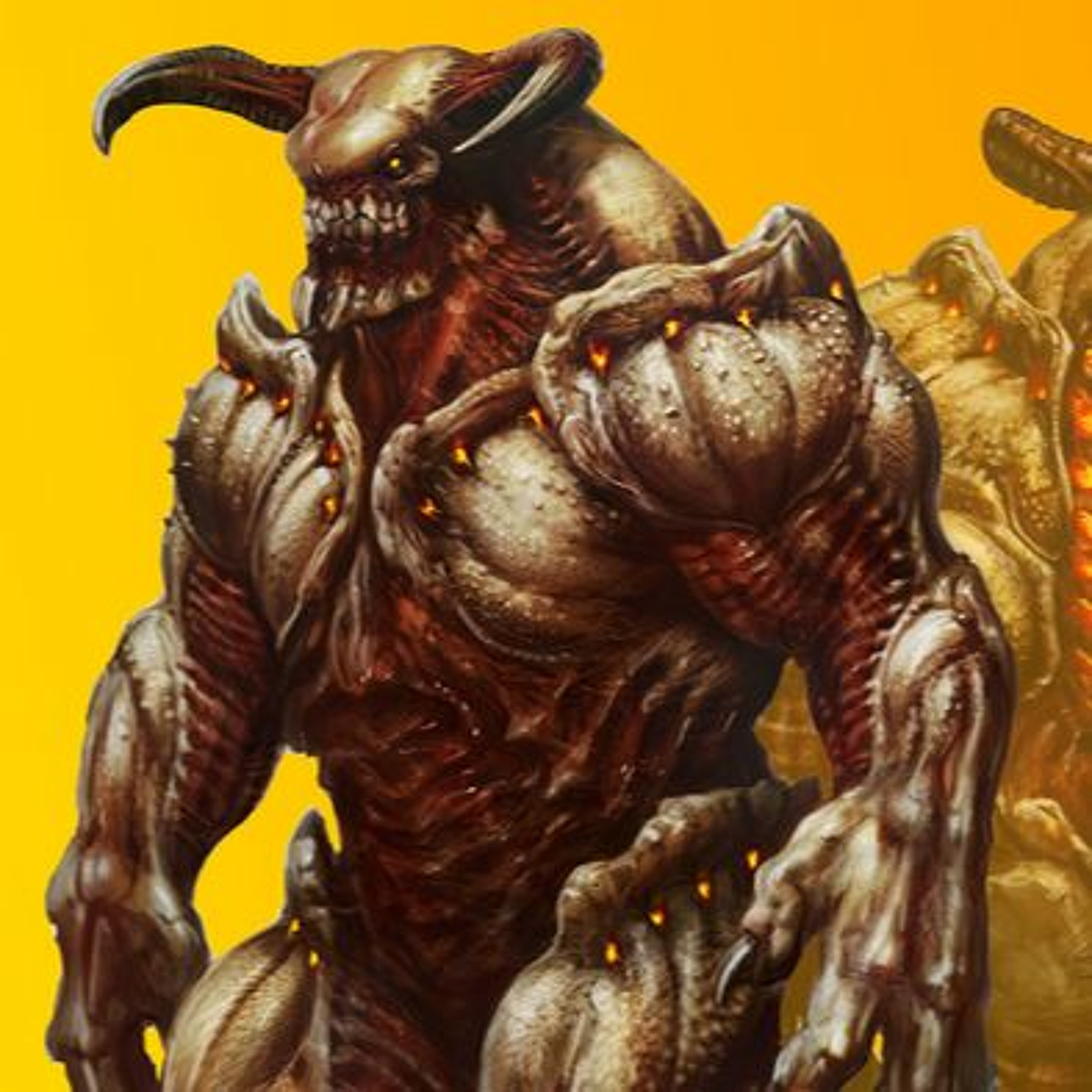
with an enemy design you know you needed to look at the revenant you know this you know our collector's edition that i see sitting there you needed to look at him if you were a new gamer and just be like that is the craziest thing i've ever seen it's a demon skeleton with a jet pack and rocket launchers on his shoulders that's unbelievable and he's got to be fun to fight and then you know if you're a classic doom fan you're like that's that's a really thoughtful uh cool reinterpretation of of the revenant so it's kind of always that balance focusing on fun first and foremost um and making sure that it is a great gaming experience We added things like upgrades and weapon mods and runes and lots of things that gamers would expect through progression and that kind of stuff. Those are easy and obvious decisions. But making sure that it was fun, but then everything just kind of made sure we had that familiarity to it. And lots of winks and nods and nostalgia and homages that I think longtime Doom players just felt like was that warm blanket wrapping around them again. Thanks, Marty. This will be our final question for the day.
G'day mate, Chris Stead here, long time journo. Look, this question has been a crossover with the last one actually, but a lot of your potential audience for this game wasn't born when Doom came out and the genre was kind of established. And when I'm covering Doom in mainstream press, I feel compelled to kind of spell out the role that you guys have played in laying the foundations of the SPS, because I know I've got readers who may not connect with you, specifically for that era. So as well as servicing the fans, did you feel any sense of responsibility to connect these young gamers to the genre's roots? And if so, can you give us some examples of any design decisions that were kind of driven by that thought pattern?
Yeah, I mean, absolutely. Some of the most fundamental aspects of the game were very much deliberate and almost, I don't know whether you'd say risky or definitely counter to what is the norm right now. I think just simple examples like the... The way that, you know, you play a lot of modern games now. You're fighting kind of conventional enemies, guys with, I mean, painting with a broad brush. There's obviously aliens and all that kind of stuff too. But you, you know, a lot of modern shooters, you know, you're fighting guys with guns. They're, you know, hit scan where, you know, a bullet gets shot. You don't really see it. It just kind of hits you and you're like, oh, okay, something hit me.
With Doom and with the whole concept of the combat, it's all about movement, dodging projectiles, dodging enemies that are doing melee attacks. It's about this interaction where your decisions in a Doom game are reacting to the stuff that's flying at you from every angle in the game. And it does come from every angle. The first time we back spawned an enemy on players and we put that out there, some people were like, you can't do that. That's not what gamers expect. They don't expect enemies to spawn behind them.
and then throw a fireball in their ear. So those were definitely some moments of like, this is going to be different for people, and this is going to feel different for a lot of players who haven't played the original. But again, we kind of kept that focus on fun and made sure that as we go through those early levels of the game, we really do try to introduce those concepts. As fast as the game starts, we do try to introduce the concepts. Slowly, as slow as we do anything in Doom. So, you know, you kind of break your way off the table there, and you're fighting within 15 seconds. It is just a couple dies. We teach you the glory kill mechanic pretty quickly, and then we put you in that first arena, and you basically learn the fundamentals right there. You can't stop. If you stop, you're dead. You can move just about anywhere that it looks like you can move. The enemy can move just about anywhere that it looks like it can move, and you've got to kill him.
And that's kind of at a high level the way Doom works. So we kind of ramp you up in that progression early on. And I think players have really taken to it. And like I said, whether you call it classic or retro or timeless like I do, I think they're just fun principles of design that can be just as applicable now as they were 23 years ago. And that's kind of what we were betting on when we made the game. Thanks, Marty. Can I please get a huge round of applause for Marty Stratton?
Thank you again for having me. Really appreciate it. And we really appreciate you taking time out of your incredibly busy schedule at the moment in order to talk to us here. So thanks again, Marty, and enjoy the rest of your evening. Thanks, you too. So now I'd like to pass over to Jason O'Callaghan. He's going to have the chance to have a quick chat with Simon Althie, Managing Director of Bethesda or Zenimax Australia. Hello, Simon.
Follow that, Jesus. Okay. Yeah, good luck. So I guess probably the most relevant one for me that pops straight into my head is the Doom statue. Have you guys seen the Doom statue out in the thing? Yeah. So that's probably going to be one of the more unique activations, shall we say, in gaming. You've been in this business a long time. Is there something else that sticks out? Is there any stories from the old days that come back to you? Yeah, we broke a lot of rules. A lot of people weren't watching so much. Before I answer that, can I just say how cool it is that we're actually in Acme alongside a Scorsese exhibition talking about Doom and video games.
That in itself is really cool, the fact that we've got the activation down there. That in itself talks about how far we've come. I mean, my mind wanders back to a lot of stuff that we did because we weren't allowed to do it. So we just took to the streets and did a lot of stuff back then. But we were appealing to a very specific core group. Then through the years, the 90s, we aligned ourselves a lot to the music industry. So we were both broken industries at that time. So we aligned ourselves. So we were doing things like Battle of the Bands versus Battle of the Clans.
Stuff like that. But I think more recently, yeah, they were interesting. Yeah, try and get a bunch of people to watch clans play after a band's just thrash metal through LZ. Anyway, that's another day. More recently, it becomes a lot easier for us. We don't have to create these reasons for people to come and gather. People want to come and gather. And for us, and particularly now with Bethesda, they'll gather whenever we say, let's get together. So...
We've got some awesome cosplayers, for example. I'll say Fallout 4 is probably the most recent example of that. Yeah, and the Elder Scrolls as well. Just passionate, people passionate about the lore, passionate about it. So for us, you know, those gatherings are more about a little bit like, I mean, we create spaces for people to come and talk and play. So our role these days is to facilitate rather than sort of try and manufacture those things.
Helen, you've got a question for Simon? Is this mic working now? Excellent. I just wanted, because sometimes people in the industry are a little confused about all the different roles between the developers and the publishers and the distributors, and maybe you could just sort of talk people through. Sure. Yeah, so you get the really cool games guy there, and you get the boring marketeer here. So, I mean, that's the way of the world. I mean, I think what Helen's talking about is that, like all entertainment businesses, in games we have the game's creators, and then we have a group of people, which tend to be called publishers, who take that game and make you aware of it.
Those people in that publishing group are arranged from lawyers through to PR and marketing people to salespeople who have to sell to people like EB Games, a whole range of things, distribution companies around the world. There are markets where we don't sell our games directly, so we have to use distribution companies. So traditionally, that's the role of a publisher. Of course, what's happening nowadays is that that's all just meshing together. You know, back in the day, the game was made, it was handed to that group. There wasn't really a relationship between those two groups of people, and off we went to market. Nowadays, we work hand in hand. We're totally entwined and immersed. The spokespeople are no longer...
faceless PR people, they're Marty, they're Todd. They're the game's creators themselves. So we have to create great product. Everyone does, whether it's a group of two guys or whether it's a team of 300. The important thing is, is the game any good now? If the game's good, then the publisher's job is to make sure as many people get to know that as possible.
So it is really much more of a collaborative approach than it ever was before, which makes answering your question more difficult because the lines are blurred. The historical model where the publisher often put the money forward, the developer made the game, the developer, with the exception of id Software, often never owned the rights to their games and they would sit with the publisher and the publisher's name would be the one that went into most people's memories. True, if anyone ever remembers a publisher. But I think that that's changed. And if it hasn't changed everywhere, it's changing everywhere very quickly. I mean, what's driving that is lots of different things. We've got a scenario similar, I talked about the music industry, where everybody can publish now. You make a game yourself, there are ways for you to get your game to market. We've got that going on. We've got direct sales, so developers themselves have scale, and they're often part of groups which are publishers, and so developers become publishers, just can sell their wares through Xbox Live, through PlayStation Network, through Steam, however it may be. So who is and what is a publisher? That has changed tremendously. I mean, if you look at Bethesda, really, you know, I...
One of the things I love working for Bethesda is that we are a group of collaborative studios that happen to also publish our own games. And that gives us that level of control. It gives us that level of care and consideration, not just about the content, but the way we communicate our content. And that's often why you'll see Bethesda do things differently. But the rules and principles of a big company like ours, and obviously we're nowhere near as big as some of the others, they apply to everybody. I was talking to Arius today about some of the guys. We've got the arcade here in Melbourne. We've got some great games makers coming out of there now. Part of the role of the publisher is strip away money. Everyone's not lying about money. Everyone wants to make money. Every games maker, every games publisher wants to make money. Well, let's not make it about money. If you make it about money, you'll fail. If you make it about great games, then the job of the publisher is to communicate. It's to reach out to, if you're lucky enough to have a community, a group of people interested in what you do.
to them and then as far as you can push it and convert more and more people so today the role of the publisher is more and more the job of the communicator and in that small group of people at the arcade everyone's got a mate or a friend who loves playing games who's probably better than you or maybe different at you at communicating or can spend their time communicating crafting your blog working on your social media and getting your message out there and and that's that for me is where publishers are going that's what publishers are going to become so good communicators as you can see our studio heads are immense communicators these days they're the rock stars now of our business Fantastic. Can I please get a huge round of applause for Simon, for Jason and for Helen and for Ari as well. Thanks, Jason.
So just a few things before we wrap up the day. I know you've heard Jason mention earlier the fantastic Activator, the fantastic eight-foot-high version we have of The Revenant. So he's currently living down in our free-to-attend Screenworlds gallery, just near the Games Live section. So I'd like to encourage you all to go down and see it because he really is something to behold if you haven't seen him already. I'd like to thank you all for attending. I think it's been a fantastic session. And obviously I'm an exclusive here in Australia for you to be able to actually have this chance to talk one-on-one with both Marty and Simon. I would like to offer, on behalf of ACMI, a huge thank you to Bethesda for helping to make this happen. They've been absolutely amazing through the entire process.
And particularly I'd like to give a huge thank you to one of the unsung heroes of the process, which is Miss Bec Waddy, who's sitting down the front here. She's been absolutely instrumental in making this thing happen. And fantastic the entire way. Well, as we said earlier, we are really, really pleased and proud to support the gaming industry here and also culturally related gaming events here at the Australian Centre for the Moving Image. And we have a lot of extremely exciting things coming up, some of which I can talk about and some of which I can't. But the best thing I can say is please do keep an eye on this space because there's going to be constantly new things happening. So coming up in late June and also early July, we have a really exciting series of Play Like a Pro sessions where we're having professional gamers come in and actually do their things here in the cinema. A chance for you to actually perhaps even win a lottery ticket to come down and test out your skills against some of the best gamers in Australia across some of the most competitive games.
We also have a very, very exciting event, which I can only tell you a little about, but coming up in late July in time for the Olympics. So if any of you are retro fans out there, please do keep an eye on this space because it's going to be an extremely unique and extremely fun event. But look, again, on behalf of myself and ACMI, I wanted to thank you all for coming along. Please do not forget to take your awesome Doom t-shirts that Bethesda has provided. They are not just chair covers. They are t-shirts for you to take and to enjoy. And I hope you enjoy the rest of your weekend. Thank you very much. Thank you. You have been listening to an ACMI podcast. For more recordings, go to soundcloud.com slash ACMI online or the ACMI website.