
EPISODE · Dec 30, 2025 · 21 MIN
Doomsday Dance: Ramses Mission and the Secrets of Apophis
from SpaceTime with Stuart Gary · host Stuart Gary
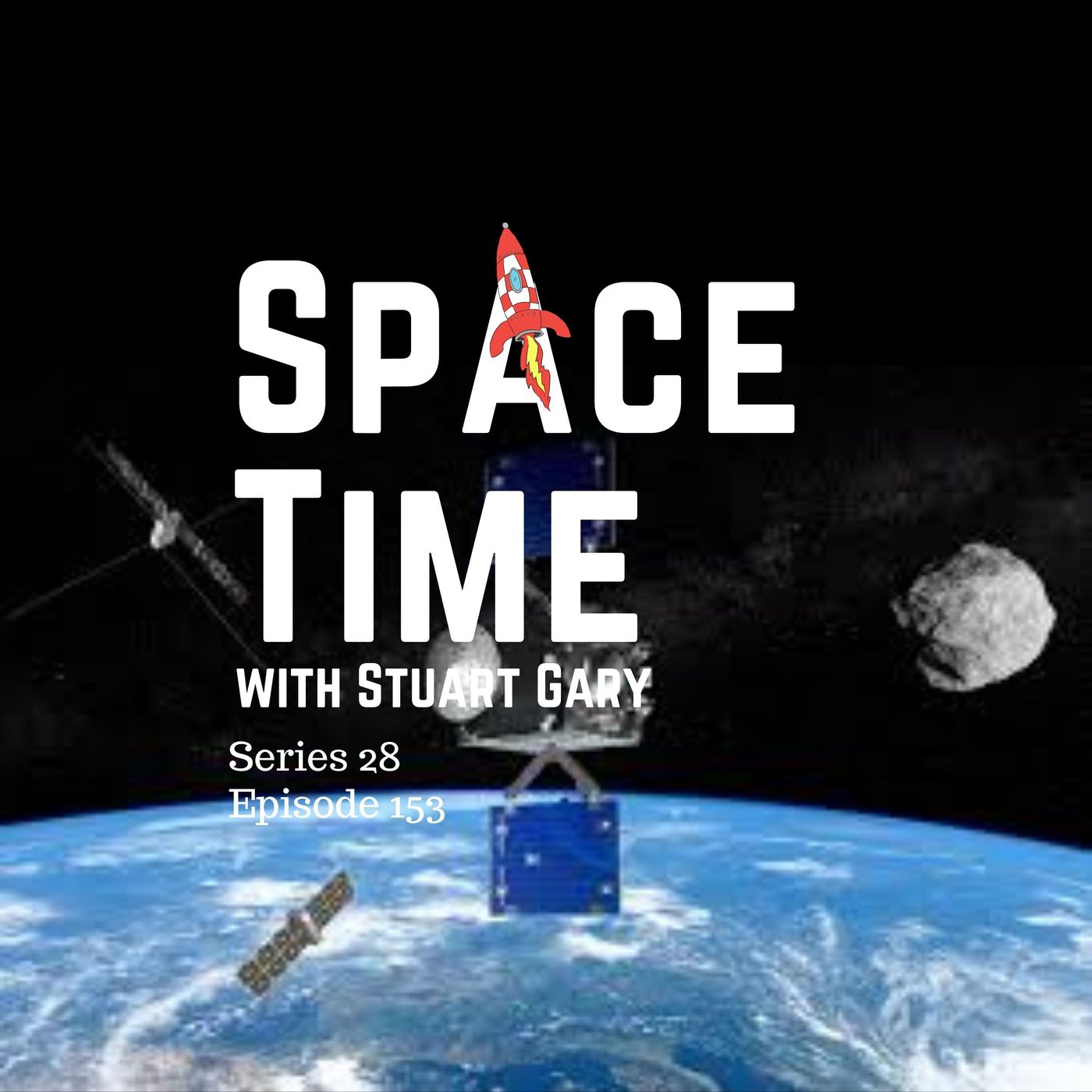
SpaceTime with Stuart Gary Gary - Series 28 Episode 153In this episode of SpaceTime, we dive into thrilling new missions and groundbreaking discoveries in the universe.Ramses Mission to Asteroid ApophisThe European Space Agency has greenlit an exciting new mission to study the infamous doomsday asteroid Apophis. The Ramses spacecraft will closely observe the 450-meter-wide asteroid as it makes a close flyby of Earth on April 13, 2029, at a mere 32,000 kilometers away—closer than many satellites. Initially feared to be on a collision course with Earth, further observations have since ruled out the threat of impact. However, the Ramses mission aims to understand how Earth's gravitational forces might affect Apophis during this close encounter, potentially setting the stage for future impacts. The spacecraft will deploy smaller probes to monitor changes in Apophis's orbit, rotation, and surface, providing vital data for planetary defense and insight into the evolution of asteroids.Solving the Mystery of ExistenceIn a groundbreaking study, scientists at CERN have made strides in explaining the universe's existence by observing a slight imbalance in the behavior of matter and antimatter. This charge parity (CP) violation suggests that a tiny difference favored matter over antimatter during the Big Bang, allowing the universe to evolve into its current state. The findings, based on 80,000 decays of the Lambda beauty particle, indicate a significant deviation that could reshape our understanding of the cosmos.The Largest Planetary Nursery Ever SeenAstronomers have discovered the largest planetary nursery ever observed, located in a massive protoplanetary disk around a young star. This chaotic environment, cataloged as IRAS230776707, spans an astonishing 650 billion kilometers and showcases intricate structures that hint at the complex processes of planet formation. The observations, made using NASA's Hubble Space Telescope, reveal a unique perspective on how planetary systems may develop in extreme conditions, raising new questions about the dynamics shaping these disks.www.spacetimewithstuartgary.com✍️ Episode ReferencesAstrophysical JournalNatureCERN ReportsBecome a supporter of this podcast: https://www.spreaker.com/podcast/spacetime-your-guide-to-space-astronomy--2458531/support.(00:00:00) This is Space Time Series 28, Episode 153 for broadcast on 29 December 2025(00:00:47) ESA's Ramses mission to study asteroid Apophis(00:12:30) CERN's discovery of matter-antimatter imbalance(00:20:10) Astronomers observe the largest protoplanetary disk ever found(00:25:00) New insights into sleep apnea and mental health risks(00:28:30) Potential discovery of a new ancient human species
Embed this episode
NOW PLAYING
Doomsday Dance: Ramses Mission and the Secrets of Apophis
No transcript for this episode yet
Similar Episodes
No similar episodes found.
Similar Podcasts
No similar podcasts found.