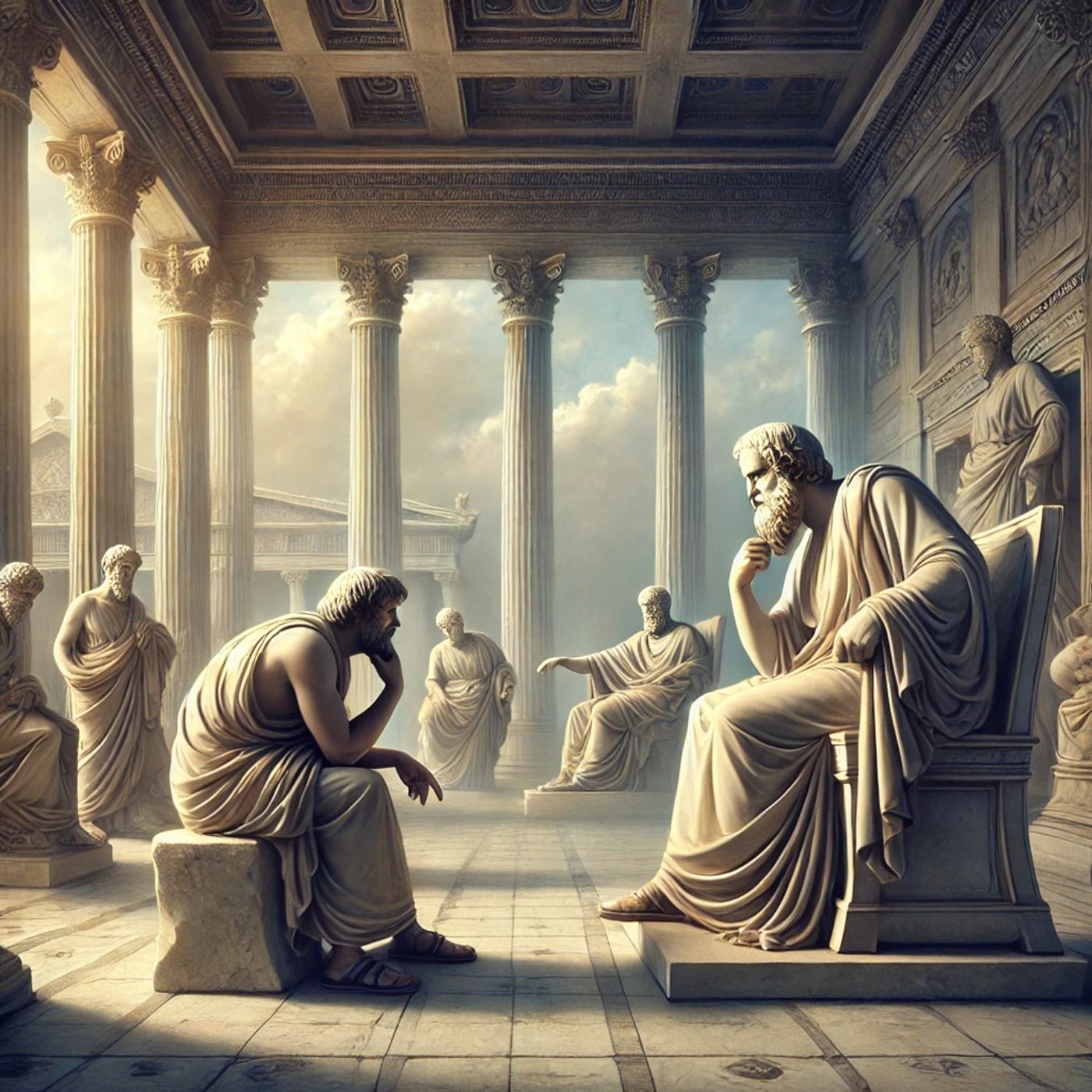
Door in the Wall, and Other Stories-H. G. Wells episode artwork

EPISODE · Sep 11, 2026 · 5H

Door in the Wall, and Other Stories-H. G. Wells

from Phaedrus · host Plato

"Door in the Wall, and Other Stories" by H. G. Wells showcases a collection of thought-provoking tales that delve into the complexities of human experience and imagination. Through his masterful storytelling, Wells invites listeners to explore themes of reality, desire, and the boundaries of perception that continue to resonate today. The exploration of alternate realities and the human condition in these stories highlights the timeless struggle between aspiration and the constraints of life. Engaging with Wells' work offers a chance to reflect on the enduring nature of our dreams and the doors we seek to open, making it a captivating listen for those curious about the depths of human thought and creativity.

Episode metadata supplied by the publisher feed · Published Sep 11, 2026

Embed this episode

Ready to play

Door in the Wall, and Other Stories-H. G. Wells

0:00 5:00:58

No transcript for this episode yet

We transcribe on demand. Request one and we'll notify you when it's ready — usually under 10 minutes.

No similar episodes found.

Fables of Phaedrus Phaedrus Dive into the enchanting world of fables with Fables of Phaedrus, where timeless stories impart valuable moral lessons. While the modern interpretation of a fable often features talking animals or inanimate objects, Phaedrus, the foremost Latin fabulist, breaks the mold with his innovative storytelling. His narratives encompass not only animals but also human characters, transforming them into captivating short tales that resonate even today. This collection presents Phaedrus five acclaimed books of fables, brought to life in English prose by Henry Thomas Ridley. Join us on this literary journey that bridges ancient wisdom with contemporary relevance. Phaedrus by Plato (Πλάτων) (c. 428 BCE - c. 347 BCE) LibriVox “For there is no light of justice or temperance, or any of the higher ideas which are precious to souls, in the earthly copies of them: they are seen through a glass, dimly…”Socrates and his earnest friend Phaedrus, enjoying the Athenian equivalent of a lunchtime stroll in the park, exchange views on love and on the power of words, spoken and written.Phaedrus is the most enchanting of Plato’s Erotic dialogues (capitalised in honour of the god). The barefoot philosopher urges an eager young acquaintance – who has allowed his lover’s oratorical skills to impress him overmuch – to re-examine the text of Lysias’s speech in the light of his own exalted (and Platonic) vision of Love. Not long ago this early example of literary dismantling was itself deconstructed by a contemporary sage - Jacques Derrida. The present reader tries to present Socrates as he conceivably was: the chortling, pot-bellied ex-soldier, a flirtatious yet charismati The Fables of Phaedrus by Phaedrus Loyal Books The fable is a small narrative, in prose or verse, which has as its main characteristic the aim of conveying a moral lesson (the “moral”), implicitly or, more normally, explicitly expressed. Even though the modern concept of fable is that it should have animals or inanimated objects as characters – an idea supported by the works of famous fabulists such as Aesop and La Fontaine – Phaedrus, the most important Latin fabulist, is innovative in his writing. Although many of his fables do depict animals or objects assuming speech, he also has many short stories about men, writing narratives that seem to the modern eye more like short tales than fables. Despite many other fables being attributed to Phaedrus, only five books are considered by scholarship to have been written by him. Phaedrus’ five books of fables are here presented in a translation to English prose by Henry Thomas Ridley. Phaedrus by Plato Loyal Books “For there is no light of justice or temperance, or any of the higher ideas which are precious to souls, in the earthly copies of them: they are seen through a glass, dimly…”Socrates and his earnest friend Phaedrus, enjoying the Athenian equivalent of a lunchtime stroll in the park, exchange views on love and on the power of words, spoken and written.Phaedrus is the most enchanting of Plato’s Erotic dialogues (capitalised in honour of the god). The barefoot philosopher urges an eager young acquaintance – who has allowed his lover’s oratorical skills to impress him overmuch – to re-examine the text of Lysias’s speech in the light of his own exalted (and Platonic) vision of Love. Not long ago this early example of literary dismantling was itself deconstructed by a contemporary sage - Jacques Derrida. The present reader tries to present Socrates as he conceivably was: the chortling, pot-bellied ex-soldier, a flirtatious yet charismatic talker with a serious passion for Truth. (Introductio

Frequently Asked Questions

How long is this episode of Phaedrus?

This episode is 5 hours and 0 minutes long.

When was this Phaedrus episode published?

This episode was published on September 11, 2026.

Can I download this Phaedrus episode?

Yes. Use the download control on the episode player to save the publisher-provided media file.
URL copied to clipboard!