Welcome to the Tweed Trends podcast. Hey, Evette, what's trending today? Hey, I'm Evette, hey girl, and you are tuned in to Tweed Trends. It's the quickest way to find out what's trending today.
I would never have drawn my sword in the cause of America if I could have conceived that thereby I was founding a land of slavery, the Marquis de Lafayette. Hey there, welcome back to Tweed Trends. I know. You are confused because today's quote, to open the episode, was a quote from the Marquis de Lafayette.
And I am aware that he's not a figure from history, or at least the black part of the history. He's not black. So why would I have picked him? Well, one, his story is directly lined up with today's person.
So that's the main reason. But also I was very intrigued by a lot of the information that I read about him. One piece of information being that people like Frederick Douglass held him in high regard, like Frederick Douglass considered him to be a true abolitionist who embraced racial equality. And I like that.
From what I gathered, he was a very logical person. And so the idea of fighting for freedom in a country where one sixth of the population was enslaved, that didn't make sense to him. He came up with ideas and ways to abolish slavery. And his way, in my opinion, was one that he felt like would work for everyone.
Where you have the land, you have the enslaved people. However, you change the crops to something less backbreaking. You provide them with money for the work that they do, opportunity to spend time with family, and education, and then almost kind of like indentured servants where after a certain amount of time, then you get to go free. That that would be the way to kind of ease off of slavery and to then have everyone to be emancipated.
What I read is that he had reached out to George Washington and was like, hey, this is what I'm going to try to do. I really think you should do that with your plantation. And George is like, no thanks. Although he did put it in his will that when he died, then the enslaved people under his care should be let free, set free.
Lafayette also tried to convince other people to kind of go in with him on it. And nobody was stealing it. They were like, no, no, we're not going to do that. So he went ahead and attempted to.
I don't think that it didn't work because he didn't try. What ended up happening is he ended up being jailed away from this place, this little plantation that he bought. And during the time that he was put in jail, then all of those people were compensated and resold to some other places. So they had it good for a little minute and then probably ended up in worse places than where they were prior to Lafayette bringing them to his place and working them up to being able to be on their own.
So in a nutshell, that's why I picked that particular quote for today. And because I felt like it spoke to the character that other people saw who Lafayette was. So now let's get on to the real person for today. The real focus for today's episode is on James Armstead, later known as James Armstead Lafayette.
He was an enslaved young man and around the age of 20 or 21, he got permission from his owner to join the Continental Army. When he did that, he was under the French General Lafayette and Lafayette came to him and said, Hey, I'm going to pay you to be a spy for us. Here's how it's going to work. You're going to pretend to be a runaway slave.
You're going to go join the British, get them to trust you, and then start bringing it into him. And that's exactly how it went. He went, he joined the British forces in Virginia. They appreciated him because he knew the lay of the land and they didn't.
So they needed him. Soon enough, he gained their trust and that's when he started moving back and forth. Between the two armies, he would feed the false information to the British while secretly documenting what their strategies were and taking that back to Lafayette. Now, how dangerous of a job that was, I hope he got paid well because seriously, if the British found out that he was a spy, he was surely going to be killed.
But then what about the other crazy people in the south in, you know, in that same area? Seeing a black man, are they really going to believe that he's a spy? I don't know what type of papers he had to have or what, but whatever it was, it worked. So he was taking information back and forth, back and forth, and then it gets down to this one crucial point in the war where he takes plans that Cornwallis had to move his troops from Portsmouth to Yorktown.
He gets that information. He takes it back to Lafayette. Lafayette takes that information since it's a George Washington. George Washington gets that information and sets up a blockade around Yorktown, which led to Cornwallis's surrender.
And all of that pretty much led to the end of the Revolutionary War. I do have one big question though. How long did it take Cornwallis to get his troops from Portsmouth to Yorktown? Because he only had one task to do there, Portsmouth to Yorktown.
On the other side, you got Armstead had to take the information to Lafayette. How long did that take? I don't know. Lafayette had to take his information and get it to George Washington.
How long that took? I have no idea. And then George Washington then had to take that information and set up a blockade. That seems like that should have taken a long time.
Whereas Cornwallis was just getting his guys from Portsmouth to Yorktown. I know today in a car from Portsmouth to Yorktown is about 45 minutes. What that means on foot during that time traveling with the whole army? I don't know.
But it just seemed like Lafayette and George Washington in Armstead, they had a well oiled machine and they did it. And once it was all over, then Lafayette actually had to lobby the Virginia lawmakers to grant Armstead his freedom. And they granted it to him in 1787. And upon that, then that's when Armstead added Lafayette to his last name or as his last name to then be a token of gratitude for all the different general had done for him.
Let me explain something real quick. Because I realized when I look back at what I said, I made it sound real cut and dry, simple and easy where the war ended. He became a free man and they all lived happily ever after. That's not quite how it went.
How it went was the war ended and James Armstead went back to being a slave. Yes. He was an enslaved man once again. Well, why is that?
How is that? Let me tell you, loophole. So in the war, he was a spy. The act of 1783, which emancipated any slave soldiers that fought for the revolution, he was a spy.
He was not a slave soldier. Therefore, he did not benefit from the act of 1783. So he went back to being an enslaved person. And that lasted for about four years.
He went, he petitioned Congress to fight for his freedom, you know, as he rightfully should have. You know, he risked his life day in and day out to win the war. And then that's the thanks he gets. That's crazy.
So he petitioned Congress and then when Lafayette found out that he was still enslaved, then he had to step up. And he wrote a letter to Congress on his behalf and then Armstead received his freedom in 1787. So that in part is why Armstead felt so much for Lafayette that he added Lafayette onto his name to honor this man because he didn't have to send anything. He didn't have to say anything.
He did not have to reach out and help at all. But he did. And that's what matters. Thanks for joining me for today's episode.
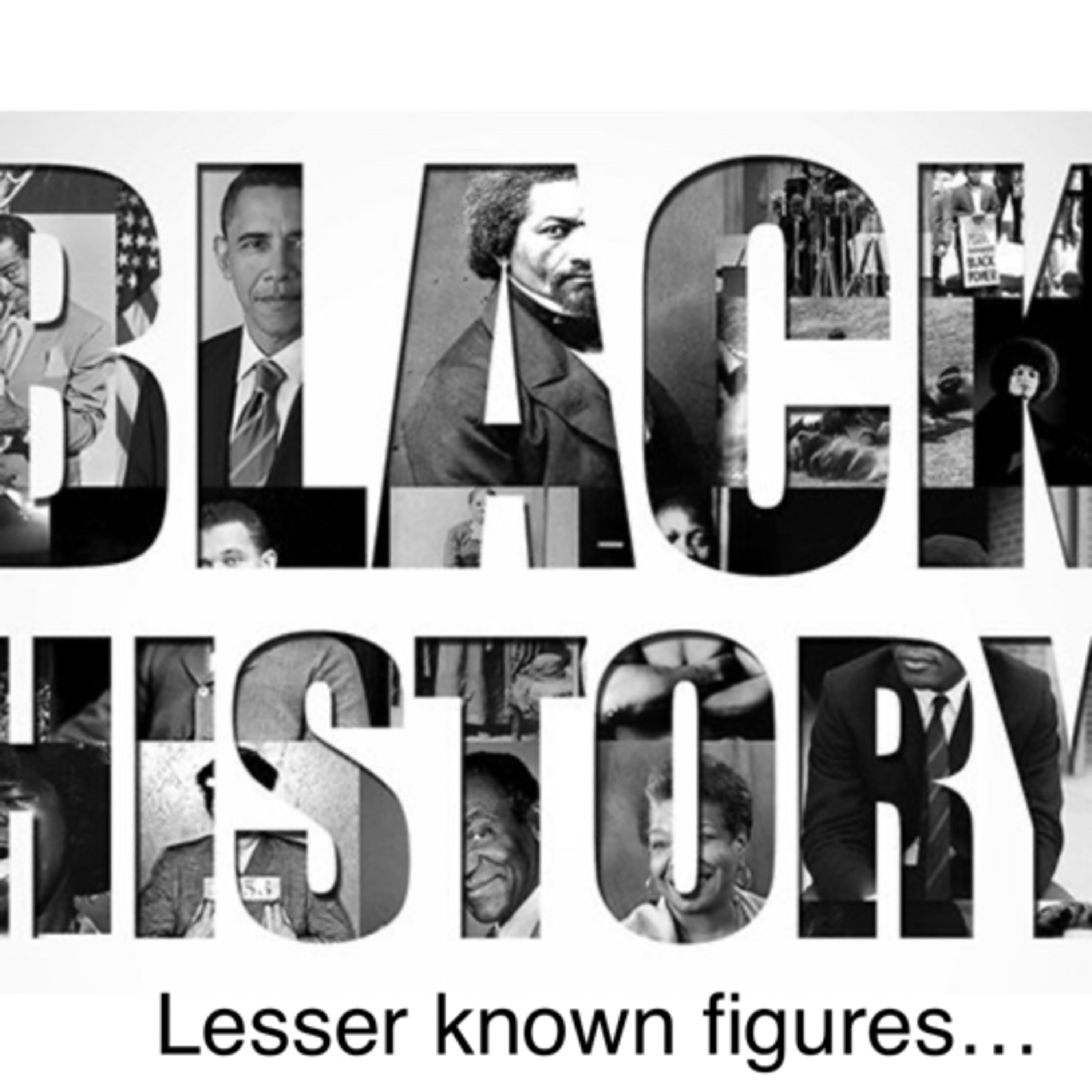
Stay tuned for tomorrow's episode where we will talk about some more lesser known figures in history, also known as Black History. In the meanwhile, you know where to find me on Twitter and Instagram at he. That's at H-E-Y-E-B-E-T-E or just look for the hashtag tweet trends.