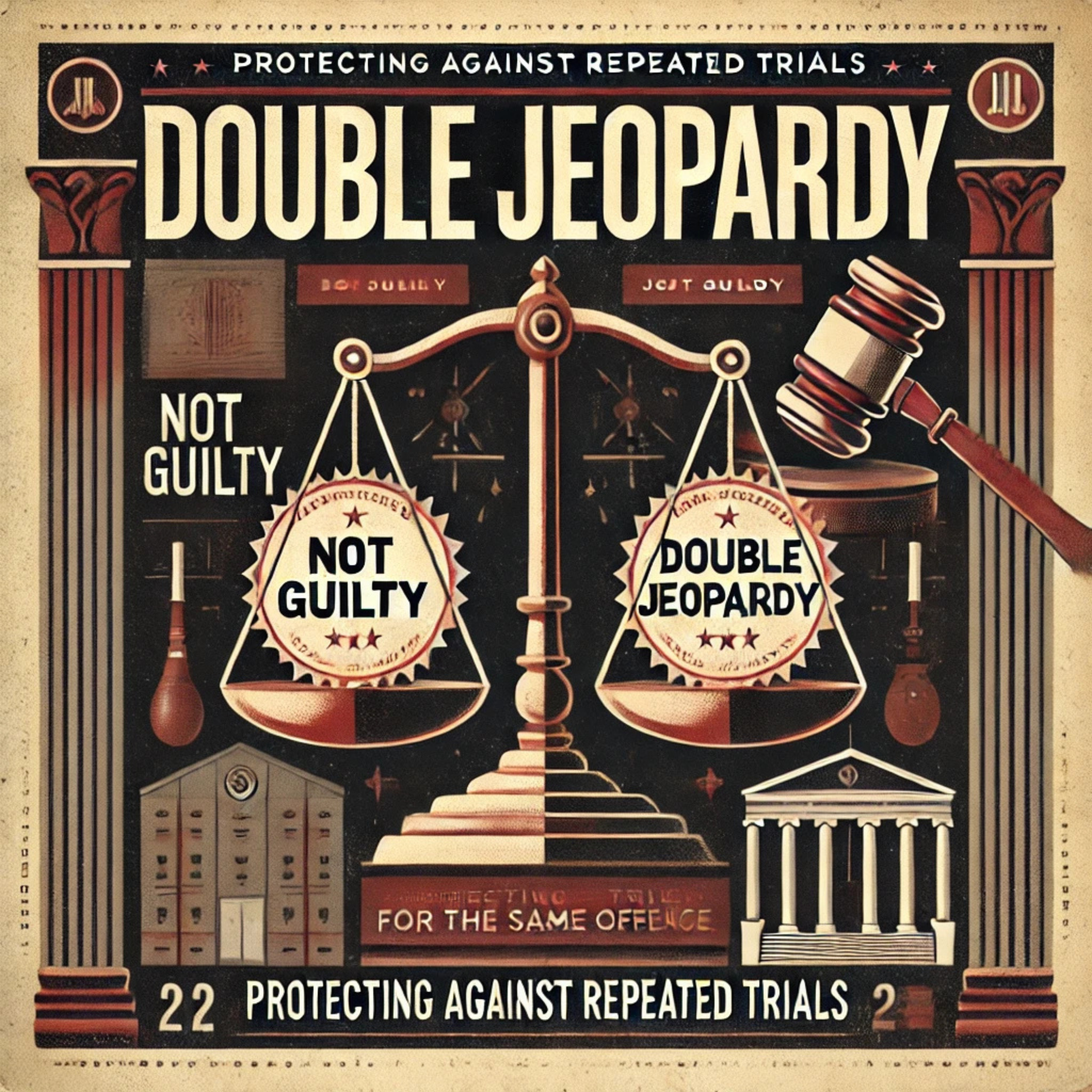
Double Jeopardy episode artwork

EPISODE · Nov 18, 2024 · 12 MIN

Double Jeopardy

from Law School · host The Law School of America

Double Jeopardy Source: Excerpts from "Double Jeopardy: A Fundamental Protection in Criminal Law" Main Themes: Protection from Government Overreach: Double jeopardy serves as a safeguard against prosecutorial abuse by preventing repeated prosecutions for the same offense. This ensures fairness and promotes public trust in the justice system. Fairness and Finality: The principle of double jeopardy aligns with the doctrine of res judicata, promoting finality in legal proceedings. It prevents endless litigation and allows individuals to move on with their lives after a verdict. Balancing Individual Rights and Public Interest: While crucial for protecting individuals, double jeopardy faces criticism regarding exceptions like the dual sovereignty doctrine and its potential impact on victims seeking justice. Most Important Ideas and Facts: Definition: Double jeopardy, enshrined in the Fifth Amendment, protects individuals from being prosecuted or punished multiple times for the same offense. It encompasses three key protections: Protection against subsequent prosecutions after an acquittal. Protection against subsequent prosecutions after a conviction. Protection against multiple punishments for the same offense. Purpose: Double jeopardy promotes: Fairness: "The policy behind double jeopardy is based on principles of fairness, finality, and avoiding government overreach." Finality: "Finality is not just about conserving judicial resources; it also respects the emotional and psychological well-being of defendants." Reduced Strain: "Repeated trials can have devastating consequences for a defendant, both emotionally and financially." Key Protections: Retrial After Acquittal: A person acquitted of a crime cannot be retried even if new evidence emerges. Retrial After Conviction: A convicted person cannot be prosecuted again for the same crime, regardless of how the conviction is disposed. Multiple Punishments: Prohibits cumulative sentences for the same crime unless statutorily authorized. Mistrials: Protections may not apply in cases of mistrials, especially if due to a hung jury or manifest necessity. Exceptions: Separate Sovereignties Doctrine: Different jurisdictions (state and federal) can prosecute for the same act as they are considered separate offenses. Civil vs. Criminal Proceedings: Double jeopardy applies only to criminal prosecutions, not civil or administrative actions. Retrials After Successful Appeal: If a conviction is overturned on appeal, retrial is permissible. Mistrials Due to Manifest Necessity: Retrials are justified in cases of mistrials caused by juror misconduct or other necessities. Continuing Offenses: Repeated similar offenses over time can be prosecuted separately. Case Law: Blockburger v. United States (1932): Established the "Blockburger test" to determine if offenses are distinct for double jeopardy purposes. United States v. Dixon (1993): Reaffirmed the Blockburger test, emphasizing unique elements in offenses. Heath v. Alabama (1985): Reaffirmed the dual sovereignty doctrine. Blueford v. Arkansas (2012): Emphasized the importance of a final verdict for double jeopardy to apply. Criticisms and Controversies: Dual Sovereignty Doctrine: Seen as a loophole allowing multiple prosecutions for the same conduct, potentially undermining fairness. Impact on Victims: Potentially hindering justice when new evidence surfaces after acquittal, raising questions about victims' rights. Blockburger Test: Criticized for being overly technical and inconsistent, potentially allowing for circumvention of protections. Civil Cases Following Acquittals: Allowing civil litigation after criminal acquittal seen as a potential form of double punishment, blurring the lines between civil and criminal justice. Importance: Limits Government Power: Prevents abuse and promotes fair trials. Promotes Judicial Efficiency: Ensures finality and prevents overburdening the justice system. Protects Defendants: Shields individuals from undue har

Double Jeopardy Source: Excerpts from "Double Jeopardy: A Fundamental Protection in Criminal Law" Main Themes: Protection from Government Overreach: Double jeopardy serves as a safeguard against prosecutorial abuse by preventing repeated prosecutions for the same offense. This ensures fairness and promotes public trust in the justice system. Fairness and Finality: The principle of double jeopardy aligns with the doctrine of res judicata, promoting finality in legal proceedings. It prevents endless litigation and allows individuals to move on with their lives after a verdict. Balancing Individual Rights and Public Interest: While crucial for protecting individuals, double jeopardy faces criticism regarding exceptions like the dual sovereignty doctrine and its potential impact on victims seeking justice. Most Important Ideas and Facts: Definition: Double jeopardy, enshrined in the Fifth Amendment, protects individuals from being prosecuted or punished multiple times for the same offense. It encompasses three key protections: Protection against subsequent prosecutions after an acquittal. Protection against subsequent prosecutions after a conviction. Protection against multiple punishments for the same offense. Purpose: Double jeopardy promotes: Fairness: "The policy behind double jeopardy is based on principles of fairness, finality, and avoiding government overreach." Finality: "Finality is not just about conserving judicial resources; it also respects the emotional and psychological well-being of defendants." Reduced Strain: "Repeated trials can have devastating consequences for a defendant, both emotionally and financially." Key Protections: Retrial After Acquittal: A person acquitted of a crime cannot be retried even if new evidence emerges. Retrial After Conviction: A convicted person cannot be prosecuted again for the same crime, regardless of how the conviction is disposed. Multiple Punishments: Prohibits cumulative sentences for the same crime unless statutorily authorized. Mistrials: Protections may not apply in cases of mistrials, especially if due to a hung jury or manifest necessity. Exceptions: Separate Sovereignties Doctrine: Different jurisdictions (state and federal) can prosecute for the same act as they are considered separate offenses. Civil vs. Criminal Proceedings: Double jeopardy applies only to criminal prosecutions, not civil or administrative actions. Retrials After Successful Appeal: If a conviction is overturned on appeal, retrial is permissible. Mistrials Due to Manifest Necessity: Retrials are justified in cases of mistrials caused by juror misconduct or other necessities. Continuing Offenses: Repeated similar offenses over time can be prosecuted separately. Case Law: Blockburger v. United States (1932): Established the "Blockburger test" to determine if offenses are distinct for double jeopardy purposes. United States v. Dixon (1993): Reaffirmed the Blockburger test, emphasizing unique elements in offenses. Heath v. Alabama (1985): Reaffirmed the dual sovereignty doctrine. Blueford v. Arkansas (2012): Emphasized the importance of a final verdict for double jeopardy to apply. Criticisms and Controversies: Dual Sovereignty Doctrine: Seen as a loophole allowing multiple prosecutions for the same conduct, potentially undermining fairness. Impact on Victims: Potentially hindering justice when new evidence surfaces after acquittal, raising questions about victims' rights. Blockburger Test: Criticized for being overly technical and inconsistent, potentially allowing for circumvention of protections. Civil Cases Following Acquittals: Allowing civil litigation after criminal acquittal seen as a potential form of double punishment, blurring the lines between civil and criminal justice. Importance: Limits Government Power: Prevents abuse and promotes fair trials. Promotes Judicial Efficiency: Ensures finality and prevents overburdening the justice system. Protects Defendants: Shields individuals from undue har

NOW PLAYING

Double Jeopardy

0:00 12:54

No transcript for this episode yet

We transcribe on demand. Request one and we'll notify you when it's ready — usually under 10 minutes.

The Small Business Startup School – Business Notes | Financial Literacy | Retail Psychology – For Professionals & Entrepreneurs The Small Business Startup School Inc. Starting or buying a small business? While personal circumstances may vary, business patterns remain timeless. On The Small Business Startup School, we explore strategies, insights, and practical solutions to help entrepreneurs confidently navigate their journey.Hosted by Ola Williams—a retail entrepreneur, fintech founder, and financial coach with over two decades of experience—this podcast marries financial awareness and retail psychology with optimism to deliver actionable takeaways.Join us to learn, grow, and connect as we uncover the keys to business success.Let’s continue to learn together and be encouraged to keep on connecting! The 48 Laws of Power by Robert Greene (Full Audiobook) Robert Greene Amoral, cunning, ruthless, and instructive, this multi-million-copy New York Times bestseller is the definitive manual for anyone interested in gaining, observing, or defending against ultimate control – from the author of The Laws of Human Nature.In the book that People magazine proclaimed “beguiling” and “fascinating,” Robert Greene and Joost Elffers have distilled three thousand years of the history of power into 48 essential laws by drawing from the philosophies of Machiavelli, Sun Tzu, and Carl Von Clausewitz and also from the lives of figures ranging from Henry Kissinger to P.T. Barnum.Some laws teach the need for prudence (“Law 1: Never Outshine the Master”), others teach the value of confidence (“Law 28: Enter Action with Boldness”), and many recommend absolute self-preservation (“Law 15: Crush Your Enemy Totally”). Every law, though, has one thing in common: an interest in t Guardians Of Innocence Guardians Of Innocence Guardians of Innocence is a powerful and informative podcast designed to equip parents, teachers, and communities with the knowledge and tools needed to protect children from the growing threat of trafficking. Each episode dives deep into the tactics traffickers use to target vulnerable children—both online and in real life—and provides actionable advice on how to recognize the warning signs.Through expert interviews with cyber safety professionals, law enforcement, and survivors, we uncover the latest grooming methods, share real-world stories, and empower listeners to become vigilant guardians of innocence in their own families and communities.Guardians of Innocence is more than just a podcast; it’s a call to action to safeguard our children, raise awareness, and foster a united front against trafficking.Listen. Learn. Protect. The Laura Ingraham Show Laura Ingraham The most-watched woman in the history of cable news brings her no-holds-barred political and cultural commentary to podcasting with The Laura Ingraham Show. A bestselling author, breast cancer survivor, and mother of three internationally adopted children, Laura was the most listened-to woman in talk radio before launching her own podcast. A trailblazer across media platforms, she brings a unique perspective to this twice-weekly show, drawing on her experience as a white-collar criminal defense litigator and a Supreme Court law clerk.New episodes drop twice a week—delivering the clarity, courage, and common sense America needs.

Frequently Asked Questions

How long is this episode of Law School?

This episode is 12 minutes long.

When was this Law School episode published?

This episode was published on November 18, 2024.

What is this episode about?

Double Jeopardy Source: Excerpts from "Double Jeopardy: A Fundamental Protection in Criminal Law" Main Themes: Protection from Government Overreach: Double jeopardy serves as a safeguard against prosecutorial abuse by preventing repeated...

Can I download this Law School episode?

Yes, you can download this episode by clicking the download button on the episode player, or subscribe to the podcast in your preferred podcast app for automatic downloads.
URL copied to clipboard!