
EPISODE · Jan 19, 2026 · 7 MIN
Dr. King Jr. & Thich Nhat Hanh: 14 meditations on an historic friendship
from Cliff Crego · host Cliff Crego
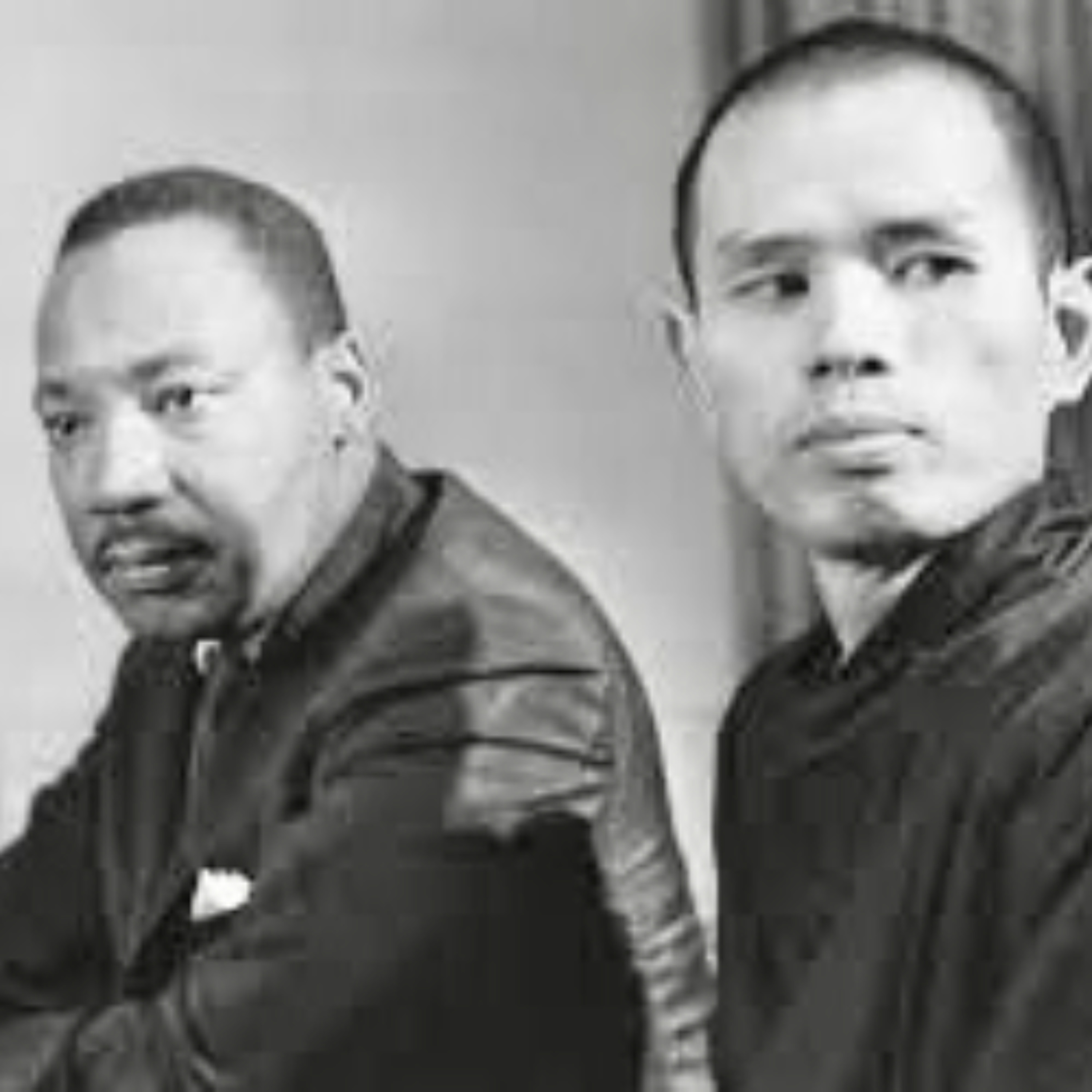
In MAY of 1966, Dr. KING & Thich Nhat Hanh gave together an historic press conference against the Vietnam War. Remarkably--and tragically--there’s no audio record of that event. What to do? Well, I decided to honor them by composing these little pieces, going back and forth between “KING & HANH”, as a way of perhaps bringing the listener a little bit closer to this unique convergence on the world stage of their immense compassion & creative intelligence. 1. (King) The Beloved Community: In the heart of his crusade, King’s vision stretched beyond American borders. The "Beloved Community" was global, a world where brotherhood and justice were not limited by nation, race, or creed. Vietnam’s suffering, therefore, was not a distant issue, but a wound in the body of his imagined family. 2. (Hanh) Engaged Buddhism: For Hanh, meditation was not an escape. He coined the term "Engaged Buddhism," the practice of mindfulness while actively tending to the world’s suffering. The monk’s robe was not a shield from society, but a banner for peace, worn in the very streets and war zones where people cried. 3. (King) A Time to Break Silence: By 1967, King felt a profound moral collision. His advisors warned against speaking on Vietnam, but his conscience screamed. "A time comes when silence is betrayal." He could not preach nonviolence in Birmingham while ignoring the bombs over Hanoi; the same flame of justice illuminated both struggles. 4. (Hanh) The Sound of the Bell: Hanh taught that the present moment, accessed by a simple mindful breath or the sound of a temple bell, contained everything: peace, sorrow, and the key to understanding. He invited King—and the world—to pause and truly hear the interconnected cries within that silence. 5. (King) The Giant Triplets: In his boldest speech, King identified the "giant triplets of racism, extreme materialism, and militarism." He saw the war as a symptom of a deep American sickness, where resources for the poor were consumed by bombs, linking the ghetto and the Vietnamese village in a chain of oppression. 6. (Hanh) Interbeing: Hanh offered a spiritual lens: "Interbeing." A flower is made of cloud, sunshine, and soil; a soldier is made of ancestors, fear, and propaganda. To bomb another is to bomb a part of yourself. This philosophy gave King’s political vision a profound metaphysical grounding. 7. (King) Soul Force (Satyagraha): King’s method was "Soul Force," adapted from Gandhi. It was the relentless, loving application of truth and nonviolent resistance to transform an opponent. He wondered if this force, powerful against Bull Connor, could be scaled to confront the machinery of global war. 8. (Hanh) The Real Enemy: Hanh wrote that, "The real enemy of man is not man. It is ignorance, hatred, and fear." He did not see American soldiers as demons, but as victims of a system clouding their true nature. This framing allowed compassion to extend even to those dropping the napalm. 9. (King) The Fierce Urgency of Now: King’s tempo was urgent, driven by a ticking clock of injustice. "Now" was the word. Delay meant more children burned, more dreams deferred. This urgency propelled him onto risky platforms, nominating Hanh for a Nobel Peace Prize to amplify the cry for an immediate ceasefire. 10. (Hanh) No Coming, No Going: From his tradition, Hanh offered a different solace for death. "This body is not me; I am not caught in this body." For those perishing in the delta or in Memphis, he taught a continuum of existence—a calming counterpoint to the frantic urgency of the mortal struggle. becoming rain, nourishing the ongoing work.
Embed this episode
NOW PLAYING
Dr. King Jr. & Thich Nhat Hanh: 14 meditations on an historic friendship
No transcript for this episode yet
Similar Episodes
No similar episodes found.
Similar Podcasts
No similar podcasts found.