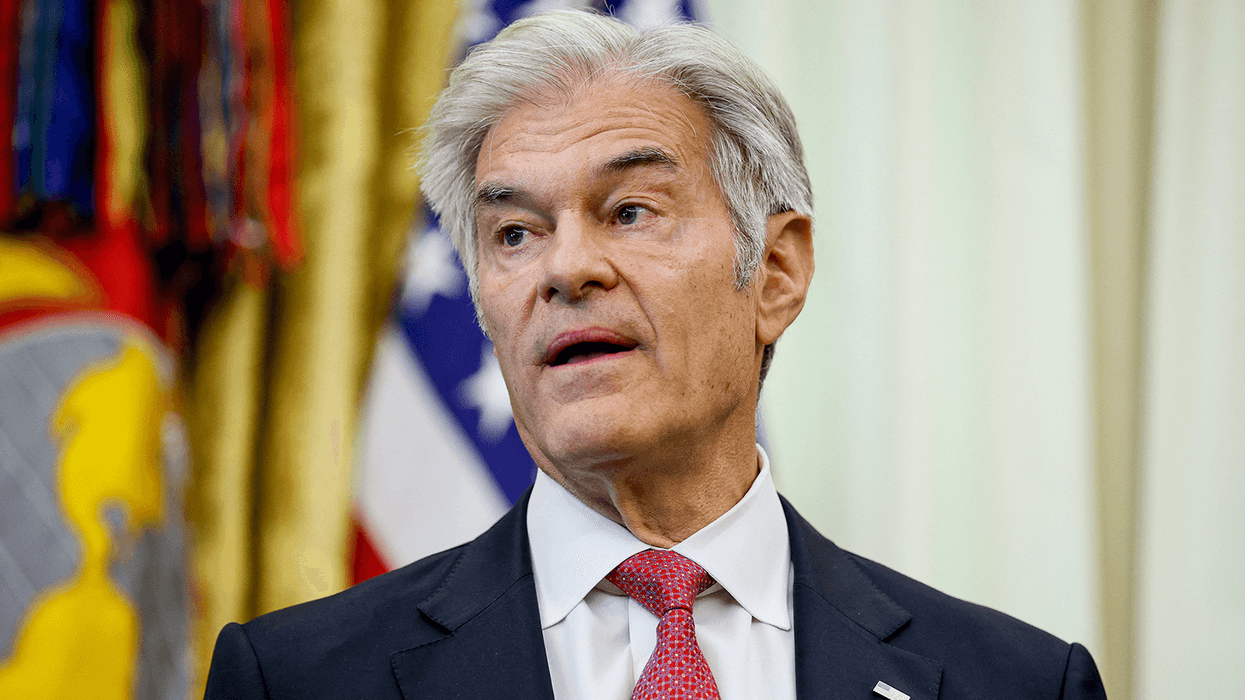
Dr. Oz erupts when confronted with Trump’s self-inflicted problem
from Systemic Error Podcast Hosted by Paulo Santos
What happened AlterNet reports that Centers for Medicare and Medicaid Services administrator Mehmet Oz raised his voice and accused Gray Media reporter Molly Martinez of being “deliberately duplicitous” after she contrasted two provisions of President Donald Trump’s domestic policy law: an estimated $137 billion reduction in federal Medicaid spending in rural areas over ten years and a $50 billion rural health initiative operating from 2026 through 2030. Oz disputed the comparison, arguing that Medicaid dollars routed through states often benefit large urban hospital systems rather than smaller rural providers. Martinez pressed him on patients who cannot afford care and must travel long distances; Oz replied that the administration was directing money “into places where the money should be spent.” AlterNet cites Kaiser Family Foundation estimates that the law Trump signed on July 4, 2025, will reduce federal Medicaid spending nationwide by $911 billion over ten years. KFF calculates that the new fund equals roughly 37 percent of the projected rural reduction, while cautioning that the programs have different purposes and timelines. Federal restrictions also prevent states from simply using the grants to replace existing Medicaid payments. The power sits with the administration Martinez did not write the law, administer Medicaid, or decide how rural health care would be financed. Trump signed the legislation, Congress enacted it, and Oz leads the federal agency responsible for Medicaid. The institutional power—and therefore responsibility—belongs to the officials changing the funding structure. Oz’s response displaced that responsibility onto the reporter questioning him. Calling an evidence-based comparison dishonest does not answer what happens when a temporary, restricted fund accompanies a much larger projected reduction in coverage spending. Volume is not a fiscal analysis. A fund is not a replacement The administration can accurately say that $50 billion is a substantial investment. That does not establish that rural communities will emerge better funded after the broader law takes effect. The distinction matters because Medicaid payments and transformation grants are not interchangeable. According to the reporting, direct provider payments are capped at 15 percent of a state’s award, and the grants cannot supplement existing Medicaid payments. Oz defended where the new money would go without resolving what reduced Medicaid spending could mean for patients, providers, and hospital finances. Attack the premise, avoid the consequence Oz’s substantive objection was that the $137 billion estimate does not represent money flowing directly to rural institutions. That qualification deserves scrutiny. But it does not erase the estimate’s stated scope: projected federal Medicaid reductions affecting rural areas. His answer also shifted the measure of success. Martinez asked about affordable access for patients; Oz answered that money was being sent to the places where it “should be spent.” Administrative confidence about allocation is not evidence that people losing support will still receive care. The foreseeable consequence of less Medicaid funding cannot be dismissed by praising a separate grant program. The governing pattern This is a familiar exercise in political repackaging: enact a broad reduction, advertise a narrower program, then treat comparison between the two as misconduct. The new fund becomes the headline-sized proof of generosity while the larger financing change is pushed into technical disputes about categories and distribution. That does not prove every dollar of projected Medicaid reduction would otherwise have reached a rural hospital. It does reveal the administration’s preferred terrain. Officials want credit for visible grants without accepting accountability for the law’s full balance sheet. Accountability made personal The exchange exposes a larger institutional failure: powerful officials can turn scrutiny of policy into a quarrel over a reporter’s character. That maneuver recasts the administrator as the injured party and leaves patients as background scenery. The essential question is not whether Oz disliked Martinez’s framing. It is whether the administration’s restricted five-year program can offset the access and affordability consequences of projected ten-year Medicaid reductions. On the evidence AlterNet presents, it cannot simply be counted as a replacement—and indignation does nothing to close the gap. Thanks to Alter Net Source: Dr. Oz erupts when confronted with Trump’s self-inflicted problem This is a public episode. If you would like to discuss this with other subscribers or get access to bonus episodes, visit paulstsmith.substack.com
Embed this episode
No transcript yet.