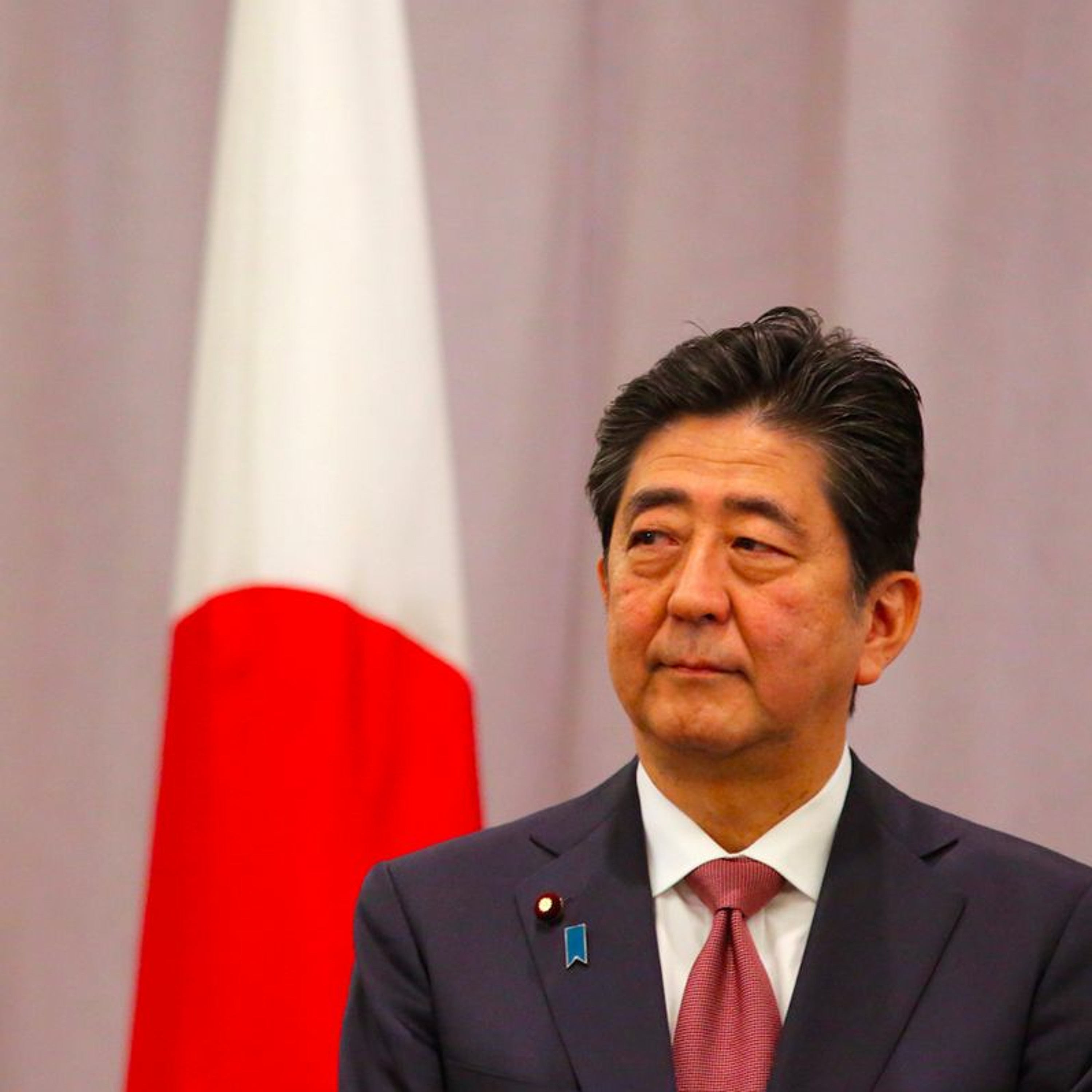
We're here today with Dr. Patrick Cronin, the director of our Asia-Pacific security program, to discuss Japanese Prime Minister Shinzo Abe's upcoming summit with President Trump. Patrick, thanks for joining us. Thank you, Neil.
So, Patrick, what does President Trump need out of this visit? Given recent events, I know quite a few of America's allies are quite anxious. I think President Trump would like a victory. That is, he'd like to show that a leading ally is responding to the direction of the Trump administration, namely an ally who's not only willing to carry its weight on security affairs, but is also willing to help economically.
So rather than coming here to berate President Trump for withdrawing from the Trans-Pacific Partnership, for instance, something that Prime Minister Abe cared about, he's coming here with a very extensive investment, jobs, and trade package that he thinks will be very attractive to the Trump administration, and indeed it will be attractive. This will attract up to $450 billion in value of new market opportunities for the United States with Japan, could create 700,000 jobs during that next decade. This is precisely what President Trump will be able to say, look, this is a great relationship, and we are going to have a close partnership between Prime Minister Abe and this White House. And that's what the other side of the coin, what does Prime Minister Abe need from the meeting?
For Shinzo Abe, who's invested so much in a tight U.S.-Japan alliance, this is too big a summit to fail. He needs this relationship to work. That's why he has done the name of Washington, he's done the preparatory work, to ensure that he knows what President Trump wants, namely something that leads to more manufacturing in America, more infrastructure in America, more jobs in America. So he comes bearing gifts, and at the same time, he takes away a strong security commitment, the Article V mutual security treaty commitment covering the Senkaku Islands and the East China Sea, for instance.
A close pat on the back for Japan doing successful burden sharing, rather than being criticized as one of those allies that's not carrying its weight. Those are things that Prime Minister Abe already heard from Secretary of Defense Mattis last week. He's heard them as well from now Secretary of State Tillerson, and now he'll be able to hear them directly, hopefully, from the President of the United States. And then do you see the U.S.-Japan relationship as being bigger than either Trump or Abe, and that things probably won't fundamentally shift over the next four to eight years, or do you think there could really be substantial shifts in the relationship?
There have always been shifts in the relationship. We should not have amnesia about American policy and commitment and our credibility in Asia. It has waxed and waned over this post-World War II period. So the Nixon shock, opening up relations with China, the Annunciation of the Guam Doctrine, which withdrew our land presence and replaced it with letting allies and partners do more in Asia, shocked Japan.
Jimmy Carter's desire to withdraw troops from South Korea shocked the Koreans. President Clinton, in his first two years in office, attacked Japan for its economic protectionist policies and industrial policies and put economic competition over the security relationship until the Clinton administration reversed itself and actually strengthened the relationship. So all I'm saying is that from an Asian perspective, and especially from a Japanese perspective, the United States has gone in different directions. It is entirely possible that President Trump could devalue the U.S.-Japan alliance.
And Prime Minister Abe, as I said, this is too big to fail for him, he needs a very strong alliance with the United States in order to realize his own legacy of bringing Japan back as a more normal power and keeping Japan on the top tier of global powers. So would you characterize Japan as fairly worried and palindaded breath about this summit? Well, I think Japan will be very careful about this. The thing about Prime Minister Shinzo Abe, he's the grandson of a former prime minister after the war, as is his finance minister, by the way, Taro Aso, also is the grandson of a former prime minister, the Yoshida Doctrine, which codified the U.S.-Japan alliance, where they provided bases for U.S.
forces and forward presence, and we empowered their economic recovery. That deal has stuck ever since, and it's expanded gradually over the recent decades of what Japan would do on security terms. Abe would like to finally normalize that. So this is a very important opportunity for the Trump administration to show continuity.
But, yes, there's always that concern, that one tweet, one statement. The reason why Prime Minister Abe will be so careful in this meeting is that he knows that transcripts of discussions get talked about, if not leaked. He will not say anything in that meeting that will be quotable as fearing or disagreeing with the President of the United States. He will not let the President of the United States lose face over this meeting.
That's how smart the Japanese are going into this meeting, because that is the right way to do it. If you disagree, you don't necessarily air that disagreement at the leader level. You do it at a lower level after the fact. You let the ambassadors talk about it.
You let other senior officials say, by the way, we were just curious about what you meant on this jobs question or this security demand. And then you give the leaders always a chance to make a deal later. Don't force a deal before you're ready to have a deal. Perfect.
Well, I'm sure we'll be talking about this critical relationship a lot in the coming months, years, and probably decades. I think the region and the world need a very successful, strong United States-Japan relationship. And I think Prime Minister Abe is prepared to work closely with President Trump and the Trump administration, and I hope this works. Thank you, Patrick.
I appreciate it.