
EPISODE · Mar 10, 2026 · 30 MIN
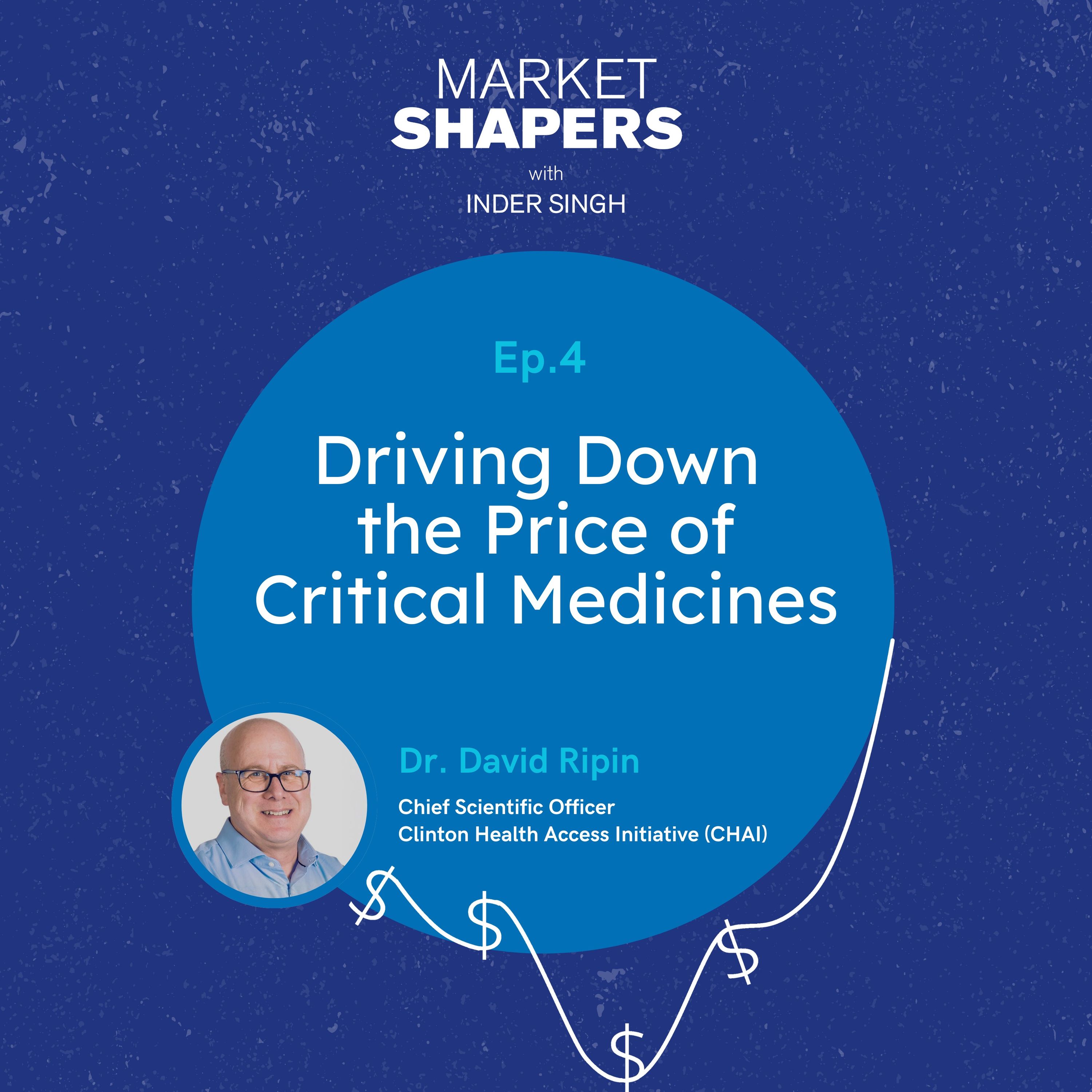
Driving Down the Price of Critical Medicines, with Dr. David Ripin
from Market Shapers with Inder Singh · host University.fm
Dr. David Ripin, the Chief Scientific Officer at the Clinton Health Access Initiative (CHAI) joins host Inder Singh to discuss a watershed market shaping effort: the price reduction of a key drug, tenofovir. This price reduction helped shift and scale treatment for millions of people living with HIV/AIDS. Today, Tenofovir is used by 30M people globally. But when it was first introduced, it was more expensive than the entire three drug cocktail used at the time, and global leaders argued it should NOT be deployed in developing countries because budgets could not stretch far enough. What happened next changed that. CHAI and its partners drove the price down nearly 60% in under four years, helping unlock widespread adoption. Its price today is more than 80% lower than when it was first introduced. David and Inder discuss the approaches and tactics that enabled these massive price reductions. The Market Shapers Podcast is a production of Inder Singh and is produced by University FM. This interview was recorded in April 2025. Episode Quotes: On disrupting the equilibrium 15:32: While all of this sounds fairly basic and intuitive, there's a lot of work back there. And because all of these companies are focused on introducing the next drug in, at some point you get into a market situation where you have a local equilibrium. 16:11: The water could be downhill, it would be happier downhill, but the water doesn't know that, right? The water is in this mountain peak, and it's perfectly content there. And it takes someone coming along and drilling a hole to disrupt that market and then reset it so that everyone realizes, oh, okay, the water needs to be down there now—or let's call it what it is, the price. And so, that's really what we had to undertake when we were focused on lowering the costs of Tenofovir. Access is the real innovation 32:33: You could cure cancer, but if you do it in a way that no one can afford, you still have a problem. Why competition can move markets forward 17:43: Let's say you have a mark and you have two or three companies. They've developed a drug. They've spent a lot of money doing it. They're generally competing. They're basically the same technology as each other. So, their costs are comparable. They're going to come to a relatively stable pricing level. Now, you know, the other thing to remember is this absolutely massive generic drug market. Twenty-five million to thirty million people are taking the same drug once a day, every day, for their entire lives. And represents a massive business opportunity. So if I'm supplier number four—you know, I'm the next supplier, and I'm looking at this market, it looks really attractive to me. I want in. But I already, you know, see three guys have market share. It's hard to come in...[19:37] So, if I can incorporate changes that get me a cheaper starting material or a more efficient process before I spend money the first time to develop this drug, I'm going to come into the market with a market advantage. I'm going to disrupt that equilibrium. Show Links: Clinton Health Access Initiative (CHAI) Optimizing the Manufacture, Formulation, and Dose of Antiretroviral Drugs (or here for the full article) Healthy Markets for Global Health: A Market Shaping Primer Hosted by Simplecast, an AdsWizz company. See pcm.adswizz.com for information about our collection and use of personal data for advertising.
What this episode covers
Dr. David Ripin, the Chief Scientific Officer at the Clinton Health Access Initiative (CHAI) joins host Inder Singh to discuss a watershed market shaping effort: the price reduction of a key drug, tenofovir. This price reduction helped shift and scale treatment for millions of people living with HIV/AIDS. Today, Tenofovir is used by 30M people globally. But when it was first introduced, it was more expensive than the entire three drug cocktail used at the time, and global leaders argued it should NOT be deployed in developing countries because budgets could not stretch far enough. What happened next changed that. CHAI and its partners drove the price down nearly 60% in under four years, helping unlock widespread adoption. Its price today is more than 80% lower than when it was first introduced. David and Inder discuss the approaches and tactics that enabled these massive price reductions. The Market Shapers Podcast is a production of Inder Singh and is produced by University FM. This interview was recorded in April 2025. Episode Quotes: SHORT VIDEO: On disrupting the equilibrium 15:32: While all of this sounds fairly basic and intuitive, there's a lot of work back there. And because all of these companies are focused on introducing the next drug in, at some point you get into a market situation where you have a local equilibrium. 16:11: The water could be downhill, it would be happier downhill, but the water doesn't know that, right? The water is in this mountain peak, and it's perfectly content there. And it takes someone coming along and drilling a hole to disrupt that market and then reset it so that everyone realizes, oh, okay, the water needs to be down there now—or let's call it what it is, the price. And so, that's really what we had to undertake when we were focused on lowering the costs of Tenofovir. SOCIAL CARD: Access is the real innovation 32:33: You could cure cancer, but if you do it in a way that no one can afford, you still have a problem. AUDIOGRAM: Why competition can move markets forward 17:43: Let's say you have a mark and you have two or three companies. They've developed a drug. They've spent a lot of money doing it. They're generally competing. They're basically the same technology as each other. So, their costs are comparable. They're going to come to a relatively stable pricing level. Now, you know, the other thing to remember is this absolutely massive generic drug market. Twenty-five million to thirty million people are taking the same drug once a day, every day, for their entire lives. And represents a massive business opportunity. So if I'm supplier number four—you know, I'm the next supplier, and I'm looking at this market, it looks really attractive to me. I want in. But I already, you know, see three guys have market share. It's hard to come in...[19:37] So, if I can incorporate changes that get me a cheaper starting material or a more efficient process before I spend money the first time to develop this drug, I'm going to come into the market with a market advantage. I'm going to disrupt that equilibrium. Show Links: Clinton Health Access Initiative (CHAI) Optimizing the Manufacture, Formulation, and Dose of Antiretroviral Drugs (or here for the full article) Healthy Markets for Global Health: A Market Shaping Primer
NOW PLAYING
Driving Down the Price of Critical Medicines, with Dr. David Ripin
No transcript for this episode yet
Similar Episodes
Mar 26, 2026 ·1m
Jan 2, 2026 ·47m
Dec 21, 2025 ·46m