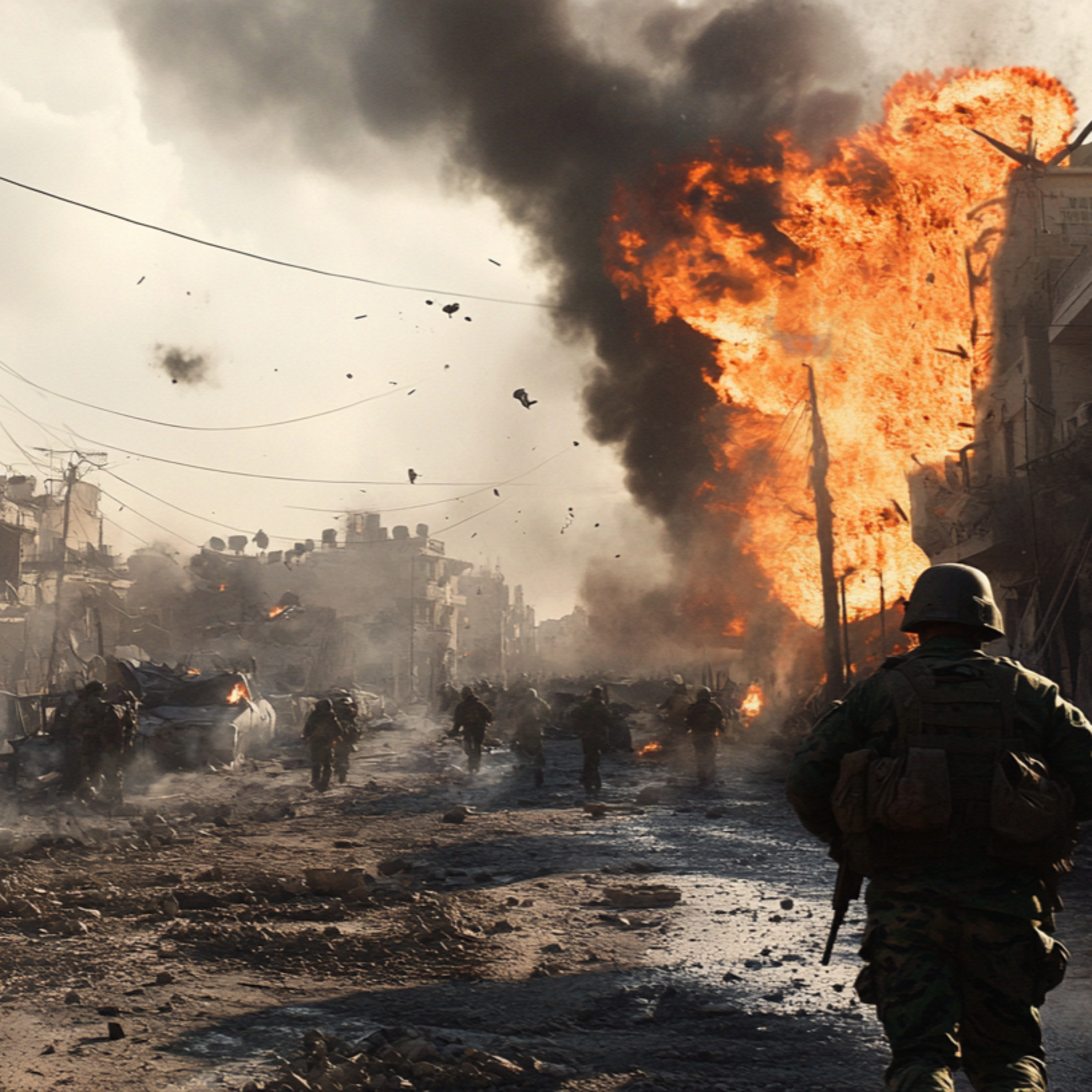
Drones & Warfare | Israel-Gaza Crisis | Can US Middle East Policy Change? episode artwork

EPISODE · Mar 24, 2025 · 1H 10M

Drones & Warfare | Israel-Gaza Crisis | Can US Middle East Policy Change?

from Conversations Among The Ruins · host Charles Erickson

The conversation delves into the complexities of the ongoing conflicts in Ukraine and the Middle East, focusing on the role of drones in warfare, the impact of media narratives, and the implications of U.S. support for Israel. It highlights the evolving nature of warfare, the challenges of diplomacy, and the internal political dynamics within Israel, while also addressing the moral and ethical considerations surrounding these issues. In this conversation, Peter and Charles Erickson discuss the implications of Israel's actions in Gaza, the influence of Christian Zionism in the U.S., and the potential for escalating conflict with Iran. They explore the moral dilemmas surrounding U.S. support for Israel, the possibility of uprisings in the Middle East, and the dire consequences of a potential war with Iran. The discussion highlights the growing anger among people in the region and the need for a change in U.S. foreign policy to address these issues.The Russia-Ukraine conflict continues with ongoing attrition and drone warfare.Drones have become a significant factor in modern warfare, changing casualty dynamics.Diplomatic negotiations are ongoing but face significant challenges and tensions.Media narratives can shape public perception and influence international responses.Internal dissent in Israel is growing, with concerns over Netanyahu's leadership.U.S. support for Israel has global implications and affects America's reputation.The humanitarian crisis in Gaza raises ethical questions about military actions.The role of propaganda in shaping narratives around conflicts is critical.Civilian casualties in war zones often go underreported or ignored.The potential for civil unrest in Israel reflects deeper societal divisions. The global perception of Israel's actions is increasingly negative.Christian Zionism has significantly influenced U.S. support for Israel.The current Israeli government is pursuing aggressive policies against its neighbors.A war with Iran could have catastrophic consequences for the U.S. and the region.There is potential for uprisings in Middle Eastern countries due to growing anger.The U.S. support for Israel is seen as morally problematic by many Americans.The situation in Gaza is viewed as a genocide by critics.The younger generation is increasingly rejecting Israel's actions.A change in U.S. foreign policy could lead to a transformation in Israeli society.The conversation reflects deep frustration with the current state of U.S. involvement in the Middle East.

The conversation delves into the complexities of the ongoing conflicts in Ukraine and the Middle East, focusing on the role of drones in warfare, the impact of media narratives, and the implications of U.S. support for Israel. It highlights the evolving nature of warfare, the challenges of diplomacy, and the internal political dynamics within Israel, while also addressing the moral and ethical considerations surrounding these issues. In this conversation, Peter and Charles Erickson discuss the implications of Israel's actions in Gaza, the influence of Christian Zionism in the U.S., and the potential for escalating conflict with Iran. They explore the moral dilemmas surrounding U.S. support for Israel, the possibility of uprisings in the Middle East, and the dire consequences of a potential war with Iran. The discussion highlights the growing anger among people in the region and the need for a change in U.S. foreign policy to address these issues.The Russia-Ukraine conflict continues with ongoing attrition and drone warfare.Drones have become a significant factor in modern warfare, changing casualty dynamics.Diplomatic negotiations are ongoing but face significant challenges and tensions.Media narratives can shape public perception and influence international responses.Internal dissent in Israel is growing, with concerns over Netanyahu's leadership.U.S. support for Israel has global implications and affects America's reputation.The humanitarian crisis in Gaza raises ethical questions about military actions.The role of propaganda in shaping narratives around conflicts is critical.Civilian casualties in war zones often go underreported or ignored.The potential for civil unrest in Israel reflects deeper societal divisions. The global perception of Israel's actions is increasingly negative.Christian Zionism has significantly influenced U.S. support for Israel.The current Israeli government is pursuing aggressive policies against its neighbors.A war with Iran could have catastrophic consequences for the U.S. and the region.There is potential for uprisings in Middle Eastern countries due to growing anger.The U.S. support for Israel is seen as morally problematic by many Americans.The situation in Gaza is viewed as a genocide by critics.The younger generation is increasingly rejecting Israel's actions.A change in U.S. foreign policy could lead to a transformation in Israeli society.The conversation reflects deep frustration with the current state of U.S. involvement in the Middle East.

NOW PLAYING

Drones & Warfare | Israel-Gaza Crisis | Can US Middle East Policy Change?

0:00 1:10:29

No transcript for this episode yet

We transcribe on demand. Request one and we'll notify you when it's ready — usually under 10 minutes.

Frequently Asked Questions

How long is this episode of Conversations Among The Ruins?

This episode is 1 hour and 10 minutes long.

When was this Conversations Among The Ruins episode published?

This episode was published on March 24, 2025.

What is this episode about?

The conversation delves into the complexities of the ongoing conflicts in Ukraine and the Middle East, focusing on the role of drones in warfare, the impact of media narratives, and the implications of U.S. support for Israel. It highlights the...

Can I download this Conversations Among The Ruins episode?

Yes, you can download this episode by clicking the download button on the episode player, or subscribe to the podcast in your preferred podcast app for automatic downloads.
URL copied to clipboard!