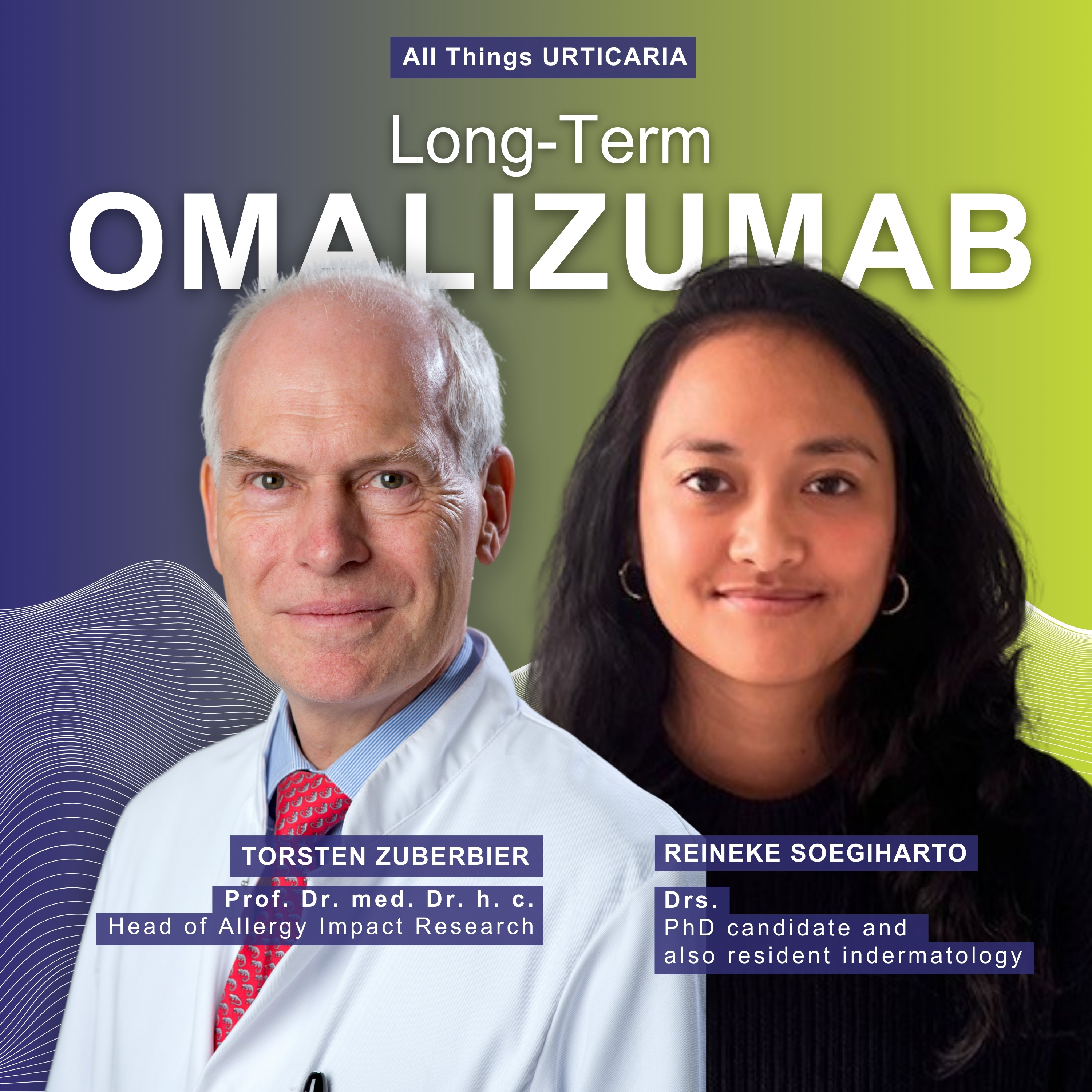
Drug Survival of Omalizumab episode artwork

EPISODE · Feb 24, 2026 · 17 MIN

Drug Survival of Omalizumab

from All Things Urticaria – Learning about urticaria with Prof. Dr. Torsten Zuberbier · host UCARE, the Global Allergy and Asthma Excellence Network for Urticaria

In this episode of the Urticaria podcast series, Prof. Torsten Zuberbier speaks with Reineke Soegiharto, PhD candidate and dermatology resident from UMC Utrecht, about the international UCARE study DRUSO-CU, which investigated the drug survival of omalizumab in chronic urticaria. They discuss: 🔹 What does “drug survival” mean and why is it a meaningful real-world outcome measure? 🔹 How long do patients with chronic urticaria typically remain on omalizumab therapy? 🔹 Why do patients discontinue treatment — and what does this say about effectiveness and safety? 🔹 How do early treatment response and disease duration influence long-term outcomes? 🔹 What role do chronic inducible urticarias (CIndU) play in treatment duration? 🔹 Are adverse events or reimbursement issues relevant reasons for stopping omalizumab? Based on data from more than 2,000 patients across 14 UCARE centers worldwide, the study shows that omalizumab has excellent long-term safety and effectiveness. Importantly, treatment discontinuation is most often due to well-controlled disease, not side effects or lack of efficacy. Patients with a rapid early response tend to stop treatment sooner, while those with longer disease duration or concomitant CIndU often require longer therapy. The discussion highlights the importance of early and effective disease control and showcases the value of international collaboration within the UCARE network. Key Learnings from the Episode:Drug survival reflects effectiveness, safety, and real-world treatment decisions. About 50% of patients remain on omalizumab after 3.3 years overall. In good responders, 50% are still treated after approximately 7 years. Discontinuation is most commonly due to well-controlled disease. Adverse events do not significantly impact omalizumab drug survival. Early and strong treatment response predicts shorter overall treatment duration. Longer disease duration before treatment is associated with longer therapy needs. Patients with chronic inducible urticaria often remain on treatment longer.Seasonal and subtype differences are relevant in CIndU management. Reimbursement issues were not a major factor in treatment discontinuation. Omalizumab shows an excellent long-term safety profile. International UCARE collaboration enables meaningful real-world research. Chapters:00:00 Introduction to Urticaria and Research Initiatives03:10 Understanding Drug Survival in Chronic Urticaria06:10 Predictors of Treatment Duration with Omalizumab08:54 The Role of Disease Duration and Response11:33 Exploring Chronic Inducible Urticaria14:23 The Experience of Collaborative Research in UCAREDo you have suggestions for future episodes? Please provide feedback and offer your suggestions for future topics and expert selection here.   Feedback form: ATU: ⁠⁠⁠⁠⁠⁠https://forms.office.com/e/m6a2uEdsUH

In this episode of the Urticaria podcast series, Prof. Torsten Zuberbier speaks with Reineke Soegiharto, PhD candidate and dermatology resident from UMC Utrecht, about the international UCARE study DRUSO-CU, which investigated the drug survival of omalizumab in chronic urticaria. They discuss: 🔹 What does “drug survival” mean and why is it a meaningful real-world outcome measure? 🔹 How long do patients with chronic urticaria typically remain on omalizumab therapy? 🔹 Why do patients discontinue treatment — and what does this say about effectiveness and safety? 🔹 How do early treatment response and disease duration influence long-term outcomes? 🔹 What role do chronic inducible urticarias (CIndU) play in treatment duration? 🔹 Are adverse events or reimbursement issues relevant reasons for stopping omalizumab? Based on data from more than 2,000 patients across 14 UCARE centers worldwide, the study shows that omalizumab has excellent long-term safety and effectiveness. Importantly, treatment discontinuation is most often due to well-controlled disease, not side effects or lack of efficacy. Patients with a rapid early response tend to stop treatment sooner, while those with longer disease duration or concomitant CIndU often require longer therapy. The discussion highlights the importance of early and effective disease control and showcases the value of international collaboration within the UCARE network. Key Learnings from the Episode:Drug survival reflects effectiveness, safety, and real-world treatment decisions. About 50% of patients remain on omalizumab after 3.3 years overall. In good responders, 50% are still treated after approximately 7 years. Discontinuation is most commonly due to well-controlled disease. Adverse events do not significantly impact omalizumab drug survival. Early and strong treatment response predicts shorter overall treatment duration. Longer disease duration before treatment is associated with longer therapy needs. Patients with chronic inducible urticaria often remain on treatment longer.Seasonal and subtype differences are relevant in CIndU management. Reimbursement issues were not a major factor in treatment discontinuation. Omalizumab shows an excellent long-term safety profile. International UCARE collaboration enables meaningful real-world research. Chapters:00:00 Introduction to Urticaria and Research Initiatives03:10 Understanding Drug Survival in Chronic Urticaria06:10 Predictors of Treatment Duration with Omalizumab08:54 The Role of Disease Duration and Response11:33 Exploring Chronic Inducible Urticaria14:23 The Experience of Collaborative Research in UCAREDo you have suggestions for future episodes? Please provide feedback and offer your suggestions for future topics and expert selection here.   Feedback form: ATU: ⁠⁠⁠⁠⁠⁠https://forms.office.com/e/m6a2uEdsUH

NOW PLAYING

Drug Survival of Omalizumab

0:00 17:03

No transcript for this episode yet

We transcribe on demand. Request one and we'll notify you when it's ready — usually under 10 minutes.

MG Show MG Show The MG Show, hosted by Jeffrey Pedersen and Shannon Townsend, is a leading alternative media platform dedicated to uncovering the truth behind today’s most pressing political issues. Launched in 2019, the show has grown exponentially, offering unfiltered insights, comprehensive research, and real-time analysis. With a commitment to independent journalism and factual integrity, the MG Show empowers its audience with knowledge and encourages active participation in the political discourse. Eat to Live Jenna Fuhrman, Dr. Fuhrman Our health is our most precious gift and smart nutrition can change your life. Each month, join Dr. Fuhrman and his daughter, Jenna Fuhrman as they discuss important topics in the world of nutrition. Eat to Live will change the way you eat and think about food. French Your Way Jessica: Native French teacher founder of French Your Way Boost your French listening skills and test your comprehension with this one of a kind series of podcasts. Get the chance to listen to a real conversation between native speakers talking at normal speed AND customise your learning experience through carefully designed sets of questions (2 levels of difficulty) available for download at www.frenchvoicespodcast.com. All interviews also come with the transcript. French teacher Jessica interviews native speakers of French from around the world who share a bit of their life and passion. Where else would you meet in one same place a French yoga teacher based in Melbourne, a soap manufacturer from Provence, or a couple cycling around the world? That Hoarder: Overcome Compulsive Hoarding That Hoarder Hoarding disorder is stigmatised and people who hoard feel vast amounts of shame. This podcast began life as an audio diary, an anonymous outlet for somebody with this weird condition. That Hoarder speaks about her experiences living with compulsive hoarding, she interviews therapists, academics, researchers, children of hoarders, professional organisers and influencers, and she shares insight and tips for others with the problem. Listened to by people who hoard as well as those who love them and those who work with them, Overcome Compulsive Hoarding with That Hoarder aims to shatter the stigma, share the truth and speak openly and honestly to improve lives.

Frequently Asked Questions

How long is this episode of All Things Urticaria – Learning about urticaria with Prof. Dr. Torsten Zuberbier?

This episode is 17 minutes long.

When was this All Things Urticaria – Learning about urticaria with Prof. Dr. Torsten Zuberbier episode published?

This episode was published on February 24, 2026.

What is this episode about?

In this episode of the Urticaria podcast series, Prof. Torsten Zuberbier speaks with Reineke Soegiharto, PhD candidate and dermatology resident from UMC Utrecht, about the international UCARE study DRUSO-CU, which investigated the drug survival of...

Can I download this All Things Urticaria – Learning about urticaria with Prof. Dr. Torsten Zuberbier episode?

Yes, you can download this episode by clicking the download button on the episode player, or subscribe to the podcast in your preferred podcast app for automatic downloads.
URL copied to clipboard!