
EPISODE · Jan 27, 2026 · 1H 8M
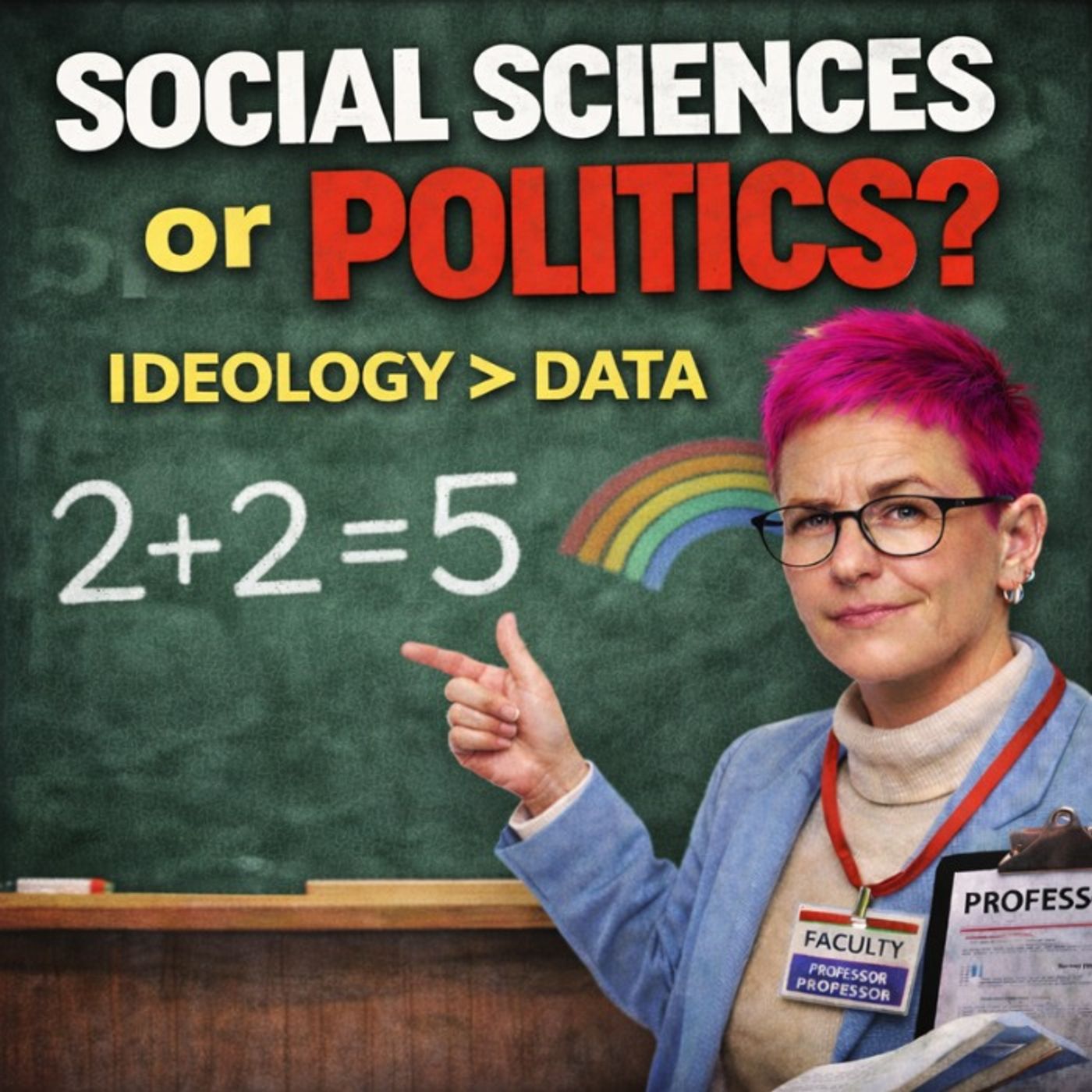
E181: Politics Is the Best Predictor of Academic Research — Prof Mark Horowitz
from El Podcast · host El Podcast, El Podcast Media, Jesse Wright, Mark Horowitz
Political beliefs often matter more than data or methods in shaping how social scientists think about controversial issues. In this episode, sociologist Dr. Mark Horowitz explains why many professors line up by politics on hot-button questions, drawing on moral psychology, groupthink inside universities, and the idea that some topics become treated as morally untouchable “sacred victims.”Guest bio:Dr. Mark Horowitz is a Professor of Sociology at Seton Hall University whose research uses large surveys of faculty to study political bias, motivated reasoning, and viewpoint diversity in the social sciences.Topics discussed:Why politics predicts social-science positions on controversial questionsMoral Foundations Theory (Jonathan Haidt): care/fairness vs. loyalty/authority/sanctity“Bio-resistance” / discomfort with biological explanations in parts of the academyAnthropology & sociology survey findings (e.g., plausibility of evolved sex differences; biology & STEM gaps)“Sacred victims,” ingroup policing, and why some hypotheses become morally “off-limits”Postmodernism vs. “postmodern vibes”: activist scholarship without explicit postmodern labelsGrievance studies hoax + “idea laundering” and how ideas move journal → curriculum → common senseTenure realities: how dissent can be managed without formal firingReplication/reliability worries and what “fixes” might actually help: introspection + viewpoint diversityMain points:Humans reason with motivated cognition, and academics aren’t exempt—political identity often tracks judgments on contested claims.Moral intuitions shape what feels plausible: some explanations trigger moral disgust (e.g., claims perceived as “naturalizing inequality”).Fields with extreme ideological skew risk narrowing hypothesis space, intensifying policing, and losing public legitimacy.The issue isn’t “one side evil”—it’s how moral communities become interpretive communities (and vice versa).The best corrective mechanisms are viewpoint diversity, active engagement with opposing arguments, and self-awareness about bias.Top 3 quotes:“Do you believe it because the evidence suggests it—or because it’s congenial to how you feel?”“Interpretive communities become moral and emotional communities—and then disagreement feels morally wrong, not just empirically wrong.”“The only way to minimize distortion is introspection plus viewpoint diversity—actively seeking ideas that unsettle us.” 🎙 The Pod is hosted by Jesse Wright💬 For guest suggestions, questions, or media inquiries, reach out at https://elpodcast.media/📬 Never miss an episode – subscribe and follow wherever you get your podcasts.⭐️ If you enjoyed this episode, please rate and review the show. It helps others find us. Thanks for listening!
Embed this episode
What this episode covers
Dr. Mark Horowitz, Professor of Sociology at Seton Hall University, argues that politics often predicts where professors land on hot-button issues before the research even begins. In this episode, he reveals how groupthink, moral instincts, and “untouchable” topics shape modern social science.
NOW PLAYING
E181: Politics Is the Best Predictor of Academic Research — Prof Mark Horowitz
No transcript for this episode yet
Similar Episodes
No similar episodes found.
Similar Podcasts
No similar podcasts found.