
EPISODE · Aug 24, 2026 · 19 MIN
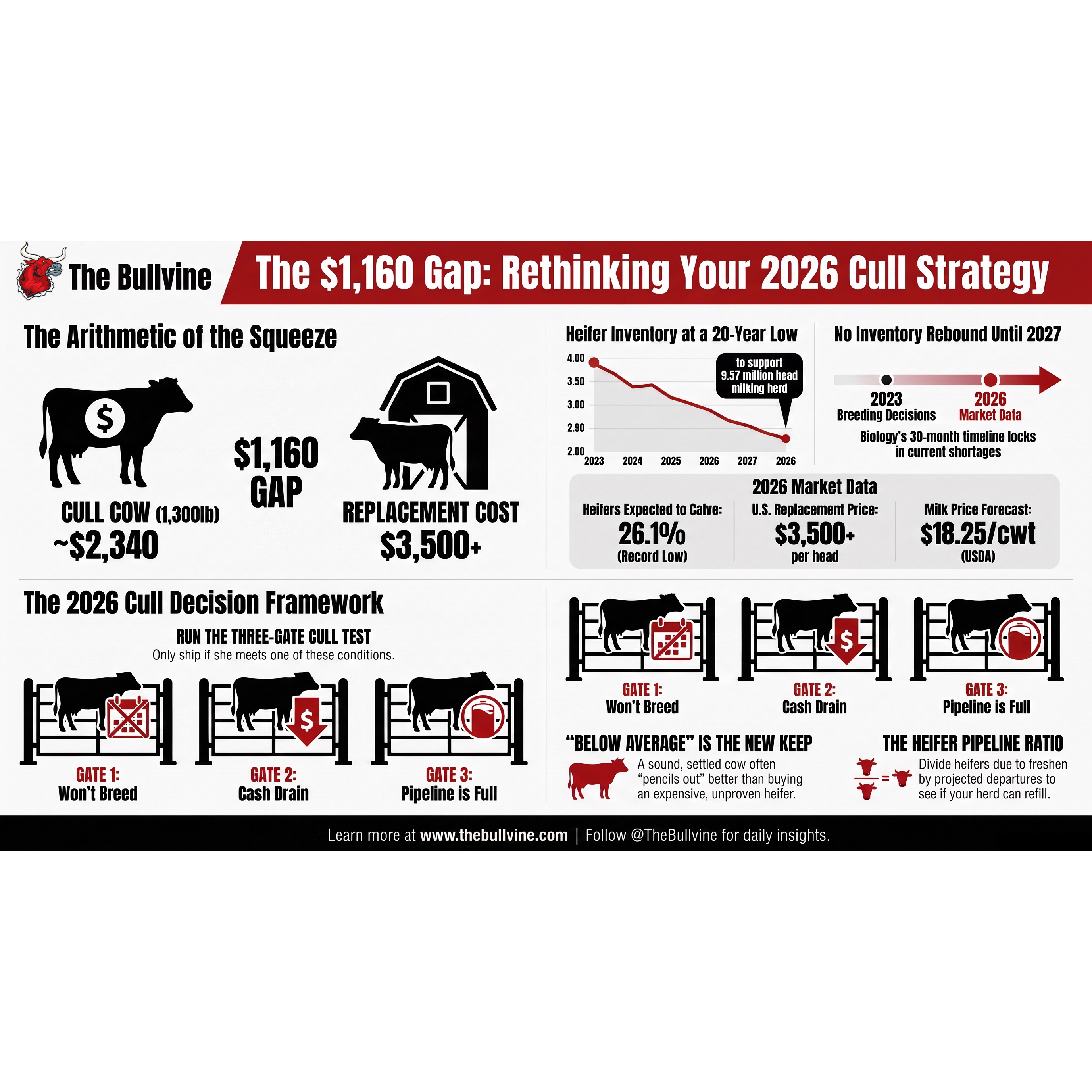
E636 That cull cow brings $2,340. Her replacement costs $3,500.
from The Bullvine
Cashing a $2,340 cull check today leaves an immediate $1,160 hole when replacement heifers cost $3,500-plus in the tightest inventory since 1978.On this edition of The Bullvine Podcast, we break down why shipping a sound, bred cow milking under herd average is no longer an automatic load. USDA counts replacement heifers at just 3.90 million head while the milking herd sits at 9.57 million. We examine CoBank data on the 438,844-heifer deficit, calculate true net swap costs, and outline why holding sound cows protects working capital.What You'll Learn: • Why a $2,340 cull check leaves you $1,160 in the hole before lost milk • How the beef-on-dairy boom locked in a 438,844-heifer shortage • The three-gate test to run before loading any cow on the trailer • How forced replacement purchases hit 60-cow herds hardest • Why Canadian supply-managed economics change the replacement equation • How to calculate your beef-on-dairy cap from replacement need upwardCulling by habit rather than inventory arithmetic drains farm equity. Replacement animals represent 15% to 20% of milk production costs, and CoBank models project no heifer inventory recovery before 2027. Corey Geiger notes that dairy farmers must cull fewer cows simply to keep milk flowing. On a 250-cow herd, shipping five convenience culls creates a $5,800 to $13,300 purchase gap. Shipping open, chronic problem cows is smart business, but below-average, settled cows are often the cheapest animals in your barn.Listen & Connect: Full article and sources: https://www.thebullvine.com/farm-economics-management/cull-cow-replacement-cost-2026/ Subscribe for straight-talking dairy analysis. Share this with a producer who needs it.
Embed this episode
NOW PLAYING
E636 That cull cow brings $2,340. Her replacement costs $3,500.
No transcript for this episode yet
Similar Episodes
No similar episodes found.
Similar Podcasts
No similar podcasts found.