
EPISODE · Jun 9, 2026 · 51 MIN
E8: Rethinking Risk Management in the Humanitarian and Development Sector
from The Sector Debrief · host The Sector Debrief
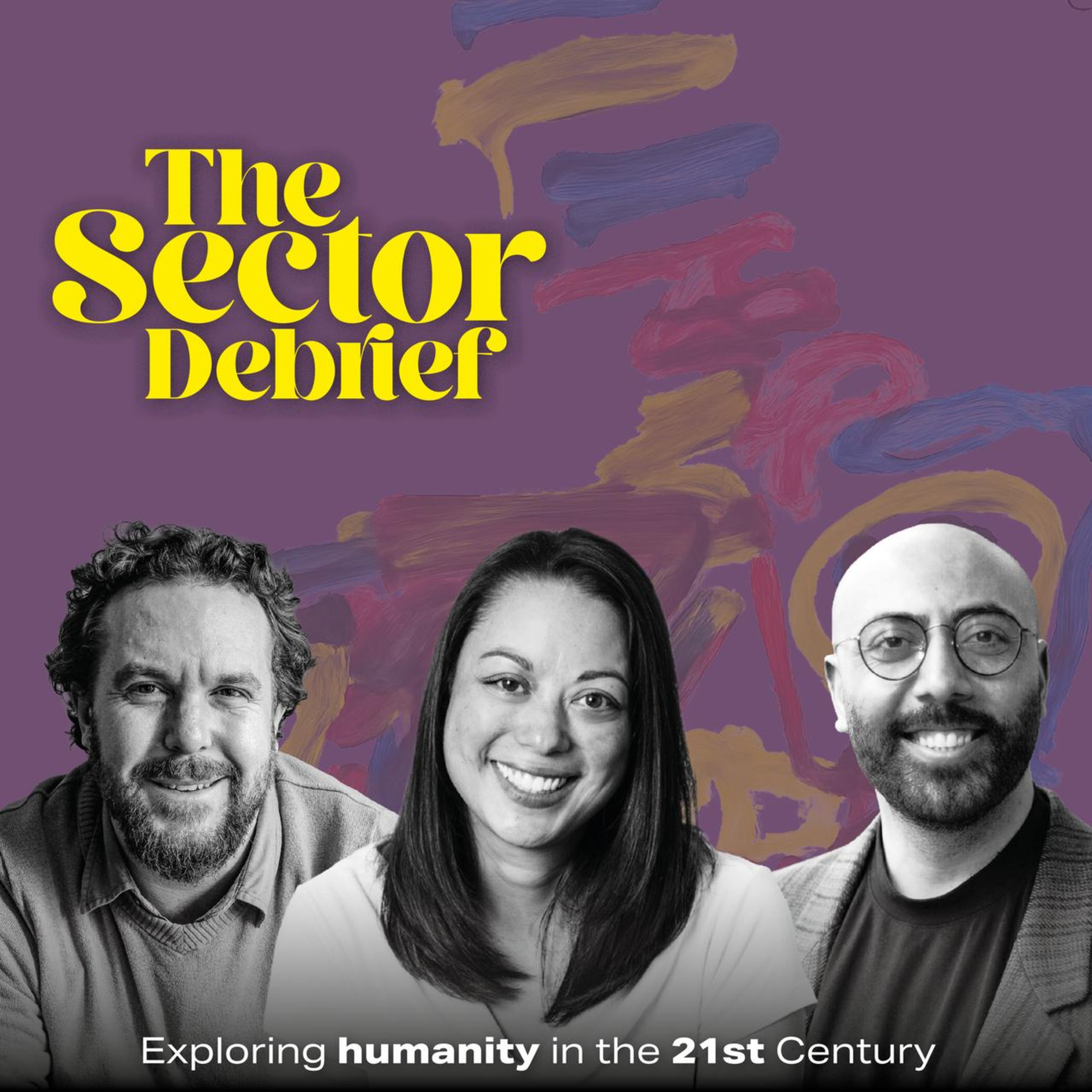
In this episode, Kim Kucinskas, Thomas Jepson-Lay, and Ali Al Mokdad are joined by Sabrina M. Segal, Director of The Risk Collaborative, who has spent years working on how organisations in the humanitarian and development sector actually think about risk. Her argument: risk is not compliance. It is the effect of uncertainty on objectives, and most of the sector has been doing it backwards, starting from a list of everything that might go wrong instead of from what the work is trying to achieve.The conversation moves between the practical and the structural, and Sabrina does not stop at the critique. She offers the tools. Start from the objective, then treat risk as a two-sided coin of threats and opportunities, because a sector that only looks at the downside loses half its creativity. Do the analysis upstream while the objective is still being designed, so the numbers can defend a budget when a funder reaches for the red pen. Run a three plus three strategy instead of a five year plan nobody can escape two years in. Replace endless prediction with organisational fragility work, her phrase is "don't predict, prepare", because over-reliance on one big funder sat on every risk register for years and the registers saved no one. And use the three P framework, Project, Partner, Patron, which reframes a women's organisation in Sudan judged high risk for lacking an insurance market that does not exist, and plots funders on a line from command and control to trust to see how far they will actually bend.Ali Al Mokdad reflects on how risk gets branded to win attention from headquarters, and why what a process leaves out often says more than what it includes. Kim Kucinskas builds on this with the idea of risk as a crack of opportunity, a language people in power actually listen to. Thomas Jepson-Lay presses on competing objectives and the fear of failure, and what happens when protecting the organisation quietly replaces protecting its purpose. It lands on what Ali calls the generational fight: clearing out the inherited compliance, outdated governance, and habits that drain the sector's energy, so the people who come next can spend theirs on the things that actually matter, climate, hunger, health, rather than the machinery around them.Honest thinking, shared without scripts and without talking points.
Embed this episode
Ready to play
E8: Rethinking Risk Management in the Humanitarian and Development Sector
No transcript for this episode yet
Similar Episodes
No similar episodes found.
Similar Podcasts
No similar podcasts found.