
EPISODE · Jul 11, 2025 · 24 MIN
Earth's Ancient Secrets: Unveiling the Oldest Rocks and Mars' Frozen History
from SpaceTime with Stuart Gary · host Stuart Gary
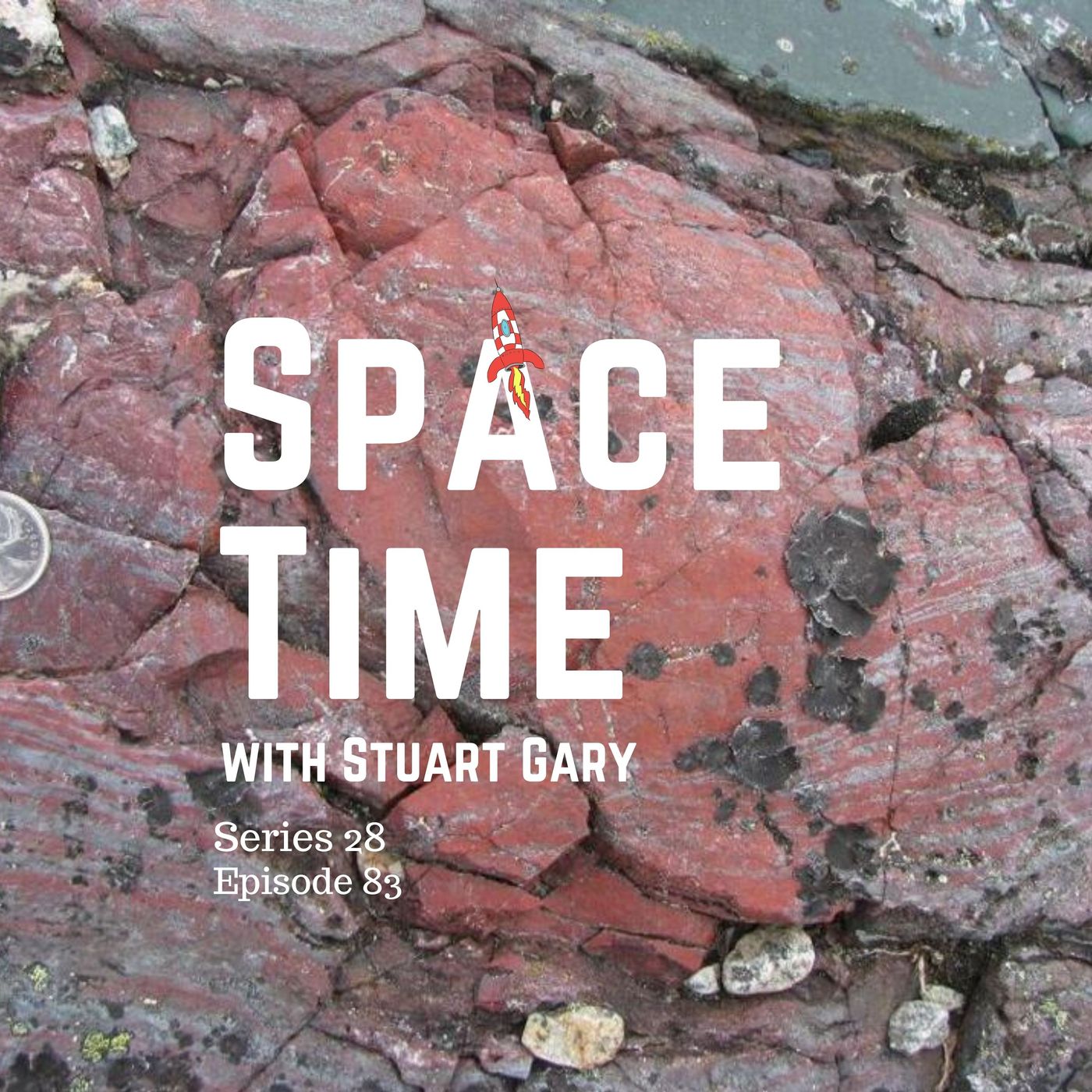
This episode of SpaceTime is brought to you by NordVPN....our official VPN partner. To get your special SpaceTime listener offer, simply visit www.nordvpn.com/stuartgary. You'll be glad you did...and remember, our special offer comes with a 30 day money back guarantee...so there's nothing to lose. In this episode of SpaceTime, we delve into groundbreaking research that sheds light on Earth's ancient history, the formation of hot Jupiters, and the enigmatic climate of Mars.Earth's Oldest Rocks Confirmed in Northern CanadaA recent study published in the journal Science confirms that the oldest rocks on Earth are located in northern Quebec, Canada, dating back 4.16 billion years. Lead author Jonathan Nally. from the University of Ottawa explains how this discovery provides a unique window into the Hadean Eon, offering insights into the early Earth's environment and the formation of its first continents. While the Jack Hills Range in Australia holds the oldest material of terrestrial origin, these Canadian rocks are pivotal in understanding Earth's formative years.New Insights into Hot Jupiter FormationWe explore the intriguing case of CI Tau B, a hot Jupiter that orbits a young star just 450 light-years away. Researchers from Rice University and Lowell Observatory have utilized advanced spectroscopic techniques to analyze the planet's mass and brightness, revealing that it formed through a hot start mechanism rather than traditional models. This study provides a critical benchmark for understanding how giant planets can form rapidly in close proximity to their stars, challenging long-held assumptions in planetary science.Was Mars Always Doomed to be a Desert?A new hypothesis from the University of Chicago suggests that Mars was never meant to remain a warm, habitable planet. The study indicates that the planet's past liquid water periods were likely short-lived, driven by the Sun's gradual brightening. Unlike Earth, which has maintained its habitability, Mars appears to self-regulate towards desert conditions, raising questions about the mechanisms that have led to its current frozen state. The findings, published in Nature, build on previous discoveries by NASA's Curiosity rover and could reshape our understanding of Martian climate history.www.spacetimewithstuartgary.com✍️ Episode ReferencesScience Journalhttps://www.sciencemag.org/Astrophysical Journal Lettershttps://iopscience.iop.org/journal/1538-4357Nature Journalhttps://www.nature.com/natureBecome a supporter of this podcast: https://www.spreaker.com/podcast/spacetime-space-astronomy--2458531/support.
Embed this episode
NOW PLAYING
Earth's Ancient Secrets: Unveiling the Oldest Rocks and Mars' Frozen History
No transcript for this episode yet
Similar Episodes
No similar episodes found.
Similar Podcasts
No similar podcasts found.