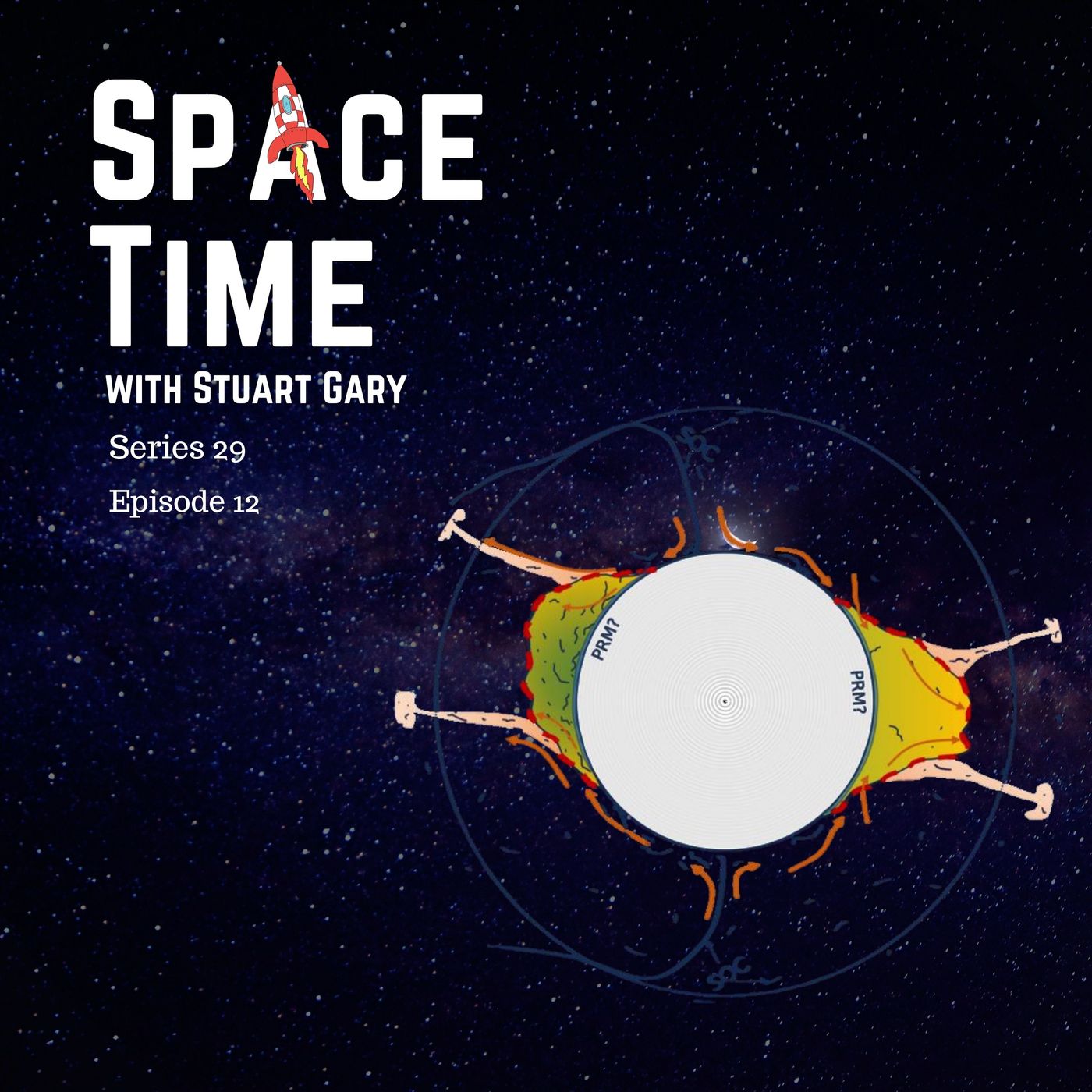
Earth's Hidden Mantle Secrets: Mars' Blue Past and the Cosmic Gas Pipeline of Galaxy Growth episode artwork

EPISODE · Jan 28, 2026 · 24 MIN

Earth's Hidden Mantle Secrets: Mars' Blue Past and the Cosmic Gas Pipeline of Galaxy Growth

from SpaceTime with Stuart Gary · host Stuart Gary

Sponsor Link:This episode is brought to you with thanks to Squarespace. Bring your stories to life with Squarespace, the easiest way to create an exceptional website, blog, portfolio, or online store. To take up our great offer and help support the show, just visit www.squarespace.com/spacetime or use the Promo Code SPACETIME at checkout.SpaceTime with Stuart Gary Gary - Series 29 Episode 12In this episode of SpaceTime, we uncover groundbreaking discoveries about Earth's mantle, the watery past of Mars, and the rapid growth of galaxies through cool gas filaments.Distinct Histories of Earth’s Mantle ProvincesRecent research reveals that the two massive continent-sized regions deep within the Earth's mantle have unique chemical compositions and histories. This study challenges long-held assumptions and uses seismic wave data to illustrate how these large low velocity provinces differ in density and material, impacting the planet's heat extraction from the core and potentially affecting the stability of Earth's magnetic field.Confirmation of Mars as a Blue PlanetNew evidence from ancient Martian river deltas suggests that Mars was once covered by a vast ocean. High-resolution images reveal delta-like structures, indicating that water once flowed into an ocean approximately 3 billion years ago. This discovery supports the notion of a once habitable environment on Mars, offering insights into its geological history and the potential for life.Galaxies Growing Through Cool Gas FilamentsA fascinating new study has demonstrated how galaxies can rapidly grow by drawing in filaments of cool gas. Observations from the Keck Telescope's Cosmic Webb Imager provide direct evidence of these gas streams spiraling into galaxies, fueling star formation at unprecedented rates. This research offers significant insights into the processes of galaxy formation and the role of the cosmic web in shaping the universe.www.spacetimewithstuartgary.com✍️ Episode ReferencesScientific ReportsMPJ Space ExplorationNature AstronomyBecome a supporter of this podcast: https://www.spreaker.com/podcast/spacetime-your-guide-to-space-astronomy--2458531/support.(00:00:00) Distinct histories of Earth's mantle provinces(00:12:15) Mars confirmed as a blue planet with ancient ocean(00:25:30) Galaxies grow rapidly through cool gas filaments(00:35:00) Discovery of the oldest known rock art in the world.

Sponsor Link:This episode is brought to you with thanks to Squarespace. Bring your stories to life with Squarespace, the easiest way to create an exceptional website, blog, portfolio, or online store. To take up our great offer and help support the show, just visit www.squarespace.com/spacetime or use the Promo Code SPACETIME at checkout.SpaceTime with Stuart Gary Gary - Series 29 Episode 12In this episode of SpaceTime, we uncover groundbreaking discoveries about Earth's mantle, the watery past of Mars, and the rapid growth of galaxies through cool gas filaments.Distinct Histories of Earth’s Mantle ProvincesRecent research reveals that the two massive continent-sized regions deep within the Earth's mantle have unique chemical compositions and histories. This study challenges long-held assumptions and uses seismic wave data to illustrate how these large low velocity provinces differ in density and material, impacting the planet's heat extraction from the core and potentially affecting the stability of Earth's magnetic field.Confirmation of Mars as a Blue PlanetNew evidence from ancient Martian river deltas suggests that Mars was once covered by a vast ocean. High-resolution images reveal delta-like structures, indicating that water once flowed into an ocean approximately 3 billion years ago. This discovery supports the notion of a once habitable environment on Mars, offering insights into its geological history and the potential for life.Galaxies Growing Through Cool Gas FilamentsA fascinating new study has demonstrated how galaxies can rapidly grow by drawing in filaments of cool gas. Observations from the Keck Telescope's Cosmic Webb Imager provide direct evidence of these gas streams spiraling into galaxies, fueling star formation at unprecedented rates. This research offers significant insights into the processes of galaxy formation and the role of the cosmic web in shaping the universe.www.spacetimewithstuartgary.com✍️ Episode ReferencesScientific ReportsMPJ Space ExplorationNature AstronomyBecome a supporter of this podcast: https://www.spreaker.com/podcast/spacetime-your-guide-to-space-astronomy--2458531/support.(00:00:00) Distinct histories of Earth's mantle provinces(00:12:15) Mars confirmed as a blue planet with ancient ocean(00:25:30) Galaxies grow rapidly through cool gas filaments(00:35:00) Discovery of the oldest known rock art in the world.

NOW PLAYING

Earth's Hidden Mantle Secrets: Mars' Blue Past and the Cosmic Gas Pipeline of Galaxy Growth

0:00 24:32

No transcript for this episode yet

We transcribe on demand. Request one and we'll notify you when it's ready — usually under 10 minutes.

No similar episodes found.

No similar podcasts found.

Frequently Asked Questions

How long is this episode of SpaceTime with Stuart Gary?

This episode is 24 minutes long.

When was this SpaceTime with Stuart Gary episode published?

This episode was published on January 28, 2026.

What is this episode about?

Sponsor Link:This episode is brought to you with thanks to Squarespace. Bring your stories to life with Squarespace, the easiest way to create an exceptional website, blog, portfolio, or online store. To take up our great offer and help support the...

Is there a transcript available for this episode?

Yes, a full transcript is available for this episode. You can read the complete transcript on the episode page.

Can I download this SpaceTime with Stuart Gary episode?

Yes, you can download this episode by clicking the download button on the episode player, or subscribe to the podcast in your preferred podcast app for automatic downloads.
URL copied to clipboard!