
EPISODE · Dec 11, 2024 · 49 MIN
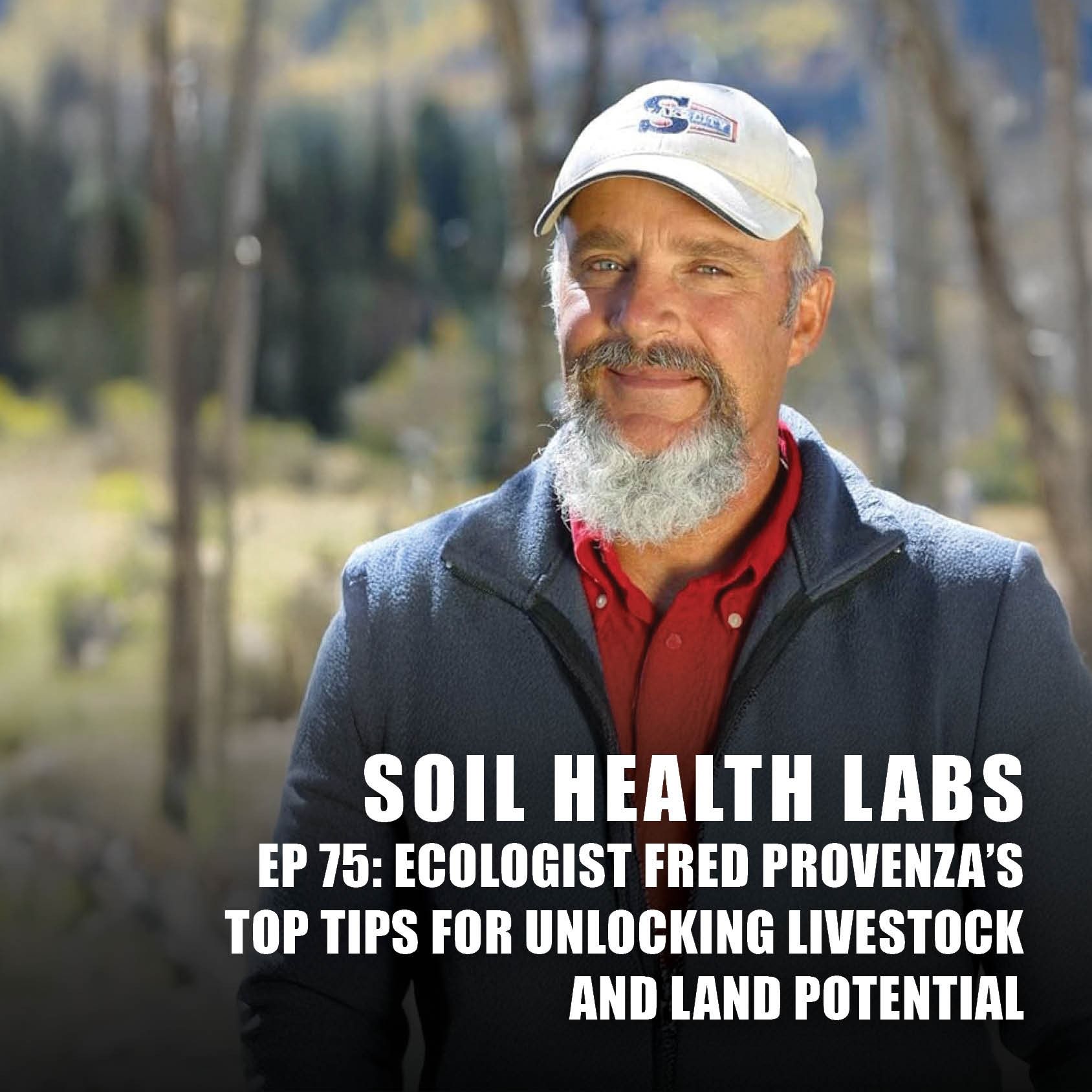
Ecologist Fred Provenza's Top Tips for Unlocking Livestock and Land Potential
from Soil Health Labs · host Soil Health Labs
In this second podcast with Dr. Fred Provenza, professor emeritus of Behavioral Ecology at Utah State University, and author of several important books on animal behavior and land stewardship, we discuss key themes include wildlife nutrition, ecological practices, and the interconnectedness of animal behavior and plant diversity. The discussion opens with Provenza detailing the Welfare Elk Program implemented at Deseret Land and Livestock, a large ranch on the Wyoming-Utah border. Faced with the challenge of elk wintering on neighboring lands and health issues like brucellosis and chronic wasting disease, the ranch transitioned from supplemental feeding to promoting natural foraging. By strategically using cattle to graze specific areas, elk were encouraged to self-sustain, breaking a cycle of dependency on human-provided food. This shift not only benefited the elk but fostered a new generation of calves unfamiliar with artificial feeding, establishing a "culture of welfare elk."Provenza also elaborates on the importance of diverse landscapes for livestock health. He highlights how animals instinctively seek a variety of plant species, which contain secondary compounds (physochemicals) that play a vital role in their nutrition and health. These compounds, once dismissed as mere plant defenses, are now recognized for their potential health benefits, serving as antioxidants and aiding in self-medication. By grazing diverse plant species, animals reduce their reliance on veterinary care, demonstrating a deep-rooted nutritional wisdom that connects them to their environments.A significant anecdote shared is Claire Sylvia’s experience following her organ transplant, as recounted in her book "A Change of Heart." Sylvia’s story illustrates how organ recipients often experience changes in food preferences that align with those of their donors, suggesting a profound connection between body and identity. Provenza draws parallels between this and the dietary choices of animals, emphasizing that the feedback mechanisms within both animal and human bodies guide their nutritional decisions.Throughout the interview, Provenza emphasizes the importance of understanding animal behavior and ecology as interconnected systems. The wisdom animals demonstrate in selecting their diets reflects an intimate knowledge of their landscapes, akin to the complexities of the human microbiome. He notes that, just as plants transform soil into a diverse ecosystem of nutrients, animals thrive by foraging from varied plant sources, reinforcing the idea that both species are part of a larger ecological web.In essence, the discussion highlights how fostering a more holistic view of animal nutrition—grounded in ecological practices, diverse landscapes, and understanding the innate knowledge of animals—can lead to healthier ecosystems and livestock. Provenza’s insights encourage a reevaluation of conventional agricultural practices, promoting a deeper appreciation for the natural instincts that guide animal foraging and well-being.Fred reflects on the limitations and complexities of scientific inquiry, especially in fields like ecology, economics, and sociology. He discusses the concept of "trans-science," which refers to questions and phenomena that lie beyond the capabilities of traditional scientific methods to fully answer. Early in his career, Fred believed that rigorous study would lead to predictable and controllable outcomes, akin to the precision of physics. However, he gradually recognized that science can only provide provisional insights into complex systems.Fred emphasizes that the interactions within ecological systems often defy reductionist approaches. He illustrates this with the example of studying secondary compounds in foods: while individual compounds can be analyzed, the sheer complexity of combinations in real meals makes it impossible to fully understand their effects in isolation. He champions the idea that "food, not nutrient" is the basic unit of nutrition, highlighting that the synergistic effects of various compounds in whole foods are crucial for health.He critiques the historical emphasis on competition within ecological theories, which he argues stems from economic models. Instead, he promotes the concept of cooperation and synergies among diverse species as essential for ecological health. This perspective informs his approach to agriculture, advocating for polycultures over monocultures, as diversity fosters greater resilience and nutrient density.Fred also explores the philosophical underpinnings of scientific inquiry, discussing how science is inherently limited and tentative. He encourages scientists to remain open-minded and to adapt based on data rather than clinging to preconceived hypotheses. He shares personal anecdotes of frustration and learning throughout his research journey, underscoring the importance of integrity in scientific practice.Lastly, Fred highlights the significance of creativity in both nature and human systems, arguing that true understanding emerges from participation in the environment. He suggests that by embracing our interconnectedness with nature, we can cultivate more effective and innovative approaches to ecological and agricultural challenges. Overall, Fred advocates for a holistic, cooperative view of science and ecology, one that values the complex interactions within ecosystems and the creative potential inherent in these systems.Additional Resources:Dr. Fred Provenza’s Talk at Utah State University: The Web of Life EventDr. Fred Provenza’s Books:NY Times Article: Montana at has more Cows than People: why are Locals eating Beef from Brazil? https://www.nytimes.com/2024/06/13/business/montana-meat-old-salt-co-op.html
Embed this episode
Ready to play
Ecologist Fred Provenza's Top Tips for Unlocking Livestock and Land Potential
No transcript for this episode yet
Similar Episodes
No similar episodes found.
Similar Podcasts
No similar podcasts found.