
EPISODE · Nov 21, 2024 · 14 MIN
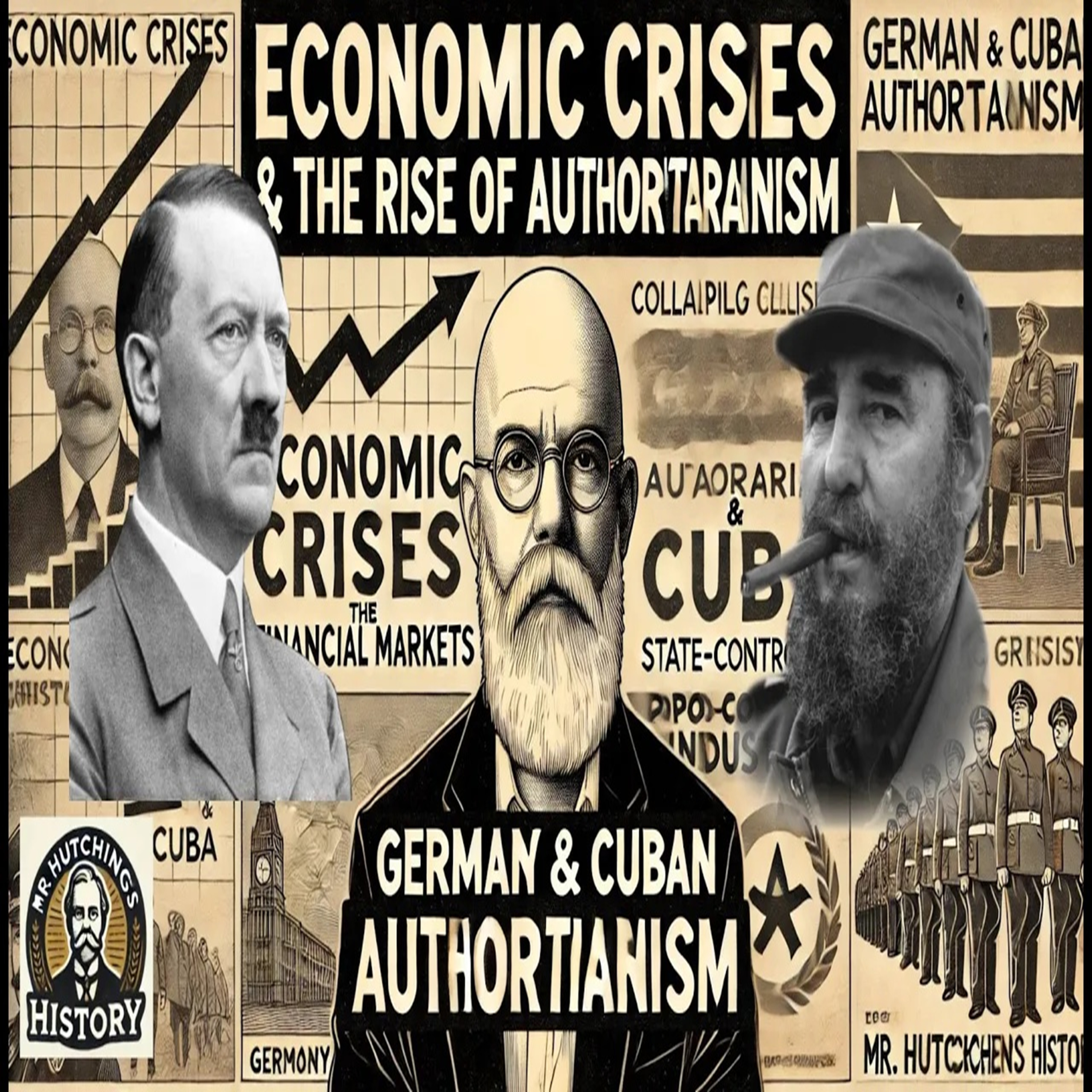
Economic Crises and the Rise of Authoritarianism – Hitler’s Germany and Castro’s Cuba
from Mr. Hutchings History · host Produced, created, and written by Harold M. Hutchings
Welcome to Mr. Hutchings History, where we explore how economic crises shaped two of the 20th century’s most impactful authoritarian regimes: Hitler’s Germany and Castro’s Cuba. In this episode, we compare the economic turmoil in Nazi Germany following the 1929 Great Depression and the social inequalities in 1950s Cuba under Batista. We delve into how both Hitler and Castro capitalized on these crises to rise to power—Hitler through manipulation of the Weimar Republic’s failure and Castro via revolutionary warfare. From Hitler’s use of the Reichstag Fire to consolidate power to Castro’s reforms like land redistribution and nationalization of industries, we examine how each leader reshaped their nations economically and socially. Learn how both regimes utilized crisis to implement repressive policies and the lasting impacts of their economic and social reforms. #HitlersGermany #CastrosCuba #Authoritarianism #EconomicCrisis #GreatDepression #CubanRevolution #WeimarRepublic #NaziGermany #SocialReform #RevolutionaryMovements #PoliticalHistory #20thCenturyHistory #Totalitarianism #MarxistRevolution #FidelCastro #AdolfHitler #IBHistory #Paper2History #WorldHistory #EconomicPolicies #SocialJustice #ColdWar #DependencyTheory #Functionalism #Intentionalism Works Cited Frank, Andre Gunder. Dependent Accumulation and Underdevelopment. Monthly Review Press, 1979. Gott, Richard. Cuba: A New History. Yale UP, 2004. Kershaw, Ian. Hitler: A Biography. Norton, 2008. Mommsen, Hans. The Rise and Fall of Weimar Democracy. UNC Press, 1996.
Embed this episode
NOW PLAYING
Economic Crises and the Rise of Authoritarianism – Hitler’s Germany and Castro’s Cuba
No transcript for this episode yet
Similar Episodes
No similar episodes found.
Similar Podcasts
No similar podcasts found.