The topics and opinions expressed in the following show are solely those of the hosts and their guests and not those of W4CY Radio It's employees are affiliates. We make no recommendations or endorsements radio show program services or products mentioned on air or on our web. No liability explicit implied shall be extended to W4CY Radio or it's employees are affiliates. Any questions or comments should be directed to those show hosts.
Thank you for choosing W4CY Radio. Welcome back everyone to the Geek's Caesars and Googlesation Show, the home of Googlesation Nation, where we talk with HR and business thought leaders about the crazy shift going on in the world of business, technology and HR. Here's your host, Ira Wolf. Hello everyone and welcome back to Geek's Caesars and Googlesation.
Hello everyone in Googlesation Nation. We hope that you continue to be safe, particularly protecting yourself, social distancing, masking. It's getting pretty scary out there and welcome back Joyce. Joya, as my co-host again, so appreciate it.
Great to be here with you, Ira. Yeah, I'm sort of living in my bubble here. I'm in my office and obviously I've been working from home for a long time. But the office, there's one window and I have a black belt because the sun literally comes right in my face and not very good when I'm on Zoom calls to have this light coming in.
Plus, I can't see when it's early in the morning or earlier in the day. It's a direct light. So I have a black belt. So I walked up the steps just a few minutes ago to get ready, refresh my coffee and it's like two inches of snow on the ground.
I didn't even know it was supposed to snow. So one of those events of living in the bubble, which sort of reflects what we're going to be talking about today. Yes, it's one of those things I missed, by the way, living in Austin is the snow. But I left out of New York because I didn't like it.
Yeah, I didn't miss it at all. We lived just at the foothills of the Bocano, so we're going to get that again. But you talk about living in this bubble, what's going to happen next? And every time you walk up the steps, it's cloudy, it's raining and today I was snowing.
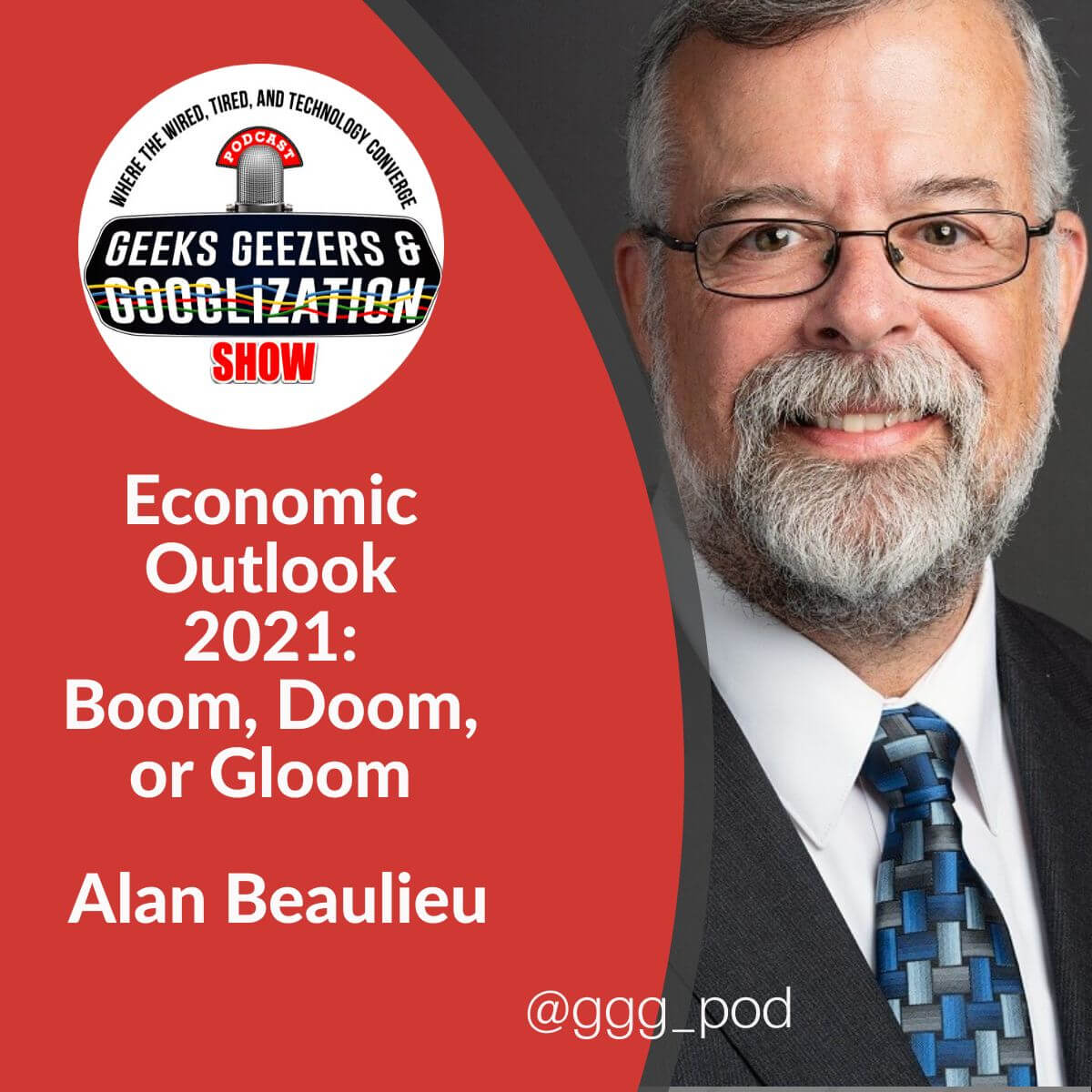
We're our guest today. He's a repeat. He actually has the record for most repeat guests. It's Alan Bello from ITR Economics.
And with good reason. Yeah, outstanding reason one is a great guest. But with the firm, he's had an ITR economics with his brother. The firm is about 70 years old, I believe he can correct me on that.
I think it was started in 49 or so. But since they got involved and they've taken it over for the last 30 some years, 94.7% accuracy rate, predicting the economy, I would say predicting forecasting, but the economy will be like, I got a picture on here. So forecasting the economy, what it's going to be like a year out. Nobody's that good at the month out or two weeks out or even a quarter, but a year out, 94.7%.
So it's amazing. I sent out a newsletter the other day that he was going to be on the show again. We've been posting on LinkedIn getting a lot of feedback. So many people said, oh, I've seen him for years or they subscribed to his newsletter, which he will share with you how you can join it.
I highly recommend participating in that, subscribing to that as well, especially for your business. No question about it. Every year I issue a workplace work forecast for the next year. And I'm really looking forward to hearing what Alan has to say so that I can incorporate that with credit, of course, into my forecast.
Yeah, well, you may have an extra long newsletter this year. It's pretty long. Yeah, so we've got a whole lot more to do. It was just a couple of things that happened this week.
I know you've had an incredibly busy, crazy week. We were doing between yesterday and today. I spoke on UNESCO this morning. Yeah, again, it's sort of like wet pandemic.
I mean, it's a good thing. And other people are struggling. And that's what we're going to talk about. What's that economic outlook?
And it looks like I have some fairly, this was busy week for me, as usual, as it always is. But my book, A Recruiting in the Age of Globalization, was actually selected to be, was the top 50 book to read in 2021 from April 60. Great. I know some are around.
Congratulations, Ira. That was good. Wonderful feathering your cap. Yeah, thank you.
And a couple articles, the article yesterday, Resilience, that I focused on Resilience, was just in Cornerstone on Demand, rework. So if you go to Cornerstone on Demand, rework, it's there. But if you subscribe to Googleization Nation, which is GoogleizationNation.com, you'll get updates on when these things happen. And plus updates on the shows and show notes and so forth and so on.
But without further ado, I want to bring on Alan. Correct. As we mentioned just before, Alan Blue is an economist. He's been in the business for, I believe, since 1985, I believe, is when he and his brother got involved with ITR.
You can correct me on that, Alan. But again, you've got a huge, huge following. I don't think I've had as much response without somebody being a guest and maybe it's you. And it's also, who knows?
That topic. Maybe a little bit, just a little bit. Well, certainly an important topic. And thanks, Ira.
And I'm glad to be here with you. Great to have you on, Alan. So I got a question for, you know, I contacted you somewhere, or you and Lindsey, just back in, I don't know, maybe it was May or June and said, hey, what's going on? I was like, hey, I don't think I have time.
Which I fully understand. So I really, really am grateful that you've carved out some time to be back on their show. But so what have you been doing all year? Well, nonstop, we've been doing our best to help businesses see their way through all the noise and through everything that's going on.
As you know, Ira enjoys it. The headlines are one thing, the reality is another. And so we deal with numbers and trends and what's actually happening and fit it into our clients' world, and to their markets and to their offerings and make it work for them. And the amount of fear was certainly palpable.
But as you've talked about, Ira, I mean, there's a lot going on too. And so a lot of our client base, you know, it was the couple months of slammed the door shut, but then all of a sudden they're faced with a new world, but uncertainty abounded. So our job has been to show them reality so that they can prepare properly. And that means spend money.
That means getting ready for what should be a good 2021. Employment demands are going to only increase. And people who are having a hard time hiring now, it's just going to get worse in 2021. Absolutely amazing.
Well, you're certainly preaching to the choir here. Yes, indeed. I've never had anybody ever done that for a while. I don't know if you had a chance to listen or read anything that I've done in the last couple months.
But I talked about that the businesses, you know, we have these two economies, you know, it seems that we have two economies. We have the thriving. You know, we have Wall Street and Main Street, which is not exact, but people get there. But one of the things that some of the businesses that are still working and hiring, you know, they used to get 25 or 50 people to apply.
And now they're getting one, this is a real example. 50, you just get 25 to 50 people every time you posted a job at, posted it maybe in July, had 1400 indeed applications within 20 hours. Small business wasn't prepared for that. They used to struggle with how do we narrow down 50 resumes to two, and maybe have two good units out of that out of 1400.
As you said, lots of noise in there. People just applying to be able to get off that. But it's remarkable because I was looking at some graphs, doing a lot of work, and I know Joyce has got a couple key questions here for you as well, as we look at the forecast. The US was doing pretty well.
I don't know if this has changed on the kind of the manufacturing cost index. I mean, we always think of that. We can't compete. We heard this in politics.
We can't compete. Is it just much too expensive? Yeah, the research that you're showing, if you really look at the evidence and the data, I know that's unique, but you know, we actually are doing pretty well. Oh, doing very, very well.
That's one of the biggest mistruths in our countries that we can't compete. You look at the reasons why people or businesses are investing in the United States, foreign direct investment. They give their reasons. You look at the reasons why people are reshoring.
They give their reasons, and cost is an important part of it. I mean, there are many other reasons, but the cost advantage is obvious, because the major market is here, and Europe is easy from here. On the Boston Consulting Group's cost index, they rate us at like 100, not like it is 100. China is 95 to 97, just a little better than us.
We're way better than Europe. We're more expensive than Mexico, but our resiliency, supply chain resiliency, is much higher than Mexico. So this is an amazing place, and I really get annoyed when people say we can't compete, because we're the second largest manufacturing nation on the planet, darn it. And why don't we realize that?
It's mind-boggling to me. The secret, Alan, is to look at lake shoring. Not just re-shoring, but lake shoring. And lake shoring has to do with finding the lowest cost place in the US, where you can find the talent and you can set up shop.
Yes, you're absolutely right. And I was surprised when I saw that list, Joyce said Michigan ranks pretty high on that list, because it's empty in the north into the south, but Michigan was like number three or five or something on the list of recipients. Pretty incredible. I just love what's happening.
I'm excited about what's happening. I just wish more people knew it, so they'd walk around looking like Eor. Now I know why you're so popular, Alan. Yeah.
Let's try to give people some hope or outlook and encourage to move forward. So we're looking toward 2021, just around the corner at this point. What are some of the industries, I know Joyce has a couple questions about these two, but what are some of the, you talk about it in soft landings and hard landings? What are some of the industries you see that are going to have a soft landing?
We're going to rebound pretty quickly. And which of the other ones that may into first, second quarter, may still be struggling or even going down the curve a bit? Well, the latter will be the group that you would expect. Hospitality, hotels, airlines, travel towards them.
All of that's going to have a difficult 2021. You could add to that, although there's going to be some improvement, it'll be mild to be slow. They're going to be suffering from the pandemic one way or another for quite a while. I think others that may not be getting the attention, well, you probably get all the attention they need, but others may not think about will be office space, but the distributed workforce, I mean, that's taking the beating, and it will take a beating through 21.
And in general, our leading indicators say commercial construction, non-residential construction, will be very soft in 21. That only lags the economy anyway, so it's not unusual, but it is something to keep in mind. Well, and Alan, with all of the neighborhood retail and restaurants closing, that's going to open up a lot of extra spaces as well, that would have been sometimes built separately. So that's just another matter.
That's true. You may need to think, I'm sorry, I read you ahead, it's your show. No, no, you finished. You'd be guessing.
I would have never used that. I just maybe think of something, Joyce. I get really annoyed with economists and others who talk about the hundreds of thousands of bankruptcies that are going to come in 2021 and put us back into a recession and they're just full of this doom and gloom. And I go, they have it backwards.
Recessions cost bankruptcies, bankruptcies don't cause recessions. Because when there's a bankruptcy and a recovery, that means that somebody else's that's a competitor is going to gain that business. They're going to grow. They're going to hire.
They're going to spend. They're going to keep the economy going. It's the ones who can't make the climb up the hill aren't going to make it. Others are going to succeed even faster.
And it also opens up space for entrepreneurs and for small businesses to come in. That's the way it has always worked. And I just define anyone to prove that's worked differently. And even after the great recession with that mountain of bankruptcies, we have been covering 10, 11, and 12.
And I just, I think this is those restaurants, you may be thinking about restaurants, Joyce. And I get excited because I had some folks in New York doing the E-word thing over restaurants, they're all gone. I go, no, they're not. And the ones that did close, you don't think some other families want to come along and open that up when the economy picks up and people start hitting the streets.
You think they're gone for good, really? That's just somebody failed. So somebody else can succeed. That's all that.
That's what capitalism does. Now, and it's amazing that you bring that up because it was just an article now. I'm in Lehigh Valley. It's a regional area, dynamic growth.
And so there's two questions to this. But the one was, it was just an article that came out, I get it online. So, but in the newspaper, and it showed all the restaurant closings for 2020. And you looked at it in a long list.
Then they showed the number of restaurant openings. Yeah. It was bigger. The landmark restaurants here, it was called Ritz BBQ.
It's been around, I went to school here 50 years ago. And it was here then. It really is part of the history. And it was closed in the spring.
Yep. And yesterday, the headlines was, somebody bought it, they're reopening it. That's exactly it. That's exactly it.
That's exactly it. One question for you though. What is this thing newspaper you mentioned? I have no idea what that is.
Yeah. Sorry. Sorry. Sorry.
I guess it's electronic news, right? Yeah. I was listening. That's all.
That's my presentation when I said that. It was like, yeah, I really don't read. I don't get the newspaper. Except for, I do get the Saturday edition of the Wall Street Journal.
Oh, how come? It actually comes, yeah, they deliver it. And it actually comes the same day. I don't know why I opted for it, but I sort of like it.
Maybe it's just reminiscing. You know what that. But let's talk about the future. So there are a couple other things going on.
Obviously, and this fits into the construction. If I look around the Lehigh Valley, they're tremendous home growth. And partly because people, many people are moving outside from New York, where 70 miles west of New York City. So people are saying, hey, we're not going to do that crazy commute.
We need more space. We don't want to live in a 1100 square foot apartment with five people. We're going to buy a home. So there's a progression or a progression toward Lehigh Valley.
Tremendous residential growth. Austin too. Yeah, a lot of our money is moved to Texas. Yeah, it's not.
But there's also, when we talk about commercial, yeah, the commercial space is the office space, the retail, some of the retail spaces, but the distribution centers. I mean, they are just going crazy. So assuming industrial fits under commercial or non-residential construction, do you see a sense of that may pick up? I've got a new client that's in meat processing.
He's got $120 million of contracts sitting on his desk that he can't find the people to do the work for him, but all around the country, meat processing plans have to upgrade. They have to do a lot of what they're doing. So do you see how do you see that impacting the construction business? Well, both things positively.
Distribution has been, will continue to be, I believe, in 21 good business and upgrading meat packing plants and other facilities for the future of fairness, for pandemics, et cetera. It's going to remain good business. It's just as a segment that as well, but it's not enough to do more than dull the decline as opposed to, you know, make it into recovery. Alan, I see the need for certain businesses and institutions to be able to ramp up and ramp down, because this is not the last infection that we're going to have, certainly.
And the good news is that now that we have an RNA model, we are very likely to be able to create a vaccine for it in certainly less than nine months. But what do you see in terms of that aspect of life? Do you see that as well? You're the futurist.
I'm the economist. I can't say that I predicted whether or not even forecast how many pandemics and when they'll be coming. I told our younger staff, our millennials, I said, and I'm 64. I said, I think this will be the last one I see in my working career.
But one of my young guys said, and this is training ground for us, because there's more coming. And I think that's probably absolutely true. I think it'll be the last one I see in my working career. But they have more to come because that's the world that we've become.
Yeah, I'm not so sure it's going to be post your working career, but Joyce, you don't know how long I'm going to stay working. He didn't say life. He didn't say living. He said, are you intending to leave in two years?
Nope. Nope. Okay. So we're not more volatility.
I mean, it's not just another pandemic. I mean, from an economic crisis, terrorism for cyber attacks, from whatever it is. All kinds of reasons. Yeah.
Volatility in there. I'm not sure I'd expect more volatility, actually, folks. We've had cyber attacks going on for years. You know, we have the post 911 history to tell us what terrorism does.
Terrorism's been going on around the world. And when we look at things cyclically, which is what we do, there has not been this great, oh my gosh, it's all new. It's different. It's a different pattern.
You know, our trends have not differed from the past other than that. They're not so violent, but they haven't become more narrow. So I would tend to differ that we're entering into a period of extreme volatility because of what you said, because it hasn't happened that way in the last 10 years. So I'm not ready to forecast that the future's going to show that either.
Well, here's the difference. During previous administrations, when an infection showed up somewhere in the world, we sent, in the case of Obama, literally thousands of people there to contain that infection to do what was necessary so that it did not make its way to the United States. That whole office was closed. And I believe that with a new administration, we're going to see a much faster response.
And so I feel much more secure. In fact, I was looking, personally, I was looking at property in Costa Rica. And my husband said, this house that we were looking at just dropped by $15,000. And I said, yes, because Biden was elected and people like us decided that we'd be just as safe staying here in the United States, then moving to Costa Rica, because I feared another four years of a laissez-faire administration with pandemics happening.
That gives me some sense of security. That makes me feel like going forward, we're going to have at least health security. I don't know about economic security, though, certainly what you're telling us is that we are likely not to be as affected by this pandemic as some people are thinking. Well, the first part of what you were saying speaks to, you believe there'll be less volatility going forward because of pandemics, not more.
Correct. What I heard, which I must have misunderstood, I thought you said before, that there's going to be more volatility because of that. Oh, well, there's insecurity. Certainly with 280 something thousand of us having passed away, because of the lack of national guidance, I mean, That's a short term.
I mean, we're talking long, we will get past this. I mean, it's tragic. We'll go down history and we can talk about this management. But we're talking beyond that.
What have we learned from that? So I want to make sure we cover a couple of things. Is there certainly a few industries we talked about construction? Health care is certainly under huge pressures.
Where do you see the investment or what do you see happening to the health care industry in the near future? Well, near future is the term I'm stalling over. So the near term being turned longer term, you don't find demand demand to man continue to increase increase increase. How it's going to be paid for is a function of whether government's going to move towards a single payer system or whether we're going to increase copays, whether we increase insurance payments, whatever it happens to be.
But the demand curve is just going to continue because you would not. Yes, yes. We baby boomers, we keep getting older. Well, people turn it to it's not so good, right?
Where do you see some of the fastest, I mean, for people that are looking to invest or people that are looking, you know, we're talking about the job market, people that are looking to get back into the job market. Where are some of the industries that are going to be the fastest to recover? And you have talked earlier about the ones that are probably in for a longer haul. Well, the ones that are going to go, they are not going to be, they are quickly recovering now would be most manufacturing, certainly construction trades, as you alluded to, Ira.
Those, there's insatiable demand going on now. Distribution, you mentioned distribution centers, but that's a lot of people involved. Trucking industry can't get nearly enough people. So I mean, they're very really good paying jobs out there.
Some require college degree, some do not require college degree, some provide training, some do not. But reality is it's happening and you can have a good lifelong career in those fields I just mentioned beginning, you know, two months ago. Well, there's been shortages of truck drivers now, Alan, for decades. Yeah, but it's become really acute because of COVID.
Clearly. A lot of drivers was one thing, a lack of risk was another. So that's in shipping prices as well as trucking. A budget rented truck delivered my purple carrot box this morning.
I have no idea what a purple carrot box is. It's a meal kit. Oh, okay. I'm not just driving industry.
How many? One of the ideas I had for restaurants is that they start doing meal kits. Well, it's funny you mentioned that. I don't know if you're familiar with Charlene Lee.
She actually was a guest lecturer, she wrote the disruption mindset, but she was a guest lecturer last night in my graduate organization leadership class. And she had talked about one of her favorite businesses in San Francisco. It was an ethnic group and, you know, obviously they got shut down. They've been under lockdown.
They're on lockdown again. And then and the owner of the business literally would take order to new her customers. That was part of it. Understand who your customer was.
She started to deliver the packages or home packages and also started to freeze. Some create prepared meals that they can use for the week or even freeze them. Right. Right.
Traditional restaurant that people used to go to and she's thriving and she's not sure she'll open the restaurant again. Well, that gets to my whole meal plan suggestion, which I told you months ago, right? Sorry, Alan. We digress.
Alan, so what can we look toward? You know, we're just weeks away from first quarter, but from a job market. Because that's where Joyce and I spend the time there. And employee retention is my area of.
Yeah, huge. People are going to have to keep the people because other businesses are going to want to hire. Where do you see the unemployment rate? What do you see on a recovery for that?
Because right now it's six, seven percent. Yeah, six point four percent now and the Federal Reserve has been saying to be around six for the end of the year. We have been to and you probably remember that used to be called full employment back when we were talking economics. It's going to continue to go down.
Jobs are going to continue to grow, which means consumers will have money. They will spend the economy ramps up. It's all working as it should. It's a machine that is producing what it should produce opportunity and growth.
And it's just going to continue through 21 and into 22 and into 23 and we're going to have a good run. So as your 2022 outlook changed, because initially, I think one of the few times I think before you were looking at 2021 and then maybe 2022 would slow down. Are you because of this, do you now see that continuing longer the growth? Well, we still have a slowdown.
We actually had in prior times when we talked about a mild recession built in through there. This really, all the stimulus provided in afterglow, we have a lot going on in this country. That's going to carry us into that. So all we see is a flatness developing, one quarter of GDP softness, not enough account as a recession, that type of thing.
So it won't be as vibrant out there as it will be in 21, but it'll still be up and the percentages will still be positive and people will still grow when they money and people have babies and Michael Kwan and probably good. I actually had heard that the birthright might go down, but who knows? Well, it's been slipping for a while. I don't know if this COVID thing's going to spike it or not.
That's a near term trend. I know the bigger issue in my mind on the people front is immigration. We need to ramp up immigration to provide labor and taxpayers and opportunity and economic energy. I'm not one of those who think immigrants take American jobs.
We have so few coming in and millions of open jobs that are being taken by Americans, and it's hard to say that immigrants are taking jobs. Yes, Gordon says 10 million by the beginning of next year or something like that. Open a million. Open jobs.
I've got a lot of immigrants. Well, no, I'm not talking about open jobs. So Alan, we are amazingly fast. We can talk about it a while.
But last but not least, any kind of final comments, how can people get ahold of you, as I said earlier on, highly recommend the newsletter. Let people know how they can subscribe to that if interested. Yeah, thank you for that. I'm ITR at ITReconomics.com.
And you'll read someone and you can ask about the newsletter. We have two. And so you can see one of those right right here, very different price points, very different deliveries. But ITR at ITReconomics.com will do it.
And thank you for asking me that. I appreciate it. I wish you both the best. Happy holidays to you.
And look forward to talking to you down the road sometime. Yeah, definitely. You have an open invitation anytime that you want to be back. If not, I'm going to reach out to you again and we'll get updates in 2021 for all right.
Thanks Alan. I'd love to run some things by you when I get my workforce workplace forecast. Thank you. Okay.
Take care. Thank you. Bye bye. Yeah, that was fast.
Was it? Yeah, I was this with him. This is just so much, but it was a good solid conversation. So appreciate that.
And mostly it's uplifting, which we need from somebody who again, got almost a 95% accuracy rate. So we need that. But for right now, we're going to take a short break. We're going to hear from a sponsor success performance solution.
When we come back, we're going to have a slightly new twist on the head of the curve. We're going to welcome back. I guess cohost, Michael's remotely, is going to be talking about a few tech tips. So stay tuned.
You've been listening to Geekscissors Googleization. I'm my revolve. I'm here with my cohost, Joyce D'Oya. We will be right back.
Hiring top talent shouldn't be left up to the roll of the dice. And yet, that's exactly what many organizations do. They roll the dice across their fingers and pray for a better outcome. Hiring the right employees the first time is much too important and way too costly to leave to a game of chance.
Your employees and your customers deserve better. For 25 years, success performance solution has been held small and medium sized businesses hire smarter. They offer pre-employment and leadership assessments for typing a data entry to see sweet competence. Whether it's production, sales, healthcare, call centers, or management, success performance solutions can help.
Visit their website at www.successperformance solutions.com to schedule a free demo or call 800-803-4303. Hey, welcome back everyone to Geekscissors and Googleization here with my cohost, Joyce D'Oya. We will have a special guest, cohost coming back, which is Michael Spermanoli. So there he is.
Michael, come back with you guys. Rebel, if you can put the Googleization Nation up there again, just want to make sure. I've got my community, Googleization Nation. Hopefully everybody will be a part of that.
We talk, obviously, if you want updates for the podcast, for the radio, for events, for news that's coming out, please join us. It's free, no obligation. It's not on the same day every week type thing yet. But on a regular basis, you'll get an email from me and with news, or announcements, or events, or upcoming speakers.
And 2021, we got a couple cool things planned for it. So please join that. And then across the bottom of the screen, you can see a free download for an updated version of what turned into the book, Recruiting the Age of Googleization, when you hit your plan. You get basically the first chapter or two from the book in that, and that part was recently updated.
So thanks. Now to Michael. Here's a- And if somebody wants to sign up for the Herman Trend Alert, they can go to https. HermanTrend Alert.com.
Right. So thanks. And I definitely suggest getting that. Now what's your topic today that's coming out?
Oh, today is how cruise ships can get back on the seas safely. Oh, I'll have to send it to my mother. My mother's, it's 397, and she said, hey, she said, as soon as this is over, we're going on a cruise. Well, and you know, I questioned whether the cruise ships, I mean, we're talking about a floating germ farm, right?
Yeah. So how could they possibly get back safely? If we're bad before, Viking has the answer, and they can read my trend alert and find out. I'll definitely send that to her.
I don't know if I'm going to put her in, but she thinks we are. So Michael, tell us how to look good and sound good on these virtual meetings. We're all in all the time. Oh, we're all in them all the time is correct.
And just a little background. I've been a tech geek since I was probably eight. So technology is not my business, but I use a lot of technology in my business. So happy to share a couple of tips with folks on how to best approach these meetings, because think about the last Zoom call or session you were on.
Someone said it's the modern day seance. Ira, Ira, are you there? I can hear you, but I can't see you. And there's all this commotion.
And we've been at this now since what, you know, March and earnest, and it's not getting any better. So a couple of things that I like to recommend when you're going on Zoom or any type of platform, WebEx, whatever, it doesn't matter what the medium is. Two things that you always want to keep in mind. And this comes out of the world of speaking and performing.
And that is number one, you need to be seen. And number two, you need to be heard. You follow those two guiding principles, and that'll help you up your game so that you're looking good and sounding good when you're on these various meetings. Every day, my phone rings with colleagues and friends and saying, you know, what do you use for dot dot dot?
And they're asking the wrong question. It doesn't matter what I'm using. If you notice you're on pretty well lit, I've got a nice background behind me. But most folks don't need that.
They need to ask the question, what should I be using? Because it's very easy to go down the rabbit hole when you start looking at technology, and you can end up spending a ton of money on stuff that is complicated and things that you don't need. So let's start with the basics. First off, be on the shadow of a doubt.
You cannot use, if you want to look decent, you can't use the built-in webcam that's on your mobile device or on your computer because they look horrible. Now, the good news is you don't need to go out and spend thousands of dollars on a webcam or professional studio setup, but there's a great webcam out there that I recommend to folks that has been put through its paces and it's the Logitech C920. And I was going to have in the show notes links to all of these, so don't worry about writing this down if you're in the car. The C920 has been around for ages.
I was using that webcam prior to all this pandemic theory went crazy. And it's a great camera. It looks good. It's relatively inexpensive.
It's 79 bucks. And the reason you want to get an external webcam is because if you're looking down at your screen, you're either you've got this view, if the laptop's down here, or it's kind of like this view, and you can't reposition it. So I recommend starting with that camera. They've had other models that came out after it.
I don't recommend those. Stick with the 920. 79 bucks. Easy works on PC and Mac.
What's the thing, Mike, and this may make or break this? Yeah. I'm using one of those later versions. It's a C922.
Okay. So it was actually a wider frame. Yeah. I mean, essentially the same.
So if you like what I look like, if you like how I'm visible, it's the right one. If you don't like it, it's my lighting, my problem. Well, you know, I saw the 22 out there. I didn't look at the pricing on that.
Maybe I'm a little bit more. So I'm looking to give options for folks to just kind of get into the game without, you know, spending the next month's salary on video equipment, which is very easy to do. Is my child is attached to the computer? Well, basically connects via a USB port.
So if your device has a USB port, you plug it in, you got to go through the gyrations of setting it up, but you're fairly simple. And then it just shows up as an additional camera to use based on whatever streaming platform you're in. That's not what I mean. I mean, the camera itself, how does it attach to?
There's a piece of plastic. Oh, yeah. There's a little, there's a little ledge or hook type of thing that comes with it, when it just sets on the monitor alternatively, what I recommend is if you really want to get the angle, right, put it on an inexpensive tripod. There are many different items that you can put a threaded tripod accessory into and then you can adjust it exactly at the height that you want it to be.
Yeah. Many of them come with that. Very good idea. A lot of them do come with them.
And another good piece that you could use for that is they've got these kind of curly Q tripod devices that have like spider legs that you can bend them any way you want. You can clip it on your monitor. You can clip it on a light stand. The good news to keep in mind is what the camera doesn't see, which is everything in front of me.
It could look crazy. That need to look pristine. It's functional. And that's what it's all about is getting functional and getting online.
So after your scene, you need to be heard. And I was going to do a demonstration, but for the risk of getting thrown out of the room here and getting disconnected of showing. We just got a few minutes left. That's fine.
I'm not going to do it. So the bottom line is you need an external mic of some sort. You can't get away with the microphone in your laptop. Yeah, you can be going to sound like you're in a garbage can.
I've got three for you to work with. Here's the El Kippo option, which is still going to be better than the built in mic. It's a Sennheiser PC 8 USB microphone. Again, plugs into the USB port.
It's a headset. Sounds a little tinny, but it's going to sound a lot better than your current built in mic. If you want to step it up a game, a solid workhorse is the Audio Technica AT-20. Around $99, it's a heavy microphone, but it has really, really good quality.
So when you say heavy microphone, what does that mean? It means it's physically heavy. So you're going to even need a boom arm like this. Or stand by the way, this is not the AT-20, but this is a $300 microphone.
And you don't need to go out and spend that type of money. The last thing is that lighting is critical. Now, I've got four lights on me right now. The average person doesn't need that.
I'm a bit obsessive. I admit that. I've got two lights lighting me, two lights lighting a green screen background. By the way, don't mess with green screen.
It's a pain unless you're set up for it all the time and it just looks horrible. So what do you need for lighting? The entry point, if you just want to jump in quick and dirty, go with one of those ring lights, where the camera is in the middle of the ring and it's almost like a fluorescent or LED light that really makes you look flattering. It has a very flattering appearance.
There you go. Okay, they're quick. The one that I recommend is a newer spelled N-E-E-E-R ring light 18 inch kit. It's about 71 bucks currently on Amazon.
Again, I will put links so that you'll have that to go to. Don't get the 12 inch one, which is less expensive. You need light and lots of it. If you want to take it to the next game and actually start getting into studio lighting, like I have here, you can get away with GVM lights.
So GVM is just the brand. I have four of them that I'm looking at here. A two piece GVM lighting setup is about 197 and that comes with stands and things. And you're able to actually control the lights via an app.
So you can sit there and dial in your settings and make things look good. No control. It's already more controlled. Yeah, I have the DASME, the DAZ-E-N-E.
They're all the same. They're just private label. Really? Everyone's the best deal.
Yeah, we're being at the best deal. Don't get hung up on them. I got to get a $300 lighter. You got to light it.
It's got to be lit evenly. It's got to be lit across the board. That immediately puts you, whether you're the CEO of the company or you're on a sales call, or you're dealing with your team, it just elevates the whole experience. And it doesn't look like you're looking at someone doing a video on TikTok from their car, which really doesn't convey that amount of professional experience.
Thanks for the humor along with the great information, Mike. I'll send you the bill for the humor. That costs extra. That can always count on Mike's for that.
Mike, that was great. So we will put the links in for everybody. I'll put some references, get people some options on that. And Mike, if they want to get a hold of you.
Yeah, if they want to get them in, you want to ask a simple question via email, feel free. You can email me very simple, michaelatspramule.com and spramuleaspelled sp-re-m-u-l-l-i. If it's a long convoluted question, I probably won't answer you. But if you've got something quick, I'm happy to point you back to me.
I'm just being as honest as Canada is. I've got another world. You don't go by magician, illusionist, right? I'm a mentalist mind reader.
I've used all the stuff that I've learned over these years of assessing personality for an entertainment capacity, which I haven't done a performance in February for obvious reasons. But yeah, you can find out more about that at spramule.com as well. For when all the travel restrictions have been lifted and we're back to somewhat of new normal. Mike, I think you're missing a really good revenue generating opportunity to do affiliate programs with all of these.
There's a ton of people. I don't get all that excited about that. I mean, I like talking tech, but I don't want to build a business around that. I've got enough going.
But I think we've got back to doing events and somebody's looking for an energy. Right. Right. Okay.
Okay. Got it. I've seen him multiple times, including when we've done some conferences and things. He's done that.
Crazy. This is gone. I say it every week. It goes fast.
We can come back and do it again in a few weeks with something else. Yeah. We do hope to find to do this once a month. Good idea.
Yes. Right. There's one episode every month of Ahead of the Curve. We're going to focus on tech too.
So we'll figure out if anybody has any suggestions, you're struggling at home. Yes. And again, if it's short and easy and Mike can do it, we'll talk about it. What do you need to know about personal technology?
Right. Exactly. Is everybody struggling? And here's the thing.
I know we're running short on time. Technology is moving so fast. We can't figure it out. So don't feel like you're alone and buried in the mire.
I'm buried in the mire. No one knows at all. So don't be afraid to ask questions. Absolutely.
Thanks, Mike. Appreciate it. Thank you. Appreciate it, guys.
So again, Joyce, we've got crazy fast. We're did 48 minutes ago, right? All right. I certainly don't know.
It just seems like- You and I haven't had a whole lot of time to chat. But we'll be back next week. Next week, we actually got another talking about technology. Dennis Hill will be joining us.
He's one of his many companies that he evolved with. It's called Exacta. But we're going to be talking about personal information security. It's coming up a lot even this morning.
I know people are talking about COVID apps. You know, how to track where people are. And then there's this whole concern about what happens to my data. Who knows where I'm tracking.
So we're going to be talking about cybersecurity threats for small media-sized businesses and globally. But also, what's to trend on personal information security? You may be pleasantly surprised of what's down the road. I hope I will be.
I've heard a lot of scary stuff about that, actually. It's going to be another huge disruption in the business with technology. So some good will come out of it. And we disrupt it if you don't know what you're doing.
And that'll be our final. And we are 50th and final show of the year. And then we'll be back with the head of the curve with Joyce. I think recognition.
We're going to close the year with the power recognition. Talking about the power of recognition, especially in the normal 2.0 and going to 2021. So it'd be a great wrap up. We appreciate everybody being here today.
Another episode of Geekstee's Resuagalization. Appreciate that. Really, thank you. Thanks to Alan Baloo from ITR Economics.
Hopefully you'll share the episode. A lot of good data in there. Optimistic. Things are looking up next year.
Should be a good year, good, good year. And even 2022 and maybe even the 2023. So that's we're going to hopefully leave everybody for the year on a very positive note. I want to thank Successful Foreign Solutions again for being a sponsor.
If you want to get the newsletter at googleizationnation.com, if you want to get Joyce's newsletter. Trans Alert, right. Trans. HermanTrentAlert.com.
And if you missed the show where you want to replay it, you want to share it, it is available on YouTube, Facebook, and almost every podcast. It's cool. Audible. We're now in Audible.
Amazon Audible. Spotify, iHeart, you name it. We're there. So please subscribe.
Please share it. Let us know. We're on. Let us know what you like what you don't like.
Topics you'd like to hear. Until next week. Joyce, we'll see you. Thank you, Ira.
It's really a pleasure. And to everyone else, don't let the shift. Hit your plans.