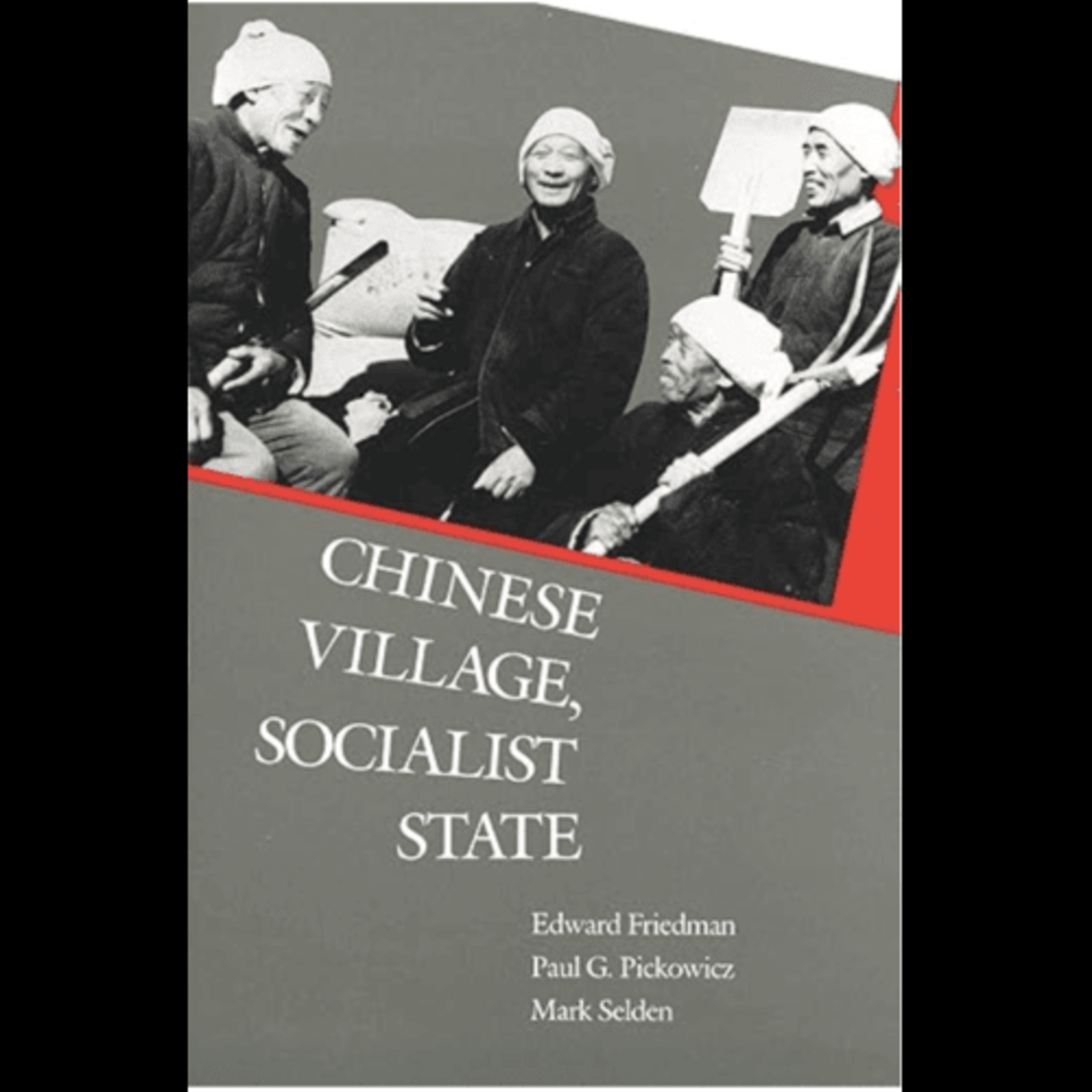
Edward Friedman, Paul G. Pickowicz, and Mark Selden, "Chinese Village/Socialist State," (Yale University Press, 1993) episode artwork

EPISODE · Dec 15, 2024 · 30 MIN

Edward Friedman, Paul G. Pickowicz, and Mark Selden, "Chinese Village/Socialist State," (Yale University Press, 1993)

from The New East Asian Studies Podcasts in the Age of AI · host Barton Qian

The detailed portrait of social change in the North China plain depicts how the world of the Chinese peasant evolved during an era of war and revolution and how it in turn shaped the revolutionary process. The authors spent a decade interviewing villagers and rural officials, exploring archives, and investigating villagers with diverse resources and cultural, traditions, and they vividly describe both the promise and the human tragedy of China’s rural revolution.   Exploring the decades before and after the establishment of the People’s Republic in 1949, they trace the growing economic desperation and cultural disintegration that led to the revolution, the reforms undertaken by the Communist leadership that initially brought economic gains and cultural healing, and the tensions that soon developed between party and peasantry. They show that the Communist antimarket and collectivist strategies which culminated in the imposed collectivization of 1955-56 and the disastrous Great Leap Forward of 1958-60, clashed with cherished peasant cultural norms and economic aspirations. Eventually the party’s attack on peasant values and interests, the authors find, produced a rupture that threatened both developmental and socialist goals and destroyed the democratic potential of the revolution at its best. East Asian Studies Podcast Chinese History Podcast Rural revolution in North China Social change in Chinese villages Communist revolution and Chinese peasants China’s rural transformation Great Leap Forward impact on peasants Peasant collectivization in China Chinese rural economy pre-1949 Communist reforms in rural China North China peasant life Antimarket strategies in Communist China Cultural disintegration in rural China Economic desperation and revolution in China Chinese peasant resistance Party-peasantry tensions in China Collectivization and Chinese cultural norms Maoist policies and rural China Communist party vs peasant interests Democratic potential of the Chinese revolution Chinese rural archives and oral history Peasant cultural traditions in China Impact of the Great Leap Forward Agricultural reforms in Communist China

The detailed portrait of social change in the North China plain depicts how the world of the Chinese peasant evolved during an era of war and revolution and how it in turn shaped the revolutionary process. The authors spent a decade interviewing villagers and rural officials, exploring archives, and investigating villagers with diverse resources and cultural, traditions, and they vividly describe both the promise and the human tragedy of China’s rural revolution.   Exploring the decades before and after the establishment of the People’s Republic in 1949, they trace the growing economic desperation and cultural disintegration that led to the revolution, the reforms undertaken by the Communist leadership that initially brought economic gains and cultural healing, and the tensions that soon developed between party and peasantry. They show that the Communist antimarket and collectivist strategies which culminated in the imposed collectivization of 1955-56 and the disastrous Great Leap Forward of 1958-60, clashed with cherished peasant cultural norms and economic aspirations. Eventually the party’s attack on peasant values and interests, the authors find, produced a rupture that threatened both developmental and socialist goals and destroyed the democratic potential of the revolution at its best. East Asian Studies Podcast Chinese History Podcast Rural revolution in North China Social change in Chinese villages Communist revolution and Chinese peasants China’s rural transformation Great Leap Forward impact on peasants Peasant collectivization in China Chinese rural economy pre-1949 Communist reforms in rural China North China peasant life Antimarket strategies in Communist China Cultural disintegration in rural China Economic desperation and revolution in China Chinese peasant resistance Party-peasantry tensions in China Collectivization and Chinese cultural norms Maoist policies and rural China Communist party vs peasant interests Democratic potential of the Chinese revolution Chinese rural archives and oral history Peasant cultural traditions in China Impact of the Great Leap Forward Agricultural reforms in Communist China

NOW PLAYING

Edward Friedman, Paul G. Pickowicz, and Mark Selden, "Chinese Village/Socialist State," (Yale University Press, 1993)

0:00 30:30

No transcript for this episode yet

We transcribe on demand. Request one and we'll notify you when it's ready — usually under 10 minutes.

Frequently Asked Questions

How long is this episode of The New East Asian Studies Podcasts in the Age of AI?

This episode is 30 minutes long.

When was this The New East Asian Studies Podcasts in the Age of AI episode published?

This episode was published on December 15, 2024.

What is this episode about?

The detailed portrait of social change in the North China plain depicts how the world of the Chinese peasant evolved during an era of war and revolution and how it in turn shaped the revolutionary process. The authors spent a decade interviewing...

Can I download this The New East Asian Studies Podcasts in the Age of AI episode?

Yes, you can download this episode by clicking the download button on the episode player, or subscribe to the podcast in your preferred podcast app for automatic downloads.
URL copied to clipboard!