
EPISODE · Aug 16, 2025 · 1H 2M
Ein selbstgemachter Computer: Die Tridora-CPU (froscon2025)
from Chaos Computer Club - recent audio-only feed · host Sebastian Lederer
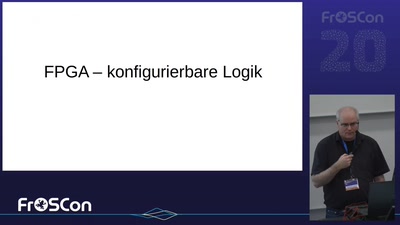
Die Tridora-CPU ist ein vollständig selbstgemachtes Computersystem in einem FPGA: 77 MHz, drei Stacks, 32 Bit, keine Bytes - ein eigenes, völlig inkompatibles CPU-Design mit passender Softwareumgebung aus Shell, Editor und Pascal-Compiler, minimalistisch, vollständig einsehbar, durchschaubar, änderbar, und natürlich open-source. Realisiert wird das System auf einem handelsüblichen FPGA-Board im Format eines Arduino oder Raspberry Pi. Die CPU umfasst ca. 500 Zeilen Verilog-Code und hat eine Stackmaschinen-Architektur, die es besonders leicht macht, einen Compiler zu implementieren, in etwa 9000 Zeilen Pascal-Code. Das System läuft mit 77MHz, vier Takten pro Befehl und mit 32 Bit Wortbreite, aber ohne Byte-Zugriff. Zur Interaktion dient eine serielle Konsole über USB. Außerdem gibt es eine MicroSD-Schnittstelle und einen VGA-Ausgang. Die technischen Daten erinnern an Computer der 1980er Jahre. Es ist also auch ein Retrocomputing-Projekt, welches das möglich macht, was mit aktuellen Systemen nicht mehr geht: Einen Computer vollständig verstehen zu können. Diesmal auch noch mit dem Sourcecode der CPU. Im Vortrag werden die Stationen auf dem Weg zum lauffähigen System gezeigt und auf einige Details eingegangen: Zum Beispiel, wie man auf einer Stackmaschine in Assembler programmiert, warum die Architektur so gut zum Compiler passt und wie der Compiler Code generiert. Natürlich wird das System auch live gezeigt. Licensed to the public under http://creativecommons.org/licenses/by/4.0 about this event: https://programm.froscon.org/2025/events/3324.html
What this episode covers
Die Tridora-CPU ist ein vollständig selbstgemachtes Computersystem in einem FPGA: 77 MHz, drei Stacks, 32 Bit, keine Bytes - ein eigenes, völlig inkompatibles CPU-Design mit passender Softwareumgebung aus Shell, Editor und Pascal-Compiler, minimalistisch, vollständig einsehbar, durchschaubar, änderbar, und natürlich open-source. Realisiert wird das System auf einem handelsüblichen FPGA-Board im Format eines Arduino oder Raspberry Pi. Die CPU umfasst ca. 500 Zeilen Verilog-Code und hat eine Stackmaschinen-Architektur, die es besonders leicht macht, einen Compiler zu implementieren, in etwa 9000 Zeilen Pascal-Code. Das System läuft mit 77MHz, vier Takten pro Befehl und mit 32 Bit Wortbreite, aber ohne Byte-Zugriff. Zur Interaktion dient eine serielle Konsole über USB. Außerdem gibt es eine MicroSD-Schnittstelle und einen VGA-Ausgang. Die technischen Daten erinnern an Computer der 1980er Jahre. Es ist also auch ein Retrocomputing-Projekt, welches das möglich macht, was mit aktuellen Systemen nicht mehr geht: Einen Computer vollständig verstehen zu können. Diesmal auch noch mit dem Sourcecode der CPU. Im Vortrag werden die Stationen auf dem Weg zum lauffähigen System gezeigt und auf einige Details eingegangen: Zum Beispiel, wie man auf einer Stackmaschine in Assembler programmiert, warum die Architektur so gut zum Compiler passt und wie der Compiler Code generiert. Natürlich wird das System auch live gezeigt. Licensed to the public under http://creativecommons.org/licenses/by/4.0 about this event: https://programm.froscon.org/2025/events/3324.html
NOW PLAYING
Ein selbstgemachter Computer: Die Tridora-CPU (froscon2025)
No transcript for this episode yet
Similar Episodes
Mar 26, 2026 ·1m
Feb 8, 2026 ·4m
Jan 30, 2026 ·6m
Jan 2, 2026 ·47m