
EPISODE · Sep 26, 2025 · 1H 21M
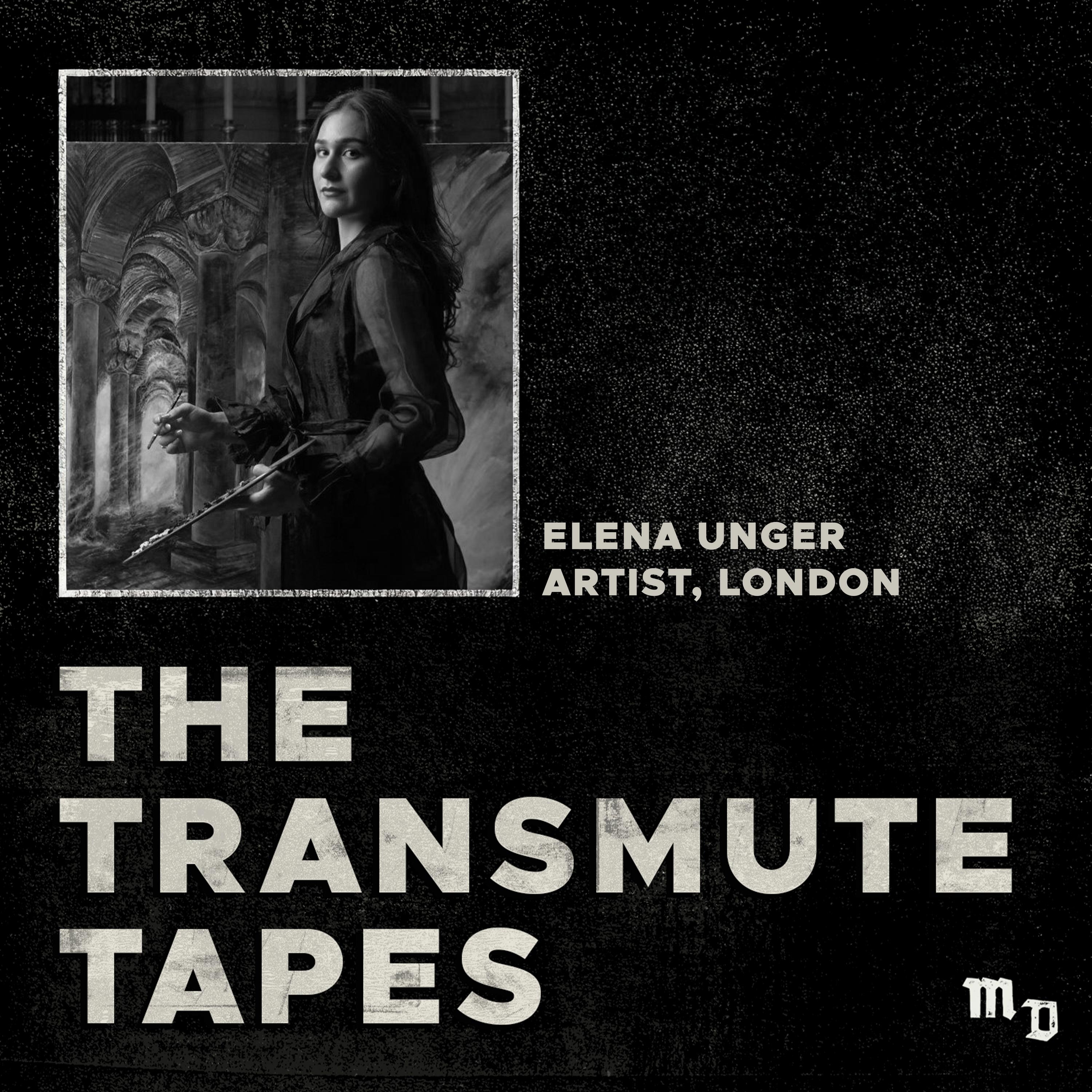
Elena Unger (Artist) Interview
from The Transmute Tapes by Maison Douce · host Maison Douce
Elena Unger calls herself a painter of the apocalypse—not as spectacle, but as a lens for truth. A painter and installation artist, she works across sculpture, sound, film, and site-specific formats, building what she calls “extra-liturgical” spaces where her apocalyptic imagery can breathe. In our conversation we explore why collapse and revelation keep returning in her practice, how images arrive fully formed like waking dreams, and what it means for art to act as witness, archivist, and ritual all at once. We talk about the moment an image lands and the small rituals she uses to catch it before it fades; why “the end” isn’t an aesthetic but a way to sharpen attention, ethics, and even a stubborn kind of hope; and how Paul Klee’s painting Angelus Novus, refracted through Walter Benjamin’s Angel of History, becomes a working philosophy in her studio—testimony to the fragments progress leaves behind. We move through historic craft and sacred sujets made urgent in the present tense, then trace the braid of her training at Central Saint Martins, Goldsmiths, and in Philosophical Theology at Cambridge, and how those languages meet in practice. From there, the conversation turns to art and the sacred: when an exhibition becomes ritual, how communal attention might be rebuilt in a culture designed to splinter it, and why devotion sometimes looks like miniature painting—editing the infinite, deciding what not to render, drawing the line between revelation and noise. Find Transmute Tapes on your podcast app of choice. If the episode resonates, please follow, rate, and share—it helps new listeners discover the show.
Embed this episode
Ready to play
Elena Unger (Artist) Interview
No transcript for this episode yet
Similar Episodes
No similar episodes found.
Similar Podcasts
No similar podcasts found.