
EPISODE · Mar 16, 2026 · 19 MIN
The Real Problem Isn’t Guilt — It’s Death and the Devil
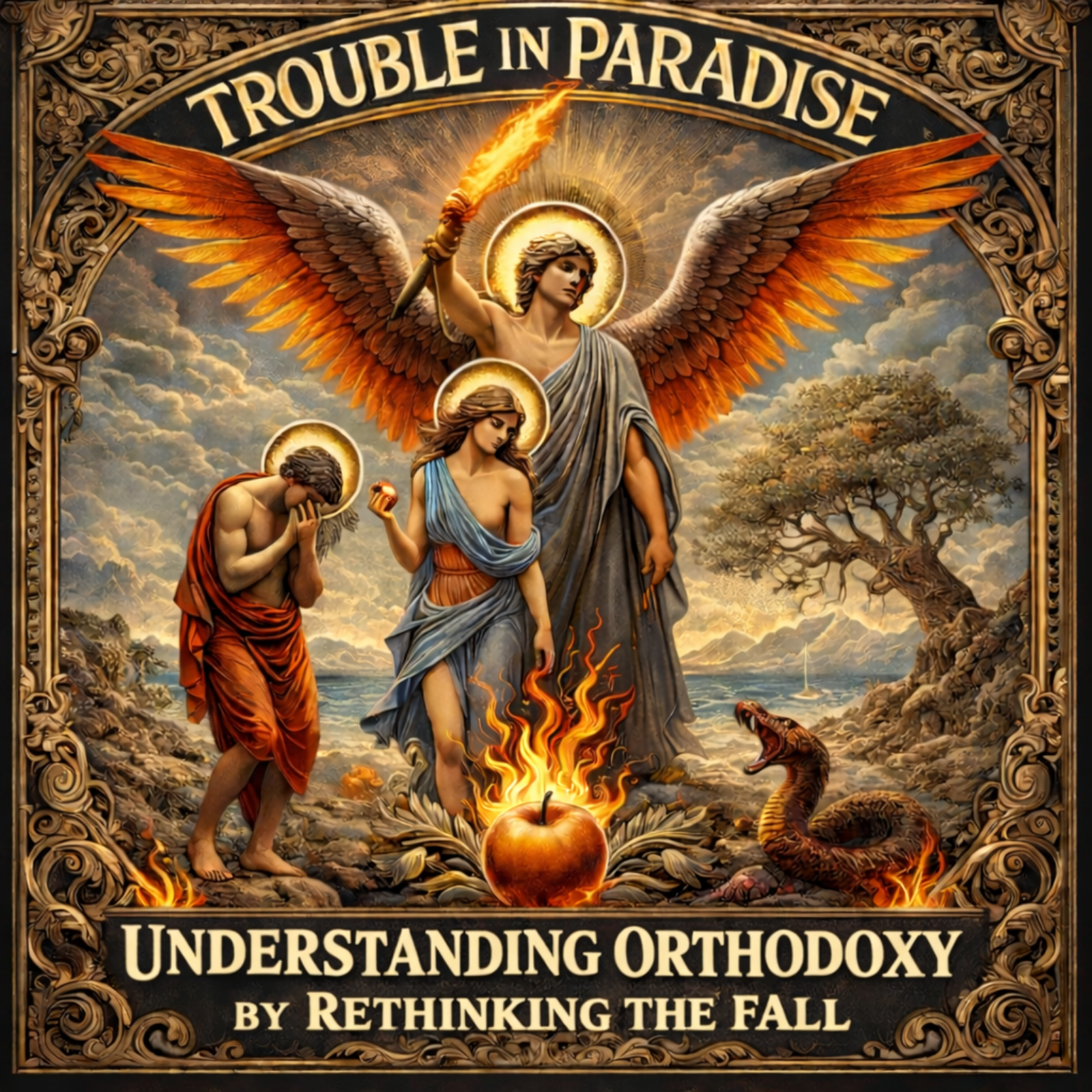
from Trouble in Paradise - Understanding Orthodoxy by Rethinking the Fall
Episode 8 —This episode explores salvation as liberation and restored union with God, not simply forgiveness. A central question frames the discussion: What would happen if references to Satan and spiritual bondage were removed from the Bible?In the Gospels—especially Mark—a large part of Christ’s ministry involves casting out demons. This suggests the problem Christ addresses is not only human sin but also bondage to death, corruption, and spiritual powers.Humanity’s Union With DeathScripture often describes human existence in terms of union. Humanity is born into union with Adam and therefore inherits mortality and corruption. The word corruption originally referred to physical decay—rust, rot, or spoilage. Over time these terms became moral descriptions.Many words associated with moral failure began as descriptions of decay:corruptionrottenspoileddepravedThe biblical pattern often follows this progression:death → decay → fear → sinHuman beings inherit mortality, and fear of death drives self-preservation. When survival is pursued apart from trust in God, sin follows. Hebrews describes humanity as enslaved through the fear of death.Fear and TrustJesus addresses this fear in Matthew 10. He tells His disciples not to fear those who can kill the body but to fear God.Trust in God becomes the antidote to fear-driven self-preservation.Sin as Misplaced UnionSin can be understood as misdirected union.Union with God produces life and freedom. Union with destructive passions or spiritual forces produces bondage.Sin ultimately becomes self-preservation without trust. When trust weakens, union with God weakens. Repentance restores that relationship.Baptism and New UnionIn the early Church, preparation for baptism included exorcism prayers, symbolizing a break from the dominion of darkness.Baptism represents participation in Christ’s death and resurrection. Believers die with Christ and rise with Him. Through this participation a new union begins—union with Christ instead of union with the death inherited from Adam.Chrismation and the SpiritAfter baptism comes Chrismation, where the believer receives the Holy Spirit. The Spirit strengthens the human person and restores freedom of will, enabling cooperation with God’s life.Essence, Energies, and SynergyThe Fathers distinguished between God’s essence and energies. God’s essence is what God is; His energies are how He acts and gives life. Humans cannot share God’s essence but participate in His energies.Salvation therefore involves synergy—God acts first and human beings respond.The Fathers illustrated this with iron in fire. The iron remains iron but becomes radiant and filled with the fire’s energy.The Goal: TheosisAs St. Athanasius said:“God became man so that man might become god.”Not by nature, but through participation in the life of God.Next EpisodeNext time on Trouble in Paradise, we’ll explore the biblical images that describe this participatory union, including the vine and branches, living water, temple imagery, and marriage imagery.These images reveal salvation as organic participation in the life of God.
Embed this episode
NOW PLAYING
The Real Problem Isn’t Guilt — It’s Death and the Devil
No transcript for this episode yet
Similar Episodes
No similar episodes found.
Similar Podcasts
No similar podcasts found.