
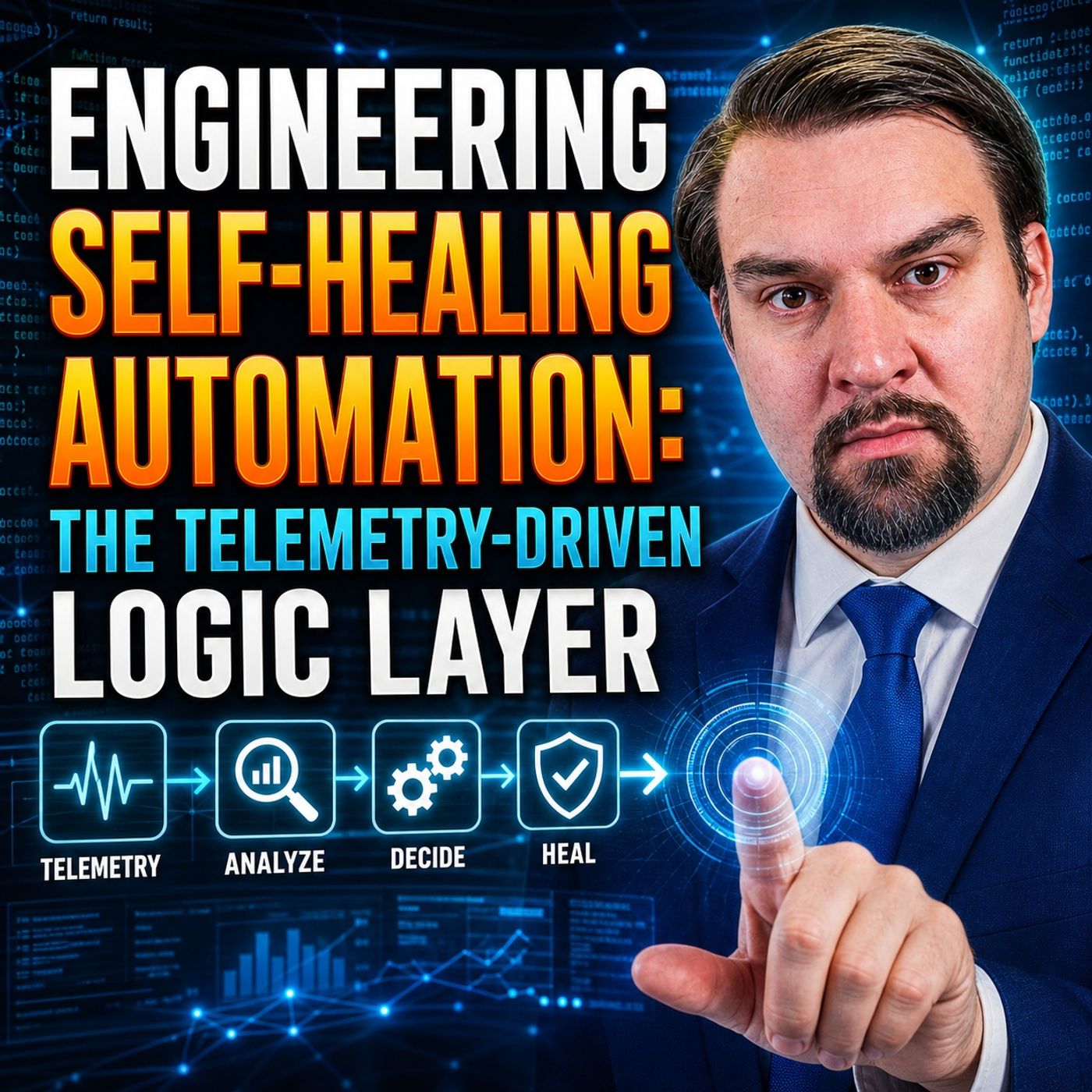
EPISODE · May 3, 2026 · 20 MIN
Engineering Self-Healing Automation: The Telemetry-Driven Logic Layer
from M365.FM - Modern work, security, and productivity with Microsoft 365 · host Mirko Peters - Founder of m365.fm, m365.show and m365con.net
Automation is evolving—and fast. What used to be simple task execution is now becoming something far more powerful: systems that can observe themselves, make decisions, and recover without human intervention. In this episode, we explore what it really means to engineer self-healing automation, and why telemetry is the missing piece that turns static workflows into adaptive systems.THE SHIFT FROM STATIC AUTOMATION TO INTELLIGENT SYSTEMS For years, automation has been built on deterministic logic: predefined triggers, fixed conditions, and predictable outcomes. But modern environments—especially cloud, SaaS, and distributed systems—are anything but predictable. Conditions change constantly, signals are noisy, and dependencies are complex. This is where traditional automation starts to break down. Instead of rigid workflows, we now need systems that can interpret signals dynamically. Systems that don’t just execute, but decide. This shift marks the transition from automation as a tool… to automation as a system.WHY TRADITIONAL AUTOMATION FAILS AT SCALE Most automation fails not because the idea is wrong—but because the design is incomplete. Static workflows assume:Stable environmentsPredictable inputsLinear cause-and-effect relationshipsIn reality, you’re dealing with:Distributed servicesRapid configuration changesUncertain and evolving conditionsThe result? Broken flows, alert fatigue, and constant manual intervention. Automation becomes something you maintain, not something that maintains itself.ENTER THE TELEMETRY-DRIVEN LOGIC LAYERTelemetry is everywhere—logs, metrics, traces, events. But collecting data isn’t enough. The real value comes from interpreting that data and turning it into decisions. That’s where the Telemetry-Driven Logic Layer comes in. This layer sits between raw signals and automated actions. It acts as the brain of your automation system:It ingests telemetry from multiple sourcesIt applies context and correlationIt evaluates conditions dynamicallyIt determines the best course of actionInstead of hardcoding every scenario, you create a system that can adapt to new ones.FROM “IF THIS THEN THAT” TO “OBSERVE, DECIDE, ACT”Traditional automation follows a simple model:IF condition → THEN action Self-healing automation follows a more advanced loop:OBSERVE → ANALYZE → DECIDE → ACT → LEARN This feedback loop is what enables systems to evolve over time. They don’t just respond—they improve.BUILDING SELF-HEALING SYSTEMS IN PRACTICE So how do you actually design for self-healing? It starts with three foundational components:OBSERVABILITY (THE INPUT LAYER)Collect meaningful telemetry across systems—metrics, logs, user signals, and performance data. The goal is not more data, but better signals.DECISION ENGINE (THE LOGIC LAYER)This is where intelligence lives. You define rules, thresholds, and models that interpret telemetry and determine actions.AUTOMATED EXECUTION (THE ACTION LAYER)Actions are triggered based on decisions—remediation, scaling, policy enforcement, or workflow adjustments.When these components are connected through a feedback loop, you get a system that continuously refines itself.REAL-WORLD USE CASES OF SELF-HEALING AUTOMATION This isn’t just theory—it’s already happening. Imagine:A system detects abnormal API latency and automatically reroutes trafficA security anomaly triggers adaptive access policies in real timeA failed workflow self-corrects based on historical success patternsA resource spike initiates scaling actions before users are impactedIn platforms like Microsoft 365 and cloud-native environments, these patterns are becoming essential—not optional.THE ROLE OF FEEDBACK LOOPS IN MODERN AUTOMATION The real breakthrough isn’t automation—it’s feedback. Without feedback, automation is blind.With feedback, it becomes intelligent. Telemetry provides that feedback by:Validating whether actions were successfulIdentifying unintended consequencesContinuously refining decision logicThis is what transforms automation into a living system.DESIGN PATTERNS FOR TELEMETRY-DRIVEN AUTOMATION To implement this effectively, consider these patterns:EVENT-DRIVEN ARCHITECTUREReact to real-time signals instead of scheduled triggersCORRELATION OVER ISOLATIONCombine multiple signals to reduce false positivesGRADUAL AUTOMATION MATURITYStart with assisted automation, then move to full autonomyHUMAN-IN-THE-LOOP DESIGNKeep humans involved where decisions carry riskCOMMON PITFALLS TO AVOID Even advanced automation can fail if poorly designed. Watch out for:Over-automation without contextPoor signal quality leading to bad decisionsLack of visibility into automated actionsNo rollback or safety mechanismsSelf-healing doesn’t mean uncontrolled—it means intelligently controlled.THE FUTURE: AUTONOMOUS OPERATIONS We’re moving toward a world where systems manage themselves. Not entirely without humans—but with far less manual intervention. This is the foundation of:Autonomous IT operationsResilient cloud architecturesIntelligent enterprise platformsOrganizations that embrace telemetry-driven logic today will define the operational standards of tomorrow.WHAT YOU’LL LEARNHow to move from static workflows to adaptive automation systemsThe architecture and purpose of a telemetry-driven logic layerWhy feedback loops are critical for resilience and scalabilityPractical approaches to building self-healing automationReal-world scenarios where this model delivers immediate valueKEY TAKEAWAYSAutomation without telemetry is reactive—automation with telemetry is intelligentSelf-healing systems reduce downtime, effort, and operational complexityThe future of automation is not scripts—it’s systems that learn and adaptWHY THIS MATTERS NOWThe complexity of modern systems is growing faster than our ability to manage them manually. If your automation can’t adapt, it will eventually fail. The question is no longer if you need smarter automation—but how soon you can implement it.Become a supporter of this podcast: https://www.spreaker.com/podcast/m365-fm-modern-work-security-and-productivity-with-microsoft-365--6704921/support.
Embed this episode
What this episode covers
Automation is evolving—and fast. What used to be simple task execution is now becoming something far more powerful: systems that can observe themselves, make decisions, and recover without human intervention. In this episode, we explore what it really means to engineer self-healing automation, and why telemetry is the missing piece that turns static workflows into adaptive systems. THE SHIFT FROM STATIC AUTOMATION TO INTELLIGENT SYSTEMS For years, automation has been built on deterministic logic: predefined triggers, fixed conditions, and predictable outcomes. But modern environments—especially cloud, SaaS, and distributed systems—are anything but predictable. Conditions change constantly, signals are noisy, and dependencies are complex. This is where traditional automation starts to break down. Instead of rigid workflows, we now need systems that can interpret signals dynamically. Systems that don’t just execute, but decide. This shift marks the transition from automation as a tool… to automation as a system. WHY TRADITIONAL AUTOMATION FAILS AT SCALE Most automation fails not because the idea is wrong—but because the design is incomplete. Static workflows assume: Stable environments Predictable inputs Linear cause-and-effect relationships In reality, you’re dealing with: Distributed services Rapid configuration changes Uncertain and evolving conditions The result? Broken flows, alert fatigue, and constant manual intervention. Automation becomes something you maintain, not something that maintains itself. ENTER THE TELEMETRY-DRIVEN LOGIC LAYER Telemetry is everywhere—logs, metrics, traces, events. But collecting data isn’t enough. The real value comes from interpreting that data and turning it into decisions. That’s where the Telemetry-Driven Logic Layer comes in. This layer sits between raw signals and automated actions. It acts as the brain of your automation system: It ingests telemetry from multiple sources It applies context and correlation It evaluates conditions dynamically It determines the best course of action Instead of hardcoding every scenario, you create a system that can adapt to new ones. FROM “IF THIS THEN THAT” TO “OBSERVE, DECIDE, ACT” Traditional automation follows a simple model: IF condition → THEN action Self-healing automation follows a more advanced loop: OBSERVE → ANALYZE → DECIDE → ACT → LEARN This feedback loop is what enables systems to evolve over time. They don’t just respond—they improve. BUILDING SELF-HEALING SYSTEMS IN PRACTICE So how do you actually design for self-healing? It starts with three foundational components: OBSERVABILITY (THE INPUT LAYER) Collect meaningful telemetry across systems—metrics, logs, user signals, and performance data. The goal is not more data, but better signals. DECISION ENGINE (THE LOGIC LAYER) This is where intelligence lives. You define rules, thresholds, and models that interpret telemetry and determine actions. AUTOMATED EXECUTION (THE ACTION LAYER) Actions are triggered based on decisions—remediation, scaling, policy enforcement, or workflow adjustments. When these components are connected through a feedback loop, you get a system that continuously refines itself. REAL-WORLD USE CASES OF SELF-HEALING AUTOMATION This isn’t just theory—it’s already happening. Imagine: A system detects abnormal API latency and automatically reroutes traffic A security anomaly triggers adaptive access policies in real time A failed workflow self-corrects based on historical success patterns A resource spike initiates scaling actions before users are impacted In...
NOW PLAYING
Engineering Self-Healing Automation: The Telemetry-Driven Logic Layer
No transcript for this episode yet
Similar Episodes
No similar episodes found.
Similar Podcasts
No similar podcasts found.