
EPISODE · Apr 10, 2026 · 1H 7M
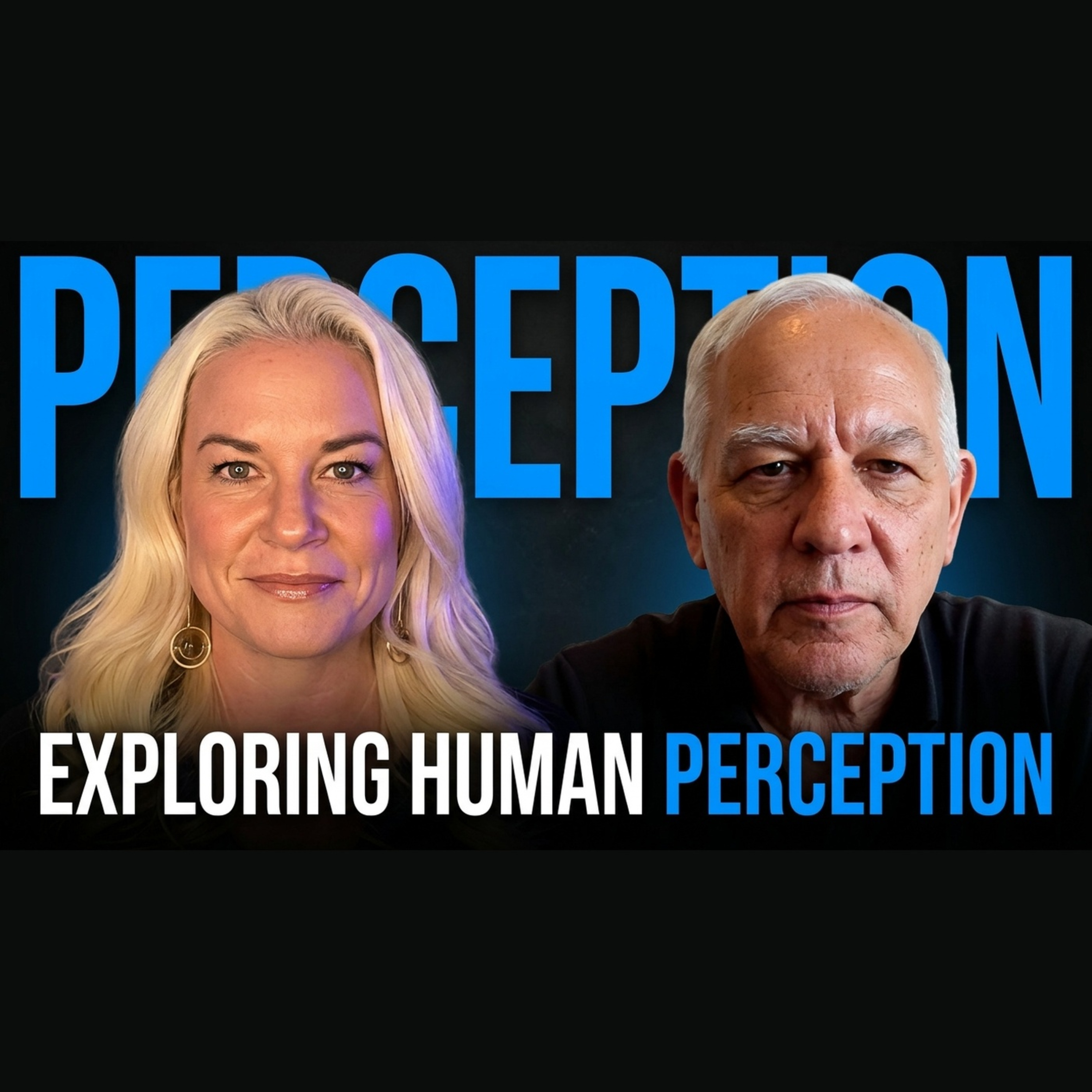
Enhance your decision-making by developing full-spectrum perception.
from Arthur's Round Table-Subscription to Curiosity. · host Arthur Andrew Bavelas
Unlocking the Power of Human Perception in Decision-Making. Discover how intuition and full-spectrum perception can give entrepreneurs, investors, and leaders a competitive edge. Kate Mulder shares practical insights and experiences on harnessing innate perceptual abilities to navigate complex environments, make faster decisions, and uncover hidden opportunities. Top Insights: 1. Full Spectrum Perception is Innate and Trainable o The idea: Humans have an inherent, biological capacity to sense and perceive beyond logical analysis, akin to sonar or radio frequencies, which can be cultivated through practice. o Why it matters: Recognizing perception as a skill, not a mystical gift, empowers anyone to develop a sharper intuitive sense that enhances decision making across personal and professional domains. o In practice: Practicing specific exercises to identify your unique signals—whether tactile, auditory, or visual—can expand your awareness and improve your ability to sense opportunities and risks unseen by conventional analysis. 2. Neutrality Maximizes Perceptive Clarity o The idea: Achieving a neutral state—free from desire, bias, or stress—enhances perceptual accuracy, allowing more objective and comprehensive insights. o Why it matters: In environments of chaos or uncertainty, emotional biases distort perception. Cultivating neutrality helps access clearer signals and better aligns intuition with reality. o In practice: Practicing meditation or mindfulness to reach a calm, neutral baseline before making decisions can serve as a mental "helicopter" view, revealing the full landscape rather than narrow pathways. 3. Intuition is a Scientific, Evolutionary Superpower o The idea: Intuition is rooted in evolutionary biology—our ancient brain’s sensory capacity—acting as a biological antenna that, when harnessed, provides critical signals faster than analysis. o Why it matters: Viewing intuition through a scientific lens removes the mystical stigma, making it accessible and actionable, especially in high-stakes decision contexts. o In practice: Recognize and attribute red flags or opportunities to the body’s signals—such as a tight stomach or a copper taste—then systematically validate and refine these signals through repeated practice. 4. Building the Perceptive Muscle through Pattern Recognition o The idea: The ability to perceive intuitively improves with experience and pattern recognition—trusting signals that have historically served you—and is limited only by individual practice and awareness. o Why it matters: Everyone has the raw material for perceptive expertise; scaling and honing it can significantly elevate decision accuracy and strategic agility. o In practice: Start with small, non-urgent decisions; identify your unique perceptual signals; and track outcomes to refine your personal radar, eventually trusting it in high-stakes environments. 5. The Analytical Mind Limits, Perception Expands o The idea: Over-reliance on logical analysis constrains perception; expanding awareness into the full sensory and energetic spectrum provides richer, more actionable information. o Why it matters: Shifting from narrow analytical focus to a wider perceptual stance cuts through cognitive biases, enabling faster solutions and more innovative ideas. o In practice: Use visualization exercises to "leave the maze" mentally—getting above the problem—enabling you to see dead ends and hidden passages that are invisible from within the maze. Resources & Links: • Kate Mulder on LinkedIn
Embed this episode
Ready to play
Enhance your decision-making by developing full-spectrum perception.
No transcript for this episode yet
Similar Episodes
No similar episodes found.
Similar Podcasts
No similar podcasts found.