
EPISODE · Feb 15, 2026 · 25 MIN
THE MANIFESTO: Work Is For Man, Not Man For Work
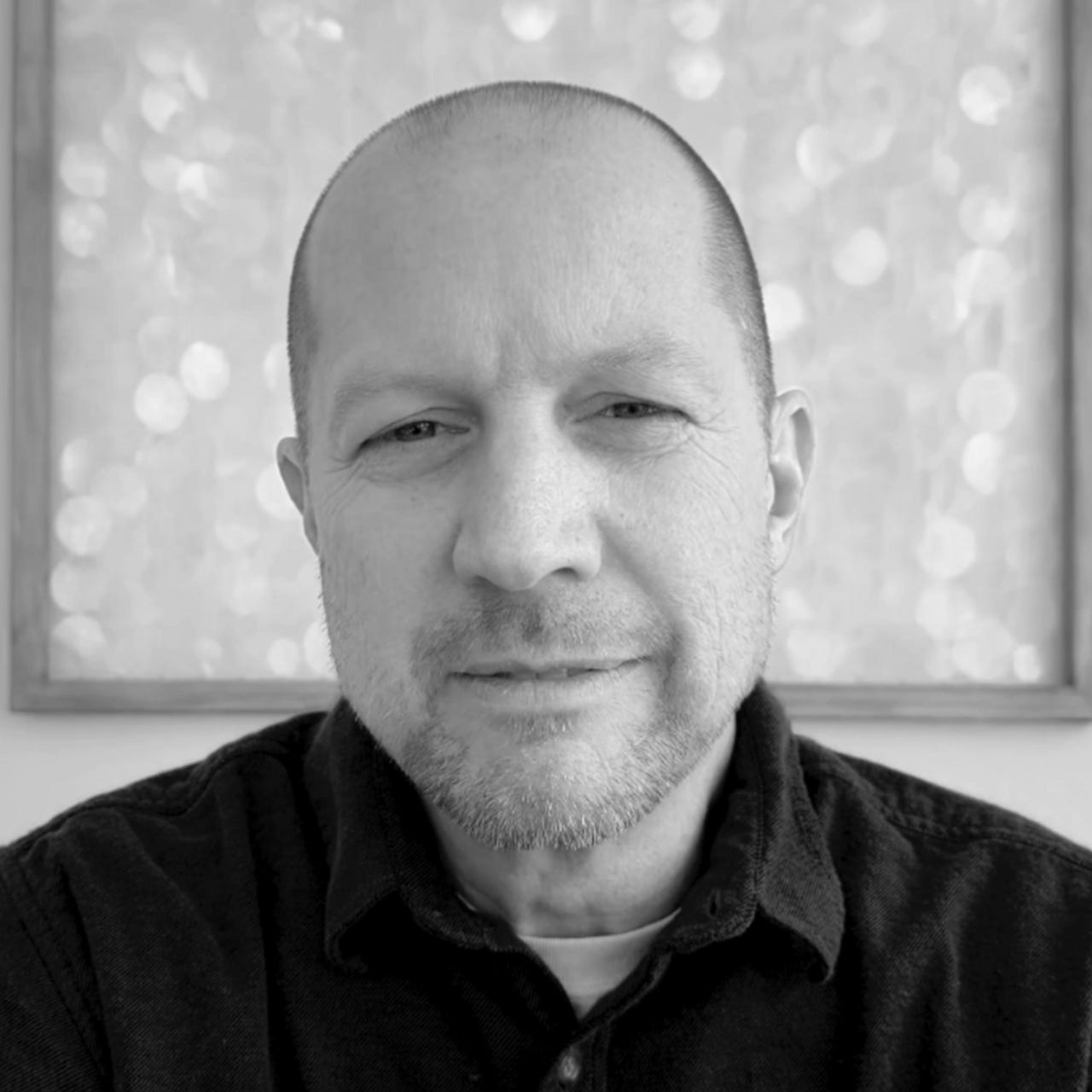
from Think Like a Director · host Maxmillian Michieli
Over 500 years ago, in an old stone quarry near Tuscany, workers extracted a massive piece of marble from the bowels of the Earth. Encrusted with dirt and bearing the scars of ropes, this slab looked like any other piece of rock cut from the ground.It was heavy.It was inert.It was dragged to Florence intended for a great statue, but the stone was difficult to manage. Two different sculptors tried to carve it, but they gave up and left it in a cathedral yard, exposed to the rain and wind for thirty-five years.It was considered a ruined object.Then, a 26-year-old named Michelangelo walked into the yard. He didn’t see an abandoned rock; he saw something else entirely. He picked up the tools he had forged with his own hands, and for two years he chipped away everything that wasn’t the statue. The young Michelangelo freed a man from the stone. He named him David. And when he finally stepped away, the world didn’t just see a piece of art.They saw magnificence.They saw that he had liberated a Subject from an Object.Four hundred years later, another young man walked into a quarry. It was 1940, and Poland was under Nazi occupation.This man wasn’t an artist; he was a laborer trying to avoid deportation. He spent his days swinging a sledgehammer in the freezing cold, splitting limestone. He watched the men around him – good men – get broken by the work. He saw how the crushing weight of the “output” threatened to turn them into objects, too.He felt that the stones had the power to crush the sculptors.In the dust of that quarry, a philosophy began to form in his mind. A philosophy founded in a six-thousand-year-old tradition, but revealed for a modern world that had invented new ways of oppression.Forty years later, he shared that philosophy with the world.The man was Karol Wojtyła.The philosophy was called Laborem Exercens – “On Human Work.”And he published it under his new name: Pope John Paul II.In it, he wrote these words:“Toil is something that is universally known, for it is universally experienced. It is familiar to those doing physical work under sometimes exceptionally laborious conditions. It is familiar not only to agricultural workers, who spend long days working the land, which sometimes ‘bears thorns and thistles’, but also to those who work in mines and quarries, to steel-workers at their blast-furnaces, to those who work in builders’ yards and in construction work, often in danger of injury or death.It is likewise familiar to those at an intellectual workbench; to scientists; to those who bear the burden of grave responsibility for decisions that will have a vast impact on society. It is familiar to doctors and nurses, who spend days and nights at their patients’ bedside. It is familiar to women, who, sometimes without proper recognition on the part of society and even of their own families, bear the daily burden and responsibility for their homes and the upbringing of their children. It is familiar to all workers and, since work is a universal calling, it is familiar to everyone.And yet, in spite of all this toil – perhaps, in a sense, because of it – work is a good thing for man. [...] It is not only good in the sense that it is useful or something to enjoy; it is also good as being something worthy, that is to say, something that corresponds to man’s dignity, that expresses this dignity and increases it. [...] Work is a good thing for man – a good thing for his humanity – because through work man not only transforms nature, adapting it to his own needs, but he also achieves fulfilment as a human being and indeed, in a sense, becomes ‘more a human being’.” (Pope John Paul II, Laborem Exercens [Encyclical Letter on Human Work] (Vatican City, September 14, 1981), sec. 9, https://www.vatican.va/content/john-paul-ii/en/encyclicals/documents/hf_jp-ii_enc_14091981_laborem-exercens.html.)About twenty years later, I was in a men’s group and we studied Wojtyła’s work. That document changed the trajectory of my life. I was inspired. I knew I needed to somehow weave this philosophy into my daily life. Laborem Exercens was sitting in the back of my mind as I grew my career and stepped into fatherhood.This was because Laborem Exercens gave me a vocabulary for something I felt intuitively but couldn’t articulate: the distinction between the objective and the subjective dimensions of work. Here’s what I came to understand:The objective dimension refers to the output. It’s the technology, the tools, the capital, and the profit.The subjective dimension is the internal reality. It’s the person doing the work.Wojtyła’s central thesis was pretty simple: Work is for man, not man for work.The world has historically rejected this premise. It became especially clear in the Industrial Revolution when machines started to blur the lines between the output and the person. We are not immune now, either. It seems we actually prefer to invert the proper order of work, because we jump at emails and text messages and flirt with 32 open apps and honestly think we are being productive. We brag about our “flexibility”. But our partners don’t care. They really don’t. They just get lonelier and lonelier and hope that we would just come to bed for once without them asking. We happily bought the lie, but deep down inside we know the nasty, dirty truth – we are just middle managers of our own digital existence. And we hate ourselves for it.We have allowed the tools (the objective) to dominate the person (the subjective).The stones in our quarries continue to crush us. No wonder we need therapy just to deal with work. Think Like a Director™ is what I created to help us avoid getting crushed.Which begs the question: what does it mean to Think Like a Director?Let’s start with society’s obsession with titles. We believe that a “Director” is more important than a “Manager” because of their rank in the hierarchy.In the Think Like a Director framework, the term “Director” does not refer to a job title on a business card. It refers to the inherent state of the human person.You are a Director because you possess an intellect and a will.You are a Director because you were made to govern your faculties, not to be governed by your tools.This dignity is inherent.It isn’t earned by a promotion.It can’t be lost if you lose your job.It’s yours to keep.It follows then that Directorship is not something to strive for. It is something to operate from.The great lie of the modern workplace is that our work gives us value. We actually believe that if we produce enough, we will matter. We treat work as if it bestows dignity upon us.This is backward.Your dignity is already complete.Therefore, work does not bestow dignity; it reveals it.So now, we can understand work as an epiphany of the person. It’s a mechanism by which we make the internal reality of our personhood visible to the world.That is a very abstract concept. It’s ethereal. But it’s worthwhile to unfold its meaning a bit, because it is the crux of a true understanding of what work should be. Because, believe it or not, work is an existential reality. So let’s ask ourselves some existential questions.Have you ever felt that you had something to offer that no one will ever understand? Have you ever yearned to just be seen? That if the world just knew the real you that you wouldn’t have to pretend anymore? Wished that you could just be free?That’s what we are talking about here. There’s something missing in our workplaces today. And that something is freedom. But we keep looking for freedom in the wrong places, because we think we can buy our way to freedom somehow, and that the currency we buy it with is our time, and effort, and sweat, and productivity, and output. We see freedom as a reward for hard work, so we work and work and work in the hopes that one day we can sit on a beach somewhere and drink drinks with little umbrellas in them. But that’s not the way freedom works. Freedom is free. And it is found entirely within your internal posture, which we will later call your Interior Life.But, that doesn’t mean you get to stop working. What it really means is that, if you operate from a place of Interior Freedom, your work is the primary expression of your freedom.Reliance on your inherent dignity isn’t an excuse for laziness, it’s precisely the opposite.Because our dignity is inherent – and because we are the sculptors, and not the stone – we are compelled to create.Output doesn’t equal dignity. Dignity necessitates output.We become who we are by doing who we are.Wojtyła’s philosophy of work changed my life. It’s rooted deeply in my faith. But early in my career, as I moved up the ranks in corporate operations, I faced a tension: How do I take this truth about human dignity and actually live it out on a manufacturing floor without proselytizing? How do I apply a theological framework in a secular environment that has its own set of values which may be different from mine?I had to distill the theology into an operating system that the corporate world couldn’t reject, because the output was undeniable. Think Like a Director is the result. I didn’t build this framework because I am a philosopher – because I’m not one – and I didn’t build it from an ivory tower, because I don’t have one. I built it because I have a ton of work to do, a ton of kids to raise, relationships to nurture, and sanity to preserve.Now, you don’t need to adopt ancient Roman Pagan theology to learn discipline from Marcus Aurelius. You also don’t need to adopt Roman Catholic theology to recognize the value of Wojtyła’s philosophy on human work. The dignity of the human person is inherent to everyone, no matter what your belief system is, simply by virtue of the fact that you are a human.Think Like a Director is designed to rewire your mind around your own inherent dignity. It does this by providing a new approach to your day. This approach is built on the premise that work reveals your personhood.It’s super simple. It may even seem too simple. That’s because the key to understanding your freedom isn’t to add a bunch more stuff onto your plate. It’s to strip things out until you are left with the essence of who you are. It’s liberating yourself from endless hacks and tips and tricks and keyboard shortcuts and templates and books to read and systems to implement. That stuff exists because it’s way easier to sell. But- you can’t buy freedom, because freedom is free. It can’t be monetized. You have to experience it. Which is more like jumping naked into a lake than going to the shopping mall.You do this by subtraction, not multiplication. Yeah, you still have complexity in your life and work. The difference is that complexity is not where you start. You start with simplicity so you can clearly direct your time and attention. Then you go as deep as you need to, and as complex as the work requires. You take a deep breath before you jump in the deep end, so that you can swim further than you could before.You don’t allow the stones in your Quarry the power to crush you before you even start the sculpture.OK. How? How do you even start? Good question.Here is the premise of this entire Field Manual. We will unpack each one of these things throughout the manual, but the flow goes like this:* You’re a Director.* So is everybody else.* So, don’t treat yourself like a means to an end. Ever.* Also, don’t treat anyone else like a means to an end. Ever.* In philosophical terms, not treating a person as a means to an end is called The Personalist Norm. Keep that term in the forefront of your mind.* Directorship doesn’t mean managing, it means directing.* You direct your work and your life by embracing the Personalist Norm and setting a direction from there.* This starts with your internal posture, which is governed by your Interior Life.* Your Interior Life can be defined as a deliberate orientation of yourself towards Truth.* You manifest your internal posture in the way you approach your day, and how you use the tools at your disposal to orient yourself and set a direction.* You carve out time for silence and your Interior Life by subtracting things that don’t really matter.* Embracing reflection and silence allows you to listen.* Listening allows you to grow in your Interior Life and live into the Personalist Norm.* Which in turn means you don’t treat yourself like a means to an end, or others like a means to an end, which means when others treat you like a means to an end, you know why they would do such a thing, which is either because they don’t understand the Personalist Norm or they choose to ignore it, which means either you have an opportunity to help them or the freedom to reject their attempts to control you, which means you have experienced a certain level of Interior Freedom, which means you now:* Think Like a Director.Then, once you have the mindset of the Director, you can do all the productivity stuff. All the complex inner workings of your job and family life, using as many software platforms as you need to and implementing as many hacks as you feel are necessary. But my hunch is that when you get into the right headspace, you won’t need hacks anymore, because you already hacked away at the biggest thing keeping you from being effective. Which is your belief that your work gave you value. You will know that your value drives your work.You will have rejected the lie.You’ll become who you are.What do you say? Are you ready to start?It is time to unveil your dignity.It’s time to show up.Fully alive. This is a public episode. If you would like to discuss this with other subscribers or get access to bonus episodes, visit thinklikeadirector.substack.com
Embed this episode
Ready to play
THE MANIFESTO: Work Is For Man, Not Man For Work
No transcript for this episode yet
Similar Episodes
No similar episodes found.
Similar Podcasts
No similar podcasts found.