Ep 1: The Two Fighters
from The Delusional Podcast with Kevin Blake Ferguson Hosted by Kevin Blake Ferguson
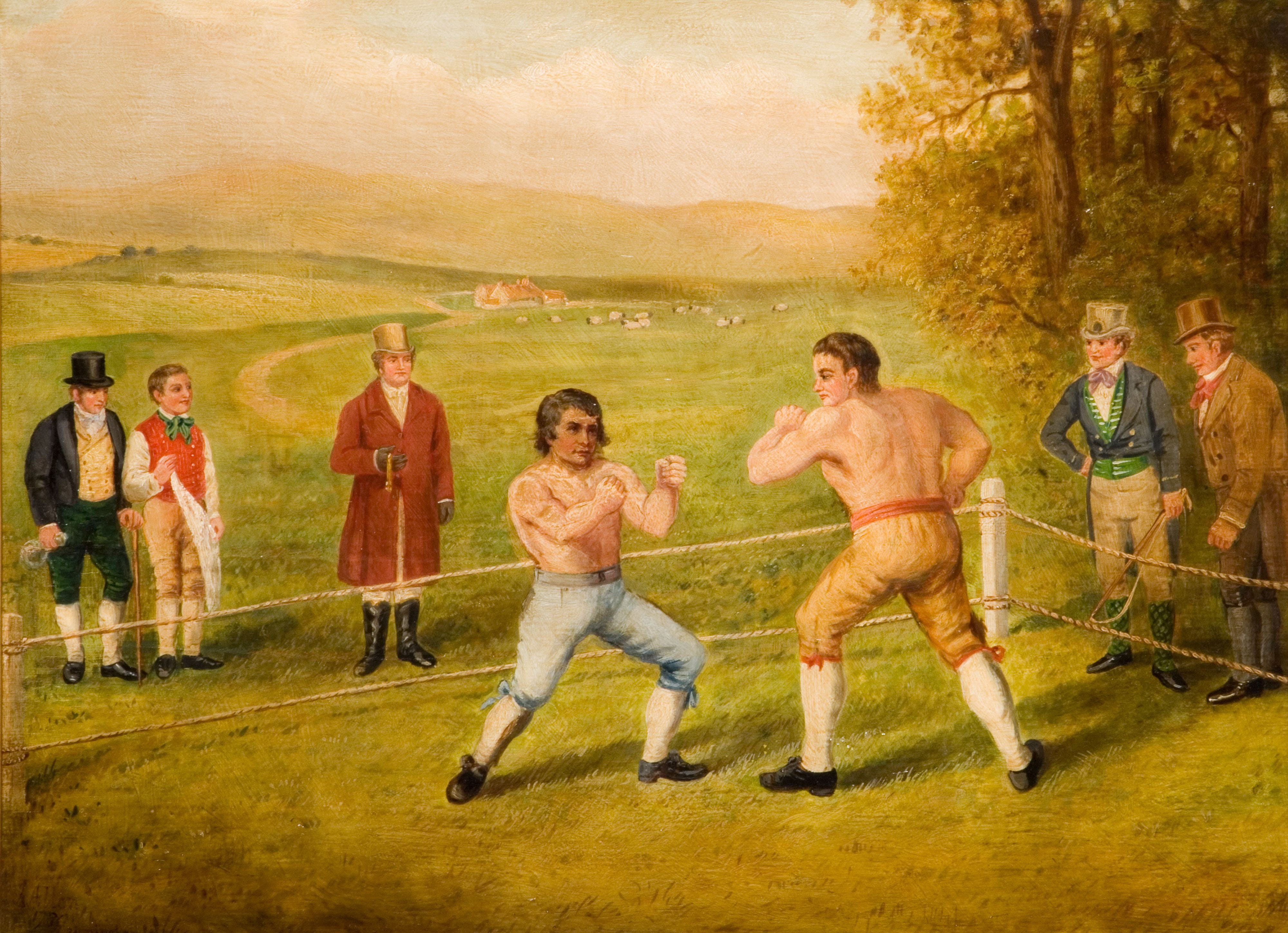
Once upon a time, there were two fighters in an arena, one small, one large. The smaller one asked the bigger one: Why are you always beating me? The bigger one replied: My size and strength are without peer. If you wish to truly know how great I am, all you have to do is to say the word, and I shall then beat you with one finger. So the smaller one said: I challenge you. And when he did, the bigger one beat him with one finger. So, the smaller one said: I challenge you once again. And when he did, the bigger one beat him with one finger. This went on for a long time, until the smaller fighter became angry and said: How is it that you always beat me with one finger? So the bigger one replied: The reason is that I am big and you are small. This is the difference between us. There are many differences between each of us. A big one, now that we’ve gotten past trial-by-combat as a judicial tool, is how we argue. Some people are naturally great at arguing. We’ve all heard a parent or teacher say of a kid “they’re going to be a lawyer,” by which they’re saying that the kid is great at making stuff up to convince others that they’re right. If this was you, you’re probably feeling some inner pride about this. I’m afraid this also means that you are likely more delusional than average. Don’t feel bad. Me too. There’s hope. Arguing well—constructively, with the ability to admit when you are or might be wrong—is, I think, one of the best skills anyone can have. And it’s one that takes practice. I live with my fiancée, and I’ve also spent a fair amount of time collaborating with others on creative projects. In both arenas, clashes of ideas are an every-day occurrence, whether that’s whose idea is better, or whether we should stay in and rewatch Avatar: the Last Airbender or stay in and rewatch The Office—a debate that can quickly turn to verbal fisticuffs if not careful. Conflict resolution advice typically suggests that we try to understand and empathize with our conflictee’s position, while our internal motivating force suggests we do whatever we can to get our adversary to understand our position. We usually try to resolve it by trying to explain why it is we feel a certain way. But an immediate problem presents itself: This assumes that we know why we hold the opinions we do. But do we? The short answer is: it’s not likely. We tend to see ourselves as having relatively consistent thoughts, beliefs and goals within us—not to mention, of course, good reasons for these thoughts, beliefs and goals—but some research suggests we’re shockingly unaware of the causes of our own behaviors, and when we try to explain why we feel or act in a certain way, we’re often doing nothing more than educated guesswork, a mental phenomenon known as confabulation. Confabulation is the action of fabricating explanations for a belief, opinion, or behavior post-hoc. *If you already know all about split-brain research, skip down 7 paragraphs.* Evidence for confabulation came in the 1950s when psychologists began to notice strange behaviors in “split-brain” patients—patients with severe epilepsy who had undergone a last-resort experimental procedure known as a corpus callosotomy. The treatment attempted to stop the spread of seizures throughout the brain by severing the bundle of nerves that carries signals between the right and left hemispheres of the brain, the corpus callosum, effectively splitting the brain in half. While this seems like a crazy idea today—and perhaps did then—experiments with the procedure in primates showed no adverse effects, so they figured—what the heck. Worth a shot. And while the good news is that this did minimize the crippling effects of the patients’ seizures, the patients had some very strange side effects, the study of which led to some of the most profound work in the history of psychology, eventually earning the lead researcher Roger Sperry the Nobel Prize in medicine. The experiments with split brain patients involved testing the subjects awareness of certain visual cues: flashing their left and right hemispheres different images, words, or even just a flash of light, and measuring what they would report to see. In one experiment, when researchers flashed a light into the subjects’ visual field corresponding to the left hemisphere of the brain, the subjects would report seeing it, but when the light was flashed in the visual field corresponding to the right hemisphere, the subjects would report that they saw nothing. Wait, what? They couldn’t see the light when it was flashed to their right hemisphere? It’s stranger than even that—while they said that they saw nothing, when asked to point to which of the two bulbs that flashed they had no problem pointing to which bulb flashed. The studies on split brain patients showed that our left and right hemispheres are specialized for different general functions, for example that verbal language processing is specialized in the left hemisphere; when the right hemisphere saw the light, it couldn’t say it, but it could point to it. In intact brains, our hemispheres coordinate effectively, but in split brains, they are unable to do so. It gets more interesting. A later study presented a series of neutral photos and the occasional nude photo to a subject’s right, non-verbal visual field. When the nude photo was shown, the subject began to smile or giggle. When asked what she was laughing at, the subject said she was laughing at the funny machine in the room. Confabulated explanations for their behaviors were common among the subjects in the research, leading to the researchers hypothesizing the existence of a ‘confabulation module’ of sorts, presumably in the speech center of the brain, which comes up with explanations for actions after the fact, in order to maintain a sort of continuity of self. A similar theory in psychology comes to mind; social psychologist Daryl J. Bem’s self-perception theory. This is confabulation: a subject, unaware of the true reasons behind her actions, retroactively creates a story that seems to make sense of those actions. We all do this, all the time. From our political parties to professions to romantic partners to our explanations about why we are the way we are, we like to think we have good reasons for the opinions we hold and the choices we make. But the truth is, very often, it probably just seems like we do. Why do we believe what we believe? In the end most arguments for positions or understandings about ourselves are a confabulated mix of unexplainable unconscious biases, half-remembered podcast talking points, and the stories we’ve told over and over, all retroactively stitched together in order to maintain some semblance of continuity within our lives. This means that whenever we are in conflict, it’s hard to know who is fighting, ourselves or our confabulation modules. Realizing we all have a confabulation fighter in us can help deescalate conflict and open bridges of communication. I find it helpful to imagine that often my opponent and I are not in the ring ourselves, but have instead tapped in our confabulators to wage our fights for us. These confabulators don’t know why they fight, but are often much better at punching. And some can kill with the point of a finger. Thanks for reading this week’s Delusion. Please consider subscribing if you’re not, or sharing with a friend. Agree? Disagree? Please leave a comment below. This is a public episode. If you would like to discuss this with other subscribers or get access to bonus episodes, visit delusional.substack.com
Embed this episode
No transcript yet.