It's not really interesting. You probably don't want to put that part in there. I'm going to cut out everything except you saying that's not interesting. So everybody would be like, oh, what was that?
That must have been actually interesting. You should. Psychology, true. Hello and welcome to WNC Original Music episode 121, the Cribbage episode.
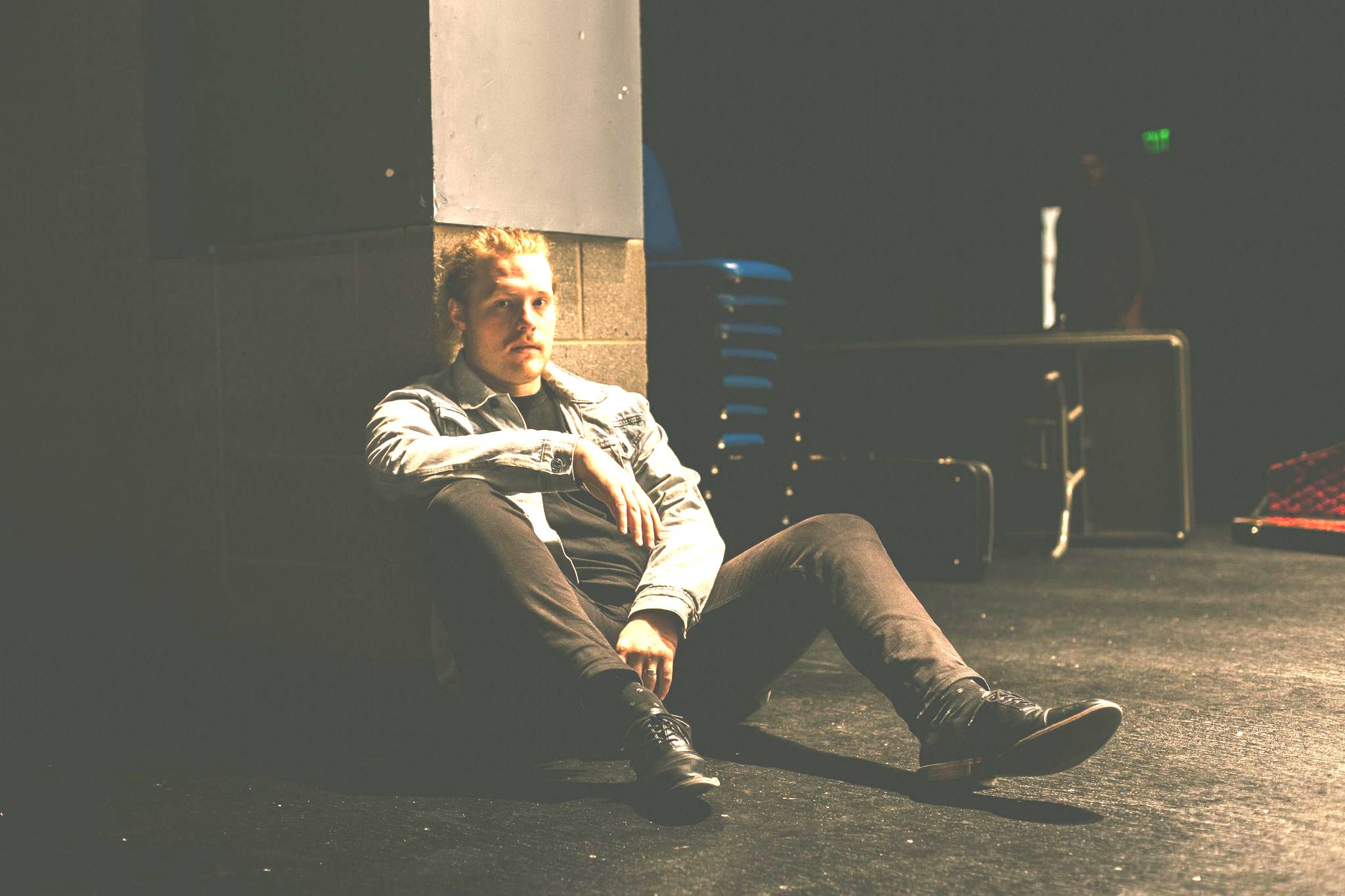
This week, very happy to have the singer-songwriter True Verre on the podcast. True Verre originally started in Lynchburg, Virginia before moving to Western North Carolina. Displayed house shows and venues like Speaker J Records and the Litch Stock Music Festival and the Wine & Garlic Festival. This week we're going to have selections from his released EP, St.
Luna, and also his upcoming full-length album, Conditional Comfort. You can find his music at trueverre.bancamp.com. That's t-r-o-u-v-r-e.bancamp.com. And also several other places, there will be links, of course, in the show notes.
Had a really great time talking with True Verre. As you'll notice, because there's quite a bit of talking in this episode, we had a really good time talking about the songs and his songwriting and a lot of other stuff. So I was going to edit a lot of it out, but I just decided to leave it in because I just really liked it. Here is True Verre.
Commisional Comforts. It's kind of like a play on words and a play on an idea of, you know, like, pollution. And I think we all try to do our part preceding the writing of the song. I think I learned that America doesn't do any of its recycling.
And we ship it off to East Asian Companies and they've now since boycotted us. So it's my understanding, as of now, that our recycling just goes into landfills, mostly. And so that was pretty disheartening, because it's like we have all these efforts to reduce their conveniences, right, plastics, convenient, whether it's recycled water, they put in plastic bottles that we supposedly recycle, suppose like, you know, having to walk to a stream and filtering out the water. And so it's a play on that sort of concept of our contribution to pollution, but then also like, to play on emotional and like relational conveniences, you know, that kind of like damage relationships with friends and, you know, peripheral relationships.
So the name conventional comforts, I was to me in the way I intended it. It's kind of just tackling this concept that we have these systems set up, whether it's relationships are just the day to day, you know, like getting in a car and burning fossil fuels. We have these systems come up that are conventional, like everybody does them. And it's a live in the first world.
You, I mean, really, in general, there's a lot of things we can't not do that are damaging. And additionally, you know, as a human being trying to like navigate social hierarchies, whether it's for a job or, you know, self esteem or whatever, it's the same thing. It's very conventional to kind of trample on people or disregard people or overlook, you know, being gentle or considerate. So it's kind of a look at both of those and how in a first world society, at least those conveniences are for our own comforts, but they're not necessarily even for our own survival or existence, but they're for our own comforts, so much that we don't think about them too much.
And this is a song that's, you know, deeper into my character songs prior to this. And that's where I felt comfortable analyzing my own, like, approach to songwriting as a generalization at least. And I think I think I like to like raise questions. And it could be potentially like not helpful at all.
I don't necessarily bring up resolutions, but at least for me and my experience, you know, listening to music, and then also writing, it forces me to kind of meditate essentially, and to check my intentions or my lifestyle. And you know, the two songwriters that come to mind that have done that for me, you know, is Robin of Fleet Foxes. I don't know if you're familiar with the Fleet Foxes at all. Yeah, a little bit.
Yeah. And you know, he talks about like, essentially, us being part of like a big machine, and then also Father John Misty. I think they're both really really good at like probing at, you know, at investigating our own intentions. And so I would say that's probably the vibe of conventional conference for sure is just kind of like investigating, you know, the damage that we create, whether it's in relationships, human, human, or, you know, the greater, like, effects that we create in our communities and in Earth.
Yeah. You know, since I was, I think it was a new, a couple weeks ago that Chevrolet or General Motors, the new president of General Motors says, we're going to be, I don't know if they said all the electric, I think they said all electric within 15 years. And I'm kind of, you know, I'm very skeptical of that. That's a lot to happen in 15 years.
But also I was thinking, that's going to be a huge change if General Motors, you know, the largest car company in America, makes that change. That's going to cause a lot of other change. And it's going to help some people, but hurt some people. But also it's, it's a sign of how kind of a unilateral a lot of systems are like you're talking about like there's no competition in, in travel.
There's, you know, there's, there's electric, there's hybrids, Prius and, you know, some electronics, but it's, you know, it's 95% gasoline. And if you look at the trucking fleet, that's diesel, you know, that's all, there's all diesel. There's no electric trucks or anything like that. You know, there might be five out of a billion, you know, but, but yeah, there's no, there's no easy to, for General Motors to do that, they're going to have to change not just what they do, but they'll have to change the system.
They'll have to create a whole system around it just so they can make cars that are better for the earth. That's exactly it. You know, it's, it's a system and like a lot of psychologists, I guess, also point to this, it's like no one wants to stick their neck out and no one wants to be the change. And the reality is, is that in general, most of us are capable.
I don't know if we're in the situation, it's not leadership to be, but we all have the capacity to do that in our own small world, you know, that we live in the circles that we navigate. But you're exactly right. Let's, you know, 95% of the cars are gasoline and it's been that way. And now all of a sudden, you know, we've become used to that, right?
Like our whole culture is designed around that. And now to just, you know, switch to electric, that's going to, that's going to, you know, end a lot of jobs that people, you know, have been in for a while or, you know, we're anticipating to be in the future as they grow. And it's going to disrupt a lot of things, but, you know, that's the thing we need to do. That's the excellent point.
I mean, it has to be done, something like that has to be done. But yeah, absolutely. Well, you know, in something interesting to you, man, in my song, in the, you know, I think it's the first verse, right? I talk about, you know, like, wind turnmines.
And like it's, it kills, it kills flocks of birds. Like, I sing about, you know, like killing birds, you know, and so it's like we're trying to be more green with like wind turnmines, but still we can't avoid, you know, damaging the earth around us and our laugh, but it's, I don't mean, you know, laugh at it. Just it's humorous, I guess, but it's, you know, it's serious. That's the nature of man, almost that whatever we do, first of all, we can't, we can't pull back whenever we're going to pull back on anything, we're just going to say, can we do this at the best we can do is say, can we do this differently and hurt a different species or, you know, maybe we destroy this part of land instead of the ocean for a while or something like that, you know?
Yeah, exactly. You know, and we fool ourselves to think that we're like on top, you know, because we're so interconnected. It's almost like, you know, go with me on this. It's almost like a, like a, like a cheerleading, when you call it cheerleading tower or whatever, you know, a pyramid.
Yeah, like the person on top, the light is their most glamorous, you know, but it, like it literally takes every single person, you know, in the tower to do their best, you know, if one person's weak and they tumble, like the whole thing's going down. And it's, it's that, it's that way with our food systems and with our circle of life, you know, if we don't respect and care about, look for, you know, support these, you know, more humble beings, you want to take a sit of them, it's going to eventually, it's all going to start coming down. The mother and I were expecting a little less, be your tiny heart. You fought death for hours, so I'm sitting there with Abacus of how beautiful you are.
Tiny head, you, and held my finger out like that, before you never saw your eye. That's who caught us at side. On this cold, aimless love, burning cake, the sunrise, your first day of your time, Do not exist. But wait, you're small, I don't seem like she did.
We're not over-sure. Then when it came, I heard a fine. You're strength, and I never saw your ever-sad. I never saw.
I can't think of that. But True Hair started in Lynchburg, Virginia, around to school and played around with the local circuit there with some friends and had a lot of fun and really started running music for a band. Prior to that, I was in a different folk band. And it was very much like guitar-driven.
Guitar starts. The song starts. Guitar does not stop. And instruments join in and out to add layers, but the guitar does not stop.
So it's definitely that. Guitar-driven songwriter style. That's what was before True Hair. That was my ability.
But when I started True Hair, I really started playing with players that stretched me and grew me. I really trust them. And they helped develop the sound that is True Hair. And we all went separate ways.
We were in college, so some people have to grow up. I guess I'm still prolonged in that. I was trying to start. No.
But yeah, so the reason why I moved to Western Carolina and my wife, she's from here. And I think we're ultimately going to make it our way to North Carolina, to other than in Oregon too. But we were pregnant. And we weren't really planning on it.
But we were growing with it. And we just found it would be better to live in your family. I was hustling, summer at and playing gigs. But also working through other jobs.
It was just rough and much work. So we thought, hey, maybe have some family about watching our child. Her name is Luna. And at that point, when I moved to Oregon, I was just kind of like, I need to grow up.
Songwriting, it's not like it's a gamble. So I really was considering just putting it down. And to really stop trying to pursue music as a creative outlet. And so a month and a half into moving here, and some terrible happens as called Help Syndrome.
But my wife basically once died, her body was reacting to the whole Sentinel Hospital. Like, all right, you have 20, 48 hours based upon tests and steroids. And they need to give our daughter their steroids because she was so premature. They're trying to develop her arms, so on and so forth.
A bunch of science. But they're like, you have 48 hours to give birth. Or you don't have a C-section. So we went through all that.
And our daughter came out crying and fighting. But her heart just wasn't strong enough. And she ended up passing away after 23 hours. And so that was actually on September, a limit she was born all days.
And September 12 she passed away. And that really really shook us, for sure. And I was cold. I was angry.
I didn't understand. Like, we have relocated our whole entire life so that we could be the best parents. We could be for her. And just a lot of stuff.
It just did not make sense. It felt just cruel. So that was September. And I was cold, as I said.
And my wife, Santa Barbara, I just remember her. I wake up in the middle of the night. She's just falling. There's nothing worse than trying to comfort a morning mother.
And I hope that no one has to deal with that. I say that. It was also awful. King of a morning father.
Yeah. But so I remember for months, you know. And I remember several times she'd be like, you don't say anything. And you don't cry.
And I realized that's just how I handle emotion. But it was several months later. I was in the back room. You know where I am talking to you now.
It's a little songwriting room. And I just started writing. I just split up into three different parts. And I started writing the first session, which is basically my perspective of her biography, of my daughter in his biography.
And I was just trying. Like I was writing it. And I was just like tears were just dripping all over the paper. And that was the first time I had broken down and accepted what happened.
And this was with my emotions. And that was me writing down my daughter's biography. And it was in that moment that I realized that whether songwriting is financially viable, whether it makes sense to spend hours in energy writing music, it's what I need. It's my medicine.
That's how I connect. That's how I, that's my outlet. And I shared it with some co-workers of school. And me and my dumb self, trying not to cry in front of me.
But I put them probably in a very awkward situation. But they knew the story of it and everything what it was about. Yeah. I ended up staying at the hospital for a week after my daughter was born just for my wife to recover.
Because my wife was going to have seizures and die. That's why she was about to die too. So that's why everything happened. So yeah, they knew.
My point is they knew because I was out for a week. So they were made aware. So this is months later I showed it to them. And I began to realize that my story is not, I'm unique, but my situation is not entirely unique.
There are, it reflects so many other people's relationships and experiences. Whether it's losing a daughter, which a lot of people do in a horrible or a son, a child, or whether it's just losing someone you love, or it's just the experience of loss. People can connect with our daughter's story. And for me, that's very empowering.
Because I wrote the song, yeah, I'm sure you see this in your parents or in other parents. It's like they weren't, most in general speaking, they want to do the most they can for their child. And so it's like when you exceed the life of your child, it's like, I can't do anything for them. And so for me, this is like the only thing I could do, just to write her biography and to do my best work.
So kind of memorializer. Exactly, yeah. So I'm trying to go all over the place, but I guess my point is is that people can relate with her memorial. And that's very special because it kind of gives her life meaning.
And it gives her 23 hours of life on this earth, and then the months with us meaning and purpose. And so that was, I'd written the first part to memorialize her. But as I thought about it more, it's like, if you look at the grouping process, I was just like very angry about it all at that point. So I started writing a second portion.
And I thought that was the outro, which is where there's this big build. And then it fades. And then it comes in and it's just basically a guitar and voice. And the guitar is essentially doubling my vocal part.
And it's not really in time. It's not in any specific time signature. And honestly, an influence of that is kind of like, Indian music and with the guitar and how it can match vocal and rhythmism and all. So that's what inspired that sort of delivery of where I'm saying I can't think about her.
I can't think about it. And that's essentially where it's like, I am now facing this thing that was avoiding. I was like, I'm not going to cry. I just didn't think about it.
Just like, storied away. And so then it's like, I am not going to empower myself and look at the situation. And yeah, so that's the second part. And I was like, I'm so freaking mad.
So then I wrote the third section of Eyes, which is, it's in 7.4. And I chose that time signature because it feels almost like a hamster wheel. When you get to the seventh beat, it's like, all right. And we're back to one.
It's like a record skidding. It's like it's time to repeat. It starts off with me just yelling, ain't really. And then my friend Jack, he lives up in Brooklyn.
He plays slide on that tune as well as the pedal steel. And he just came in with this beautiful guitar slide. guitar on the ages. So I guess actually just wrapped all that up.
Sorry. After that, that Eyes has now set up the next 10 songs. And they're going to come out and some more to come. Because I realized that I'm not doing this.
I'm going to do this if I don't make any money. I need this. And I know it helps people. And to me, that's more powerful than any sort of paycheck you could give me.
And that's where I stand now. I love paychecks, though. I do. And the bigger the paycheck I get with songwriting, the more time I can spend doing it.
So there is the aspect. But that's what started the rejuvenation of True Bear. Do you know any other songs that are seven for? I can think of two.
What are they? One is all you need is love by the Beatles. Oh, yes. Love, love, love.
Doo, doo, love, love, love. That little brass part always kind of always I always wonder if they put that there just to make sure they start singing right away. And it's a Peter Gabriel song. But yeah, he's a trainee's-ishian.
Yeah. What is it? Sure, sure. Hey, they said, pack your things.
I've come to take you. Salisbury Hill. Salisbury. OK.
Yeah, listen to it next time you'll be counting when you hear it. Oh, yeah, I will. Yeah, seven. OK.
I love that. I appreciate that. Yeah. More from True Bear in just a few moments.
And maybe we'll talk a little more about time signatures. We might even throw in key signatures. You never know. Just want to remind you, you can find his music at truevera.vancamp.com.
Keep an eye out for his upcoming release as well as going back and listening to his previous EP and also some singles he has out some of those singles will appear on the upcoming album. Don't forget to subscribe to the podcast, wherever you get your podcast. Wherever you're listening to this podcast right now is a good place to subscribe to the podcast probably. Also follow on Facebook and Instagram and any other social media entity you can think of.
I got a message from someone this week that said they like to listen to their podcast on 1 and 1 1 1 2 3 but through them all because the music, of course, was 1 and 1 1 2 3. So they wanted to know if we could do the interviews at 1 and 1 1 1 2 3 and then have the music at the regular speed. And the answer to that is no. Hey, this is Koya.
And you're listening to WNC original music. Every time. That's a fun song. Each verse kind of takes a different perspective of leaving in the sense of not just leaving, obviously sometimes but leaving somewhere where you're establishing you have meaningful relationships and lifestyle and life there.
So the first verse is kind of like the, as a narrator watching everyone else leave. And at least in my experience, I don't know about you. A lot of people, like, they're happy for someone who leaves for good reasons. But it's also like not entirely taken well.
Like there's definitely jealousy that has to be sorted out. Like, oh, good for you. Like, wow, you found a place better than here in us. And an abandonment feeling too.
Exactly abandonment. Yeah, perfect. So the first verse is kind of like watching everyone else leave. Like, cool.
They're all doing things. And I'm not. So that's the first perspective from the first verse. Second verse is then all of a sudden, the narrator is in situation where they have an opportunity to leave.
And they take it. And obviously it has my own personal experiences in there. That's also on a personal end from me moving to from Virginia moving here to my home establishment now. That's not really interesting.
You probably don't want to put that part in there. When it comes to the songwriting, it's about to cut out. I'm going to cut out everything except you saying that's not interesting. So everybody would be like, oh, what was that?
That must have been actually interesting. You should. Psychology, true. Yeah.
I guess what I can say about it too is from the production side. I had met up with Peter Brownlee, and he was in Asheville. He settled there with me next neck. And he's done a lot of, he's done all of my new tunes.
They're going to be coming out in the record single by single. And he did such a good job of helping me capture nostalgia in this tune. It has a sort of low-fi ambience to it. But then also has a lot of vocal harmony support.
It has a good rhythm. That's one thing I like about it. It has that ambience and also a rhythm beat to it. Not like a dance beat, but it has a little bit of a drive to it.
Yeah. It kind of relaxes you, but keeps your attention at the same time. Oh, cool. Yeah.
My friend Riley Ball, he lives actually in Wilmington now. He tracks the drums. And I remember writing this with him and my other friend, Jay. Those are OG members of True Bear.
And yeah, I mean, I just, you're right, there is a propelling rhythm to it, but it's chill. You know, it's not like, it's not thrashing. I wonder if subconsciously the propelling rhythm is like, feeling a movement and leaving. I don't know.
I wish I was that like, you know, intentionally intelligent. But the drumming reminded me of one time a drummer told me about like how he decides a way he gets a certain sound, kind of an emotion. Was that, you know, when he's playing kind of hard, he'll hit the sticks to the drum. But then when he's playing a soft song, he'll hold the stick above the drum and then let it fall to the drum.
And that's what it felt like. Listen to the drums on this. I know I'm obsessed with the drums, but like if you imagine someone holding a stick over the drum and then on every, you know, two and four, just letting the stick fall to the fall to the drum instead of hitting the drum with the stick. Yeah.
Yeah. I love that. Riley, he studied on some jazz drumming in college. And man, he just, in general, anyone who spent a lot of time, I think studying jazz percussion, they know how to make one drum sounds in a million different ways.
Like they're very in touch with making very instrument talk in various ways. And Riley does such a fantastic job of playing with the touch, you know, dynamically. And the call, you know, talking about like drum technique, his ability just to like create ghost notes. I love it.
It's just, he's so easy to play with man. It's always a pleasure for sure. Yeah. So that was a lot of fun playing, leaving.
And, you know, I guess going off of that, that started off in this back room here with me recording the guitar parts. Like on the like some dank little 57, I had like this old focus right, like preamp going into my my neck. And I think I had like a 20 key, like a high MIDI keyboard. And I remember showing Riley, like I tried to like do some pads and stuff.
And I think they were free, you know, like freeze, you know, plug-ins, right. The pad sounds on garage bands of just like weird pads, like ambient that aren't doing anything. It's like, yeah, it's like pretty cool. But you probably should, you know, like more movement.
And that's when I realized I'm like, yeah, I can't produce this by myself. So, so that's when I kind of, you know, I started playing around a little bit and got connected with Pete. And that's when I really started making this record with him. But through all of that, that really strange intro, that it's really washing in, you know, yeah, that's the one thing I probably hated.
Pete's like, no, that's cool. Like we're keeping that. It's just the one thing that made it. Mm.
More bass, some more from me. More bass, some more, more I'll be the ones, some more from me. The inspiration that came from that, I was working a lot and not making a lot. But and, you know, just felt like it was never enough.
And so just felt like everyone was wanting more. First verse talks about someone in a relationship wanting more than like everyone wanting more and then ends up where like I want more myself. And it was just kind of like this realization like, yeah, I should do better. But it's not happening.
So yeah, and the vibe of it's, you know, it's kind of laid back, but the chorus hits harder. It's rockier. It's just a bit of anger and frustration. I like the kind of guitar wash, you know, the way the guitar just kind of builds up.
It's kind of a solo, but just kind of a, I don't know if you consider it a solo, just where the guitar is kind of taking off on its own. Oh yeah, the solo section at the end. Yeah. Oh, yeah.
So cool. I'll say it. I'll let everyone know. So the original arrangement of that song that I played live, this was a, you know, fortunately song or unfortunately, I don't know, it was a song that I had written and we played out live at various breweries, you know, or venues, house shows.
We played a lot before we went into the studio to record it. And so the way the song ends on the last chorus, it goes back into like a bridge section where the solo is and then it ends like on that re-intro. Where we had it before was a completely different order. And we didn't realize that the song would lose such momentum at the end until it was recorded, you know, and we sat down and tried to do various things, like, you know, add more instruments in different sections to keep them momentum up.
And we realized it was just holistically the arrangement. So Peter Brownlee mixed this tune and most of the others, we ended up just cutting on a section and copying and pasting the rhythm section to the area. We just worked with it. So that's a funny story about that solo section.
My friend, Jack McLaughlin up in Brooklyn, he's, you know, he's super instrumental and he wrote that solo. And he's become very instrumental in the production of my tunes. How are you recording? Are you recording most of this one instrument at a time?
Are you doing, you know, like you do a demo and then you start over or you do like your version and then you layer in? Yes, so it's changed. Originally it would be, you know, like bass and drums. So if we're leaving eyes more and zebra pants, which I haven't seen you.
So, um, I can't wait to hear that. Those were all recorded drums and we kept with drums based and the rhythm guitar together. So the rhythm section and then we would layer, we would overdub parts on that. And so what ended up happening is I would send the rhythm section parts and my rhythm parts.
And I wrote most of the lead lines and I played mostly guitars, but I would send what we had to Jack up in Brooklyn via, you know, Dropbox and then he would report in his home studio and send it back. And the power I found in that man is, you know, one thing I really enjoy about collaboration is making the song bigger than myself in my imagination. Like, you know, at that moment I feel like this performance, this arrangement has reached the limitations of my imagination and it's not there yet. I love passing that off and seeing someone else's perspective of it and they bring something different and it's amazing.
It's great. It's like, oh, I would have never thought that, you know, and that's just something in general with music. I love playing with other individuals just because they bring whole new perspective. Okay, I want to thank True Verifra being on the podcast had a really good time talking to him.
That's just part one. We'll have two parts which should be coming out in a few weeks. Second part should be coming out in a few weeks. Make sure to look for his recent releases on all the streaming services, especially his EP, Saint Luna, and his full album should be coming out in the next several weeks.
Again, check the show notes for links to True Verifra's music and also to his social media where you can find out information about his upcoming releases and also any live performances. Once again, don't forget to subscribe to the podcast, WNC Original Music, wherever you get your podcast, wherever you're listening now, this is a good place to start or you can visit wncoriginalmusic.com. For the closing song this week, I should have a track from a friend of True Verifra's. This is a band called Ferdy Maine.
You can read the entire bio in the show notes, but one thing that struck me is that this band has had 30 members sit, sit, send, send, send, send, send, which I think is pretty impressive. You can also find links to their music in the show notes, especially their website, which is theferdymain.com. They are from Brooklyn, New York, my hometown. Here is Ferdy Maine.
Have a good week. Look there's a new show. Try to kill me first and then she realizes she could make more money if she just played music with me. And so now we're at the end.