
EPISODE · Nov 9, 2025 · 1H 4M
Ep. 147- Colin and Danny Worlds Recap and Worlds Qual System Analysis
from Age Grouper For Life Podcast · host Age Grouper For Life Triathlon Podcast
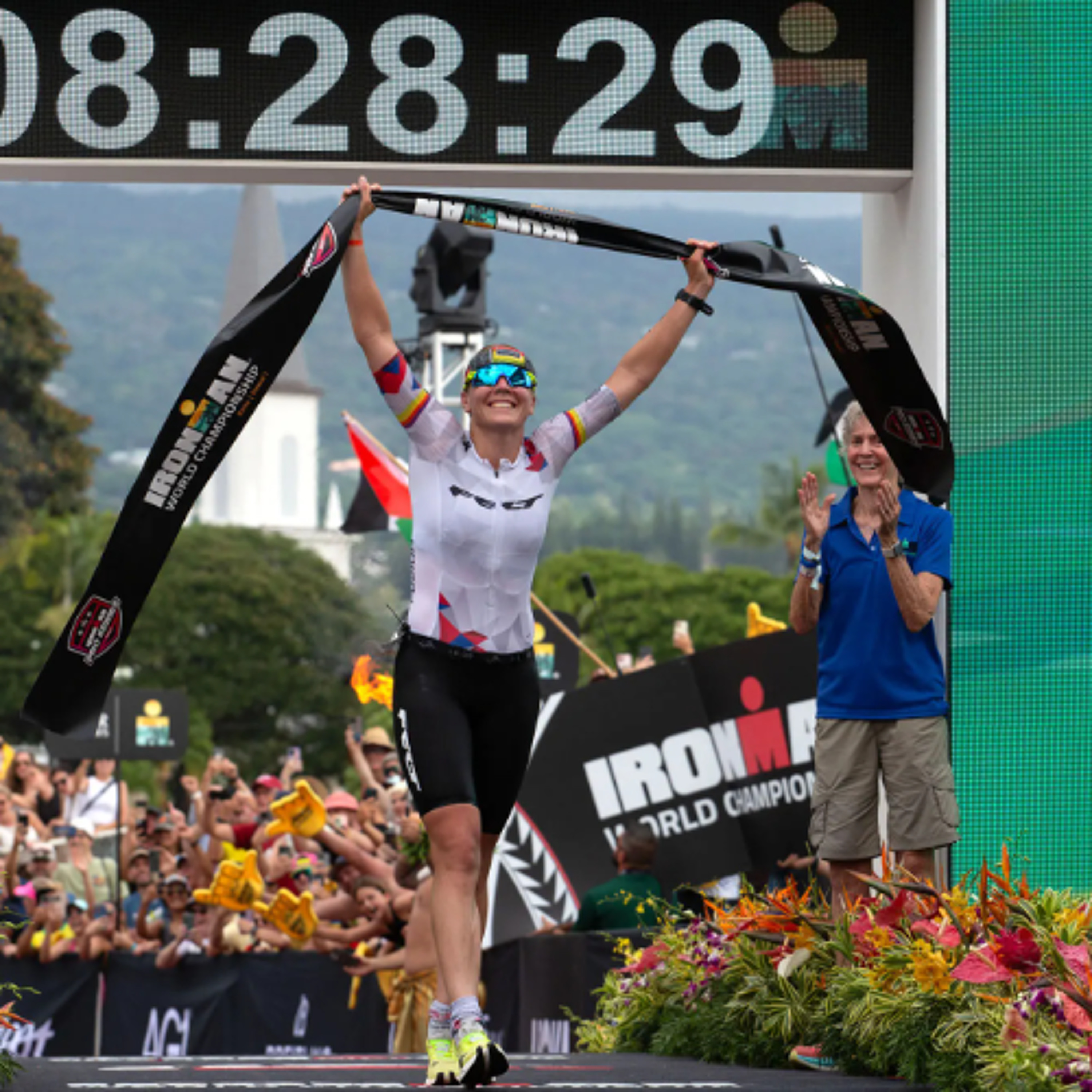
Danny and Colin discuss the 2025 World Championships (Men's and Women's) and give their hot takes on the new Kona qualification system. Key Takeaways Norwegian Dominance: The Norwegian team's success (winning both men's and women's titles) is attributed to a high-volume training model (25–30+ hrs/wk) that prioritizes threshold work and year-round altitude training, contrasting with the lower-volume, high-intensity USAT approach. Women's Race Drama: The women's race was an epic battle of tactics. Lucy Charles-Barclay's aggressive, race-dependent strategy led to a late-race DNF, while Taylor Knibb's controlled, course-dependent strategy collapsed ~3k from the finish due to heat exhaustion. Kat Matthews set a new run course record (2:49:00) to finish a close second. New Kona Qual System Flawed: The age-graded qualification system is failing. It heavily favors the Men's 55–59 age group on flat courses (e.g., 9 of 40 slots at IM California) while making it nearly impossible for women to qualify without an age-group win. This creates an unbalanced championship field. Topics World Championship Race Recaps Men's Race (Nice): Winner: Casper Stornes (Norway), who executed a smart, patient marathon. Norwegian Team Strategy: Training: High volume (25–30+ hrs/wk) with a focus on threshold work, not VO2 max. Support: Year-round altitude training and a strong team dynamic. Youth Development: Encourages high volume from a young age, a direct contrast to USAT's approach. Race Highlights: Sam Laidlow: Overcame a poor swim to finish top five. Matthew Marquardt: Finished top 11 despite cramping issues. Amateur Course Issue: Roads were not fully closed to traffic, causing safety and performance issues on descents. Women's Race (Kona): Winner: Solveig Løvseth (Norway), who ran a consistent 2:55:00 marathon. Key Performances: Lucy Charles-Barclay: Aggressive race strategy led to a late-race DNF from heat exhaustion. Taylor Knibb: Controlled race strategy (using a real-time CORE body temp sensor) collapsed ~3k from the finish. Kat Matthews: Set a new run course record (2:49:00) to finish second, 35 seconds behind Løvseth. CORE Body Temp Sensor: Function: Provides real-time core temp data to a watch. Application: Used by Taylor Knibb to manage heat; Christian Blumenfeld reportedly stayed in Zone 2 during his record-setting IM Texas marathon. Recommendation: Prioritize core temp data over heart rate in hot races. New Kona Qualification System Mechanism: An age-graded algorithm ranks all athletes against a Men's 30–34 benchmark. Younger athletes → time added. Older athletes → time subtracted. Impacts & Flaws: Men's 55–59 Age Group: Heavily favored, especially on flat courses. IM Maryland: Top 3–4 age-graded finishers were M55–59. IM California: M55–59 took 9 of 40 slots (23%). Women's Qualification: Severely limited. Outcome: Women must win their age group to have a realistic chance of qualifying. Projected Kona Field: ~15% women, with most being age-group winners. Race Dynamics: Removes on-course racing relevance, as an athlete's adjusted time is unknown. Proposed Solutions: Gender-Specific Algorithms: Use separate benchmarks for men and women. Proportional Allocation: Distribute slots based on the gender ratio at each race. System Adjustment: Ironman should adjust the algorithm mid-season to fix the imbalance.
Embed this episode
NOW PLAYING
Ep. 147- Colin and Danny Worlds Recap and Worlds Qual System Analysis
No transcript for this episode yet
Similar Episodes
No similar episodes found.
Similar Podcasts
No similar podcasts found.