Mom is a drug and alcohol counselor and my dad is an alcoholic drug addict. That's a Netflix show right there. Hello and welcome to WNC Original Music, episode 147, the snooker break episode. Snooker or snooker, I say snooker, but I feel like snooker is how they say it.
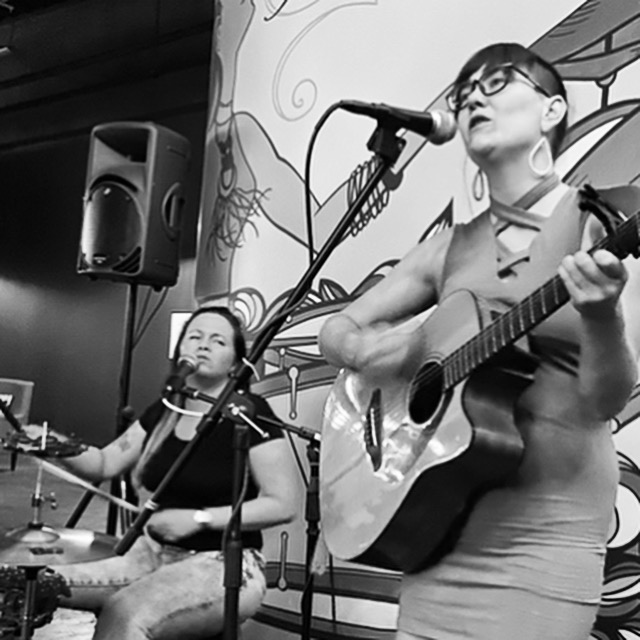
Anyway, very happy to have on the podcast this week, rooster. Rooster is a Nashville based band made up of Aaron Kennard playing drums and Annie Myers on guitar. Their bio says that the duo was formed by two strangers in the summer of 2016. It doesn't say that Aaron and Annie are those two strangers.
So I think that's kind of a literary choice. They're leaving that open to kind of your assumptions and they're going to hit us with a shop ending or a twist somewhere in there and there will be two different strangers, but probably not. Aaron and Annie are going to be talking about their most recent release, Bloodroot on this podcast and also part two, which come out later, but also make sure to check out their EP, their first release, which is also called Rooster. You can find them on all the streaming services and we'll have links in the show notes, of course.
And they were too modest to mention it in the episode, but their album Bloodroot was listed as one of WNCW's top 100 albums of 2020. Make sure to also check the show notes for their social media sites so you can see where they will be playing live. They've got some shows coming up and also again, check those links for their music. Here is Rooster.
Start. So yeah, borrowed wedding ring. It was one of those songs that just kind of happened, like if you close your eyes and boom, there it is on paper. I wrote it in a coffee shop in New York, this trip right after break up, you know, big momentous time and it'll just sort of like word vomit came out.
It was basically just, yeah, about a breakup. I think we decided to start the album with that because number one of the way the song starts is just how it ends. But also it kind of, we love sad songs and we're just naturally drawn to sad songs. So, you know, it kind of shows like, I'm making sad songs out of the way.
Yeah, I'm changing the round. But I think it kind of shows like the depth of what we write about. You know, it's like, boom, here we are. And yeah, it kind of like took, you know, very few minutes to write, like I said, it just happened, but it took me a long time to be able to play it.
I think Annie and I had just sort of met when I read that song, but it was like, you know, like a year or two before I even played it for her. I tend to be really sensitive about. In the words of Eric, I do. I'm sensitive about my artist.
And I'm sensitive about my artist. So I love there are so many lines in that song that I love. Like, just even the chorus took love when we made it a melancholy thing. I feel like people have like go into relationships a lot and like fall in love really fast.
You know, and then all of a sudden it's like, we took it and kind of like, drag it down and dirt. I'm not trying to suffer you, but like, I love that one. Yeah. Yeah.
And it was like, you know, everything's true. We, me and this person have been traveling all over the country together and like, you know, really just did a lot. And yeah, and then it all just kind of like fell apart as things do. But the time when I wrote that, it felt kind of like triumphant.
And I think that was why I was able to just like put it out there, even if I didn't end up sharing it right away. It was probably the most like sort of out of body songwriting experience I've had where I'm just like, you know, that's just happened to be the story album. I didn't want to know if I was reviewing this song and I use the phrase word vomit, that would probably be considered a negative review, but you can say it because you wrote it. So just in case that just take that context in the transcript.
Right. Yeah. I like how you like a lot of times people, I don't know if this is even important anymore in the age of digital music, but a lot of times people want to start out a an album with like an up tempo song. And you guys started out with a with a slower tempo song.
Is that something that did you think this is the one we want? Like how much thought did you put into the order of these songs? I guess it's my question. It could be a lot of thought.
I do put a lot of thought into it. And I really love to the fact that album starts with the lines is this how it ends because I don't know, we're both genized. It's like a wrap around. I don't know.
Yeah. And I like the vibe that it puts on the whole album because people are like, wow, they can sing really well together. And it kind of draws you into the rest of the album. That's all.
Yeah. I think we knew that we wanted to start it with that. It kind of feels like the most like kind of like a hit. And one thing that we really tend to do is change the tempo, being a drummer and really like key key into this, but change the tempo or the feel of a song like midway through.
And I think that song does that where it's like kind of just slow and going along. And then those drums come in. So I think illustrating that in the first song was important. Yeah.
Yeah. Yeah, I like those dynamics of that tempo. Yeah. Yeah.
And Matt Lohan can't say enough nice things about that guy, but like we had a lot of intuition ourselves and like our own musical like preferences for that song, but he also was just like the best, you know, kind of like producer, guy or two. Yeah, he produced that album. He's in a band called Deato and we can find him all over the place. And he has a couple of other projects as well, but he's just a really, you know, he, he had the perfect amount of like hands on and hands off with us.
He just has a lot of wisdom about, you know, the way sort of he just has like a high vibe to match our vibe because we're so tight together already as friends and like a songwriters and musicians and bandmates. So he was like the chilis dude that could come into that situation. We like, well, maybe I should quite out here without us being like, don't always want to do. Yeah.
Never said that. I thought you're done. You mark the bottle when you go, you draw line. You know me?
Well, let's take that thing on them. And a good time by my fucking steam. I think I know what I think I find. Take that thing on them.
I'm sure. Mark the bottle. Yeah. I wrote the song after I had a really great night by myself.
And I woke up the next morning and listened to a recording of it and was like, and it might be good. I don't know. Like I gave it something. It's very simple in my mind, but it's a, you know, it's a song.
It's a good old drinking song and everybody at the bar loves it. I don't know. I have some hang ups about the song because everyone loves it. And I remember taking the album to my parents for the first time.
And my mother is a drug and alcohol counselor and my dad is a judge. And like that song is very much like a drinking song. So it just had some, but it's all been talked out. I thought you were going to say for some reason.
I thought you were going to say my mom is a drug and alcohol counselor and my dad is an alcoholic drug addict. I don't know. I don't know. Alcoholic drug addict.
That's a network. Yeah. And then I was born. It totally is.
Yeah. No, he's a judge. And so I was a little nervous about that. But my parents just like my music.
I think it was in the big thing like bar wedding, right? But that song was just like, I drank a little too much after my boyfriend let the house and then I wrote a country song and it's done. And I think that song has just like a real raw like country, just, you know, like, it's like a classic way like it could have written by Hank Williams 50 years ago. I have written down one of my notes says, one of my notes says honky talk songs.
So I mean, it's very, very Hank Williams, senior. Do you guys typically write separately or you doing a collaboration? We've written two songs together, two songs together, but typically separately. Yeah, we don't really play those two songs anymore.
They just sort of wear a moment in time. We recorded both of them. They're not on the album, but they're just sort of like, you know, little hidden gems. It's hard for me.
Like, I've tried a lot to cool. Well, I was gonna say a lot, but like when I try to collaborate with people, my process is just so different. It's hard for me to not be overly stubborn about the words I want to use or the melody that I need. So yeah, I think our songwriting process is really different.
I think I tend to like obsessively take a long time and then once it's written, take a long time to share it. And it seems like I just do it like that. And then we'll do the same thing we can learn and like play well together. But when it comes to that, like the seed of a song or like the start of a song, it's different for both of us.
Yeah. Yeah. Yeah. Like I won't talk to Annie for a week and she'll say I wrote five songs.
Can we play for you? Perlific. Yeah. What's the studio where it was recorded?
So we actually made a studio in we recorded the most of the album in Annie's old house is Old Cabin. I almost want to know a stone cabin right on right next to the Warren Wilson campus. It used to be part of the campus and I think the like the Dean used to live there or something. Oh, yeah.
It was like it had this old wooden floors that were like the gym floors from the 40s and Warren Wilson. So it's like really thin and then it's all stone walls and the sound was just like perfect. It was awesome. The lighting was like perfect.
And so I'm like, we don't have to go to the studio. Yeah. Matt just came and we set up everything there and parked for like a week or week and a half, I think. Yeah.
So he borrowed and rented a lot of equipment came in from LA and we basically recorded seven songs in a little over a week. The other five songs were recorded before we recorded in a storage unit in West Nashville. So we had like a state was it a sort of like that. It was like a George's.
It's more stuff. George's. But he had he had a practice space way back when met him. He was a sound engineer at what was a country, I guess, ultimate, back when it was ultimate.
And he ran sound for one of our shows and we started talking to him that they have this practice space. We ended up recording our first five songs there. Four of them we kept for the album and then completed it with that week of week in the cabin. I'm sort of like running some nice microphones and some, you know, a better snare drum than what I had.
And there you go. Do you have any like half serious names for the recording studio that you called it Stone Cabin Recording or anything like that? We did it. We didn't.
We didn't. Just the Swannell House. Yeah. It was this one in the well.
And it was beautiful. I love that you could walk out the backyard to like trails and stuff. So I didn't really go anywhere. I guess that's another one of my songs where I feel like I'm like dealing with depression as many people do.
And it just came out and it's kind of like really necessarily think that's a sad song. It said like with words, but like the feeling of it just kind of like I'm here too. And I wrote it kind of right before COVID started. I think it was before.
No, it was before them because it's my album. But I remember playing or thinking of it a lot and thinking of the words when COVID first started because I was like, I'm tired of feeling this way. Like tired of feeling so crappy. And it's a tool for me.
So I'm writing is a tool where like I'll do it and all of a sudden not that I'm totally fixed, but I'll feel lighter. And now it's out there. And everybody else is like, wow, I really feel that way too sometimes. Like it's okay.
It like normalizes different struggles that people have with mental health for me. So. And I think it has like a really, like you said, like I'm here. It has a real like keep on chugging vibe to it.
You know, that is hopeful in a weird way. It's just like I'm living through this, you know, and you know, melodically, I think for me that one stands out because a lot of what we do like with harmonics with harmonies is try to just like, you know, make it simple, but make it like punch like the harmony. We call it harmony driven folk rock. So the harmony is like really strong on that song.
It's kind of even the first thing that song I'm sorry to interrupt you. But it was like magic. It was like you already knew where to go and like knew what to do in a perfect way. Yeah.
We don't really talk and like sit around and work as straight harmonies. It just clicks. Yeah. And with that one, I mean, it's all in the chords.
Like, you know, I love that what I sing. The harmony is like a drone note, you know, it's just like it just pushes through. And like I think that kind of adds to the effect of like it just is constant. Like, you know, and the chords change around it, but that that harmony line is just like steady.
Yeah. I think I listened to a lot of this whole country music and different melody lines come from that. That's how I learned to harmonize too. And like, you know, beach music and stuff.
So do you guys ever do like add what's the highest number of layers of melody or of harmony that you have on one of these songs? I think in weeds was probably the we did like a real big kind of showy part at the end there. We had like three or four layers, but just selectively, I mean, it's rare that we do that. I think like you better too, because it has like that honky ton kind of vibe where it's like, you know, supposed to be like a bunch of people singing.
But typically we just stick with two parts. I think the recording too, we wanted to keep it like as close to how we would sound. Like live aside from the fact that, you know, instrumentally, we'd expect locally wanted to keep it close to like just the two of us. But I'm all about some big harmony.
I mean, other contexts, like if we get together, we do it like around a fire, like as many as possible, you know. We've done a little bit of singing with like a third person and doing some three part harmonies, and that's always like magic. But we just like any said, we just don't even have to like talk about it. We just sort of like boom, it happens.
And that's a special thing, you know, to have a duo, because it's this like connection that's like built in that, you know, we wouldn't necessarily have a third person. Now that we don't, you know, maybe want that and talk about that. But it's definitely like a special thing. Special connect.
It's also cool that happens and then you also turn out to be best friends. Like you also actually really like each other and then you have musical connection. Right. More from Rooster in just a few moments.
Want to remind you to look for their music on all the streaming services and Bandcamp. And also you can find them online at roostermusicavl.weebly.com. And of course, we'll have those websites for you in these show notes. It's Andrew Felston and this is my song Hold on to Me for my newest EP, Sound of Repeat.
Available worldwide on all streaming platforms. Thanks for supporting local music and thanks for listening to WNC Original Music. Hey, Andrew just had a baby. So I'll go show him some love for his music at andrewthelston.com.
And also just tell him, hey, you like that new baby head. Also, don't forget to subscribe to the podcast wherever you get your podcasts, WNC Original Music or just go to wncoriginalmusic.com. Or as always, you can listen on your smart speaker or just Google WNC Original Music. I'm sure something will come up.
Follow the podcast on Instagram and Facebook. Again, just search WNC Original Music. Doing a cool thing right now. As I'm recording this where if you tell me your band name, I will tell you what your cover band name will be.
So if you are listening to this like in 2027 or something, you might have to scroll back a little bit. Corrections and clarifications from last week's episode with Derek Fry. A fiddle can be defined as a nervous violin. So we were both right.
Hi, this is Dwight McGlenn of Trueberry. You're listening to WNC Original Music. Before I get to the next song, you guys had mentioned something about the Zodiac sign. I was going to ask you if you were a Zodiac followers.
I don't know if that's the phrase I'm not. Just one silly question I'm going to ask you later is, can you think of and describe the 13th Zodiac sign? So be thinking about that and we'll talk about it at the end there. Just give you something to think about.
Hi, research stat. You did? Oh, wow, okay. Yeah, it was like, I went down a rabbit hole.
It was like the starting with an O with the 13th one. Is that what you're talking about? Like basically, they... No, no, I'm not saying that like there is one.
I'm saying you would create one. Yeah. No, I mean, we're not spending like half an hour on anything. It's just a...
We are so solid, John Ice. Yeah. Like both of us. Yeah.
Yeah. I definitely... Like I did. We just resonate and I don't think I could come up with another one because I just love myself so much.
That's not something I'd dream about. Okay. And I think we could be very different too. Yeah, we were different sides of the John Ice lecture.
Yeah. But you know, they have like the rising in the moon. For me, I actually cannot figure out what I am because my mom doesn't remember what time I was born. And it's not on the people's birth certificates in South Carolina.
I even ordered a birth certificate. Register of beads, whatever. So I'm just like, I'm just going to go in the heavens. I'm just dropped here.
But maybe that's why that's what the difference is account for. It's the rising moon. But yeah, we saw it. She doesn't remember like morning afternoon night or anything like that.
He said maybe at night, I mean, or in the evening, like in the evening. She just doesn't... I guess she had a look at what I was trying to remember. She did two national laborers.
I mean, I can't blame her. I was the second one. So she did. I know her.
I'm really hungry. I'm not saying it's best for you. Not saying what you're thinking. I'm just saying I liked you better.
You all do say it. You want it better. We have lived and comes out with... Yeah, so this is the only song that's actually co-written.
I was in a band in college called Quasifonics. It's a big like, think like a Edward Sharp, you know, like there's a million people in the band kind of thing, like, subbing it and out. But I had, I wrote a lot of songs with my friend John Durham. So we were kind of writing this song from two different places.
I was writing it about an ex who drank a lot. And he was writing about his boss who drank a lot. So we kind of came up with the chorus and he had an inverse. And it went through a lot of changes from the time that like I wrote it.
We wrote it in college to the album, like even melodically, I mean, even, you know, definitely instrumentally, like what we chose to do with it. It's it has pedal steel, which I love. I love that. I want to Matt Lohan's friends, Philly, who was a national student musician there.
And he put the whole guitar piano on it as well as pedal steel. So instrumentally, we did a lot more with it, but even like a few of the words and the melody changed. But basically, yeah, it's just like a little funny drinking song. It always gets, it's a laugh.
And I always do like a cheers before we play it. Yeah, people love it. I love it. I kind of, I always think about how there's so many double negatives in the song.
Like I'm not saying, like, I'm not saying I don't want what's best for you. That's like kind of confusing, but it's sort of supposed to be tongue in cheek. And just like, you know, people relate to it. It's like they're either in that position or they know somebody.
It's funny because of Philippe, the player who played pedal steel and piano. He, so he was the only one, like the only guest player on the album, except for Matt, the producer. So it was really, really, it was a small quiver of people. We wanted to kind of keep it consistent with how we were live, but he had just quit drinking when he was asked to play that song.
I forgot about it. Oh, it was like... It just kind of reminds me of the phenomenon where, like everybody's got like a friend who, like their personality changes so much when they're drinking that they get called, like, like, if he's William, it'll be, oh, fun Williams here. And that just means William has started drinking tonight.
You know, he's, he's a little fun, but then he gets too much and like, no, that's not fun, William. And he's like, that's aggravating William, who's like sloppy on top of you and stuff like that. Yeah. You know, there's a heavy medium there, hopefully.
I think for everybody. Yeah. I thought also I thought this would be, this sounds like it almost lends itself to an acapella version because it starts off with the strong harmonies. And I mean, it's like 75% harmonizes.
Yeah, we tend to do that. I mean, we have to kind of stop ourselves from doing harmony, like the entire way through this song at all times, forever, figuring out where it works best, yeah, emotionally and looking back fully, right? To make it dynamic because, you know, we could just like literally sing all day and never stop him. But we could find that.
Yeah. We have. Yeah. When Bluffwild, I had a, yeah, I love that song.
And like at first I didn't, and it took, it didn't take convincing from Aaron, but it took like confidence in it. It's really hard to like put a lot of yourself into something that you're sharing with people like Abbar it, like who may or may not care. But that was a very heavy song for me to write. I had like a person at the time I was seeing who's gone a lot and like just missed him on the regular.
And that was also a song that came not right away, but it was one of those that I was scared to perform. And then we recorded it, I've needed pushing from other people to be like, no, this is a good song. And like we need to keep playing it, you know, because my confidence level isn't always there. Or like a little too timid.
But at the same time, I know that I'm a good songwriter and I want to do that. So I'm like, yeah, right? Emotional songs, people are vulnerable in front of other people. It's very much what I feel like I'm supposed to do.
Yeah, so that was one of the first ones we recorded in the storage unit. And I've been pushing to play it, you know, ever since I just think it's such a classic. And it just has like a haunting way about it where it could have been written. And I love songs like this.
Could have written 200 years ago, you know, because it's like timeless in that way. There's, you know, like lyrically, there's not a lot of references that date it. But I think melodically, it's so haunting and just like timeless, beautiful. Yeah, it's like a draw.
Yeah, it was like a slow draw. I love playing it. And I love how slow it was when we recorded it, which is slower than we usually play it now. But I love that recording because it's like, it's our very beginning as a band, you know, it's like, it's just so raw and natural.
Yeah, I love the first ones I think we learned together. Do you guys play as a duo? Do you ever play with a full band after the recording? Not really.
I mean, after we were supposed to have a release show, our album release show is going to be March 16, 2020. So at the great goal, so as you can imagine, that didn't work out. They still were going to let us play, but it was so weird at that time. And we were just like, we can't.
We did have though, we had a bass player and a lead guitar player that were going to play with us. And so after that, COVID happened and we just had never really gone back to that. But we were definitely open to it because we liked that sound that we had made and not too full, you know, but at least what was like representing what was on the album, which is lead guitar and bass on both songs. We thought, you know, yeah, it sounds good.
We have the parts for it. We have like, you know, all the stuff, but yeah, it's just something we never really going back to. You know, weird way it was almost the blessing of skies. I remember Aaron calling me a week before and we worked so hard and we're so proud to like finally have our album release and Aaron called me a week or two maybe before and was like, dude, I don't think this is going to happen.
I was going around and I was like, so out of the loop at the time. I was like, what? No, it's definitely happening. Like we're not stopping.
And she's like, no, like it's pretty bad. I mean, we didn't make the calls like for sure until a few days before. Right. I also know what's happening so much there was because we didn't have a lot of practice with the bigger band.
And like we had a couple, but it might have been a blessing of disguise for that reason because I wouldn't want to come out and feel unprepared. Yeah, but it was such just a weird time. I mean, everybody was scrambling at that time. It was just like, I feel like we would have been ready, but it was just like, we totally love it.
Okay, that's it for part one with rooster. Again, rooster is the duo of Aaron Canard and Annie Myers. Make sure to check out the show notes again for their music. And also you can find them at roostermusicavl.weebly.com.
Don't forget if you haven't already and why haven't you already subscribe to the podcast, WNC, original music, wherever you get your podcast. And also don't forget to keep supporting local music, especially on band camp. We love band camp, but also all the streaming services or even better. Just go to live shows and buy people's merchandise or go to their websites and buy their music, buy their CDs, download their music.
They would really appreciate it and I would too. For the closing song this week, we have New Age Americans. New Age Americans are composed of young adolescents from the Chicago suburbs. New Age Americans are a group of young adolescents from the Chicago suburbs.
They formed a middle school and I know what you're thinking, this does sound like a John Hughes movie, but they're a real band. They performed with various artists such as the iHeartRadio rock artist of the year, lovely to band, and they're getting ready to tour again. You can find them at newagamericans.band, not.com.band, and here they are New Age Americans. Have a good week.