
Do you ever feel like you're listening to the podcast and wishing you could step behind the scenes, join the conversation and really connect with other coffee industry folks who share your values? That's exactly what our monthly Patreon live discussion group is all about. As a member of our roasted coffee tier on our Patreon, you're not just supporting the podcast, you're stepping into a space where you can join exclusive live video sessions and meet like-minded people from every corner of the coffee world. The quality of the discussions is on par with what we get on the podcast, except it's an open discussion with about 35 other like-minded people.
For just $20 a month, our roasted coffee tier gets you early, ad-free podcast access, our weekly industry insights blog, and access to join us for the live monthly discussion groups. If the roasted coffee tier isn't quite the right fit for you or it's a little out of your budget, we have other options so that you can still be a part of the community and support the work that we do. Head over to patreon.com forward slash mapper forward or check the show notes for links. If you're already a Patreon backer, thank you for your support.
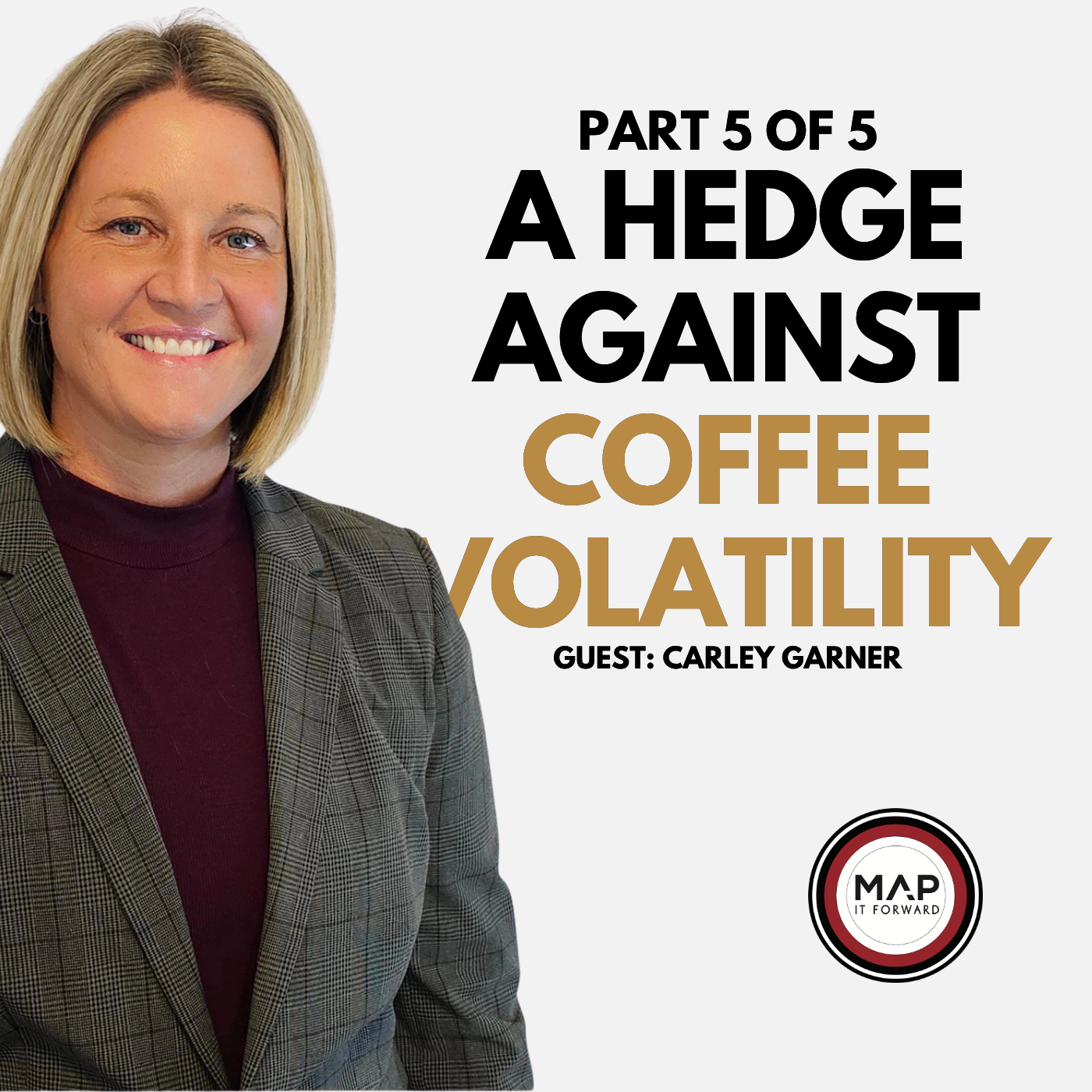
Welcome to the Daily Coffee Pro by Mapper Forward Friends, I'm your host Lee Safar and this is unfortunately the final episode of Carly Garner's first time on the podcast for 2026. Good news is this won't most likely be the last time Carly comes on the podcast for 2026 because everything seems to be quite volatile and chaotic and not looking like it's coming down anytime soon, which means we will have many reasons to ask Carly to come back on the podcast. Carly, thank you again for I think what has been our best series yet so far. This I've followed along and I know that every time you come on, it gives people a whole list of things that they need to go on research and they will be following along a lot more easily with this series than they have in previous ones and that is a real credit to you sticking with us as an industry and doing the heavy lifting and trying to educate us in this thing that really is like this behemoth to the independent sector where we don't understand why there's this like monolith in our industry that is the same market that we're all ruled by but doesn't really make any sense unless it goes to 440, right?
So thank you for that and thank you for a really great series so far. This is in this episode folks in this whole series we're talking about what's happening commodities in 2026. We've talked about coffee, we've talked about oil, we've talked about energy, we've talked about the war that's happening with Iran. What we want to do in this episode is talk about what the best ways to prepare for the best and worst case scenarios are because Carly the way that I've been talking to my clients about this volatility is in volatility there are great opportunities and we need to figure out what problems you can solve and how to monetize them in a way that works for you and for your customers.
So that's the approach that I take with my clients and that was the thinking that I had for this episode. So in your mind what are some of the best ways that people can prepare to take advantage of the best case scenarios and the worst case scenarios and I want to preface that by saying something that we've never really said on the podcast before. The best case scenario for one part of one stakeholder may actually be somebody else's worst case scenario and vice versa. Right.
Absolutely right. In commodities there's a winner for every loser and vice versa so if you're a roaster and things are amazing that means the producers probably feel like having the exact opposite and you know what this business is really uncivilized because for that reason alone if you're winning someone else's losing advice versa and sometimes it's hard to recognize that. I'm a small business owner, I'm not growing coffee in my backyard but the one thing that has always gotten me by is just being super super cheap. So I think that's really ultimately the best way to survive.
I know there's a lot of, there's a tendency to kind of get complacent when things are going well and that's actually the time that you should be thinking about what can go wrong. How could I pinch my knees, save money, cut costs and be prepared because the only way to survive is to have a little bit of cash sitting around, get you through the rough times and now it's really unfortunately that simple. So one thing that you said in the last episode that has got me thinking a lot, you were talking about speaking to roasters about hedging and in our monthly Patreon discussions we have been talking about using other mechanisms to fix prices and to help their sort of be a floor price and what you got me thinking about in the last episode was could we remove some of the risk off of the producer as a way to prepare for the year ahead by encouraging more roasters to carry the burden of hedging so that they are carrying some of the risk off of the producer. Is that a tool that we could be advocating more of because more roasters have an access with some of the cash to get that insurance?
Would that be something that could stabilize a market, a cash market more? Well, I think that that's definitely a conversation half because ultimately what's, there's a lot of things that drove prices higher over the last couple of years but I am pretty confident in saying that a lot of it was probably anti-buying, by roasters, you know, when prices started to really cascade higher, they were most likely anti-buying to keep coffee. I was looking for what's the cheapest coffee I can find and that's what I'm going to panic by and everything else kind of set on the shelves. Okay, so really the way to, I'm not, there's no way to fix any of these problems, these are just capitalism has problems, it's imperfect.
But one way to take some of the panic and emotion out of it on both sides is to hedge and so if we're talking about roasters, there are, this is actually a really great environment for hedging because there is so much volatility, you can use the market's money to buy your hedges, I talked about this at the NCA convention, if you're a roaster and you're worried about prices going up again and the way they did in the last couple of years, one way to do it is to sell a put option and use that money to buy a call, that way you're using the market's money to buy your insurance, so that you have a basically an insurance policy against coffee going up over $3.30, $3.40, whatever it is you decide you want to do and you use the market's money to do it. The only downside of that is if coffee continues to go lower, but that you sell, it eventually gets in your way. So it's not perfect but it's a way to take a lot of all over the place on the market. Yeah, and it's a really smart way to do it because it doesn't, then that way you're not making really bad decisions under the rest because that's what we do when humans are under stress, that's what we do.
So it's a really awesome way to not only hedge your own risk, but maybe if everybody did it, as you mentioned, it would work some of the volatility because there's less emotion in the tape. So talking about the practicality of doing something like that, one, that's something that you can talk people through if they don't know how to do any of that at all, right? Oh, absolutely. Yeah.
And just so people have an idea of what we're talking about here, you'd probably want $10,000 to $15,000 an account per one hedge, so for one futures contracts, equivalent, just a lot of people have an idea of what kind of money it would take to do that. But yeah, it's actually not as hard as it sounds, it sounds really, really complicated until you actually execute it and see it in your account and you check your statements and you follow things along and then it actually becomes very simple. So it's just a matter of doing it. And that's why I wish the Ice Exchange would list smaller contracts so that people could test these types of hedges out without being all later all out, you know, I wish there was little smaller increments to do it.
Is there a mechanism for us to petition them to do that? There is, I'll just say this, the Ice Exchange is not the friendliest exchange on the planet. They don't cater to smaller hedgers or speculators, like the CME group actually does. The CME has created, which is Chicago Mercantile Exchange, they've created lots of micro contracts, nano contracts, minis, so that people have all sizes can hedger speculate.
The Ice Exchange doesn't seem to be interested in doing that and we can suggest it to them, but I'm pretty sure they don't care that they kind of have a history of not being in favor of the little guy. And I know this because they charge really, really high fees just for price data. So if you wanted to get live coffee futures data, it's $150 a month plus New York sales tax just to see live prices. So smaller hedgers or smaller speculators aren't willing to pay that and they know it.
So I think they do that obviously on purpose because they make a lot of money on the bigger players. Yeah. Yes. That's exactly right.
It's unfortunate. But I think that's... Oh, yeah. Well, and it's an active participant.
It is... No, let me say that better. The Ice Exchange is a driving force behind the destruction of the coffee industry. And I don't say that lightly and I'm in every single word that I said in that sentence.
They are a driving force behind why in Costa Rica, over the past 10 years, 46%. And I'm using Costa Rica because I know this number for sure. There's been a 46% reduction in coffee farmers in Costa Rica alone over the past 10 years. And that is a market where they pay higher wages to their pickers.
And because of that, it's prohibitive to sell coffee because it's based off the sea price. And that is happening in origin countries all over the world. And for that reason, the Ice Exchange is directly responsible for what's happening in coffee. Farmers don't know how to unhook themselves from this mechanism.
And they have been trying to get the other part of the supply chain to understand, guys, we're now subsidizing because of this, you know, behemoth in this industry. The farmers are now subsidizing the rest of the supply chain. We've got to figure out a way to spread that risk. And when I hear the numbers that you're talking about, $10,000 or $15,000, I don't know a single independent roasting company that's going to be able to afford them.
But if we can get groups of roasters to come together in communities, so I want to drill down on the practicality of that a little bit more, if you don't mind. So let's say that a group of, you know, 15 roasters in Las Vegas decided to get together and put in $1,000 each to work with that, right, which is an easier barrier to entry. When they work with hedging, can they hedge against a collective position or are they hedging against a specific amount? So it can be a collective position.
So if they're all putting in an equal amount of money, they would be basically hedging an equal amount of coffee. So anyway, so it would probably come into, like I'm sure each person has like a different reality. Yeah. Exactly.
One has less. So it wouldn't be perfect. I guess in some ways they could say, you put a 900, I put an 11, you know, you can sell like that and that could work. But yeah, I mean, technically it's possible it would be, like I said, it requires some paperwork, so it's not for the lazy, but it might be worth doing if there really is such an E.
Do all of them have to be in the same country? Does it only work in the US? Can they do it if like, if one is in Brazil and one is in the US, is that, does that make it more complicated? It may not.
We have clients all over the world. There are certain countries that are hardy to do business with because of like, oh, fact list, like sanctioned country, things like that. But for the most part, we can do business with anyone in any country. But it would be more of like, there would have to be some sort of entity, like a LLC or something formed.
And then the owners could be from anywhere. They would probably have to prove, you know, they don't have to send their IDs and that sort of stuff. But I would probably suggest the entity be a US entity because that would just make things easier, but it could theoretically be anywhere. Okay.
I think we're going to talk a lot more about that in our discussion group. We might see if we can invite you to participate in that conversation because I think that there would be a lot of really interested people in our discussion group who would want to participate or at least. So we have a lot of middle men there, people who are matchmakers, who are connecting roasters with producing partners, and their job is the middle men who are taking care of a lot of the logistics is also to help both parties manage their risk. And this is where a lot of these questions are coming from, which is like, is there a way to use the C market to help set a floor price and blah, blah, blah, they're really intelligent questions.
And we're really digging very deeply into how do we use the tools that are available to us to make this, to create more stability, sorry, no problem to create more stability. But I think we're headed in a direction that might work with this conversation. There's one other thing that I wanted to ask you about that we haven't covered. We haven't talked about currency in this conversation.
And in a year like 2026, I think currency is going to be a part of people's strategy in the way that they look at currency. Am I on the market or do you think that that's not something that we need to focus on this year? No, I think that's absolutely true. In fact, I think thank you for bringing that up because I should have brought this up earlier.
I think that's one of the biggest things that's going to work against coffee is the strength of the US dollar. So even all else being equal, the stronger dollar is going to put pressure on coffee prices. Okay. And when you say pressure, do you mean downward pressure or upward pressure?
Because one thing that we're starting to see right now is this kind of people being confused about which direction is this going and how am I going to be able to use currency to help me in those exchange rates? Is it going to be good for the Brazilian or are you guys are going to be good for the peso? Is Australian the Australian dollar going to get hammered? What do you think there?
Well, commodities are generally priced in dollars. And so anytime the dollar gets stronger, it's just ahead. It doesn't guarantee that the commodity questions in the struggle, but that makes it a lot harder for the price to appreciate. So I personally think the US dollar index is probably going to like 110, 111, which is quite a bit higher than it currently is.
And if that's the case, commodities across the board will probably struggle. So that's going to be the only reason coffee goes lower, but it would be a primary reason. Okay. So, Kali, we're going to wrap up the series there.
There's a lot for people to digest. Would you remind people where they can find out more about you, where they can watch your YouTube videos and jump on your newsletter and read your LinkedIn, et cetera, et cetera. Okay. So you can find our website, decarlytrading.com.
We also have a sub stack, decarlytrading.substack. And if you're on Twitter, X, whatever you want to call it, my handle is at Carly Garner. I try to post about all commodities, but everyone's well opposed to coffee chirpy and some commentary. And you can find me at LinkedIn as well.
So any of those places, I'll be there. Thank you for what has been a delightful series. I think it's our best one yet. And thanks to everyone in our Patreon community for submitting all of those questions.
It's a delightful community, but having the questions really helped me frame the direction that the conversation needs to go. Our last question, as always, when the future version of you comes back and watches this, what do you hope for her? Well, I hope that I can look back at this and say that, you know, even though I said some unflattering things or some unfriendly things, hopefully I said them at least in a consumable manner. Let's just put it that way.
And I need to tell you something. I need to tell you that the coffee industry, you are a darling of the coffee industry. You help us understand things that we find very difficult to understand, that feel like they're being inflicted on us. And you operate in a world that is really harsh and really dirty.
And you're not that person, right? You have managed to demonstrate to the coffee industry that you can be a values driven business owner, no matter where you're operating. And I find that deeply valuable and I'm really, really thrilled to have you as a friend, but or as a recurring guest on these podcasts, because I trust the information that you give us. And we all learn so much from you, Carly.
So I'm really, really grateful for it. I appreciate you having me. Thank you very much. And the future version of me, folks that you and I finally get to see each other again.
I know. Some fucking point. We keep the world every year. I know.
The world is really giving us. I got to say, every time we plan on catching up, it doesn't matter what city, something blows up in that city or something happens and stops it from happening, literally, literally, but it will happen. So when the future versions of us come back, I hope they've finally got to catch up. I need to do us a favor and sign off our series for us.
Yes. I mean, I will add just really quickly. I do recall the first time we were supposed to meet was in New York, March, 2020, when the world arrived. Listen, we should stop planning things where you and I are ruining the world.
I was getting on a plane to go to New York to do a keynote speech and got turned away at the airport because they shut everything down that day. And that was the first thing they did in Sydney. Isn't that funny? Anyway, thank you again.
We figured out the problems of the world because it's our fault. It is our fault. It's obviously our fault. I don't know why it's so long to figure this out.
But I think I'm supposed to say peace, love and peanut butter. You are. Have an amazing rest of your day, everyone. Bye.
If you enjoyed this episode, consider supporting Map Up Forward, our guests and advertisers on social media. Subscribe, hit the like button, leave a comment and share this episode with a friend. And if you'd like to support our work more directly, become a paid premium YouTube subscriber or Patreon backer to get early access to the show ad-free directly to your inbox each week. You can find links in the show notes.