
Do you ever feel like you're listening to the podcast and wishing you could step behind the scenes, join the conversation and really connect with other coffee industry folks who share your values? That's exactly what our monthly Patreon live discussion group is all about. As a member of our roasted coffee tier on our Patreon, you're not just supporting the podcast, you're stepping into a space where you can join exclusive live video sessions and meet like-minded people from every corner of the coffee world. The quality of the discussions is on par with what we get on the podcast, except it's an open discussion with about 35 other like-minded people.
For just $20 a month, our roasted coffee tier gets you early ad-free podcast access, our weekly industry insights blog, and access to join us for the live monthly discussion groups. If the roasted coffee tier isn't quite the right fit for you or it's a little out of your budget, we have other options so that you can still be a part of the community and support the work that we do. Head over to patreon.com forward slash Mapper Forward or check the show notes for links. If you're already a Patreon backer, thank you for your support.
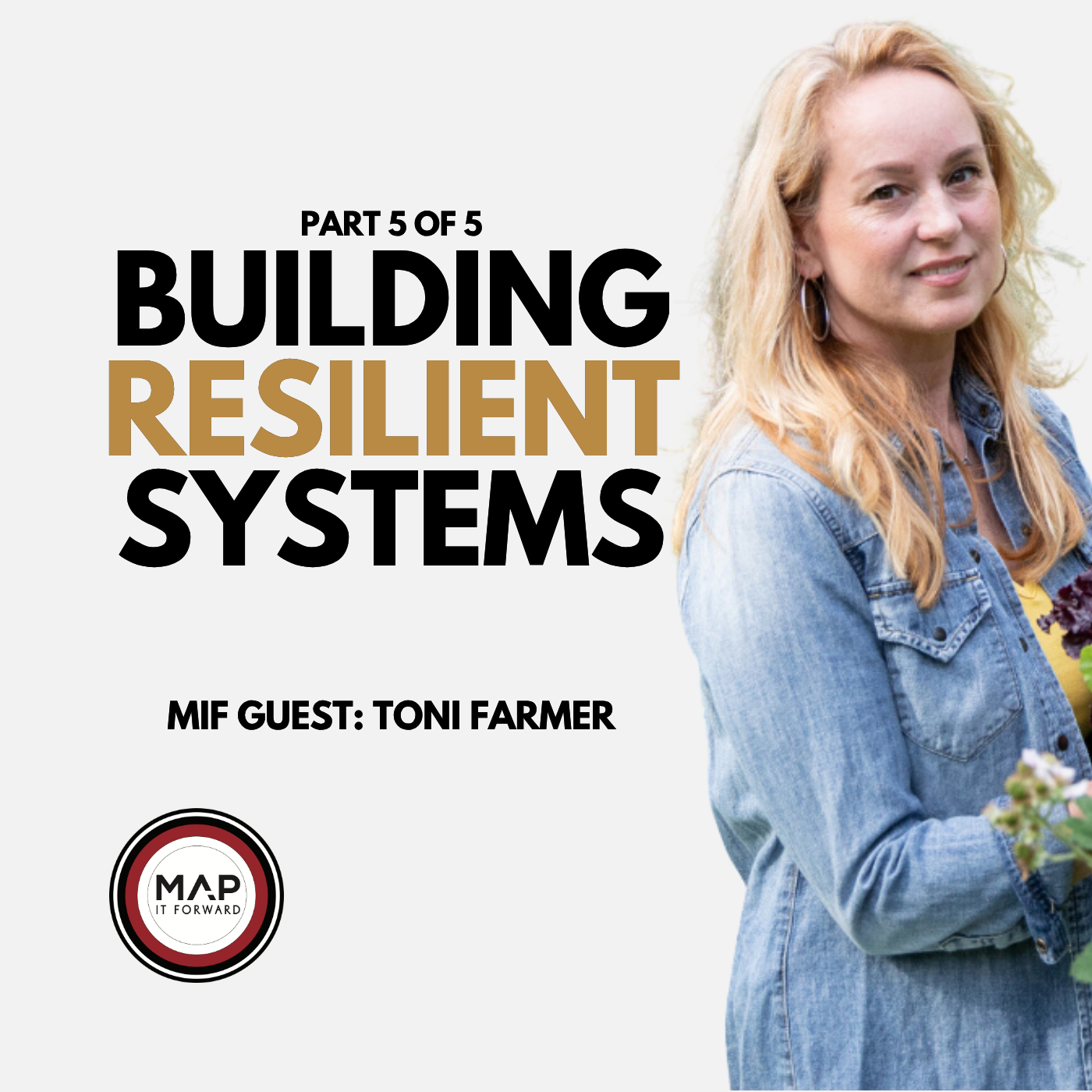
Welcome to the Daily Coffee Pro by Mapper Forward friends. I'm your host Leah Safar, and this is, unfortunately, the final episode of what has been a fantastic conversation with adjunct professor of the University of Pennsylvania and founder of Tony Farmer's Garden, Tony Farmer. We are talking about the evidence of regenerative, the evidence for regenerative agriculture, not just in coffee, but in agriculture in general. And in this episode, Tony, we are talking about moving backwards to move forward towards a resilient food system.
So tell me all about that. So that's a personal statement that I make to my students. It's kind of my tagline when I talk to them. Because, you know, when I get, we get in these lectures, I start to ask, what are we going to do?
So we've talked a little bit about moving backwards already, to moving back to indigenous practices, where we're better at crop rotation, we're better at poly culture, we're better at cover crops, we're better at caring for the soil, we're better at, you know, it's hard to go back to some real indigenous practices, like the Three Sisters Garden, which is corn, beans, and pumpkin, because you, there's no equipment to harvest that. Like that'd be so labor intensive, no one's gonna do that. But companion planting, and intercropping, and silvo pasturing, which is instead of you take down the forest, you thin them a little bit, and you allow cattle and other animals to forage underneath, and you're handed by the trees, and you plant, and they control the crops underneath, and it's, look up silvo pasturing, it's becoming very popular. So those are indigenous practices, we need to move backwards towards.
And I think, again, if you want to look up the research on the Rodeil Institute, and they're instituting all of these practices really, really well. And this kind of agriculture, when the soil is healthy, plants need less water, they hold onto water better, they hold onto nutrients better, they can continue to handle heat stress. So there was a paper that came out of the University of Delaware about five years ago that showed that most edible crops stop photosynthesizing at 95 degrees. And we've seen this, I've seen this in real life.
The plant doesn't die, it just kind of, I tell myself a lot of time, like, yeah, how well do you function when you are super stressed out, and all my students go like, not well at all? So this is a plant saying, I'm so stressed right now, I just need to survive this, I'm not gonna make anything for you. And then as soon as the temperatures come back down, they start producing again. But with regenerative practices, they handle the heat stress better, they fight off pests better.
It's just, I mean, I'm experimenting, I use beneficial nematodes in my garden, I'm experimenting with trap crops, like wild mustard, draws, pests away, like there's so much we gave away. We gave all this knowledge away, and now we're realizing our mistake. But at the same time, we have to move forward, I don't want us to be afraid of technology and through advancements in science. So hydroponics, growing food indoors, exploded a few years ago, and then everyone started going bankrupt, and we were, of course, we're all asking the question, what happened, it turned out, they were so equity intensive, and so you'd have private equity move in, they would fund the, you know, the setup for this giant factory or this warehouse with all this really expensive equipment, all this really, really cool, I can't tell how cool this equipment is, everything's monitored, everything's on timers, but they couldn't turn a profit before the deadline.
And private equity has deadlines, and investors have deadlines, and they're, and they pulled out, so we saw three or four major ones in the United States, just in my area go under, all that technology is sitting there unused, but that doesn't mean it's not part of the future, we just have to figure out how to do this, because we have a lot of unused space, a lot of warehouses, and also in areas like Alaska, and Iceland, and areas where, well not Iceland, Greenland, but where it's really hard to grow food, and if you can grow indoors in a controlled setting, that's a technology that works for us, and there's less pressure as well, and you can control what you put into it, so that's one. Also, people to have no idea how much tech is infiltrating farming in a good way, so drone technology is fabulous, so think of the farmer who used to just overhead spray, glyphosate over all the crops over and over again. Now we have these high tech agricultural drones that have sensors on them, that can sense fungal diseases, can sense pests, they can sense a need for nitrogen, and they just travel over, and they sense, and they spot treat. Wow.
You can reduce pesticide usage by 30 to 50%, cost the farmer less, we're spraying less pesticide, it is a win, win, and this is exploding, agatec is exploding. We're experimenting with robots that look like Roombas, that travel down between the crops with the same technology, they can spot treat fertilizer, oh look, they get almost all test on the spot, and then robots, like, I mean, we have a huge issue with people, it's hard to harvest today after day, robots are getting better and better, it might be a good question. The problem with that? I know, yeah, yeah.
It's a sensitive topic right now, because I want those folks to feel valued for their skills, and I want them to have jobs and pay, but it's complicated, right? So to what degree could we replace some of that with robot technology? We already have incredible equipment for harvesting, like it's better and better every year. You know, you can harvest carrots with machinery now and all this kind of stuff, so that's getting better, that will help.
And then I'd say the word genetic engineering and everyone loses their mind. There are some issues, I have some concerns with genetic engineering, but the science behind the safety of it, you know, it's instead of crossing 50% DNA from this tomato plant and 50% from this tomato plant, the example I always give is, what if this tomato plant tasted terrible? Didn't produce a lot, but it has incredible shelf life, like sits on the shelf for like months. This one tastes delicious and produces a ton of tomatoes, but you pick them and they rot the next day.
So the farmer combines these, the pollen, and it treats hybrids, and it takes 20 years to finally find a tomato that expresses all the genes that the farmer wanted. And then you also need to make sure it's stable and open pollinated before you can use it. Genetic technology is just an elegant set of scissors that goes in and cuts out the little DNA sequence and puts it in the DNA of the other tomato plant in the lab. It happens like that and it is very quick.
So I could go, I mean, I could lecture all day on that, but I'll stop there, just the idea that it's not, that one's injecting chemicals into your food. We are in most cases rearranging DNA that could have already naturally rearranged itself. So why do we need it? What if we could use the DNA of a cactus that doesn't need any water to produce corn?
What if we could use a DNA of a plant that is naturally resistant to a very serious destructive caterpillar? Cause there are plants that are naturally resistant. Identify that DNA, steal it, and throw it in a crop that we desperately need. I just don't want to see us cross off this technology simply because we don't understand it.
And I guess the challenge there is that people who are running farms, and let's say they're even smaller to larger farms, not the largest of farms, but they're certainly not people who are the abrochemical companies or the people who own the seed stock to a lot of this genetic farming. There's going to be an imbalance of power when a farmer who is growing, you know, an arabica coffee that is being tried to be sold a particular seed stock by, you see where I'm going here, right? Like, I concern is not the safety to humans. My concern is the power imbalance that you're describing in biodiversity.
Also the challenge of the investment, right? Because what we have noticed in coffee is that there's a lot of these genetic modification that's happening through CRISPR, right? With regards to a lot of these trees. The vast majority of them don't get past the F1.
They don't get past the, they can't breed at all. They can't breed to NF2 the next generation. And so they have to be repurchased every single year. And then you get into the cycle that the big farmer companies, the agro farmer companies want you to be in.
You are beholden. This is the Monsanto story all over again, with regards to soy. And it's a removal of power. And once you put that power in their hands, we're now in a situation where farmers are no longer farming based on what they want to grow and what they can put into a market.
Now they are beholden. They're essentially these companies' bitches. Go ahead. Yeah.
And so this would be an area that I would say we need government intervention and that you should not be able to trademark. And so then who's going to pay for it? I mean, because it takes millions of dollars to create a genetically engineered seed. Someone's got to pay for that.
Yep. Do you say our food supply is worth that level of protection and that it needs to not be protected in that way, that we need to make sure it is open source, right? And so, and then do we further move into what's the word I want to say? Black between countries?
Yeah, geographically, where it's so important now that if you develop an Arabica bean that has solved this problem, do you make that available to Columbia? Do you make it available to Venezuela? Do you make it available to Cuba? I mean, I'm a Pollyanna in that sense.
I would rather see everyone healthy and have food and have access to this. I struggle as a human being to understand why billionaires do what they do. If I had many billions of dollars, I'd be spending them very differently. I just had a Facebook to spot 117 million dollar mansion.
And I just looked at that picture and I thought, I don't want to tell anyone else to do what they're money, but I know there are children who don't have enough to eat in my own rich country. So I would say this is a good example of good government where you pay universities to do this research and you build really good strong, I mean, we're anti-university, you know, it's just about the same thing. Yeah, I mean, I don't trust your government to do anything. We're not taking care of food security right now.
Yeah, no, or you shorten the trademark, which is what we do in pharma. Trademarks on pharmaceuticals are getting shorter and shorter. And they take so long to come to market that by the time you launch it, you got like three years before it can just be a generic. And so shorten trademarks and you've got one year, you have two years to make all your money off this and then it becomes public domain.
I don't see another option other than headed where you're afraid we're going to head, which is only large companies control the seeds that we actually need to grow food. And we at all costs have to resist and we've got to find a way, I'm not saying I have any solutions, but the reason this podcast exists is to bring people like you onto it so that we can start looking at ideas about how do we prevent all of these small businesses across every supply chain from going under because of consolidation? Because at the end of the day, a small business existing is the owner reason, whether it's a farm or whether it's a cafe or whether it is a small grocery store that's selling produce, the only reason that we have any agency over the food that we eat is because small businesses exist. If a small business only confirms and small farms and they are small businesses, right?
Small farms are small businesses. Absolutely. And because they resist the pressures of the property developers that come and try and buy their land or the agrochemical companies that are trying to convince them that regenerative agriculture is not a way that will give them the maximum yield or if they resist the idea to deforest so that they can have a larger yield based on the high commodity prices and they can get a bigger price for that. We really need to try as much as we can to resist the urge.
Or we've got to give small business owners a better reason to say business. We've got to help some of them. Please go ahead. In the United States, there's a plan that has been put forth asking everyone to opt out of regular consumption.
So cancel your Amazon account. I don't step foot in target any longer. It's cutting out the big businesses and asking everyone to shop local. And a lot of people are clinging to this now.
A lot of people have taken up. It's hard, but when you feel like you have a clear mission, like I don't need to give Jeff Bezos any more money. And all it takes is me walking into a Barnes and Noble, even though you could or a local bookstore and saying, can you get me this book or buying it from a much smaller website? And it's really made me in the last.
I started this really very seriously in January. It's made me really, really think about my consumption. Like, what do I really need? And why the one click was dangerous for all of us?
Oh, yeah. But we're waking up to it. And so I feel like when we hit the point where we feel like our government is out of control, our food system is out of control. I mean, those of us who read enough history, remember what happened in the French Revolution?
It did not go well for them. Take the bread away, and the people will eventually revolt. So their days are numbered, unfortunately. But we need the rest of us to be finding solutions.
If I was to ask you to very plainly state how serious you think the food security situation is, how serious do you think it is? If you go to any search engine that you like, any search engine, and type in, is there a looming global food crisis? It will pop up pages and pages and pages and pages of reports and articles from every source you can imagine, World Economic Forum, the UN, major consulting firms, major ag firms, major think tanks, economic papers, all saying the same thing. We have got to fix this.
The question isn't, when is it going to get really, really bad? It's how soon? And I can only guess there. So based on what I know, I would say we are five years away from food prices being so expensive that it is just a constant topic of conversation.
Wow. How are we affording food? I would say we are 10 years away from pretty serious food shock. So food shock is, you cannot get it.
So you go to the grocery store and you're like, when are we going to get avocados again? And they're like, I don't know. And every, it's all anyone talking about like, does anyone have potatoes? Can I have some from you?
I just bought, I got my hands on the bag. And then the third phase is when it hits our commodity crops and they are already everywhere. So we're seeing global yields drop on our major commodity crops. And any people understand that is 70% of the global diet, most of your diet is not tomatoes and cucumbers.
Most of your diet is products made with corn, wheat, soy, sugar, and rice. They're the fundamentals of the global food system. When the commodity crops are threatened, that's when we will see starvation in places we have not seen it before. And the wealthy will be hit the last, the wealthy will, because everything will have a price on it, everything.
And just like during World War II, and we were all rationed, the wealthy could still figure out a way to import the things that they needed and everybody else went without. And I just, that makes me miserable. I love food. That's why I got into this.
I love food. And I want everyone to have access to healthy, abundant, fresh food at every turn. And we are moving in the opposite direction. One sure-fire way to buffer that shock for yourself is to grow your own food.
And please remind people again about your Patreon and your other links so that they can get access to them. So our website is Tony Fermors Garden and my Instagram is Tony Fermors Garden, where I teach about 20% food policy and about 80%. This is what how we're growing things. And then my Patreon is just a much more deep dive of people who really want to get serious and they need a little hand holding about how to grow their, their own food, because we can grow a lot of it.
And then we will get better at storing it. Everyone's going to learn how to can again. I have chickens in my backyard. They're more expensive than eggs, but at least I have eggs whenever I want them.
And because I know you sign off with P-7 peanut butter, let me tell you that we used to only be able to grow peanuts in Georgia and South Carolina and in the South, because they need such a long growing season. Well, Lee, I grew them in my backyard very successfully last year in 2007. Yeah. So the zones are shifting.
And so for some of us, it's going to be good. As a scover in Texas, lose their ability to grow these things. Canada, it's going to become Northern Europe. It's going to be the place that we turn to.
So share the knowledge, share your harvest, invest in your community, ask your town councils. What land do we own? What open space do we have? What unclaimed territory do we have here that we can start community gardens?
And where can we start growing raspberries, wild, just an investment in permaculture, fig trees, fruit trees? We need to start now. And then the last thing I'll say is it's not just about food. It's about knowledge.
So one of the reasons I encourage people to just grow something in their backyard is the minute you try and grow something and you see how hard it is. You suddenly have a completely new outlook on farmers. I found suddenly you go, Oh, I understand why they sprayed a pesticide because otherwise I wasn't going to get anything or I didn't spray and I had to go to the grocery store and buy it and they don't have that option or I start caring about my soil. I start caring about bugs.
I start caring about, is it going to rain? And so that reconnection to our food system and the people that grow our food, that is a reconnection that we also need to make that is critical. Love it. Thank you so much for your time, for your knowledge, for your generosity and the way that you share all of your wisdom that's freely available on Instagram for people to consume in such biopices, pieces.
Always. I can't wait to have you back on the podcast sometime soon. Now, all your details will be in the show notes for anyone who is looking to jump on them. Thank you very much.
We have one final question. When the future version of you comes back and listens to this, what do you hope for her? I hope more than anything that she was able to make a difference and that people ate because of me. I love that.
I hope so too. I definitely already see like going to the comments section of your Instagram. I already see the impact that you're having, but I feel like we need to have that times infinity, if we're going to be able to have the penetration that we need with regards to this problem. So Tony, thank you again for all the work that you do.
Would you do me the honor of signing off our series for us? I'd be honored. Peace, love and peanut butter. Have an amazing rest of your day, everyone.
Bye.