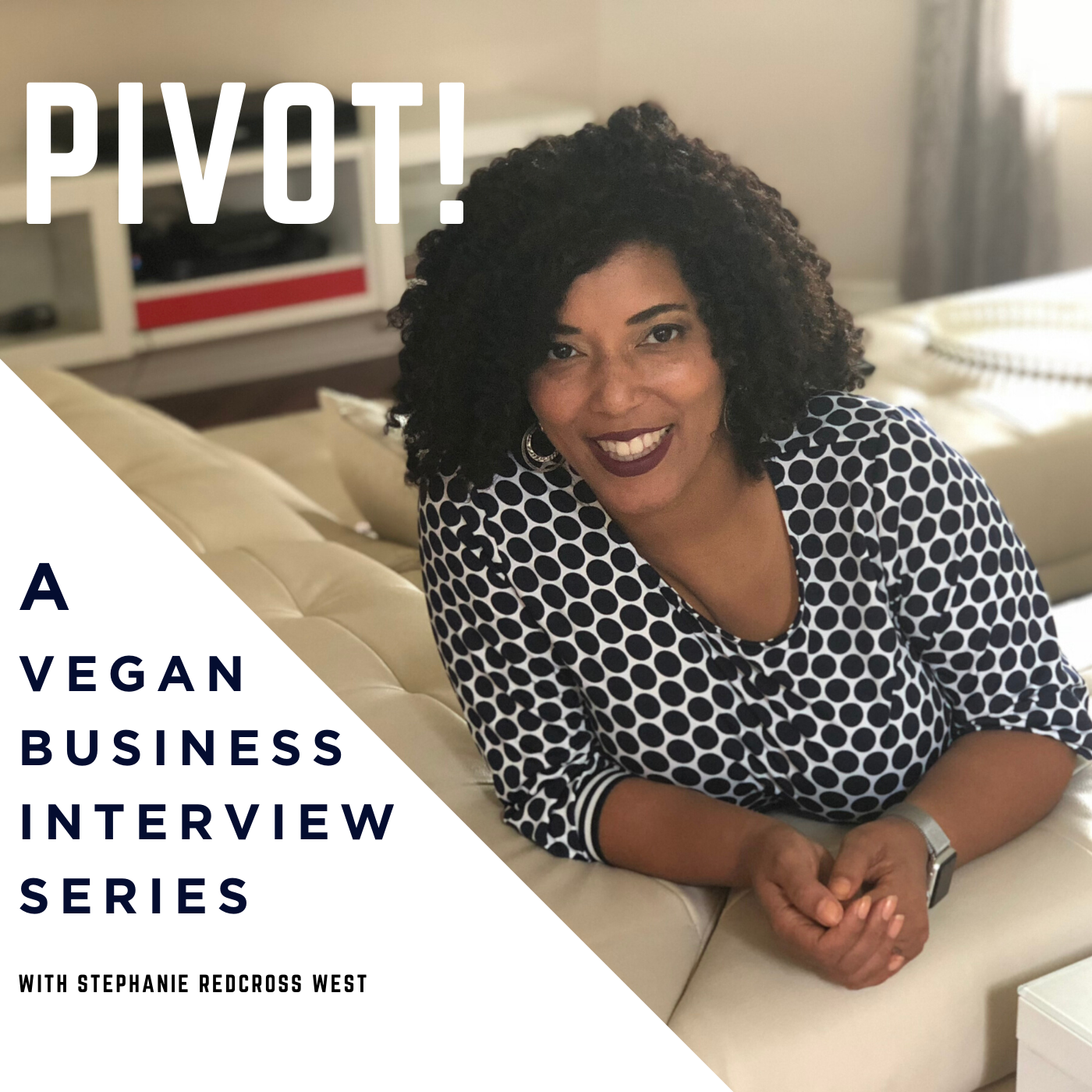
As vegan and plant-based business owners and entrepreneurs, we're often adapting to a new reality. This new podcast series from Vegan Mainstream is an opportunity to help you when it's time to pivot. These interviews will come from inside and outside of our community, and I hope as your host, Stephanie Redcross West, I can inspire you and give you the tools that you need to move forward. Hello, everyone, and welcome to our next interview.
I'm really excited about today's interview because not only are we going to dig into some myths about nutrition, but we have an amazing expert here today, Jeff Palmer, where we're going to be talking about not only his business, how he's built his business, Green Machine, but also talk about the nutrition that is not only the central part of the business that Jeff has built over the years, but why and how he uses not only research, data, to really make sure that the quality of the supplements that he's offering really meet the need. They really meet and are based on the science. We're also getting an opportunity to talk with someone who is a lifelong vegan, so it's really exciting to talk with someone who's kind of been there over the years as they've seen how the market has moved, how they've seen how businesses have shifted and pivoted. So we will talk about how, you know, what our current environment not only has been like for businesses, but also for justices, how it has changed, how much maybe COVID has impacted, and if, because of his level of experience, if he has any advice for anyone out there who's struggling, who's trying to adapt, who's trying to find their way through, I'm hoping that we can offer you some not only inspiration, maybe some ideas and some recommendations.
So without further ado, let me say welcome, Jeff, to today's interview. Thank you, Stephanie. Thank you for having me on. It's a pleasure to speak with you in person finally.
I know we've been chatting on LinkedIn and other, so nice to talk to you. Yeah, I love it when I get a chance to finally meet someone that we've known kind of through social, through, you know, events and activities. So it's a really great opportunity as well for me to get a chance to chit chat. And hopefully this is just the beginning of the good stuff that we're going to be doing together.
So give people a little bit of background on what your business is. And then let's talk about from this day and age, because 2020 has been a little bit madness for many of us out there, is how has it A, impacted you, and how have you maybe tried to pivot or adapt with all of this change and all of the challenges that we're being faced with now? When I was in the industry, you know, one of the things that I noticed standing in a store is like 50% of the store had natural vitamins and good health foods and stuff like that. And then you have this sports nutrition part over here that had stuff with steroids using guys as the pictures on it, like drug addicts, basically.
And, you know, as you're selling your product full of chemicals and nasty stimulants that could kill people, I'm like, what are those two things doing? You know, it's just like, wow, when did, when did, you know, fitness turn into this bizarre thing about drug abusers and stuff like that? I'm like, that's, that's not fitness. That's where, where did we go wrong?
That that went off the wrong path somewhere along the line. I'm like, somebody's got to bring these two things back together, health and fitness. You know, I saw that on the health side, you got some fitness products, but they were vegan and poorly developed and there was no science behind them. And I'm like, okay, that's not going to track the, you know, those type of people that are looking for something that will really do that.
When I was at 24 hour fitness, they did a nice study and looked at why do people stop going to the gym? And the number one reason was I don't get results quick enough. And I'm like, okay, but that's such an important part of being healthy is consistency. And I'm like, how can I help people stay with the program?
And I think nutrition is such an important key to that. When you have truly science-backed efficacious nutrition that gets people the results that they're looking for, they will stay with it. They'll say, I look in the mirror, I look better. I wake up in the morning.
I feel better. I have less inflammation. I'm recovering faster. That's something that they could notice and stay with it.
So they stay excited. So they stay engaged. They stay on the healthful programs and all of that. So I really wanted to do that.
And I noticed that, you know, it's all like it's fluid intelligence. That's a published human study. So when I see people, you know, talking about EPA and DHA, I'm like, you're only getting part of the story. Not only that, if you consume DHA, which is at the very bottom of the ladder, the body thinks it's converted all that.
So it shuts down the enzyme and causes a backup of all the rest of them. Oh, really? But remember, it doesn't, it only stops at EPA if you're getting them from animal sources. So then it starts to overload EPA and it can actually become a negative.
This is called EPA buildup. And this is where you look at people doing this EPA DHA consumption of fish or even algae now. And it's unfortunate that even the vegetarian community has said, oh, let's copy the animal ones because that's the only way to get it. And they found algae that had EPA and DHA in it.
And now they're trying to do that, not understanding this. Actually, the human beings are biologically, genetically built to actually get all six of them and do the conversion for ourselves. I love that you're saying how much we can do the conversion ourselves and those items, you know, so that's key because, you know, by choosing plants, you're doing all types of decisions that maybe some of us, even like myself, before this interview, didn't know, you know, I didn't know the impact of it. And what's cool about that is a lot of the research used to paint a different picture because they were only looking at omnivores and the research they never included vegans.
So when they looked at an omnivore, they said, oh, wait, ALA doesn't convert to DHA very well. And it was true in the studies. It was a very low conversion rate. But when they looked at vegans in a study in a side by side comparison, they found vegans actually had higher amounts of DHA than those eating fish oil or consuming fish.
And they're like, OK, how is that possible? What they found is when the body is higher in one, it starts producing more enzymes to convert that ALA at a much more efficient rate. If you're putting in DHA, you're telling the body, hey, I already have DHA. Let's turn off that epigenetic gene that triggers the production of that enzyme because you don't need to convert anymore.
So they were only looking at that study saying, oh, there's not much enzyme there at all. No, in vegans, the enzyme is really high because it's doing all the conversion. It's looking at the proper subset and vegans never got included in these studies before. So all this data out there was on omnivores when it the same with vitamin K2.
So all this research has gone that plants have really high amounts of vitamin K1, but our body needs vitamin K2. And of course, they looked at omnivores and they said, oh, omnivores don't convert vitamin K1 to K2 very well. But when they looked at vegans, they found something interesting happened. Dark greens are one of the best sources of vitamin K1.
When you put a dark green in it, what else does it have? High fiber and chlorophyll, right? Both of these feed specific microorganisms in our gut and they start to grow and expand and they convert vitamin K1 to K2. So now you have this super high source of vitamin K1.
You've raised the amount of bacteria that actually do the conversion. And now, you know, it shows that vegans can actually have higher levels of vitamin K2. But again, all the research is done on omnivores. And they just assume what's true with omnivores is true in everybody else.
And it's not. Once you shift the diet, the microbiome changes, the internal enzyme changes, our genes change. So many changes happen. I think is the one, we need more data, more research, looking at what's going on on the inside of a healthy normal vegan, and that should be our base of, OK, that's what's possible with the human being, when you remove these animal factors that are contributing to negative impacts on our ability to process and produce and transfer.
Amazing. That's huge. I mean, it's such a different way of looking at research, and I think, I mean, I'm learning a ton from you today, but I'm also learning the idea that, you know, even when I look at medical studies, even when I'm looking at information, and not to make it sound like I'm looking at a ton of them, but when I look at my sources of data and information, making sure that they are covering samples or individuals that are vegan makes a big difference in the outcome, makes a difference in not only the data that's reported, but to your point, the assumptions that are potentially being made. So I think it's key that even as any of us out there are trying to dig into nutrition or starting to understand it, he's making sure that we're not only looking at the most recent research, but also making sure we understand, you know, what sample, what group they are actually doing the research with.
So I think that's really, it's really impactful. I think the only thing I would ask is, you know, we do have some of our folks out there that, you know, they're listening to this and they hear it, they kind of get it, but they feel a little overwhelmed. They feel a little bit of like, they may not have the time to do the research, or they may not understand what's this versus this, or they get caught in, you know, this term versus that term. What's the best way for someone to start if they're trying to be more nutritious conscious?
If they're trying to do right, if they're trying to eat better, what's the best place for them to start, what they should be doing, or if they are doing supplements, what should they be looking for so they don't get misguided, so they don't get off the wrong path and think they're doing something great. And this idea of social media where a lot of people are getting their information off the internet, yes, you do have to be careful because there is a lot of misinformation out there and a lot of biased information, cherry-picked information, and that goes for every, including vegans out there. There's misinformation within the vegan community too as well. And again, there are assumptions that were based, like we talked about on the study, that, okay, that was the dataset.
That's all we knew in the scientific community. We had nothing to go off until these new studies that included vegans to do that. So it does take a lot of sorting through. I think there's some good sources out there.
NutritionFacts.org, Dr. Gregor does a great job of breaking down the science and making it a little more simple and understandable, but also being a fair comparison of everything. I think there are, you know, check your sources. So what's their intention?
You know, I know I get challenged a lot because I own a company that, oh, you say that because you're trying to support or sell a product. I totally get that. I feel the same way. And for me, it's the opposite.
I don't sell a product and then try to support it. I look out there at the research and say, like, Ocotflower. Ocotflower was this breakthrough in research that the highest in omega-3 of any plant in the world and the highest in one of those omega-3s called SDA, which is really important. You're going to hear lots more research on SDA.
It's powerful anti-inflammatory, especially in this day and age of COVID where inflammation can actually end up killing people. It's called a cytokine storm. Anti-inflammation is becoming very, very important. But it was the highest in SDA and ALA of any plant in the world.
And I was like, wow, that's amazing. I didn't want to just put out another plant-based omega-3 with algae or, you know, or flax or TRF or whatever. I'm looking for plants that are truly unique, that really are exceptions in the plant market, and then bring them and their research to the marketplace because I think they need a fair shot at standing up there. You know, I went to one of the largest supplement retailers in the country and I said, you know, this is amazing.
Clinically proven, 400% more effective than flax, the number one selling plant-based omega-3 in the world. And he goes, yeah, that's the problem. And I'm like, what? And he goes, I got a ton of plant-based omega-3 on there.
What happens when I put yours on there and those all stop selling? So they did not intentionally bring this product in because it was so much better than everything they had on the shelf. That's disappointing to me that the marketplace is more interested in money than in doing what's right for the consumer. I said, your consumer could have something that is clinically proven, two published human studies, clinically proven four times better than what you've got on the shelf.
And you intentionally are trying to keep that off your shelf for sales. That's like mind-blowing. I think that was one thing that we talked about earlier, especially as we talk about some of the changes with COVID, is because COVID has started to allow people to be a little bit more direct to consumer marketing, because people are really starting to do more with their online kind of business and marketing that I wonder if we'll be able to overcome some of those things. We'll be able to make sure that we can bring the better products to market because we're not subject to bringing a product through channel A or channel B.
We can actually go direct to the customer. I don't know, we talked a little bit about it before, but I don't know if you want to give anyone a little background on that. Yeah, to me, it's like the best thing ever because, you know, obviously when you're putting the quality into the ingredients, the product is going to be a little bit more expensive. But I do lectures because you have to educate.
And I think education is so important because you have to have the research to support the education. You have to understand the method of action, what's going on. A lot of people want to know what's going on in my body when I take this in, you know, what's really going on there. And I think this is such an opportunity.
This is a golden opportunity for more people who want to do a high integrity business, high quality business, to get out there and tell your story. You can get in front of the customer. It's not pigeonholed by the top 10 companies out there that are dominating the shelf space, like in traditional retail. You actually can get out there and tell your story and show people the difference and let them try and experience the difference between a quality product and something else.
Just had an email today from a guy from Australia. He said, I've tried almost all the products in that particular category and nothing's come close to what I experienced from your product. And it's not available in Australia. And he was complaining because he's like, get this to Australia.
And I'm like, yes, I know. And that's a challenge as a small company you want to grow with things. But I think with the advent of Amazon, and I know a lot of people are not real happy about Amazon, but I think it does give an opportunity to allow smaller companies who are integrity-based, who are quality-based to get their products out in front of consumers that would be able to support that type of product and allow them to grow too. It's not just about being sold because I think those who invest in the product and in high quality and the strong point of differentiation in that, like the clean green protein, we are the first company in the world to bring lentin to market.
Lentin is a plant that is higher in protein than any other plant in its whole food state, higher in nutrient density than kale, spinach, spirulina, all the green superfoods. Higher in nutrients. So higher protein, higher in nutrients than any other plant. And the first plant commercially available with bioactive B12 in it.
I want everyone to do that. Like, what do you mean by that? Yeah, so, okay. So first thing when I say that, let's clarify.
All B12 is made by bacteria and only bacteria. Animals don't make it. Plants don't make it. Only bacteria make it.
Now, an animal can consume dirt or things like that by getting the bacteria in there and making the B12 available in that. But to be honest, most of the B12 that you get in meat today is actually injected into the animal. 80% of all the B12 in the marketplace sold today goes into animals. That is farmers actually injecting cows, pigs, and things because they're eating grains.
They're completely devoid of it. They're eating out of troughs and not eating grass from grass-fed. So that's where that B12 is coming from. So don't think that you're, oh, I eat meat, so I'm taking it.
No, that B12 is a supplement. You're just taking the supplement, sticking it in an animal, killing the animal, and then eating that supplement. That's like mind-blowing. I think that was one thing that we talked about earlier, especially as we talk about some of the changes with COVID, is because COVID has started to allow people to be a little bit more direct to consumer marketing, because people are really starting to do more with their online kind of business and marketing, that I wonder if we'll be able to overcome some of those things.
We'll be able to make sure that we can bring the better products to market because we're not subject to bringing a product through channel A or channel B. We can research and science. I'm constantly posting that today as well. And then you can check us out on or order on either Amazon or cleanmachineonline.com.
Perfect. I'm gonna have to take a look. I'm in the market for a new, a couple of new supplements, so I'm actually gonna probably go out there and check it out and you'll see my name and address real soon. We just had one comment that came through from Cody, which I thought was really good.
I truly loved it that we were diving into the details and talking about kind of the plants and bacterial relationships. I always love it when we go through the details and people appreciate it. So I'm so glad that Cody commented there. So we are a little bit, running a little bit over our normal 20-minute timeline, but I think it was worth it.
I think it was really exciting. I really think people are very excited about it. I just got a thank you from Linda. Thank you so much, Linda, for hanging in there with us.
So I think we'll probably come to the end here, but is there, are there any kind of last minute either recommendations that you have for people, whether it's on the nutrition side or even on the business side, as we're kind of moving forward here in 2020, like you said, we're indoors. Anything that people should be doing or thinking about as we're, you know, trying to manage our second half here of 2020. Yeah, I do consulting, you know, over 35 years in the business. What I really like is helping startups, especially in the plant-based community.
So if that's something that you're interested in getting into, I can do real quick free consulting for you, just bouncing questions off, help send you in the right direction, maybe avoiding some pitfalls for basic startups and stuff like that. I love doing that. But also take, take a have faith, know that it is our time to step up and present quality products. Never has there been an easier time with digital marketing to reach people with Amazon and direct consumer sales methods and be able to be able to put products out in front of people in a very competitive market, whether it's food or clothing or whatever, let's keep funneling the products because that's what I think this movement is really bringing in a lot of new clients.
A lot of people are coming to the plant-based movement. They need education, but they also need the products that support their lifestyle. So I applaud everybody out there who is doing plant-based businesses and vegan businesses out there. It's much needed.
And I'm loving seeing the success of my company. And remember we're on the same side. I don't see that as competition. We're all in this together to try to improve people's health and to, to get people to put their passions into their way to make money too, as well.
Yeah, that is perfect and a wonderful way to wrap it up. I think inspiring people and helping people know that we're in this together. We're trying to make great change. And also I just love that we had a chance to kind of highlight some of the great work that you're doing.
Some of the great change that you're doing, even as you're coming up on this amazing seven-year anniversary. And I really love that we had some time to dive into the details about nutrition, but also talk about the business side of things too. It's really great when we can kind of talk about multiple aspects because, you know, we're very multidimensional people here. So it's important for us to cover all those topics.
So thank you so much for joining us today. We're really excited to get a chance to talk. I'm really excited with the amount of people that are watching and commenting. If you enjoy these sessions, if you love what we're doing, don't forget to like these sessions or give us a thumbs up and let us know.
Also share these with friends, share them with a colleague. It's really great when we can get this information out to others as well. So I just wanted to encourage some of you out there that are listening live, or even if you're listening to this as a recording or as a podcast. I highly recommend you share this with someone else because not only has this information helped me in some of the decisions I need to make as far as some of the supplements that we're using, It also I think is helpful for many of us out there that have been lifelong vegans or have been vegan for a while or some of us that are getting new into this new nutrition world, being able to have a right resource like yourself, Jeff, in this interview.
I think it's just a great way to kind of get that information out there. So once again, thank you so much for joining. Thank you everyone who has been watching and you'll see everyone in our next interview. Bye everyone.