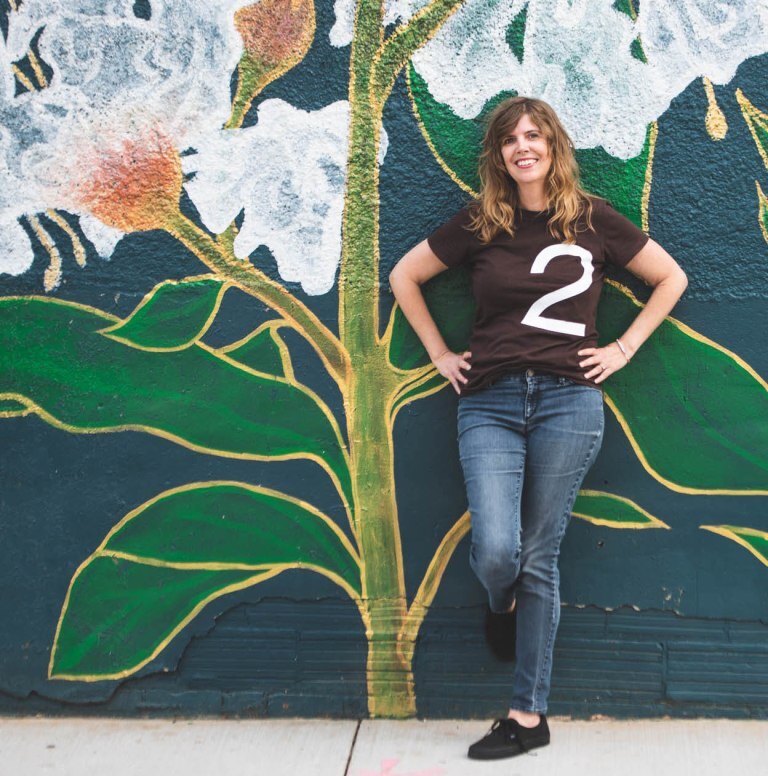
I've written a lot of silly songs and I've released them also. Yeah. Hello and welcome to WNC original music episode 160, the dialed disc episode. Very happy to have returning to the podcast this week, Kim Ware.
Kim Ware, you might also know as Kim Ware of The Good Graces, or you might know her as The Good Graces. She has a lot of A-cases. Kim Ware and The Good Graces have been touring since 2006 and they've shared stages with a lot of great acts such as The Indigo Girls, Grandpa Automatic, and The Old Ceremony. You can find music and tour dates at TheGoodGraces.org as well as a lot of other websites that you will find in these show notes.
And right now here is Kim Ware. So capital R was actually, it came out of an assignment from my therapist. And yeah, so she, it wasn't an assignment to write a song necessarily, but basically the R, the R is like a feeling that I was dealing with, that was kind of unpleasant. And I was talking to her about it and she likes to do this thing where she'll say, what does it do for you?
And I'm like, the first one, like, it doesn't do anything for me. I would rather not deal with it. You know, but then she was like, it was kind of in the session. She's like, I want you to write about, because she knew I was, you know, doing anything creative to basically try to cope with stuff.
She's like, I want you to think about what it does for you and write about it. And she got, I think she said, like, I don't know, maybe write a song about it. But I think she kind of just said that, you know, in passing. But anyway, so I sat down and I wrote, I ended up writing a letter from the thing, do my sale, about what it does for me.
And it was really eye-opening and it was really, really, really helpful. And a couple of days after that, I guess it was still kind of the top of mine. And I just sat down with my guitar with not intending to then write the song version, but it just, it really just kind of came out. And so that's why I named it capital R because I tend to, in the letter version of it, I signed it just like an R.
Like that's sometimes I'll sign, you know, just K bottom up. So yeah, that's where that song came from. And it was really, it was very, very therapeutic and really helped one end up being like pretty rocking and it's really fun to play too. And of course, the R you're talking about is Rice Oroni.
That's, it was an. You are the only person who have guessed it correctly on a first try even. I'm an empath. So, you know, there you go.
I'm a grain, a grain empath. So it has to do with rice or wheat or grain. Yeah. Yeah.
I've never met one of those. Well, it's a very specific, specific, specialized kind of empath, a useless empath. Where did you, did you record all these songs at the same place or kind of spread out different places? Well, I recorded all my parts at home and I said my home for about the first, I guess, maybe, well, for the first six months that I was working on the album, basically, I was living in Shelby and apartment.
We just moved back to this area. So I recorded it there. And then for the past couple of years, I've been living in my aunt's old farmhouse in Kings Mountain. So I just, I recorded my stuff, acoustic guitar and my vocals.
And then I sent it to everything to the Jerry Key. He has a studio in Meben, North Carolina. And he added most everything else in his studio. Yeah.
Does he do, does he do that himself or does he have session musicians or was it? Well, I was there. Hey, he did it himself for my album. And I mean, he saved for just two parts.
My friend Wyatt Esplan played Biddle on Palace A Beaches and then Carrie Scholl played Obeau on a couple of songs. And Jerry did everything else. And he's just, I mean, he's a multi-instrumentalist. His, he was a drummer, I think, was his, really his first instrument.
So he's really good with drums and like rhythm section stuff, you know, but he plays lots of synths and guitar, obviously, and a lot of other stuff that wasn't me. Was him. So like a bottle is kind of, I sort of consider it a therapy song too. That came out of a workshop that I did with Phoebe Hunt.
And it was kind of interesting because I was a little, not, I don't want to say resistant to what she assigned us to do, but I was a little uncertain as to whether it would work. But she basically had us, the whole thing, the whole workshop was about just going really deep to come up with, you know, really, really, this sounds might not end up that personal, but at least they would start in a place. It's really personal and really honest. So for this particular like assignment, she wanted us to have a conversation with a really close friend about like past traumas and or deep wounds.
And then like basically just have the conversation and just tell them like, Hey, I'm supposed to have this conversation and kind of see where it goes. You know, and then the second part was to sit down in journal about the conversation, like afterwards, you know, and then just see if a song emerges. And so I called up my friend, Wyatt Esplin, who I've just mentioned it, like bit along the pal's I peaches because we've done some tours together and stuff. And we've written very, very long distances in his car and had like really deep conversations.
And so I was like, why would be good for me to do this with, right? So I called him up and on basically the shortened version is we we discussed a few different things, but mostly stuck with just some some bullying that I had experienced when I was much younger. And he related it to a more recent relationship I had had in which I was the more like dominant figure. And I never really thought of what I did in that relationship as bullying per se.
Until he basically called it, you know, and whether or not you use that word, it did get me thinking about how, you know, everything kind of comes around. And I think the dynamics between people, it's so interesting because like you might be in one situation where it's like you are more passive, but then later down the road, maybe, you know, in another with another person, you become that like alpha figure or whatever. So that alone, I think can be really interesting, but then, you know, taking that even further to just the, because we all over the course of our lives, we will all be mistreated by someone and we will all mistreat someone, I think, you know. And just kind of thinking about it more with more empathy for the person who mistreated me and just understanding that that person was also mistreated at some point, you know, and it I had never really thought about it in that way until I sat down to write that song and it really, really helped me a lot.
It's one of my favorite songs that I've ever written. Just the power of just the exercise was pretty cool. What was the guy's name in Meben? Did you say?
Jerry Key. So, so you said Jerry Key did most of the, you know, after you sent him the tracks and then he filled in this opening with the drums. Was that was that you already? He had that.
That on like a bottle? Yeah. On like a bottle, he did the drum machine. Yeah.
Yeah. Yeah. That's Jerry's. He did that.
He did the drum machine programming. Yeah. Yeah, I'm just curious if like when you when you did it, when you recorded it and sent it to him, were you thinking like how different is what he brought to it than what you sent in? Like were you did you send it in saying, Hey, what if you put some drum machines here or did you send in like acoustic guitar?
And then he's like, Oh, you know what? I'm going to put like a soulful drum machine and keyboard and all that stuff here. Yeah. He actually, I suggested the drum machine on that song and you know, all I had so far when I sent it to him, it was just a song that I would play on acoustic and I never had heard it with anything else.
But for some reason in my head, for that one, like I basically I gave him radio head as a reference and I said, you know, maybe try a drum machine on this one. And that's what he did with it. More from Kim Ware and just a few moments when I remind you that you can find her music at thegoodgraces.org and also check the show notes for other links directly to the music and her Instagram and Facebook and all that cool stuff. Don't forget to subscribe to the podcast, WNC Original Music, wherever you get your podcast or go to wncoriginalmusic.com.
You can see or hear all the back episodes also search WNC original music on Instagram and Facebook. So you'll see a bunch of extras, including links to the show and excerpts from the show. And sometimes some stuff that wasn't on the show. Hey, this is Joe Chang from the band Goldlight.
You're listening to WNC original music. Corrections and clarifications from last week's episode with Matt Masterson of Squatch, Vertices, just is the plural of vertex. So we were both right. Oh, do you want to talk a little bit about Kamono in my house?
We can. Yeah. I think it's very interesting. I think it begins with.
Yeah, Kamono in my house, me and my friend Andy Gish started it on March 13, 2020. That was the day of the shutdown started in Atlanta for most people. And she had, I said, I'm a porridge and I thought she'd place something on Facebook. She wasn't really sure what she wanted to do, but she wanted to do something to give people some sort of virtual means of staying connected for maybe, you know, a month.
We didn't think it would last very long at the time, right? You know, so I suggested I was like, well, why don't we do a Facebook group? And then we can go live within the group and we invited a handful of friends. And it took off really, really quickly.
And it was obviously very, very needed. And now we have right around 8,000 members from all over the world. And it's slowed down a little, you know, as we're getting out there and doing more like live in person shows, but we still have like regular programming in there. Like we have like people do like weekly shows and stuff like that, which is really, really fun.
And that's kept it going. We had a guy, he hasn't performed in a while, but like early on was it was really, really wonderful because it really was that means of keeping people connected. And I met so many new friends from it, which is crazy to think of how many people I met, like over the course of the pandemic. But there's one guy who he's from Pakistan and he performed.
I don't know how he came across the group, how he found us, but just a mate, he does amazing, like meditated like guitar based stuff, just beautiful, beautiful. So we've got anything from that to like, you know, metal to someone in their bedroom, maybe they've written the handful of songs, but never done like a show in front of us runs the gamut. But it's been wonderful means of staying connected with like for me to stay connected with Atlanta. I love Atlanta and I live there for 16 years until 2020.
So it's been it's been very, very surprising and in a really beautiful way. So yeah, check it out. It's a Facebook group, you know, come out of my house. OK, go.
I'm going to give in because I'm just too tired of pretending. And if I learn from my past, maybe I'd stop repeating the things that feel good, that hurt you so bad. Some people love to get used, I'd just love to feel needed. I think that I like a challenge, not so sure that this is a game this worth with.
So I'm gone because I'm just too tired of just too tired of pretending uncertain. Don't know what we're doing. Don't know what we've done. I guess the only sure bet is we're gonna be it's all.
We all know pretending. So I brought one hand. And now that I've moved back to North Carolina to the small town where I grew up, I'm trying to embrace my twang and my country roots a little more mainly because I can't, you know, I can't not. I mean, it's like it's so it's so me.
And I'm obviously very, very southern. So that was just I just wanted to write a country song and it started out being like, I love it when you take little phrases like a bird, a bird in the hand is worth two in the bush or whatever, you know, like when you take phrases, but you kind of messed them up. My mom does that from time to time, not on purpose. And it's so funny to me.
And so when I first said on the right that I thought about trying to make a song that was just that, but it didn't last past like the first verse. So I was like, that's just crazy. So then I ended up just making it like a song about, you know, really messed up relationships, basically. And sometimes I think the best option, although it can be hard and it can make you feel like you've failed, but I think the best thing to do is sometimes walk away.
And that was really what I was focused on when I was putting that one together. If you want to do just have the spirit of the there's a phrase for the thing you're talking about and I can't quite think of it, but you could you could add a parenthetical to the title, you didn't have to change the lyric, but you could call it bird in one hand and in parentheses, half a dozen of another. So it would be like mixing to. Yeah, I could tell you didn't love that idea.
No, no, no, I do. I like I love little things like that. Well, you can use that. Yeah.
You don't have to be the co-recret. I only go for the title. Yeah, especially when they already exist. That's right.
Never know. Just just moving words from one place to another is not not helping write anything. What's your favorite holiday? My favorite holiday is day of the day.
Day of the day. Yeah. My husband, I got married on day of the day. And I mean, of course, I know all about it, but for people who might not tell them what day of the day it is.
Sure. Yeah. I know it a little bit. Just as a predominantly Mexican holiday.
It's a Mexican holiday day, a little fructose and I really only came to know about it because my husband and I got married in Mexico on day of the day, but not on purpose. Like we just happened to wait. You accidentally got married. Yes.
It's a crazy mix of like on three something or something. It was like wait, it's like, are we celebrating dead people or are we getting married? You were both engaged to other people and then wrong address. Exactly.
And then we went down there a few days before. I guess we probably went down there about October 29th, 30th, something like that. When we were there, we were like, then it occurred to us. It's like, oh, yeah, yeah, it's day of the day.
And around this period in Mexico. And it was just it was so neat. And I just love the idea. I mean, I think in our country, we are often so hesitant to just talk openly about death and it makes us very uncomfortable.
And I loved that they're in Mexico seeing that it's something that they celebrate. And I just I think that's amazing. And I want to think that when I leave this earth, I would love it if it could be a celebration. Yeah.
You know, so yeah, that became my favorite holiday because it comes with my anniversary, but I also just think it's really good. So do you guys do anything day of the day of the day of the day of the dead? I'm going to start over. Do you guys do anything day of the day related on your anniversary?
Well, for our first anniversary, we've been married 15 years coming up for our first anniversary. We got magic to do. Oh, OK. Johnny, and God.
No. Oh, so we've done we've done that. That was the biggest thing we did. But we like sometimes we'll make the sugar school cookies and stuff like that.
Not we don't always do something day of the day at ask, but we try to at least celebrate the anniversary card. Do or is there is there any kind of implication in the day of the day of the day tradition, any kind of implication about getting married on the day of the day? Like is it in Mexico where it is celebrating? Is it more likely or less likely to expect you to know all the details about it?
Sorry that I don't know. That is not something that I know and I probably should know it. That's my fault. I should have told you in the introductory email to research how you're all right.
It's OK, but I mean, I want to think hopefully it's not this big no no in their culture, you know, but at the same time, it's like it's probably good that I didn't. You know, it was a day that for whatever reason that we wanted to do and it just so happened that it also was that day that holiday in that place, you know, but yeah, I do not know. I like that. Oh, what was I thinking?
Trying to keep you around and prevent you from sinking. Well, I think I lost you. When we kissed on the couch and we listened to you to it was such a good New Year's Day. But I should have known it would fade.
It was fun. You do is probably the yeah, it's the oldest song on the album. As far as when I wrote it. Gosh, I must have written it about seven or eight years ago and it went through several different iterations.
I was glad to finally get it out in the universe. It's probably the most I guess it's probably the most rockin song. One of the more rockin songs on the album and it was one of the most fun to work on, especially the vocal harmonies because I recorded the harmonies at Jerry's studio and I really just kind of pulled them out of my butt. Kind of spur of the moment.
I was like, let's just try this and we'll see if this works. And it was just really, really fun to sing along with that because by that point in the recording process, you know, all the rest of the song was there. And so it was just like in my headphones was just like this full band version of this song. And I felt like, oh, I finally got this song to a point where it's like, yes, this sounds like something I want people to hear.
You know, because like I said, it's been through a lot of different like tweaks and stuff over the years that yeah, it's looking back at a college relationship and what I should have learned from it. I don't know if I actually did learn much, but this is my favorite kind of lyric that has, you know, has a lot of details that are, you know, meaningful to you and kind of not specifically meaningful to the listener, but also like specific and detailed enough that it kind of clues you in that it's a real situation. Yeah. You know, kind of like when you're watching a movie and something happens and you're like, they didn't explain why that happened and maybe you'll find out later.
But also maybe it's just in there because that's how really people act, you know, maybe plot, but maybe it's just maybe it's just a thing that, you know, if someone's walking down the hall, this is something they would do regardless of story or something. Yeah, absolutely. It gives you more insight into that person. Yeah.
Whereas if they took that out of the movie, you might not think, oh, that doesn't even play this big part, but maybe it does. Right. It actually, yeah, it gives you a lot more information about that person. Yeah.
Yeah. What's the like silliest song you've ever written, like not that you've recorded, but have you ever like had something that you started to write like you just writing, you know, pork and beans and writing a song about pork and beans while you figure out what it's really going to be about? I've written a lot of silly songs and I've released them also. Yeah.
Like I was kind of a thing that I've for better or for worse. Like if I stick with the song long enough to make it a song, then I do I like to try to record it and get it out there, even if it's, you know, I write a lot of really sad songs, but I've written a handful of really, really silly songs too. And like most recently in this song is it's really, really fun to play. And I feel like it provides some levity in my live shows too, because I can get kind of sad and dark, but I have a song called Sugar Daddy that I wrote inspired by an Instagram message that I got from a stranger.
And he basically was proposing that he be my sugar daddy. I did not respond to the Instagram message, but I wrote a really cheeky, funny, silly song about it. And I love that. I love just that exploring the wide variety of emotions that one can feel through song is sort of my thing.
So yeah, I'm all about silly songs. Well, we've got him here tonight on the other line, Sugar Daddy. Come on in. I'll, I'll.
No, no, co-writing credit. I later on, I later on edited in somebody talking. I had to get somebody real and tell us that word. Tell me about a favorite toy you had as a kid.
Yeah. God dang, what was that robot's name? Shoot. I had a toy robot and I cannot remember his name, but it was pretty common toy in the 80s and it in the front of it.
It had an H-Tract tape. Yes. Yes. Did he have a really round head?
He had a square head square head. But a track tape and then it had the thing because of the way that H-Tracts work, you know, you would click buttons and it would almost like a choose your own adventure thing or something like that. Yeah. Looking it up.
OK, because I love that thing. Oh, he's so cute. Me to exhale. He was called the two exhale.
Yeah, I mean, I didn't have one, but I think I knew somebody had one. Man, that thing was cool. And yeah, for me, like I actually had H-Tract. I had H-Tracts, you know, the first music that was ever like gifted me.
My uncle gave me some Beatles H-Tract tapes. Oh, that was my first H-Tract. Abbey Road. Yeah.
Really? Yeah. Mine was like one of their kind of like great to see it, sort of thing. It was like two or three H-Tract tapes and I would play it on this little robot, along with whatever, you know, came with the robot and make the different selections and stuff, I love that thing.
Did you give him his own name? You know, I wish I could remember, but I don't remember. I didn't think I did. I don't remember if I do.
And would you love it if someone gave you one for this Christmas? No, of course. Yes, OK. I'll make a few calls and see what I can write.
I would absolutely love that very much. Yeah, because I don't know. I have to see if he still exists in my mom's cause. I don't think he's long gone.
OK, thanks to Kim for being on the podcast. That's part one. We'll have part two coming up. Don't forget to get her that robot for next Christmas or her birthday or just a random day.
Robot day, probably. You can find Kim and the GoodGraces at thegoodgraces.org. You can find their music at thegoodgraces.bancamp.com and don't forget to go to Facebook and search for a Komodo My House. And also, Kim's got a new album coming up pretty soon.
So follow her on social media. So you know when that comes out, as always, don't forget to subscribe to the podcast, wherever you get your podcasts, just search WNC Original Music or go to WNCoriginalMusic.com. Also, make sure to support all of your local and independent musicians. Go out and buy their music.
Bancamp.com is usually the best place to support musicians because they get, I think, about 85% of what you pay for that. And also go see Ban's Live and just send him a message and just tell him that you like what they're doing. You like their music and you like their vibe, whatever you like about them, just tell them, you know, within reason. That's it for now.
Have a good week. The Ashvale, yeah, me and...