
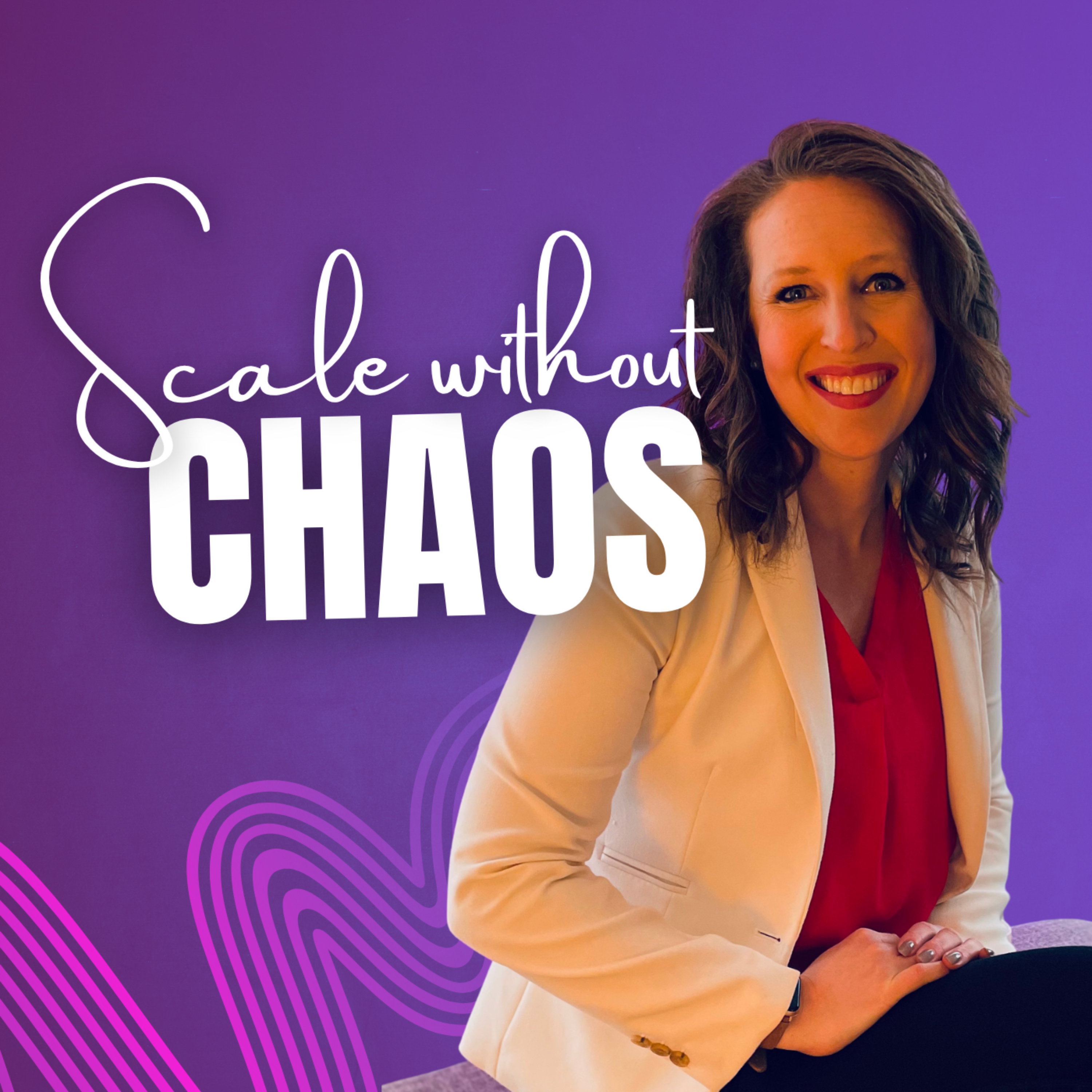
EPISODE · Feb 18, 2026 · 34 MIN
Ep 19 - Done is Better Than Perfect: The Real Work of Scaling a Company
from Scale Without Chaos: The Podcast on Business Growth, Visionary Leadership, and Scalable Systems · host Samantha Riel
This week on Scale Without Chaos, Samantha sits down with Melissa Rosenthal, co-founder of Outlever and former executive at BuzzFeed, Cheddar, and ClickUp, for a conversation about what it actually looks like to build something new in a market that doesn’t hand you a playbook.Melissa has lived through hypergrowth inside some of the most recognizable digital media and SaaS companies of the last decade. Now, she’s building a company that helps enterprises become their own media engines, shifting from renting attention to owning it. What makes this conversation powerful is not just her résumé, but the clarity she brings to the tension that shows up when you scale.We talk about category creation and what it means to build when there is no carbon-copy competitor to model. We dig into the myth of freemium and why product-led growth is far more complex, expensive, and fragile than most founders expect. Melissa shares why services are not a dirty word, especially in enterprise, and how real adoption almost always requires hands-on partnership, not just great software.At the heart of the episode is a philosophy that shaped her career: progress toward perfection, not perfection itself. “If we have a perfect product release, it was in development too long.” Done is better than perfect, not because quality does not matter, but because clarity only comes from getting into market and learning.As Melissa put it, “Usage isn’t adoption.” And that distinction changes how you build, sell, and scale.We also spend time on the people side of scaling. Melissa shares the reality of hiring when you are creating a new category and there is no obvious talent profile. She talks about the 30 hires that did not work, the lessons learned, and the unconventional AI-powered interview process that helped them find the right team. Her perspective on process debt being just as dangerous as technical debt is one every founder should hear.In this episode, we cover:• What it really means to build in hard mode• Why freemium is not easy, and often not sustainable• The difference between usage and true adoption• Why enterprise buyers want services, not just software• How to hire when there is no template for the role• The risk of process debt and why the wrong hires compound itThis episode is about choosing your hard. It is about making decisions with incomplete information, committing long enough to learn, and resisting the temptation to optimize for optics instead of outcomes. If you are building a company, evolving a product, or navigating growth inside an enterprise, this conversation will sharpen how you think about execution, adoption, and sustainable growth.
What this episode covers
This week on Scale Without Chaos, Samantha sits down with Melissa Rosenthal, co-founder of Outlever and former executive at BuzzFeed, Cheddar, and ClickUp, for a conversation about what it actually looks like to build something new in a market that doesn’t hand you a playbook.Melissa has lived through hypergrowth inside some of the most recognizable digital media and SaaS companies of the last decade. Now, she’s building a company that helps enterprises become their own media engines, shifting from renting attention to owning it. What makes this conversation powerful is not just her résumé, but the clarity she brings to the tension that shows up when you scale.We talk about category creation and what it means to build when there is no carbon-copy competitor to model. We dig into the myth of freemium and why product-led growth is far more complex, expensive, and fragile than most founders expect. Melissa shares why services are not a dirty word, especially in enterprise, and how real adoption almost always requires hands-on partnership, not just great software.At the heart of the episode is a philosophy that shaped her career: progress toward perfection, not perfection itself. “If we have a perfect product release, it was in development too long.” Done is better than perfect, not because quality does not matter, but because clarity only comes from getting into market and learning.As Melissa put it, “Usage isn’t adoption.” And that distinction changes how you build, sell, and scale.We also spend time on the people side of scaling. Melissa shares the reality of hiring when you are creating a new category and there is no obvious talent profile. She talks about the 30 hires that did not work, the lessons learned, and the unconventional AI-powered interview process that helped them find the right team. Her perspective on process debt being just as dangerous as technical debt is one every founder should hear.In this episode, we cover:• What it really means to build in hard mode• Why freemium is not easy, and often not sustainable• The difference between usage and true adoption• Why enterprise buyers want services, not just software• How to hire when there is no template for the role• The risk of process debt and why the wrong hires compound itThis episode is about choosing your hard. It is about making decisions with incomplete information, committing long enough to learn, and resisting the temptation to optimize for optics instead of outcomes. If you are building a company, evolving a product, or navigating growth inside an enterprise, this conversation will sharpen how you think about execution, adoption, and sustainable growth.
NOW PLAYING
Ep 19 - Done is Better Than Perfect: The Real Work of Scaling a Company
No transcript for this episode yet
Similar Episodes
Mar 26, 2026 ·1m
Mar 19, 2026 ·34m
Feb 18, 2026 ·11m
Feb 11, 2026 ·45m