
EPISODE · Apr 17, 2025 · 47 MIN
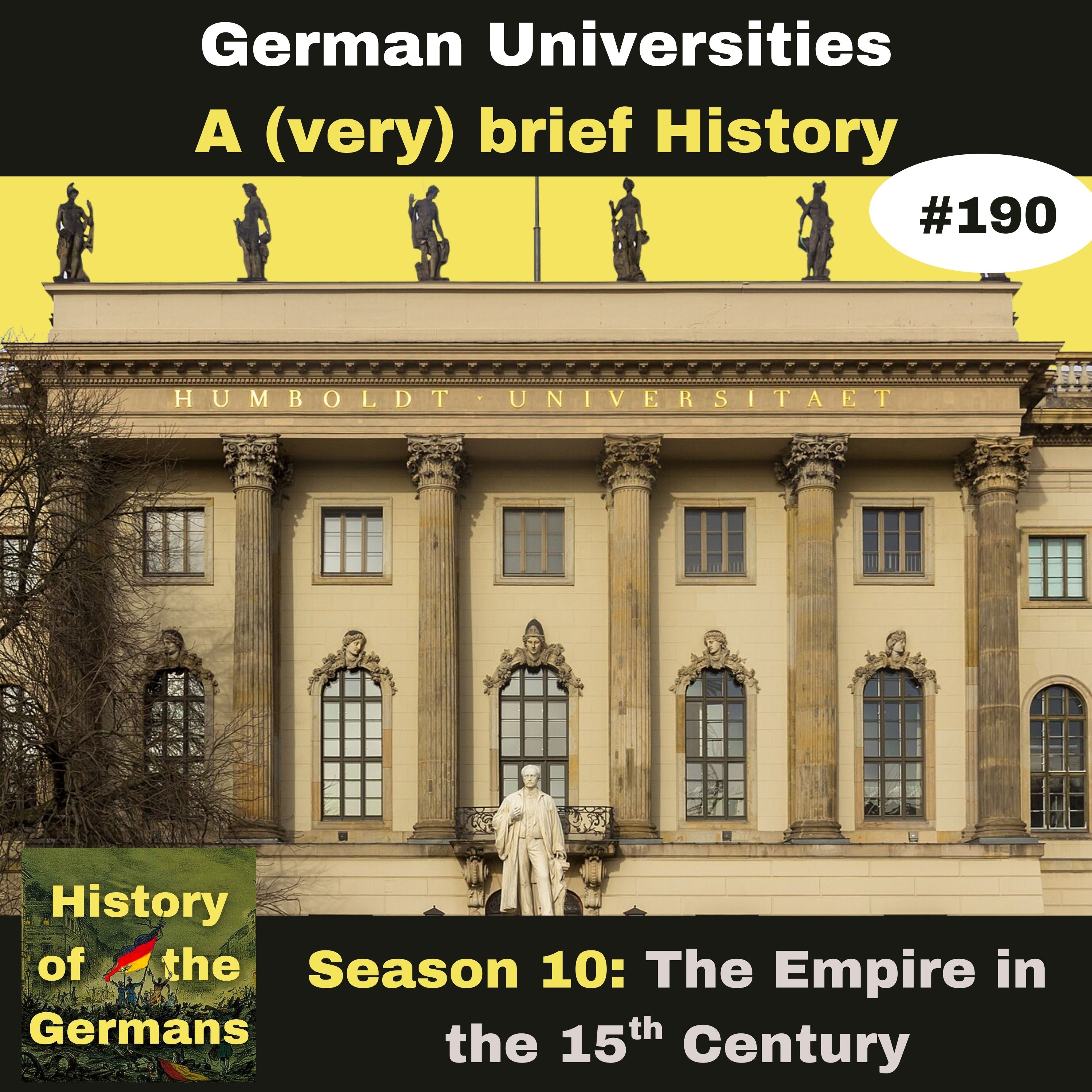
Ep. 190: A (very) brief History of the German Universities
Between the time the first Nobel Prize was awarded in 1901 and 1933, a total of 31 were awarded to German scientists and politicians. To name just a few, Wilhelm Röntgen (1901), Max Planck (1918), Albert Einstein (1921) and Werner Heisenberg (1932) for Physics, Emil Fischer (1902), Fritz Haber (1918), Walther Nernst (1920) and Hans Fischer (1930) for chemistry, Emil von Behring (1901), Robert Koch (1905) and Otto Warburg (1931) for medicine, Theodor Mommsen (1902), Gerhart Hauptmann (1912) and Thomas Mann (1929) for literature and Gustav Stresemann for peace.The UK and France received 17 and 15 respectively, whilst the US picked up just 6 during that same period.How could German universities rise to such dominance during the 19th and early 20th century from very humble beginnings? That is what we will look at in this episode.The music for the show is Flute Sonata in E-flat major, H.545 by Carl Phillip Emmanuel Bach (or some claim it as BWV 1031 Johann Sebastian Bach) performed and arranged by Michel Rondeau under Common Creative Licence 3.0.As always:Homepage with maps, photos, transcripts and blog: www.historyofthegermans.comIf you wish to support the show go to: Support • History of the Germans PodcastFor do it yourself merchandise go to: Merchandise • History of the Germans PodcastFacebook: @HOTGPod Threads: @history_of_the_germans_podcastBluesky: @hotgpod.bsky.socialInstagram: history_of_the_germansTwitter: @germanshistoryTo make it easier for you to share the podcast, I have created separate playlists for some of the seasons that are set up as individual podcasts. they have the exact same episodes as in the History of the Germans, but they may be a helpful device for those who want to concentrate on only one season.So far I have:The OttoniansSalian Emperors and Investiture ControversyFredrick Barbarossa and Early HohenstaufenFrederick II Stupor MundiSaxony and Eastward ExpansionThe Hanseatic LeagueThe Teutonic KnightsThe Holy Roman Empire 1250-1356The Reformation before the ReformationThe Empire in the 15th centuryThe Fall and Rise of the Habsburgs
Embed this episode
NOW PLAYING
Ep. 190: A (very) brief History of the German Universities
No transcript for this episode yet
Similar Episodes
No similar episodes found.
Similar Podcasts
No similar podcasts found.