This episode of Clever is brought to you by 3Form. Leadership is emergent. It comes from the bottom up. It comes from a lateral direction. It cannot any longer be used as a hierarchical, top-down version of leadership.
Hi, everyone. I'm Amy Devers, and this is Clever. Today, we're taking a practical look at the modern leadership values and methods that support a thriving culture and new vision of prosperity. Our values as a society are shifting rapidly, and the concept of prosperity is taking on a fuller, richer meaning for organizations as well as employees. Being valued means more than being compensated. It's about being heard, recognized, and tapped for unique capacities and viewpoints. We're realizing that productivity looks and feels differently than it used to, and when overemphasized, can sometimes be the enemy of real progress.
So then, how can leadership evolve in tandem with society? What exactly does that look like in practice? And how do you make a business case for it? Good question. Well...
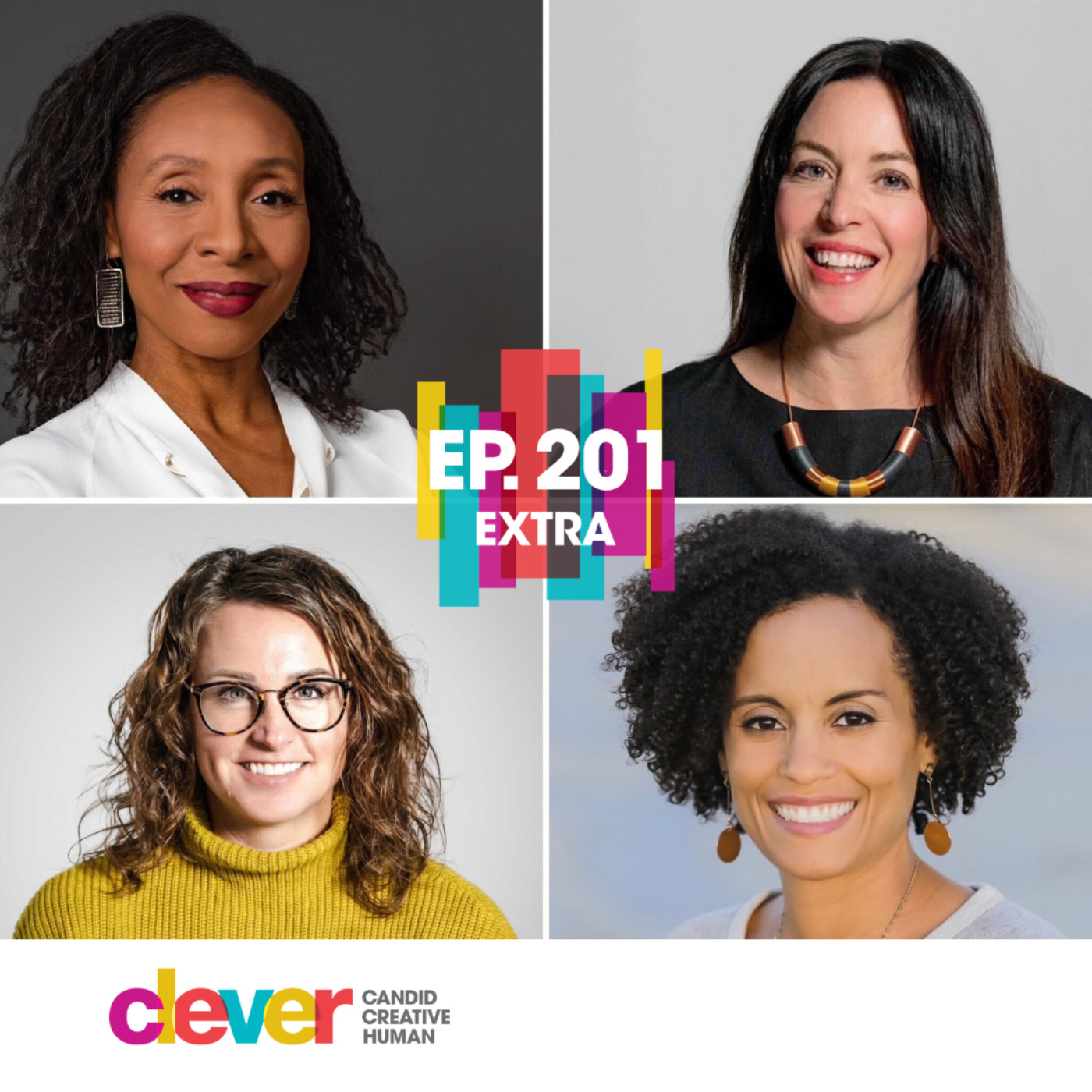
Armed with actionable advice and concrete strategies, we've brought together a stellar lineup of thought leaders, strategists, and practitioners to help us get right to work. Hi, my name is Natalie Nixon. I'm the CEO of Figure 8 Thinking, where I'm a creativity strategist. And the mission in my work is to change lives with ideas. And I do that by helping companies to reframe the ways they're thinking about their futures. I help them to apply wonder and rigor so that they can achieve more meaningful work.
Hi, I'm Jenny Vasquez-Newsom. I'm the author of a book titled Untapped Leadership, Harnessing the Power of Underrepresented Leaders, and the founder and CEO of Untapped Leaders, which operationalizes that work, supporting organizations and teams to uncover untapped talent in their workplaces. And I do that because I believe that a lot of us have been overlooked in leadership, and we have a lot to offer in this time and place. I'm Carly Slocum. I'm Vice President of Product and Marketing for 3Form. 3Form is an architectural resin, glass, and lighting company. I do what I do because I love marketing. I was drawn to it due to the mix of creative and strategy application and the ability to impact the overall business. Hi, my name is Jen Ruckel. I am the Senior Vice President of Sales for 3Form. I lead a team of dedicated individuals whose mission is to transform spaces and inspire people. And I do it within the built environment because I believe that the spaces we inhabit have a profound impact on our well-being and our productivity.
Well, this is a stellar group. I am excited to dive into this. I am not an expert on leadership, so this will be very educational for me. And I hope you'll humor me with some of my questions. I know that leadership is important for businesses, but I'm coming from the perspective where I understand that leadership actually ripples out through all of society and humanity. So it's important to everyone. And I want our listeners to know that even if you don't consider yourself in leadership, this conversation is really relevant to you. And so let's start with the idea that we can take...
The fact that corporate leadership needs to evolve concurrently with society as a given, right? We all know that. But how to do that exactly can be abstract for organizations because they've consciously designed systems and organizational frameworks that are meant to keep things streamlined, efficient, cost-effective. And evolution is, by very definition, a force of change into the unknown. So this loss of certainty and predictability can sometimes be paralyzing. So I'm interested from you all to hear how can we look at organizational growth from a more holistic perspective? And how do you think the measure of organizational health is changing currently? Well, I think we have to start by remembering that organizations are organisms and that markets are made up of humans. And because of that, markets are imperfect, they're inconsistent, they're not predictive. And I think behavioral economics has taken us really a long way to understand that rather than trying to have very
predictive models to understand the best way to lead, the best way to enter a new market, the best way to engage the people, the humans who are part of this organism we call a company, that in this time where technology is so ubiquitous and it seems to be integrating all dimensions and aspects of our lives, the opportunity is not to have a dystopian view of the technology. The train has left the station. I think it's helpful to have a dose of healthy criticism. So not totally utopian, but my friend Galit Ariel, who's a... A futurist, she talks about having a heterotopian view of this moment in time. And I think it's an opportunity to amplify what makes us uniquely human. And so for me, that means organizations that model inquiry-based leadership. And inquiry-based leadership does not look like the following. It doesn't look like a manager standing in front of a team and saying, okay, guys, give me your best questions, because you probably will be met with deer in the headlights, stairs, or crossed arms, or people not really willing to engage because people have been question shamed. People have been educated.
We have been educated to solve for the best answer, a solution, versus engaging in a process, which is a lot more ambiguous. So the new paradigm of organizations is one that leans into the ambiguous nature of falling in love with people's problems, of falling in love with the market's problems. It is a model of inquiry-based leadership that involves self-inquiry, as well as really engaging people with very open-ended questions, not just what I call convergent questions of who, what, when, but how might we, why, I wonder, what if. And it's an organizational model that's much more emergent and adaptive. And when I say emergent, I'll just add one last thing to your point embedded in your question. Leadership is emergent. It comes from the bottom up. It comes from a lateral direction. It cannot any longer be viewed as a hierarchical top-down version of leadership. I think it's interesting you mentioned to dive into what makes us uniquely human. That leads me to want to ask Jenny what your thoughts are, because as the founder of Untapped Leaders, it seems like you have a real take on how our uniqueness and our varying perspectives actually bring a lot to the whole potion. Absolutely. And I think what you shared, Natalie, just...
resonates so much for me as far as thinking of our organizations as organisms that are fully fueled by the people that are in the spaces. And so when I think about, Amy, you're kind of naming the streamlining, efficiency, cost effectiveness as important aspects of business. And yes, they are. I also hear at some points like rigidity in that, that it doesn't allow enough room for the complexities of the human experience to be in the workplace. And therefore, we start to leave things out. And so, you know, I feel like this moment calls for a re-examination of
what efficiency looks like and is, because if it is a propensity to doing things as they've always been done, assuming that they will continue to work, then I think that's a tricky assumption to make. And so, you know, with my work with untapped leaders, it really is centering marginalized perspectives and just perspectives that are working and leading within workplaces that in decades. centuries past have kind of left out those experiences for the sake of professionalism or the bottom line or efficiency. And I think that's a risky choice at this point. I'm really thinking about when we talk about evolution, our whole existence is based off of evolution. And if we take any learnings away from the natural world, things that don't evolve cease to exist, to be honest. And so I think we're at this moment now to really rethink the cost of leaning too heavily on that efficiency in those systems and really leaning towards a more
broader, holistic, more real approach to doing work and therefore doing leadership, doing impact, all the things that we have this opportunity to do now. I think what some people might be hearing is that seems really complex to implement. Humans are all really different. And so how do we organize around what seems like chaos? But Carly and Jen, you're practicing leadership every day in the field at 3Form. What are you seeing and how are you personally evaluating the landscape and measuring the health of your own company and the success of your own work?
Yeah. So it's interesting to listen because I'm thinking back about my own personal experiences. And when I came into the workplace in early 2000s, I do think there was a hierarchy in a boardroom and a lot of us were just there to listen. And I do think that was great, but you really didn't feel empowered to speak up. And over the years, I think that's changed quite a bit. And I think that is due to more people or more diverse people being in bigger roles and recognizing the importance of voices, like whether it's by generation or if it's from different backgrounds. I think that there's sort of an intentional part of when you're in a conversation to make sure that there's a place of safety so that people feel like they can speak up, that there isn't that hierarchy in a boardroom anymore, that everybody's voice matters. And I think that that's definitely something that I think about regularly with my team.
of really encouraging the fact that they do all come from not just different backgrounds, but they have very different expertise. You know, I have web developers, I have graphic designers, I've got videographers. How do they all make sure that they feel comfortable to weigh in on topics that maybe aren't even their expertise, but they're going to give some different viewpoint of an idea or subject matter that's really important for the whole team. And so I think a lot of that has shifted and I think it's up to us to continue to work on establishing places where people feel comfortable and that they can speak up. It's interesting to think just even about Carly's last comment about places, right? Because when you're in a conference room and you're inviting all those people who are definitely stakeholders and adding to the contribution of the conversation, I'm always fascinated by how many people will grab a seat and they're sitting against the wall when there are plenty of seats at the table.
And I'm always the first to say, hey, there's some empty seats at the table. Because again, I kind of think about the power of place. And when you're seated at the table, you already feel more engaged. And it's that like physical sense of like, I'm sitting here. I always tell people, especially those that may not be in that meeting often, like look around the room, you're invited to this meeting to contribute. Think about what you're going to attribute. You know what the topic is. Think about when your voice needs to be heard and find your voice amongst a room of people who are really comfortable speaking up, right? So I think that the power of place is really important. And I always just encourage people like, sit at the table. We need to hear you. It's so simple, but you have to watch to kind of.
move people forward in a small step. So that brings me to the question about some of the social complexities that are in the workplace. Carly, you mentioned generational differences. Jenny, of course, we know we're talking about marginalized perspectives. You're all talking about making a place safe for people to speak up, but how do you navigate all the different personalities and social complexities? Is there anything really important to talk about there, or maybe even things that you've seen that need to be addressed? What you just shared really resonated with me personally, that I would have been the person to sit on the sidelines in that boardroom. And even with an explicit invitation to sit at the table, I think there is that
historical context, lived experience that would have gotten to that place of being in your boardroom, I would have carried in with me a lot of these experiences of not feeling like I belonged in either boardroom or in the classroom. Really, for me, it really stems back to academia. And so I think highlighting that experience is very real. Speaking for myself, for my own identities, but I think for a lot of folks with lived experiences that are not always represented in those boardrooms, trying to make that shift can be hard and really thinking about those strategies where the invitation is like. step one. And then it's the way the discussion rolls out where, you know, a divergent lived experience or it's just another way of thinking emerges and it's validated and it's valued and it's given its attention or it's a, you know, another way of kind of doing.
conversation. For me, I'm much better at writing. I'm much better at like self-reflection first. You know, I'm an internal processor and then I can come in and to engage. And so being very aware as a leader that all those modes and preferences are at play, but then a lot of them maybe sometimes are deeply rooted in our past experiences. And that's why those exist, which leads to the complexity of this leadership moment right now. And I think for it to really be effective is just being aware of all of that and working with it as you move through those moments that can really cultivate everyone's leadership in that space. I love that.
Because you are cultivating everyone's leadership. If you're inviting them to speak up and really asking for their contribution, it's because you want them to own a piece of what it is you're all working towards. Yeah, I just wanted to build on what Jenny was sharing just to say that. It is one thing to let people know, you know, you were at this meeting for a reason. We really welcome your questions and your perspective. And then to remember that there's the meeting before the meeting, there's the actual meeting, there's the meeting after the meeting. And there's ways that we can prime that relationship building to let people know that we really like that point you raised in this email conversation. Would you be sure to bring that up during XYZ? I serve on a board with a Dynamo leader, Keith Yamashita, who's the Y in SY Partners, and he has an incredible ability.
to continue to do the inviting throughout the course of a meeting, especially if I've noticed, I observe and I'm learning from him, if he's observed that someone in particular has been particularly quiet. And Jenny's absolutely right that if you're more introverted, if you process your thoughts differently, you have to be able to have the EQ to gauge if you're going to be making a person feel uncomfortable by doing that or not. But that's why building that relationship before the meeting, after the meeting is important. I actually wrote an article for Katie Keurig Media about blending boomers and Gen Z in the workplace. And right now in our work environments, we have five different generations working together. So we have...
millennials, both juvenile and geriatric millennials, I jokingly say. We have centennials. Our daughter is an example of a centennial. She's 22. I am a solid Gen Xer. We are literally the sandwich generation. They're the boomers. And then there is the silent generation. And I reflected in this article that I wrote for Katie Keurig Media that Deloitte did this study on global human capital trends. And they report out that only 6% of their respondents are saying that company leaders know how to direct a multi-generational workforce. And at the same time, we know that intergenerational working groups.
enhance greater connection and purpose. So a few ideas about how to spark that connection intergenerationally. Number one, consider mixing up who gets to lead a meeting. And that's not just a generational issue. That could be a tenure issue, right? That could be a person who has storied experience in the industry, but is new to the organization. And you can discuss as a team how you might want to do that so that people don't feel like they're on the spot. So that's one idea is just really mixing up who gets to lead the meetings from a junior employee, a newer employee to a more tenured level employee. The other important thing that can be helpful, which is related to my comment about
the meeting before the meeting, the meeting after the meeting, is to bring in regular feedback. Because the more you're normalizing conversations, and as I was referencing earlier, your own self-inquiry and curiosity about others, and one-on-one touch-based meetings, you're more likely to spark that comfort level with engagement. Just to close on this thought, there was a 2016 Gallup poll, which found that 44% of millennials say that they're a lot more likely to be engaged if a manager is holding regular meetings with them. Some of us older folks might complain about how... air quotes, needy millennials sometimes feel, but take that in stride. If you want to get the most out of people, understand what motivates them. All of us want to feel seen and heard. So having those one-on-one meetings is going to spark more engagement, the kind that you're looking for, invest in that.
Carly and Jen, do you have any thoughts on this? And do you have any practices that you or issues that you've come up against? I think it's so fascinating that you mentioned the five generations. What it's really shaping that I'm seeing is perspectives on things like work ethic, preferred communication, technology, right? And I think you're right. We have to see what motivates that generation. And you can't take, I'm just going to pick on the older generation because I'm right there in the middle, but you can't take that older generation and say, because someone wants to work from home, they have.
a different type of work ethic that doesn't align with you, right? You perceive it as a lack of work ethic or because they prefer to use Slack or chat instead of come to you and chat with you in person. I think there's just a lot of assumptions being made about generations that are causing unnecessary friction between one another. And we really have to seek to understand, again, what motivates you? How do you like to communicate? Why is it that you'd prefer to work from home two days a week? What are you getting done there that you can't get done here, right? And really seeking to understand. And once you do understand, then you find that that friction just falls off. But I think, again, a lot of the generational differences is really shaped between those perspectives and work ethic, communication.
and then technology. So it's fascinating that the real work just comes with getting close to it and asking the right questions of understanding. Yeah, and let's face it, as a leader, it'd be great if everyone was constantly marching to the same drum, but that's never the reality, regardless of these generational differences, right? A good leader really does dig in and understand the differences, and you're not thinking of it through this lens of generation. You're just thinking of it through the lens of this human and what they need. We started talking about belonging, and I don't think there's any greater compliment as a leader for someone to say they feel a sense of belonging, either at your company or on the team. To have someone say, I feel like I belong here is a great compliment to a leader.
But you really do have to ask a lot of questions to understand how to get that, right? And to get that sense of belonging. I mean, we understand or have some general understanding of the generational differences, but it really just comes down to the individual themselves, right? And their experiences. And I think there's sort of this longstanding sort of idea in marketing where you meet your customer where they are. And I think as a manager, you have to meet your employees where they are and you have to take the time to understand them, understand where they're coming from, get a better understanding of their background, their upbringing, all the things maybe that they experienced.
even in their childhood, because it's going to affect how they act in an office environment. And then, you know, you have to talk with them about how they want to contribute or work with them on what that looks like, because sometimes calling somebody out might be the most terrifying thing that they experience, right? And so understanding where they want to be, understanding how they are now and where they want to be, and how you can help them get there depending upon that individual, I think is so important. And it's really hard, right? It's hard to take that amount of time for everyone on your team, but it's important to...
think of everyone as individuals and realize that no one has the same experience as you do. No one's going to perceive or interpret things the same way you do. And you have to really sort of think about it, where they're coming from and then help translate that, but then also figure out, okay, how do you want to be a part of this team? And what does that look like? How do we all come together at the end of it and be a cohesive team with so many different backgrounds and experiences? God, it sounds like there's a great deal of getting to know everyone well. Strengths and weaknesses, preferred methods of...
contributing and communicating. But it also sounds like once you kind of understand that, then being like a really adept orchestra conductor, because they're all playing a different instrument and you've got to make music with that. I want to get really practical now. We've talked about some really important concepts, but I want to get into the nitty gritty of how you actually implement these. One of the things that Natalie kicked us off with is this inquiry-based leadership. And we already discussed how important it is to invite people to speak up and get to know them and ask questions. So Natalie, I wonder if you can walk us through some of the techniques that you...
put into motion and maybe what that actually looks like on a practical level. Sure. I really love all the points that Carly just made about getting to know the person, which may be a work of joy for some people and other people may feel like a drag. Oh my gosh, can't we just do the work? But the reality is that work has become inside out, as I like to say. And I'd like to offer an additional model, Amy, in addition to the model metaphor of we all would love our work to feel like a well-tuned orchestra. I think another model is to think and act like a jazz musician. I wrote about this in my book, The Creativity League, and I've spoken about it in a TEDx talk.
When we think and act like jazz musicians, there are a few things that happen that are really interesting. A lot of this work comes from Frank Barrett, who is a jazz musician and academic out in San Diego. One is that jazz musicians embrace errors. There's literally no such thing as a mistake in jazz. There's an offering. And if for some reason you play in a slightly wrong key, oh, that's interesting. What might I do with that if I'm responding next with a solo? The other principle in the way that jazz improvisation works is solo and support. So one of the greatest jazz drummers, Art Lakey, sat in the back. He was the drummer.
And throughout the course of his career, he integrated younger musicians. Miles Davis did the same thing. I recently went to see John Faddis perform in New York. He's celebrating his 70th birthday. He's a jazz trumpeter. He had musicians on the stage from age 16 all the way through to other musicians in their 70s. So the ability to recede to the back, to shift who gets to lead, to support is a very fluid way to work. It's a very fluid way to be much more adaptive. And I think so that's one of the ways that looks like in practice is to study the ways.
that improvisation, which is about the build. It's about yes and. It's about being open to what is emergent, not what's set in stone. Because after all, there's the plan and then there's the reality of what we have to work around. And one other practical tip I've learned comes from the work of Jerry Hershberg, who used to be the head of design at Nissan, the automotive company. And he made up a term, creative abrasion. Whenever his design team had a design challenge they were working on for the design of automobile, he would invite in people from finance, HR, manufacturing, sales, marketing.
to opine on the process. Most of us, if we're really honest, hate collaboration because we think, oh my gosh, why do we have to bring these people in? They're going to slow us down. We understand the way we work. Our assumptions will be challenged. But what Jerry Hirshberg understood is that abrasion, friction yields energy. So why not convert that energy into something positive, right? Because the more diverse the inputs, the more innovative the output.
One example of an input is a question. If you have people around the table who keep asking the same questions, you're going to keep getting the same output and answers. So you have people around the table from different backgrounds, different training, different levels of experiences. You will yield new sorts of questions to gaze at a problem in all sorts of new ways. So practicing creative abrasion in real time could look like whoever's listening, whatever project your team is working on.
pause and think about someone else from a totally different department who you could begin to weave into the process. If you want to be really audacious, invite in someone from outside the company or even outside the sector in which you work. And in design thinking, we call that lateral thinking to bring people from near and far adjacencies to opine on the process. And it yields a really rich product as well as so much interpersonal learning, growth, and learning that you have about yourself. I'm so happy you brought up the sort of fluidity of jazz musicians and building on this idea of improv and a yes and. I think that you can always value engineer a really audacious idea, but you can't get to that audacious idea if you're knowing it before you even get there, right? Before it even reaches the blue sky.
So Jenny, I wonder if you can chime in on some of the sort of practical methods for implementing an understanding of, a building of, and a creating of a workforce that is utilizing and making the most of marginalized perspectives. Yeah, so much of what everyone's sharing is so resonant as far as being inquiry-based, grounded in the experiences of others. And that really is the purpose of a lot of the work that I do. And so a practical offering I share a lot of times with organizations, which is still... steeped in complexity. I have to name it because that's just reality. But I talk with leaders and with organizations around this idea of exercising contextual agility, that really, to be really effective as leaders, as teams, as organizations, we need to be grounded in context. We need to understand the realities that surround us. And we have to be agile within that context, which I heard a lot of that, you know, in our conversations already. It's like, you know, how do you find the music when everyone has a different beat? How do you find that jazz and work with that to support each other? And so when we kind of...
center around a framework to think about this with our own respective spaces is to know that there's at any given moment in our present day, you know, ourselves, our own awareness is informing that moment, our own preferences, our own strengths. We really kind of think about effective leadership is to be self-aware first. And then also understanding that our past is connected to our present. So really leveraging lived experiences, really leveraging historical context. That's a big piece of it as well. Understanding systems is a big piece of it. We don't do anything in isolation.
All of us are affected by systems, are affecting systems, and we want to be aware of what that is. And then ultimately towards the future, the vision. What are we going towards? How can we crystallize that? And so, you know, when I work with teams and organizations and kind of with leaders, we want to kind of build this connection between self, system, past, and future to understand how to then make tough decisions within the ambiguity, within all the spaces where everyone's coming in with a different perspective. And so that's really kind of the exercise and going deep into understanding each aspects of this context is a big piece of the work.
Circling back to your very first question around efficiency and streamlining, there's a tension here to understand and to be kind of grounded in context. Everything that we've talked about, I think there is this tension that exists between kind of getting things done fast and then also taking the time to understand who's in the room. How are we meaningfully including others? Do people belong? That requires time. And so, you know, I always say that to exercise contextual agility, you have to balance thought with action. It can't just be action, action all the time, because then we will keep certain perspectives out. The status quo will continue.
You know, I think we limit ourselves as leaders, as effective organizations. We just kind of leave out a lot. And that is our detriment ultimately. As you're saying that, what comes to mind is I'm constantly sort of reminding myself that I need to balance being with doing and understanding that that's actually probably allowing me to be more productive in the long run. So Jen, what are some of the methods that you've found to be really useful and helpful to you in terms of motivating your team or creating culture or just generally making a harmonious environment? Well, I'm lucky because the people that I manage are salespeople and they're really mostly extroverted people, right? And so I find that that group is maybe the easiest to target for just what I find is you bring them together, right? And so that can be on a Zoom call, that can be on a regional sales call. I mean, you name it, you bring them together and that's where they really just start to share. But then there's other people that...
You know, we're kind of getting lost in all of that. And I think it's my responsibility to, you know, say, hey, Carly, we haven't heard from you yet. And a couple of weeks ago when you and I were talking, you said this, right? Can we talk about that a little bit before we all go out amongst our day? I think bringing people together and then highlighting what it is you wanted to talk about through other people and not necessarily me leading the discussion. But again, back to the point we made earlier, maybe I've warmed them up a little bit and said, hey, I'm going to call on you. I'm going to bring up what we discussed. And sometimes you have to do that again, because there's so many complexities with salespeople.
Sometimes it's the top performers that are talking the most, right? Sometimes it's the people who hit their goal every year that are talking the most. And you really want to make sure that that sense of belonging stretches to that for me, those smaller territories really, again, great success there, but they're not always being highlighted because they don't have the biggest orders. They don't have the most orders, right? So it's me bringing them in. And I think also, I mean, we've talked about generational differences. These are all remote employees. There's 54 of them across North America. They're an island within their state. There's nobody else at 3Form working there, right? There's all kinds of...
gender and social orientation, sexual orientation that comes into that. There's people who I know are really involved in like motivated by three forms, corporate responsibility, our sustainability. I really try and touch on those things that motivate that employee and bring those to the forefront. And, you know, right now, some of those are paralyzing, right? You talk about political divides or just companies that have more of a global presence and the things that they're coming in contact with. And there's all kinds of friction there, right? But I think you really have to be vulnerable and start to vocalize some of the hard things, the things that are hard to talk about because you know you're reaching.
broader audience when you do, again, address those. So I try and be really vulnerable and unapologetic about it. I lead that general sales call Monday morning, and I've been known to cry at times. There's tough things that happened over the weekend. We talk every Monday. And as I'm looking at, how am I going to open this call other than saying, hi, good morning? Yes, sometimes that means talking about Black Lives Matter. Sometimes that means talking about something that is really, again, politically polarizing, but it's a factor in their lives because they are more than just salespeople, right? Absolutely. Will you share your thoughts on mentorship and sponsorship?
I've talked a lot, I think, in just small roundtables and other discussions about the difference between sponsorship and mentorship. And I'm going to keep talking about it until when I hear people talking about mentorship, they are also talking about sponsorship because the two are different forms of like professional support. They're different in terms of guidance in the workplace. And then I think the easiest way to talk about it is to talk about the role, right? And so the role of a mentor is really just anyone who, like I said, provides that advice or guidance or support. So maybe a less experienced person, maybe someone new, right? Someone new to the office, they're shadowing and they're going to be defined as their mentor for a period of time, right? And that, of course, will continue to be really important in the workplace. And you have to think about the relationship and the duration of that. But the benefits are oftentimes really fantastic for the mentee and the mentor. But I think what I really started to think about when disparity started to become more of a conversation.
globally, is that a sponsor is really that senior level individual like myself, like within an organization who is not just mentoring, but actively advocating for or supporting the career advancement of that more junior person. So if I'm in a conversation where some sort of need is percolating and we can't quite define it yet, it might be my responsibility to say, hey, I think Amy would be really great at that. Even though we don't quite have it defined yet, these are some of the qualities I see in Amy that would be a good fit to even just grow this position or start this position. So I think you're just focusing primarily not just on showing them the path within the role, but the sponsor is creating opportunities for that person within the organization or beyond. Like sometimes it's beyond and that's okay too. Sometimes people have to move on to grow, but I'm in a lot of conversations with a variety of leaders in different organizations. And so if they have a role they're trying to fill, I can also sponsor someone I know for that role, right? And so I really think it's important for mentors to kind of always exist in the organization at every level, but I think it's even more important for senior level people to start to think about who they're advocating for and why. I love that.
Carly, I know you've been really active in your role, getting a deep understanding of what the landscape is and where it needs improvement. Can you talk about some of the tools you've deployed in terms of evolving leadership from where you stand? Yeah. So for a long time at 3Form, we've looked at our products, right? So we've gotten product certifications to make sure that we're putting healthy products out into the market. So there's like declare labels, EPDs, things like that. Through that initiative, we found out that ILFI, so International Living Future Institute, had come up with a...
another label, but it's to measure social equity in the business. And it's called the Just Label. Me, along with a group of people, we're looking at it and we really were interested in, you know, how is this label to be used and what could we do to employ that at 3Form? And really what's fantastic about it is it helps you put together. a benchmark or a framework around where you're at today in your organization. And so it spans a couple of different categories, things like diversity and inclusion, equity, employee health. There's a lot of different measurements and essentially it's like a nutrition label. So you get either a one or a four. And essentially it's a really great lens to use to really evaluate truthfully where you stand. And it's not really a benchmark amongst others, but it's a benchmark to yourself. And then you can start saying, okay.
We thought we were doing really well in this category, but we really aren't. So let's start thinking about like, what can we do better here? Or looking at what you're really doing well and making sure you continue to do that. And the other thing that I think is really important is, is you have to be authentic. I think that a lot of times you see things, especially in the sustainability world of like, oh, we're going to achieve X, Y, Z, like, you know, zero carbon emissions by 2050. And it's like, oh, but you know, by then you'll have new leadership and a whole new team. And so you also have to be authentic about like, what is it that we can control and where can we have the biggest sort of impact with our employees or our environment or our supply chain and really be real with yourselves. And you can start putting things in place where like, okay, this is how we can improve over the next two, three to five years. So more immediate sort of plans where you can actually see yourselves doing better.
And I love it as a scorecard because it does allow you to do that and really look at your organization versus sort of just putting a finger up in the air and being like, oh, I think we do well on this. I feel like we do well. And the reality is when you really look at it, maybe you're not. Or I know for us, there were some cases that I don't think we realized we were doing as well as we were. And so that was really fun to look at too. So it's a really great opportunity to evaluate yourselves and then set some real challenges as an organization to make yourself better. And it's really open. It's not just for design industry. It's really for everyone.
in any industry to look at and use to evaluate the organization. So I would definitely encourage anyone out there to go check it out, see if it's something that they can do for their company and see if it's something that they can employ to help them get better, to really see the truth, really see what's underneath the hood of their organization. Yeah, seeing the truth sounds like the really important part because in terms of this complex problem that we're talking about, that sounds like a really useful way to try to wrangle the complexity and still head towards the larger goal. Yeah, and I'll just add, I think a lot of what we've talked about too, there's sort of an underlying topic of transparency. If you're willing to be vulnerable and put that out there, then I think people are more willing to trust that you stand behind what you're saying. You're not just words, your actions as well. And then I think, too, it helps to be transparent even within your organization and just say, hey, listen, we realize that this is an area that we want to do better. And it provides an opportunity to get feedback.
from your employees as well on how they're feeling about specific topics or where we're at. When people see that you're willing to be vulnerable and put that out there, they're a little bit more willing to then say, oh yeah, this is how I felt or this is what I've experienced and open that up a little bit more so you can truly learn from them. And then that helps to make even more substantial changes in the future. So I don't want to gloss over ROI or the impacts that all of these methods can have on so many different levels of the organization, but also ripple out into society in really important ways. I wonder if you can tell me what are some of the things we can expect in the short term and the long term from implementing these ideas? Well, I've given a lot of thought about, in the case of building the creative capacity of an organization, which a lot of what everyone has talked about really can contribute to building the creative capacity of an organization so that innovation can happen on a much more sustainable, scalable, and consistent basis.
I think about the business ROI of creativity because it's really important in my work to help people shift away from thinking that creativity is woo-woo or an addendum to the important stuff to realizing that it's actually the essential catalyst to be able to innovate. And there's some compelling business case. So I'll just share three examples of... the business ROI of doing more inside-out work, of having inquiry-based leadership, of truly seeing people and not just offering lip service, but through actions and institutionalizing methods like the scorecard was a great example of that, of making work a lot more transparent. So the first example is that if we start to lean into having much more inventive thinking, which is a big part of being more creative in our approaches, then we start to find new and different strategic partnerships. And those new and different strategic partnerships lead to new activities that unlock new revenue streams.
That's a solid business result going from inventive thinking to new revenue streams. A second example is that even when I shared the example of Jerry Hirshberg and creative abrasion, all of this sort of work really gets optimized when we collaborate. Even though we may be reticent initially to collaborate, collaboration ultimately boosts productivity. And when productivity goes up, efficiencies go up. When efficiencies go up, costs go down. That's a business result. It's a hardcore business result stemming from more collaborative efforts. And the third example I would give of the business ROI of creativity is that...
When you commit to building a creative capacity of yourself as an individual, of your team, scaling it out to the organization, then you must become customer obsessed. You must fall in love with people's problems. You'll never run out of business. Instead of falling in love with your widget that you launched 17 years ago or 117 years ago, if you become customer obsessed, then you'll be on the path to generating greater value. And all of those three things that I just listed really encompass what I call the three I's of optimizing creativity, that require inquiry, improvisation.
more experimental ways of working and intuition. That's part of becoming customer obsessed, getting out of the building. And the last thing I would say is a really practical thing that I don't have it fully fleshed out yet, but it's part of my research now and part of what will be in my next book is what I call identifying new KPIs for work, new metrics for productivity. And so I've been really curious about KPIs for intuiting, especially because technology, AI, robotics, automation is going to be doing basic tasks of our work. If that's the case, some of the questions that I think are interesting are that get us to KPIs for intuiting are, How might technology prompt us to pause on a more regular basis?
What if we normalized play? Because after all, all the attributes of play, being able to collaborate, being able to negotiate, being able to actively listen, are all connected to executive leadership functioning skills. And what if sensorial design and emotional design became more mainstreamed? And this incredible neuroscientist, David Eagleman, who's one of his many interesting research questions is, what if we could feel data? Which five years ago would have felt like a really wonky question. And now he has created interesting prototypes and research methods and launched scalable solutions.
where technology feels data from factory lines to helping people who are hearing impaired, for example. So applying those three I's to go from collaboration to real new revenue streams and lowering costs and following other people's problems, integrating inquiry, intuition, and improvisation really can go a long way to practically shifting what we consider the business return on the ways that we work. Damn. Yes. That's so clear. I don't even have anything to add. I know. I was like, should we just end on that? Drop the mic. Yeah.
Jenny, I'm really interested in your thoughts. We all know that it's important to diversify because multiple perspectives leads to a more, like, I always think of ecosystems and more biodiversity in an ecosystem means the whole system itself can regenerate, can expand, can evolve, can start to function on its own, doesn't need to be led, actually. It can grow and evolve in its own way. So it makes a lot of logical sense. But how do we boil that down into what might be considered business return? Yeah. Ultimately, I do think that organizations lose out when
They don't tap into their full potential of their talent. Organizations are healthier when there are diverse perspectives who can bring those perspectives, that intelligence, that, you know, the breadth of intelligence into the workplace and contribute and be valued and validated through that. But consistently, we don't see it happening as much. And so, you know, I think of a McKinsey report that came out last year, 2022, for the great attrition. A lot of conversation around uncaring and uninspiring leaders are the third top reason people leave their jobs.
following, you know, really closely after inadequate compensation. So it's that serious. And I think when all our conversations that we've had today, you know, really understanding that the way of work, the world of work is different than where it originated. And I think that's where a lot of my work stems is, you know. When we first started to define what leadership is, when we first started to define what work is, it was all created in eras of exclusion, of times where women, people of color, LGBTQ identifying folks were fighting for equal rights more broadly. And so now, you know, this idea of compartmentalizing, checking things out the door, you know, we're evolving away from that, thankfully. But I think where we...
I think have to do more work is, you know, when we think about leadership, it can no longer be that hierarchical definition, title, experience, all those like traditional factors equating to leadership. We have to be able to cultivate that leadership at all levels and then value it and show that it's valued and, you know, compensate and really kind of offer these opportunities for that growth to occur. And it's not being just siphoned to those at the very top. And so, you know, I think what is happening is folks don't want to work at places that they're not seen, not heard, not valued. You know, in a way, like fortunately voting with feet and kind of moving on or quiet quitting, which was all the conversation for a while. And I think that's very real. Again, if you're experiencing work in a way that doesn't honor and center your humanity, then you're not going to give your full to it. And I think that's pretty baseline. And a lot of times, at least, you know, maybe in the spaces that I operate in, folks can feel it in their bones. Like when you're in a space that really values and cultivates and people belong, no matter who they are, you feel better and you give more.
Yeah. And I think when it starts to hum, that's something people can understand as an efficiency, right? Right. Carly and Jen, I'm really interested from your vantage point inside the organization. How do you see some of the methods that you've discussed playing out? And do you feel like you can measure the impact it's having? As both Natalie and Jenny were talking, I keep thinking about more of kind of the...
micro view of a manager, right? The things that we're dealing with every day. And I recently had the opportunity of taking on our product and engineering team. And I think throughout this conversation, I keep thinking about that group because they ask questions that are very different than the teams I've worked with in the past and require additional or want additional context. And it's been a great challenge for me. But I think when I think about my role has been multifaceted. One being that having taken over the product engineer team and the marketing team has allowed to take down the silos that were there.
has allowed for more freedom of information sharing, more collaboration. It's not perfect. There's a lot that I still need to learn. I'm learning from this conversation. But when we're talking about the ROI, I can see that from just that view, right? Where we might've developed a hardware system in the past and maybe it wasn't completely communicated all of the different opportunities or the different selling points of that system because the groups weren't working together. So from a super kind of micro view of a little impact, but that could have ripples ongoing.
And I think the thing that really I think about every day is my role as a manager. And Jenny mentioned, you know, having a bad manager is why people leave, you know, other than poor compensation. I think if you really think about that as a manager, it is so important that we take a big responsibility on understanding each individual human that is on our team and helping them be successful. Because bad managers are detrimental, not just to an organization, but to an individual. And if an individual has a bad manager for a number of years, they may be set back because maybe they observed all the wrong things. Maybe they...
never had an opportunity to observe somebody and how to handle a situation appropriately. And so I've seen that happen a lot where somebody gets put into that position and they kind of get set back because they've had years of this bad experience. And I think the way I look at that is that it's my responsibility to make sure that I'm giving as much as I possibly can to each person on the team and to make sure that they have the opportunity to grow and thrive in the way that they want and the way they want in their professional career. And I think we have to think about that more as individual managers too. And I think people say it a lot.
but I don't know if they say it enough, is that if you support one person and you believe that a rising tide lifts all ships, then everybody wins. Everybody wins. And the pie doesn't get smaller. It expands to a bigger pie. I think that's so true. And it does, I think this is kind of where we started, right? Is that it is about the human, not your coworker, not your friend, the human experience. But we had someone recently become a leader and I had said to them, I was like, just remember two things, ask questions and be an active listener because
I think when people demonstrate their own curiosity by asking all those questions and that kind of allows for more critical thinking, I think it's also very freeing to not have to have all the answers, right? And so if you just avoid assuming that you either have them or you have to have them, you can be open to generally interested in like their answers to those questions, right? And, you know, sometimes when people say active listening, you mean just listening? And I'm like, yes, but by just chime in, ask more questions, show that you value that perspective, ask follow-up questions. Make sure that you understand what you're hearing. Yes, yes. Seek to understand that viewpoint like fully.
Because that's exactly what we want is what everybody's viewpoint, right? And oftentimes when something starts, you're like, I'm not sure I agree. But the more question to have, the closer you can either get to an agreement or to understanding the difference, right? And so I always tell people like when you're a new leader, just remember to be curious and ask a lot of questions and be a very active listener. And if you can do that, you'll just be more comfortable in those meetings where all eyes are on you.
I feel so nourished by this conversation. I've learned so much from all of you. Before we sign off, can you let us know the best place to find you and to follow your work? Natalie? Yes. Thank you for an awesome conversation, everyone. This was a real pleasure in my day. People can find more about the work that I do as a creativity strategist at figure8thinking.com. That's the number eight. Definitely sign up for the Ever Wonder newsletter and make sure you download a free sample chapter of my book, The Creativity Leap. And definitely follow me on LinkedIn and on Instagram where I am.
at Nat W. Nixon. Thank you. Jenny, where can we find you and learn more about untapped leaders? Yes, this was so wonderful. I have to start there. Thank you for just a thoughtful conversation. It's tricky to tackle leadership in this day. So you can find more about untapped leaders at www.untappedleaders.com. And you can also purchase the book if you're interested in untapped leadership, harnessing the power of underrepresented leaders at any of your favorite online retailers. And you can find me on socials as well at Jenny Vasquez Newsome. I spelled my whole entire name, so that's Vasquez with two Zs. And looking forward to just continuing conversations. Carly.
Yeah, so first, being a 3Form employee, I would say check out 3Form at 3-form.com. I have to do that in marketing. But you can find me on LinkedIn and Instagram under Carly's Lucum. And it's K-A-R-L-I. And Jen, where can we find you? Yeah, you can connect with me professionally on LinkedIn. I accept everyone on Instagram too, but you'll be disappointed. It's just pictures of my kids, nothing to do with the built environment. So yeah, I love LinkedIn for professional connections. Again, I really want to thank you all. I feel like I learned so much from you and I really value the work and I'm very...
Glad that we had this conversation. Thank you so much. You're welcome. Yeah, thank you, Amy. Thanks. Thank you.
Hey, thanks so much for listening. For a transcript of this episode and more about our speakers, head to cleverpodcast.com. Thanks again to 3Form for their support of this episode. If you like Clever, there are a number of ways you can help us out. Share Clever with your friends, leave us a five-star rating or a kind review, support our sponsors, or hit the follow or subscribe button in your podcast app so that our new episodes will turn up in your feed. We'd love to hear from you on LinkedIn, Instagram, and Twitter. I mean, X. You can find us at Clever Podcast and you can find me at Amy Devers. Please stay tuned for upcoming announcements and bonus content.
You can subscribe to our newsletter at cleverpodcast.com to make sure you don't miss a thing. Clever is hosted and produced by me, Amy Devers, with editing by Mark Zerowinski, production assistance from Alana Nevins and Anushka Stefan, and music by L1011. Clever is a proud member of the Surround Podcast Network. Visit surroundpodcasts.com to discover more of the architecture and design industry's premier shows. Drop the mic.