
EPISODE · Jan 12, 2026 · 38 MIN
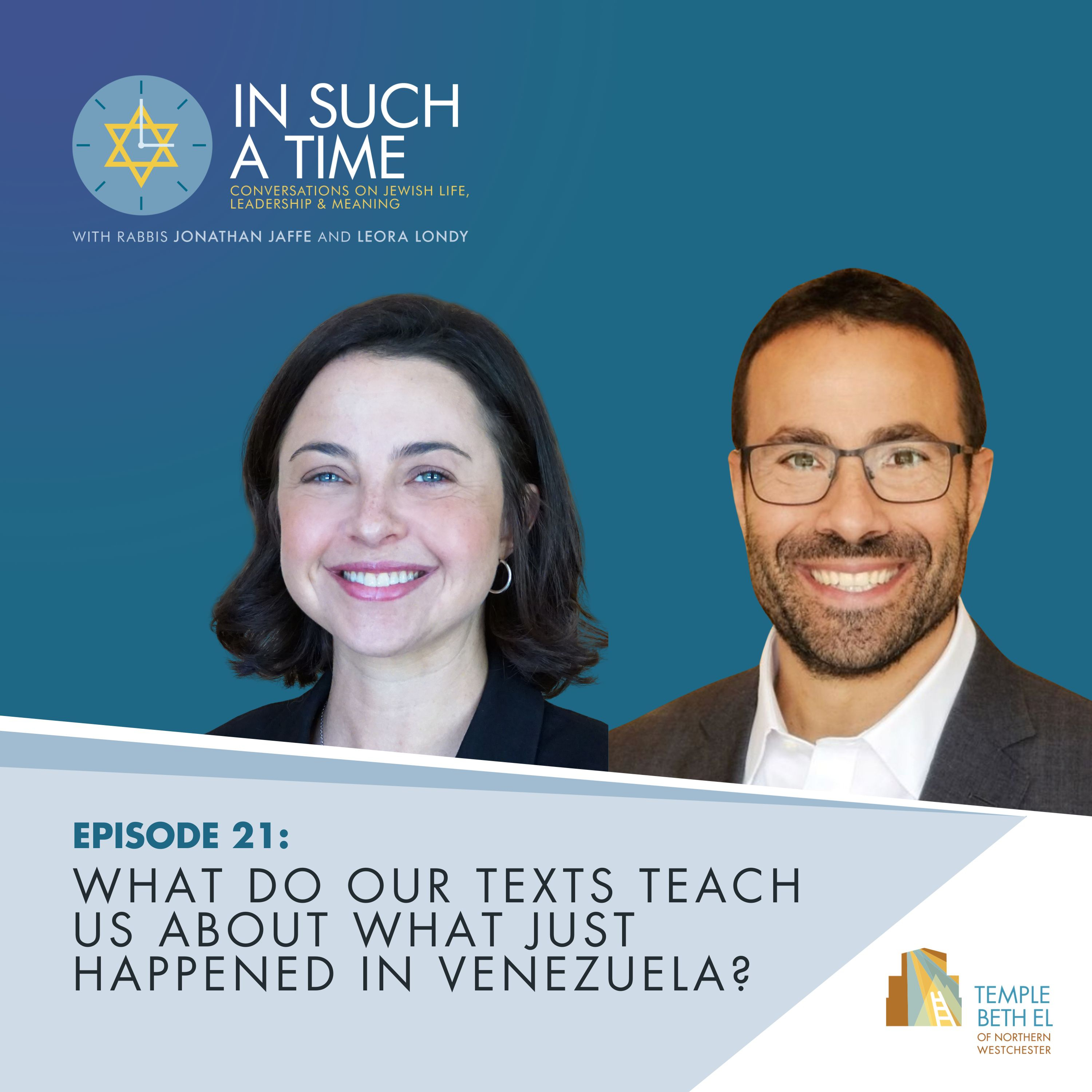
Ep. 21: What Do Our Texts Teach Us About What Just Happened in Venezuela?
from In Such A Time: Conversations on Jewish Life, Leadership & Meaning · host Rabbis Jonathan Jaffe and Leora Londy
What if the morality of war wasn’t just debated in the halls of Congress, but had been dissected by Jewish scholars for centuries? This week’s episode of "In Such a Time: Conversations on Jewish Life, Leadership and Meaning" dives into one of the most dramatic news stories of the week—the U.S. raid to capture Venezuelan President Maduro—and confronts it with the wisdom of Jewish law.Join Rabbi Jonathan Jaffe and Rabbi Leora Londy as they untangle the ancient Jewish principles behind warfare, asking: Was this a defensive act, or a dangerous show of unchecked power? Is there a Jewish lens through which we can make sense of modern international conflicts?Key highlights include:The shocking parallels between Maimonides’ (Rambam's) categories of war—obligatory vs. discretionary—and America’s military actions abroad.Spirited debate about whether Jewish law is still relevant when looking at today’s wars, and why it sometimes feels so personal or so distant.Thoughtful discussion on moral responsibility and the risks of executive power, illustrated by historical comparisons to the Noriega arrest and the current state of democracy in Venezuela.A candid reflection on America’s role in the world: Are we the moral exemplar or simply another self-interested nation? And what happens to our character when leaders stop admitting fault?Touching moments where both rabbis wrestle with personal uncertainty, searching for clarity amidst chaos, and reflect on what it means to be American, Israeli, and Jewish in a turbulent era.If you’ve ever wondered how ancient texts can illuminate the ethical gray areas of today’s headlines—or if you’ve felt uneasy about the intersection of faith, politics, and war—this episode offers honest dialogue, historical context, and challenges listeners to think deeper.Timestamped Episode Overview[00:00:00] – Welcome and introduction byIntro Announcer[00:00:20] –Rabbi Jonathan Jaffeintroduces the topic: Jewish law and the U.S. raid on Venezuela[00:01:27] –Rabbi Leora Londyexplains Rambam’s two categories of war: obligatory vs. discretionary[00:02:19] – Defining the purposes and structure of warfare in Jewish tradition[00:03:07] – Who holds authority in Jewish law: king, Sanhedrin, Urim and Tumim[00:03:55] – Framing the Venezuela raid: Does Jewish law apply? Comparing obligatory and discretionary war[00:06:49] – Debating immediate vs. elective military actions; parallels to Noriega’s arrest[00:13:21] – Concerns about executive power, democracy, and moral boundaries[00:21:04] – Why ancient halacha feels personal in Israel but distant in America[00:25:47] – America’s self-perception as a moral beacon and its changing role in the world[00:30:02] – Contrasting ideologies: rationalism vs. idealism; the need for a moral compass[00:33:06] – The struggle for accountability and responsibility among nations and leaders[00:34:53] – Waging war ethically: the necessity of humility and self-examination[00:37:13] – Democracy vs. dictatorship: Reflections on Venezuela, Israel, and world leadership[00:38:37] – Closing thoughts and call to subscribeDon’t miss this episode—where timeless Jewish wisdom meets the unpredictability of current events.
Embed this episode
Ready to play
Ep. 21: What Do Our Texts Teach Us About What Just Happened in Venezuela?
No transcript for this episode yet
Similar Episodes
No similar episodes found.
Similar Podcasts
No similar podcasts found.