
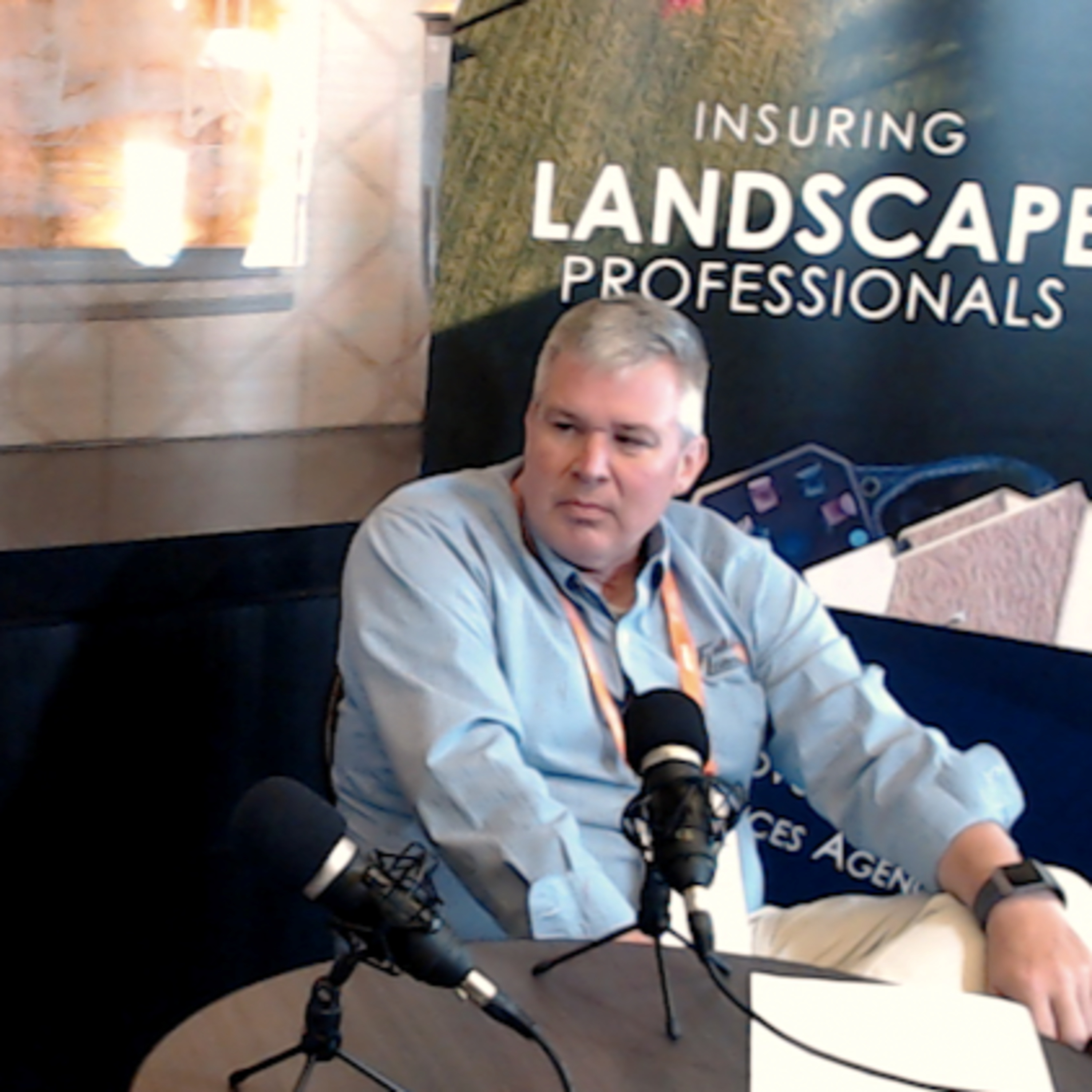
Hi, this is Drew Garcia with the Landscape Group. Thank you for listening to today's interview brought to you by our Safety and Risk Management Network, Studio One. Welcome back, everybody. I'm Drew Garcia.
Today we're with Chris Quagnon from Falling Youth Lawn Care. Chris, thank you for joining us today. If you wouldn't mind giving us a quick bio of the company. Glad to be here.
We've been in business a little bit more than 20 years. We're about 25 to 30 folks in the high season. We are maintenance-driven, offer enhancements, suburb of Atlanta, Georgia, and again, glad to be here. Nice.
Who's your typical clientele? Who are you guys serving? What space? We do a lot of HOAs, HOA commercial work, some high-end restaurants.
We do some high-end residential as well. We have a mix. We're definitely gravitating to more commercial. We feel it's a little bit easier to manage over the years.
We like residential. The margins are good, but it's just a lot of hand-holding, I guess you could say. And so companies, I said about 30 to 35. 25 to 30.
25 to 30 employees. How is safety delegated for you guys? Is it one person in charge of it? Is it a group of people?
Who determines and sets the tone for safety within the company? In terms of setting the tone, I think that would probably come through me in terms of the team that manages it would be Charles, myself, and Emily. We all three work hard at it. I had an epiphany or what have you, but just a defining moment.
I would say six to eight years ago when my mod rate was 2.7 or 2.8, and it was just off some bad luck. We weren't very intentional about safety, and ever since then, the mission has been, hey, we've got to get this sorted out. It's interesting. Sometimes it takes that pain, the high-experience mod versus the premium, to really bring focus to something that was in need.
But to have that realization, and it's so easy, I think, with that kind of stuff, to just be frustrated with it and deal with it and kind of carry on. It's important, and it's a nice piece for you to make here is you recognize it and say, hey, we need to have some intentional focus on to safety to really make a difference here. It's obviously paying off for you. We knew something needed to change, for sure.
Very nice. Okay, so we'll kind of jump into the work-related injury section of this, and no secret workforce shortage. There's an issue out there trying to fill jobs and to bring on employees. Is there anything that that has done with your company that you guys tried to get out ahead of, or is it impacting safety in any piece where, because of the shortage, is it causing any kind of issues in that regard?
I don't know that we get out ahead of it. Again, it's a mindset. Training is part of it, at least for – I think it's part of breathing. Again, it's intentional, but I don't know how we could do it because the workforce, the quality of the workforce is not what it was 10 years ago.
And because of that, we just have a training mindset, almost like the military. You know, they wake up every day and they train. We have our morning rollout and what have you. So, again, I don't know how it's impacted us other than we just had to totally change our mindset.
Sure. And what does that look like for you in the morning when you do that rollout? What does the morning look like for you? We have a morning huddle, a morning huddle, and there's a square painted in our warehouse, and everybody's supposed to have their toes on that square in uniform, you know, wearing their safety vest, and, you know, we go through roll call.
That's nice, and, you know, I imagine for the new employee that's coming to your company and they're watching, this is how we start our day every day. There's some focus, there's some reason why I'm not used to doing this. Like, you know, I maybe didn't do this at another employer in the past. I think you do set the tone right there, you know, to say, hey, roll call, everyone's here, let's huddle up.
You use that term, huddle, and it's kind of like team and atmosphere. So I think a lot of that can create that culture that you're looking for that ultimately, you know, makes that difference. Absolutely. So we know on the insurance side, about 50% of all work-related injuries happen within the first six months to a year of employment.
And, you know, you had mentioned the skilled workforce is diminishing, like, not like it was 10 years ago. And so that becomes even more prevalent in that first year because we're seeing a lot of injuries with people that are using machines that really maybe weren't properly trained or didn't understand the exposure that they're getting from using those machines. What kind of onboarding and training do you do? What does that look like for you?
Is it, like, physical training or handouts? Emily's been really good about creating an onboarding, and we try very hard. We don't always succeed, but we try. Before anyone gets on a truck, they go through orientations.
They spend two to three hours, maybe as much as a half day, depending on what kind of position, at the company, typically on a Friday. We run production Monday through Thursday. We do four to 10-hour days, and then on Fridays, we try and leave for catching up, meeting with clients, you know, proposals, things like that. But in addition, we try and do onboarding and an additional training.
So you've left that time open for that. We can really get into the 410, so that concept. I'm going to resist from going down that path just to get on to the next question here, which is the impact that technology has had on this industry. So we're seeing equipment, you know, smarter technology seems to become more efficient, easier to use.
And on our cell phones, there's an app for everything now where we're able to do things. How has technology impacted your business? Are you utilizing anything specific that's related to safety? We've been a little slow as it relates to safety in the technology standpoint.
But back to what I was saying is that we try and limit as much as possible people that are fresh to the industry. We try and use the KISS principle, you know, keep it simple, stupid, which is this is the pieces of equipment we want them to use. We don't expect them to be able to run a walk behind or, you know, navigate a Velke. We don't want anywhere near it.
We know that the most dangerous piece of equipment in terms of doing damage to a property is a mower and a weeder. So we try as best as possible to keep them away from that. We've got a lot of sticks, weeds, pine cones, a lot of edging to be done. Below we try and train them on the things that they can build up to.
So I didn't want to not answer your question about technology, but just kind of finish about how we try and stay away from major injuries in the first six months. Absolutely. So there's a progression plan in place. Correct.
That makes sense. So it's kind of, you're not just, you know, here's three hours of orientation now, go get on the walk behind. There's some progress that you're going to take to get to that point and you'll earn it until when you get there. With, you know, the cell phones and videos and what have you, I think one of the things in our last, you know, session that we were learning about a little bit earlier is it's really easy to create a video.
So there's a couple of things that we might try and do before spring, you know, gear up or, you know, basically getting ready for the high season next year, you know, to have some things that we could provide to new team members. Yeah, I think the way that this generation receives content, I think we're more susceptible to watching a video, retaining that information versus give you an article, read it, tell me what you think. We're just kind of a, you know, we progress that way where we want either an audio style or we want a video style and we're going to retain those information because we're used to receiving information that way. So I think, you know, as we look to the future and how technology can make an impact, you guys are doing the right thing there by exploring that to see how it can make any kind of impact for your own safety and probably other portions of your business as well.
So we'll get to fleet safety now and give us an idea. How many trucks do you guys have? What does the fleet look like? About 13 trucks in the fleet.
Okay. And do you utilize any kind of fleet management GPS? We use Azuga. Azuga, okay.
And so for those that don't know what Azuga or who Azuga is, what do you get from it? What does it provide back to you? What kind of information are you gathering from that system? It's reporting in real time.
It's a GPS system and there's a lot of folks out there. That was just the one that we went with. You know, the big thing is, is the safety, the hard braking. You know, it provides a lot of data and information, the speeding portion.
It gives us a lot of tools to go back and reinforce in our meetings, you know, when we talk to the guys in addition to our morning rollouts. Yeah, I think that's where, you know, technology is making that impact. They're definitely on fleet safety. And I see sometimes there's a little gap between utilizing that kind of service and then not doing anything with the data.
So it's going to be great to have that. But what are we doing now to take what we're learning and turn it into trainings or abilities for our drivers to grow and we need to become safer? We'll talk about it as a group in the coming days. Hey, this is what the information is telling us.
Here's the issue. Now let's address it with, you know, this information. So I think that's a solid approach, you know, to taking it. And then driver training, driver awareness.
How often do you review fleet safety or fleet topics? So when you're a driver with our company, whether you start driving from day one or you build up to that, you're always checked out. You have to take a ride with someone. There's things that are pointed out.
You know, we talk about distracted driving all the time. But we have team leaders and drivers safety meeting every two weeks. And so we get our literature together. We talk about our topics.
A lot of it's review and repetitive, but it's repetitive on purpose. We talk about distracted driving, as I said. But the other thing that we talk about is road rage and things like that. Hey, it's not personal.
We're here making money. You know, if there's an issue that happens on the road, eyes straight. You know, if you're on the expressway, right-hand lane, you know, we're below the speed limit if possible. You stay out of all that fret.
Right, yeah. It's so many topics to hit on. And I think having some kind of frequency to when you're going to have those conversations and being consistent with it. So for you every two weeks, you know, coming at that, setting those expectations in that time frame and then being able to hit on and achieve those moments.
You don't want to overcommit and say, we're going to talk about fleet safety every Tuesday. You know, and it's like, there's not enough time to manage that. But realistically, throwing out, you know, a two-week time period to touch base on these topics. And then, like you said, it's all a refresher.
You know, it's nothing new that you're telling them. But you just have to make sure that you're establishing those thoughts in their head so that when they get out there and drive, they're doing what you're looking for them to do. Very good. Okay, well, when we kind of wrap up here, what are you guys focusing on for 2020?
What's one thing with your safety program that is going to be a focus in the coming year? What's something that you're really looking at? We need to work on fleet. We've improved dramatically the work comp portion.
But we need to work on fleet from a standpoint that that's the fastest rising premium, I think, at least in our area, in the southeast. It's dramatic. We've had just some really bad incidents lately where there's no fault of our own, but uninsured motorists, another vehicle hit one of our fleet the other day. We were just sitting at a traffic light, and the person that got hit, the other driver ran.
So just, again, just some bad luck. So fleet is obviously something that we're going to focus on. But in terms of overall safety, you know, probably some videos, some things at home. Not home, but, you know, back at our office or what have you.
Not necessarily going to someone, you know, that's already offering a training program whenever we're going to see if we can do some things in-house. That's great. You know, and you'll get that. If you can include your team in making those videos, you're going to get that buy-in, you know, that you're looking for from your team members.
And it's one thing to say it and one thing to do it, but if you're bringing them in and letting them be a part of that and creating those videos, if they're open to doing it, I think that you really do get that buy-in that you're looking for. And ultimately, that, you know, creates this better decision-making, you know, happening to when they're out in the field, you know, on their own doing their own thing without direct supervision. So that's a nice strategy to take. For the landscape company that's just starting out, okay?
They just opened their doors. They got a lot of stuff going on right now. Safety can kind of get pushed to the wayside. What would you tell that company if you could say, hey, focus on this one thing with safety, where would you start?
Process. Process. That's anything. You know, if you're just starting out with people.
If I had to do it over again, we would spend the time on the process as it relates to safety or any other thing in your company, you know, that's really, really important that when you're small, that's the time to invest all those great ideas, get them down on paper, get signage up in your warehouse. If you have signs, you know, that are on the windshield of your truck or what have you, spend that time up front while you're small because as you grow, there's always the allure of chasing money, and you've got to have that process for safety in place. Exactly. Yeah, you're still trying to, at that point, you're trying to grow your business.
Now you have, you know, all this work out there, and time is most important, and you'll lose that as you continue to, you know, as you continue to grow because you're going to have less time, get more commitments. So that's a good point. That's kind of just putting together that process of time management from the beginning to set yourself up for success from when you do grow. Now how about the company that's, the landscape company that's been doing this for a while and they're comfortable with their safety program and, you know, no real issues, they don't, what's the advice you would give to them in terms of challenging them to refresh, regroup, you know, take a look at their safety programs to improve it?
I would say it goes back to the human side of just to treat people the way you'd like to be treated, and that goes back to the culture. Whether you have problems or you don't have problems, you're going to be more successful with a training and a safety program if you treat people, you know, again, with respect, dignity, find the good, you know, find the good in people. In terms of challenging people to do better, there's always something that you can do better. You know, how can that roll downhill?
How can you teach, you know, the guy below you? And that goes back to your culture. Yeah, absolutely. Was there anything, when you started out, somebody gave you a great piece of safety advice or something you've always, you know, liked, a slogan, or you've kind of latched on to, is there anything that you think back to your history and someone said, oh, I really like that and you've used it?
Not really in terms of slogans. We always talk about common sense. Gosh knows, we've got enough test cases. We're like, oh my gosh, how did that happen?
And you have to kind of think, well, no, some people don't have common sense. And so there's some major do's and don'ts. No, we don't do that. And we don't, you know, any hands or feet around, you know, operating mowers or what have you, just as an example.
But no big slogans, but you really just have to say, use some common sense and remember, this is designed to make money and to do work and it will hurt you. Absolutely. Well, we want to thank Chris for his time today. You know, sometimes it's the simplest things that he's talking about, being consistent and having to process that ultimately makes me and Patrick looking for on safety in your business in general.
So, Chris, we want to thank you for your time. Appreciate you joining us. Yeah, appreciate it. Thank you for being here.
Thank you. This is Alyssa Burley with Rancho Mesa. Thanks for tuning in to our latest episode produced by Studio One. For more information, visit us at ranchomesa.com.