
EPISODE · Nov 4, 2024 · 11 MIN
Ep.3 Squanto Through The Lens of History
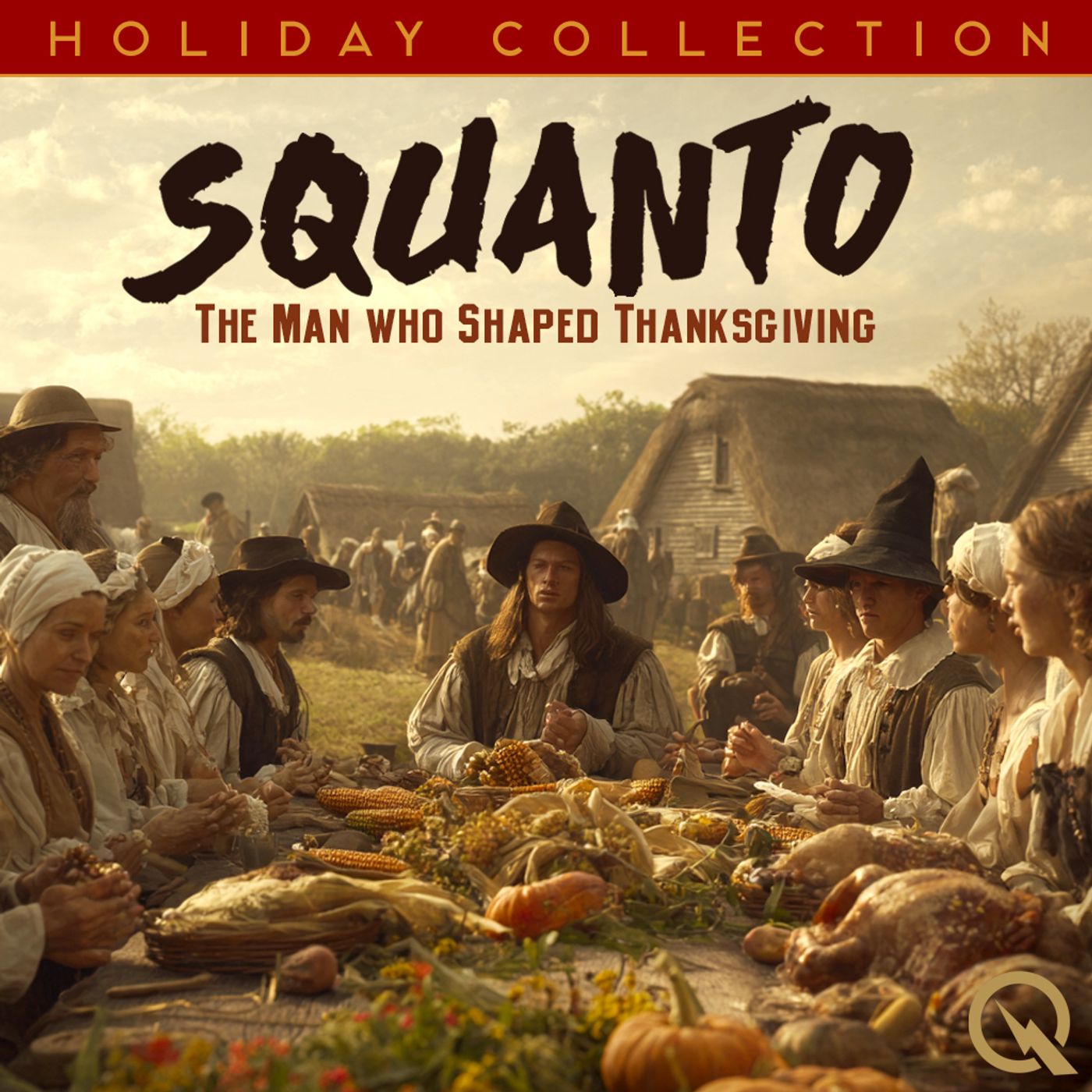
from Squanto The Man who Shaped Thanksgiving · host Inception Point AI
The story of Tisquantum has been told and retold countless times over the past four centuries, each retelling shaped by the cultural perspectives and political needs of its era. From children's books to scholarly works, from Thanksgiving pageants to historical documentaries, his life has been interpreted and reinterpreted, often revealing more about the storytellers than the man himself. The earliest written accounts of Tisquantum come from the Plymouth colonists, particularly William Bradford's "Of Plymouth Plantation." These initial descriptions present him primarily through a Protestant Christian lens, as an instrument of divine providence sent to aid the struggling colony. Bradford's famous description of him as "a special instrument sent of God" established a religious framework for interpreting Tisquantum's role that would persist in American historical narratives for centuries. By the early 19th century, as Americans began crafting their national origin story, Tisquantum was transformed into "Squanto," a simplified character in what became known as the "First Thanksgiving" narrative. This version, popularized by writers like Jane G. Austin and Henry Wadsworth Longfellow, portrayed him as a passive, helpful figure, stripped of his complex motivations and political savvy. This characterization served the young nation's need for a story of peaceful cooperation between Native Americans and European settlers. The Victorian era saw particularly dramatic adaptations of his story. Children's magazines and school textbooks of the period presented "Squanto" as the archetypal "good Indian," willing to help Europeans while implicitly accepting their cultural superiority. These accounts often minimized or completely ignored the traumatic aspects of his life - his kidnapping, enslavement, and the destruction of his people. The early 20th century brought the first significant shift in how Tisquantum's story was told. Progressive Era historians began examining primary sources more critically, questioning the simplistic narratives that had dominated the previous century. Henry C. Shelley's 1913 biography, "Squanto: The Red Helper," while still colored by the racial attitudes of its time, was among the first works to seriously examine Tisquantum's life before Plymouth and acknowledge the complexity of his position between cultures. The 1920s and 1930s saw Tisquantum's story become further embedded in American popular culture through school plays, Thanksgiving pageants, and early radio dramas. These presentations typically followed a simplified script: the helpful Indian teaching the Pilgrims to plant corn with fish, leading to a successful harvest and the First Thanksgiving. This version, while historically incomplete, became deeply ingrained in American cultural memory. World War II and the immediate postwar period brought interesting adaptations of Tisquantum's story. During the war, his tale was sometimes used in propaganda materials as an example of Ame This content was created in partnership and with the help of Artificial Intelligence AI.
Embed this episode
NOW PLAYING
Ep.3 Squanto Through The Lens of History
No transcript for this episode yet
Similar Episodes
No similar episodes found.
Similar Podcasts
No similar podcasts found.