
EPISODE · Jan 14, 2026 · 16 MIN
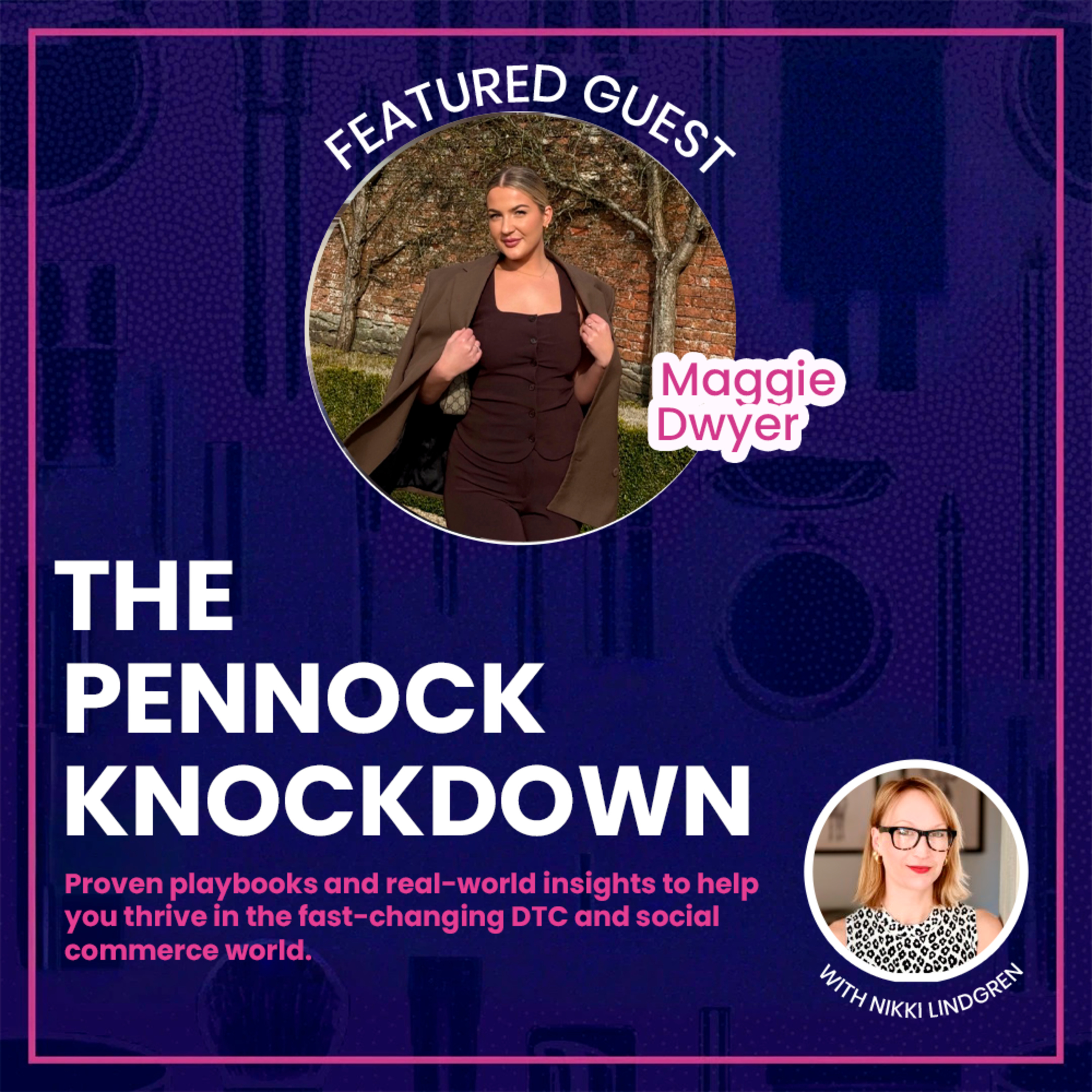
Ep. 38 Influencer Strategy 101: From Gifting to Whitelisting with Maggie Dwyer
from The Pennock Knockdown · host Pennock Agency
Is influencer marketing just expensive gifting, or is it a scalable revenue channel?In this episode of The Pennock Knockdown, Nikki sits down with Maggie Dwyer, founder of CO-ANU, to dismantle the common myths of the creator economy. They move beyond vanity metrics to break down the exact operational mechanics of a profitable influencer division.The "Gifting" Myth & Managing ExpectationsOne of the biggest friction points in the industry today is the disconnect between brand expectations and creator reality. Maggie discusses the "education gap" she faces with new clients who assume sending a PR package guarantees a review. She explains why "gifting" is a valid strategy for relationship building but a poor strategy for guaranteed awareness. If you want control over the narrative, the timeline, and the deliverables, you have to move from a "hope strategy" to a "paid collaboration" model.Not every brand has a charismatic founder ready to hop on TikTok and tell their story. So, what do you do if your brand is more corporate or legacy? Maggie highlights her work with Ghost Fragrances, a brand that successfully utilized creators to pivot their messaging during a "restage" and vegan reformulation. She explains how influencers can act as the "face" and voice of the brand, lending credibility and human connection to products that might otherwise feel distant or purely commercial.Perhaps the most tactical takeaway from this episode is the discussion on budgeting. How small is "too small"? Maggie argues that while you can work with 50K budgets, the real magic happens when Influencer Marketing and Paid Media are not siloed.She breaks down her ideal split for emerging brands: 40% of the budget goes to the creators (production/fees), and 60% goes to Paid Media. This allows the agency to take that high-performing creator content and "whitelist" it (run ads directly from the creator’s handle). This "Spark Ad" approach often outperforms brand-led ads because it feels native to the feed, leveraging the trust the creator has already built with their audience.If you are planning a holiday launch in November, when should you start briefing creators? Maggie’s answer: Three months prior, minimum.She distinguishes between two core strategies brands need to master:Always-On: This is your volume play. Daily posts on TikTok and Instagram to keep the algorithm fed and maintain "share of voice."Campaign Spikes: These are strategic, high-budget moments (like a new product drop) that require deeper storytelling and perhaps celebrity or top-tier macro-influencers.Storytelling for "Faceless" BrandsThe 60/40 Budget Rule: Organic vs. PaidTimelines & The "Always-On" EngineKey Takeaways:The 60/40 Rule: Don't blow your whole budget on fees. Maggie recommends a split of 40% for Creator Fees and 60% for Paid Media to scale the content via whitelisting.Timelines: Effective campaigns require a 3-month runway. If you want Q4 results, briefing starts in August.Whitelisting: The highest ROI comes from running ads through the creator’s handle (Spark Ads), not just the brand's profile.The "Faceless" Pivot: How legacy brands without a founder-story can use creators to humanize their messaging.In this episode, we cover:00:00 Intro & Maggie’s background at Fable & Mane02:30 Gifting vs. Paid Collaborations: Where to start03:48 Why an agency "Rolodex" beats cold outreach05:21 "Always On" vs. Seasonal Campaign spikes06:43 Building long-term Brand Ambassadors10:45 The 3-Month Planning Rule11:26 Budgeting: The 60/40 Split (Paid vs. Organic)12:42 Whitelisting Strategy 10114:01 Tracking success without DTC dataGuest: Maggie DwyerAgency: CO-ANUScale your DTC Brand:For more insights on paid media and growth strategy, visit pennock.co.
Embed this episode
NOW PLAYING
Ep. 38 Influencer Strategy 101: From Gifting to Whitelisting with Maggie Dwyer
No transcript for this episode yet
Similar Episodes
No similar episodes found.
Similar Podcasts
No similar podcasts found.