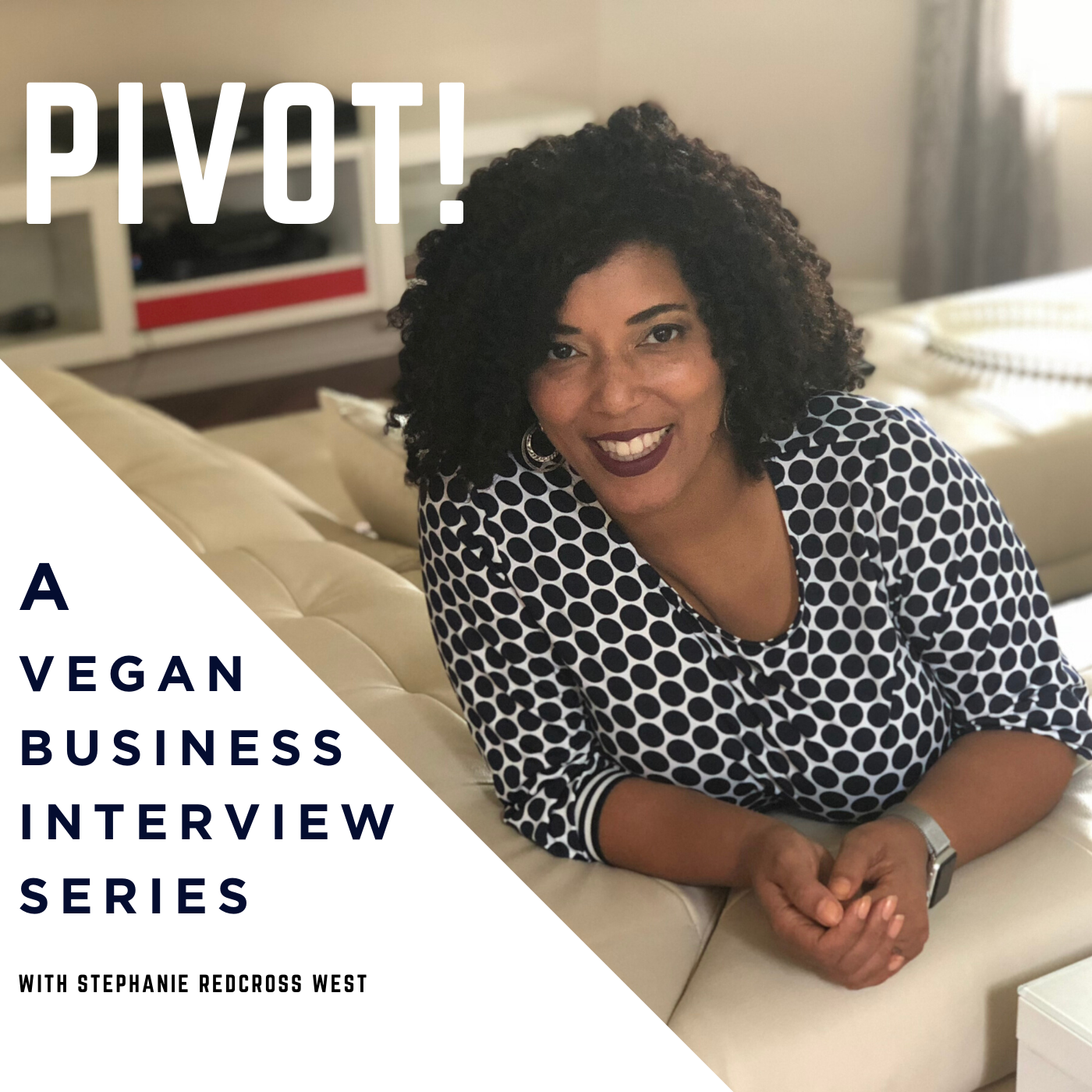
As vegan and plant-based business owners and entrepreneurs, we're often adapting to a new reality. This new podcast series from Vegan Mainstream is an opportunity to help you when it's time to pivot. These interviews will come from inside and outside of our community, and I hope as your host, Stephanie Red Cross West, I can inspire you and give you the tools that you need to move forward. Hello, everyone back to our interview series where we have the amazing opportunity to meet so many entrepreneurs, business owners, creative types, and individuals that are truly changing the world out there.
And today, I have an amazing guest that we're gonna talk about vegan interior design. And you believe it, I love when we get an opportunity to talk about businesses that are not necessarily in the traditional vegan bucket, but it shows not only our ability to be creative, but also, this is a space, at least in my perspective, and I'm curious what my guests will say, that we can make big impact because a lot of products, a lot of materials that people use for designing their homes for interior design are often sourced by us. So if we can have amazing businesses like this, we can start to make change, start to make a difference in the way that people furnish their homes, their offices, and also kind of change hearts and minds. So I'm excited about kind of exploring that and also talking about how an interior design business did this year with all the pandemic and COVID, how it impacted the business and how things have maybe pivoted through this year.
So without further ado, let me say welcome, welcome to our guest. Eileen, Dara, thank you so much for showing up today and taking a little bit of time to tell us about your business and how you're making an impact here in the vegan and plant-based movement. Yeah, thank you very much for having me. It's always look any opportunity to talk about vegan interior design because my passion always like.
Well, perfect. Now, just like having a little background, you've been vegan for about three years now. Is that correct? That's right.
That's correct. And do you want to share anything about your vegan journey? Maybe what was your aha moment? Or were you like some of us that kind of were like, oh my goodness, maybe I should have been doing this all along.
I mean, we all have a different approach to our vegan transformation story. I don't know if you want to share any kind of thoughts about that and make sure about the fact that your business. Yes, well, I do think that now, how did I not do this earlier, like most vegans, I guess? But my moment really came after having my daughter and I was home, I had a lot more time, but a little bit more time to think about other things than just work on daily business.
And I came across a few documentaries. I don't know where they came from, just out of nowhere. And then I watched a full-length documentary and that pretty much made me vegan overnight. Of course, transitioning with the necessary steps.
But I thought, how did I not know all this and how have I not been vegan my whole life? And especially having my daughter and breastfeeding, Derry, that all kind of resonated with me because it was so close to home. And then I fell into this whole being, how do I keep designing spaces and help people with designing their homes and their offices, if all these things are going on and the animals need my help? And then that stuck with me for a few months.
And I thought, well, how do I get back into a design, having all this whole new mindset and realization about the world? Like, it felt like a really big thing. And then I thought, okay, I need to just combine them in a way. Yeah, exciting about like this kind of lifestyle we live as vegans that we get to bring those things together.
We get to incorporate, you know, we don't have to kind of like be vegan over here and then run businesses over here. We can bring those things together. So that's what made me kind of jump in there when you were talking about combining it because I think that's such an amazing place to be when we think about, you know, this journey we're on and we think about, you know, ways we can contribute to the world. Exactly.
I mean, I guess veganism, it always starts with food. It's the obvious, obvious step. And it's the biggest impact in a way. But then if you dive deeper into it and you look into materials and, you know, fabrics, then especially in interior design, it's the very obvious ones, leather and wool and silk.
But then the further you dive in, there's also paint and I don't put us creep into everything, everything you wouldn't even think of. Like, yeah, I did then do so much research and found out most towels aren't actually produced in a vegan way. And it always, you know, of course, the question is, where do you start, where do you stop? I mean, do you, do you stop a toilet paper or do you make sure that your toilet paper is also vegan?
And that's, every individual has to decide that for themselves. There's also convenience and everyday practicality. But I think knowing about it and finding out more is always the first step and then you can make a decision. And that's a little bit what my business is about too or what my purpose is, to just tell people things they might not even have thought about, yeah.
And then, you know, everyone can make a decision for their own life. And I love that you say that because I think, you know, we have to figure out, like you said, where, how are we defining our veganism? We want to make sure we reduce that impact. But if we don't know that, like you were saying towels, and I have to go research this right after this interview now, or not being made in a vegan way, it's one of those things where we don't know, there's so much I find in a lot of different industries.
And like I said, at first it was even, we thought it was obvious, even in food, until we all understood what was happening in factory farms, then we understood it was even worse than we imagined. I really think it's the case with a lot of these industries where when we peel back the layers, we start to realize that there's a lot of practices in there that we wouldn't condone. There's a lot of things that are done in the name of, it's the way it's always been done, or the name of what we thought was beautiful, or how things are bleached, mostly the, you know, bleached to the point where they're not much unrecognizable, as opposed to using the natural fibers and the natural pieces of that. That I think there's so much opportunity for awareness in these industries, and helping us understand and navigate what we think is beginning what may not be vegan, and why it's not.
And I think empowering us to understand how we can impact demand, because I really feel, and I don't know if you feel the same way, but I feel like a lot of these industries are just based on the demand that has been built over time, and for us to drive that change, we have to demand something different, we want something different, and we have to let in some ways our voice speak, but our money has to speak as well. That's absolutely what motivates me, because once I started looking into materials and all these kind of things related to interior design, finishes materials, I noticed there's products out there, but often they're just like on the side or supplies don't even advertise them, or supplies don't even sometimes know, and they need to go back and they need to do their own research, and it depends if they're manufacturing it themselves, or if they're a middleman, but there's so much gap of knowledge, where people don't know, but once you start asking, it's so interesting what comes of it, and I never thought about it, but we'll definitely look into it, even over the last three years, there's been so many more products coming out, and I feel like the two-design industry is probably a little bit behind, or it's definitely behind the food and even the fashion industry in terms of availability, but it's starting, and I just really want to drive this demand and make sure people ask questions, and just make supplies have to look into it, and have to provide those products. I love that. Really understanding our power in these industries, and how we listen to move the needle, to move the world like we want to, we have to be part of that demand.
So walk us through a little bit of your business, what you're doing day to day, working with individuals, helping people if someone needs to design a space, do they just give you a call, I know you have some amazing online courses, why or how do people use the courses to help them with interior design, maybe give us a little bit of background. Sure, well, I've been an interior designer for many years, so that part of my business is still, same as always, one-on-one clients or face-to-face clients, it's either in person, if you live in Australia, or online anywhere else in the world, and yes, I help individuals with their homes or with offices to create a space that's vegan, but also just in the traditional sense of interior design, space planning, all different sorts of jobs around homes and designing offices, so that part of my business is still there and always will be, over the last year, especially with COVID happening and all those changes, I decided to implement an educational platform and keep calling it, so it's just different courses that I'm offering for different levels, I guess, I mean, there's, I have one course called vegan materials and finishes one or one, which is a basic entry to, obviously, leathers and walls, and all those obvious finishes that are not vegan, explaining why they're not, how we can replace them, how they affect our health, that's a very important point for me too, like how all these products affect our actually health and wellbeing in the environment, in the spaces we live in. And then there's also other courses that are specifically for interior designers, and that's what I'm really most passionate about. It's changing the interior design world from within.
Not many interior designers are necessarily vegan, and they don't have to be, and they don't have to offer exclusive vegan interior design services, but I think to give them the tools, explain a bit of a background, give them alternatives, explain the mindset, I mean, there's not a mindset of the vegan, but just to explain a little bit to people who are not dealing with veganism every day in their own life, explain where we come from, what the general ethical beliefs are, then how to address this in a professional setting, designing a home for someone, or designing any space, and then give the alternatives and practical tips on how to help this kind of new consumer group. You know what I mean, like it. Yeah, I'd like to give you an online registry, you know? Yes, and create an awareness, give some tools, and they are able to offer the service, or to say, well, I do know about vegan interior design, done this course, I've delved into it, I can help you with that, and that's what I want to really achieve with these courses, to create more awareness and just spread it everywhere, they don't have to use it, but they know about it, and they can, and I feel like all the non-vegan interior designers that have taken the course so far, the feedback is really amazing, it's really positive.
They say, well, I do love leather, and I do love the smell of it, touch of it, but just knowing where it comes from now makes it so much less appealing, and you don't have to use it, so it probably won't specify the future. And whenever I hear that, I'm like, my heart sinks, because that's really what I want to achieve, with that educational side of my business. I love that, yeah. And I like that because, you know, the demand comes from two sides, it's the individual that needs the one-ce interior design in their homes, and it's also the interior designer that's on hires, so even if a person isn't so, you know, pro-vegan necessarily, or isn't necessarily, you know, it's open to all different types of materials, if the designer suggests non-vegan materials, that's how they end up in the home as well.
So if we can educate the consumer, the individual, and you can educate the designer, we can change the demand, I think, from two points of contact, so I think it's a brilliant way for you to impact the industry and move things forward. Now, you touched on a point about the types of products that we bring in the home, and how it links to our health, and so forth. Maybe give our audience a little bit of perspective on kind of how you, I guess, intertwine the idea of interior design and how it impacts our home health. Sure, I mean, I guess, again, the most obvious to always use is leather.
If you have a leather couch at home, which most of you can probably wind anyway, but let's just say, for the health argument, you have a leather couch at home, it used to be the skin of someone, to be on a couch and to be durable, it had to go through a lot of processes, like adding toxins, adding chemicals, adding a lot of unnatural things to make it last. So, those chemicals can off gas for years and years and years, and absorb into your skin, it's really unhealthy for anyone to sit on it, apart from the ethical aspect. The same goes for wool, it's a little bit different, but wool has a lot of allergens in it. So, a lot of people react badly to wool, but don't necessarily link the two.
There's feathers, I could go on and on about it, but then I also look at the alternatives, and a lot of four leathers are made of plastic in one form or the other. So, is that a bad alternative? Not really, no animals have died for it, but at the same time, if you look at the life cycle, it's gonna stay in our environment forever, even after you discard the couch, it's not necessarily so much better. So, I look at different aspects, the health at home and how it affects your skin directly, and the air we breathe in, but then also how it is sustainable and what materials are out there that are probably better than your plastic alternative to real leather.
So, there's a lot of layers to it, and I feel like it's still an industry or an area that's developing a lot as we speak. There's so many new materials coming out, and not all of them are necessarily suitable for interior design for all three, but it is happening and there is a lot of research going into it. So, yeah, I always look for products that are not only non-animal, but also healthy to be around and put for the environment. Yeah, I think that's a really good point.
I think that's one of the things that a lot of vegan struggle with is balancing the alternatives that we're all trying to be evertated towards and the impact some of those alternatives have on the environment and making sure that we're not moving to another problem or creating a new problem. I know some of this is the industry has to catch up, the science has to catch up, and also some of it just has to be that someone has to mass produce it enough so that the world can have access to it. So, some of this is just how much the world has been changing, but I think it's amazing to have individuals like yourself creating courses help educate people, help people understand where and how these products are being created on both sides of the fence, the ones that are non-vegan, and the things that may be vegan but may not be sustainable, and helping that that education process I really think can go a long way. And also, I love how you phrased it with we're bringing these products in our homes and they're giving off gases.
They have mild allergens, we're sleeping on them, especially when you talk about the feathers, and I think about how many people are sleeping on these things and what they're giving off in Europe. It's hours and hours of people breathing in those items that I don't think everyone's taking that into perspective in their minds when they're buying a pillow. You only know what you know. You think, well, this is comfortable and there's so much marketing, obviously, always misleading or not misleading, but he only know what you know and that's why I'm trying to add my little bit to educate people.
Nice, I would really have you that you are doing that in the world. Now, you talked a little bit about the pivoting and how you agreed at this kind of educational suite. How's it been going? How's the pivoting going?
Have you been a little bit surprised that it's been going maybe better than you expected? I'm not necessarily saying that, you know, they're shutting down your website with so much traffic yet, but have you been impressed with how the pivot has been going? How you've been kind of moving into this space? And is there any advice for anyone out there that's watching and has maybe wanted to pivot to educational that you would like to maybe give them?
Yes, I actually have been all the way on because it was something I thought about for the last years and I thought, oh, I'll just, you know, being at home all the time now or working from home being forced to. I'll start building this and I'll see how I go, but then it accelerated so quickly. Like there was so much interest from all over the world and so much feedback. And to write those courses, I actually wrote a book just to get my own thoughts together to compliment the courses.
But then when the book was launched in October, only two months ago, it just went off and I got all these messages from non-vegans. Like never thought about it, but it's such an interesting angle and it's an interesting book to read. And you know, it just came out of so many corners where I didn't expect any reactions from. So it has been amazing and it has been really positive and well, advice for anyone.
If you have any idea that you think you might want to implement, is it if it's educational or anything of cinema? Just do it, just don't wait. I waited for a year and thought, oh, how am I going to do everything I want to do at once? But you just start with one thing and kind of develops its own life.
Yeah, but I have been impressed with the feedback from all corners of the world. It's just made me realize it's something that is out there that needs to be explored more. Absolutely, absolutely. So if people want to get access to the book, if they want to take maybe one of your courses or even get in touch with you, because maybe they need help with interior design work, how do they get in touch with you, what's the best way?
The best way would be my website, I'd say. It's vegan interior design. That's the best way to get in touch with me. And yeah, that's where all the courses are posted as well.
And my book, it's called Vegan Interior Design. It's all pretty straightforward. That's available on Amazon in any major bookstores or online retailers in the world. Yeah, I guess the website is the best way.
I think people can definitely go to their website and you're on social media as well. You can check it out on social media too. That's right, yes. Perfect.
And then as we're wrapping up today's session, do you have any final recommendations, wisdom, inspiration, because as we're wrapping up the year and moving into a new year, this is such a good time for businesses to reevaluate, reassess how the year went, which, and it was really bad for some of us. And how we want 2021 to be, even as we still navigate some of these uncertain times, do you have any advice or recommendations for anyone out there that's kind of, maybe what's in your shoes, is struggling right now, where they're trying to navigate their business and reposition and find new opportunities that you would like to share based on your success and what you've learned this year. Yes, I think what I've learned most, what stands out to me is being bold is a good thing. And just doing things that you're convinced about is a good thing.
I renamed my business this year to Vegan Interior Design and I was arming and arming and arming off, am I cutting out people if I call it Vegan Interior Design? Am I not really achieving what I want to achieve by reaching a lot of people? But it is what it is, it is Vegan Interior Design. I talked to someone the other day and she said, a word came up for her and that's defining her business now.
It's, I can't say it, say it. I'm a part of it, I'm a part of it, Jelly. I'm a part of it, yes, I'm a part of it, yes. I'm a part of it there, I'm a part of it, Jelly Vegan.
And I find, that's a lot of people I talk to, that's what Horst was holding them back. They're like, well, I am vegan, but not everyone is. And no, if I should really make this a part of my business and be open about it. And I think if that's what you're about and what your business about it, if that's the ethics behind what you do it and just be open about it, it's becoming so much more mainstream anyway.
Just, yeah, just do it. I love that. Be bold, just do it. Love it, love it, love it.
Thank you so much for spending some time with me today. Even though I know it's early in the morning for you. I was pretty aided. And it was like if you have a chance to chat, learn a little bit about what we were doing, give me some aha moments and some homework I have to do and some of the items in my home.
But it's always wonderful to hear how, not only how people are doing it, doing kind of vegan businesses around the world, but also how they're running amazing businesses, inside and outside of the food industry. And for me personally, I love hearing things that are on the service-based side and so forth because I really want us to all the impact the world and to do that we need to be in all these spaces. So thank you so much for all that you do. Thank you for taking me.
Thank you for having me. Yep, to have you, happy to be on the show today. And I really appreciate all the information you shared with everyone today. So everyone who watched us live, thank you so much for joining us live.
It's so great to see everyone here. It's so fun to be able to bring you these interviews. It's really fun to be able to interview you to amazing women entrepreneurs as well, like my guest here. So I am happy and grateful that you came and joined us live.
If you didn't watch this live or you're watching this as part of our podcast series, I'm gonna be just checking this out on YouTube. We really appreciate it. You can always leave comments, give us a thumbs up, give us love. We love getting love, but we also love being able to be there for you, inspire you and help you along the way.
So I hope this interview has helped you, inspired you and I look forward to seeing you. And our next interview, bye everyone.